
Tree Care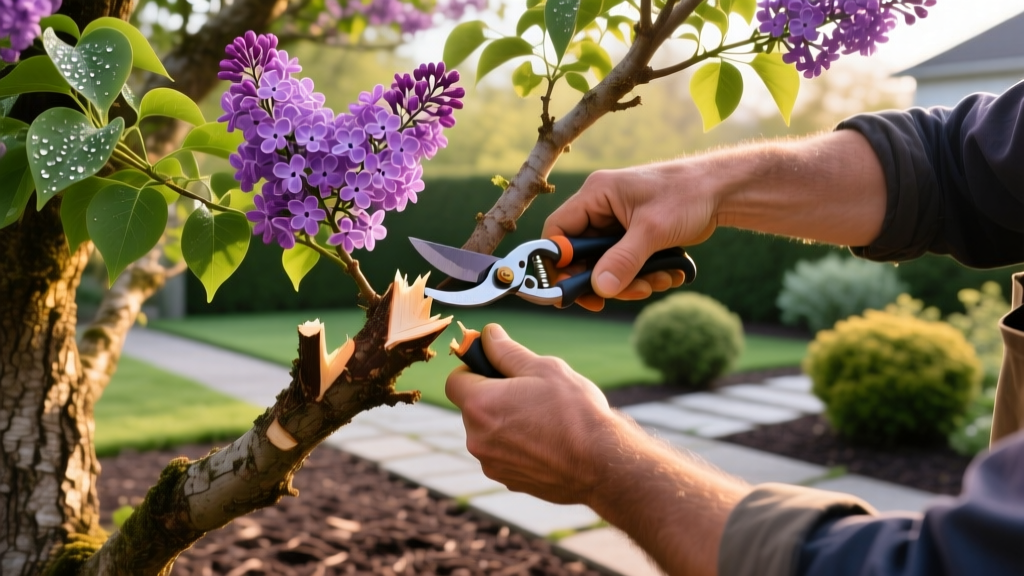
How to Prune a Lilac Bush: Rejuvenation and Maintenance Guide
The Physiology of Lilac Blooming: Why Timing is Everything
Understanding how to prune a lilac bush (Syringa vulgaris) requires a foundational grasp of its blooming physiology. Unlike roses or butterfly bushes that flower on "new wood" (current season's growth), lilacs set their flower buds on "old wood" during the summer months immediately following the current year's bloom cycle. If you prune a lilac in late summer, fall, or early spring, you are physically removing the embryonic flower clusters, guaranteeing a barren, leaf-only shrub the following May.
The University of Minnesota Extension emphasizes that the pruning window for lilacs is notoriously unforgiving. You have exactly 14 to 21 days after the spring flowers fade to perform structural cuts. Once the plant begins hardening off its new summer shoots, the pruning saw must be put away until the following year.
Professional-Grade Tool Selection for Lilac Canes
Lilac wood is dense, brittle, and highly susceptible to vascular crushing if cut with inferior tools. Crushed cambium tissue fails to heal properly, creating entry vectors for Pseudomonas syringae (lilac bacterial blight). Invest in precision bypass tools; never use anvil pruners on live lilac wood.
- Hand Pruners (Stems up to 1/2 inch): The Felco F-2 Classic Bypass Pruner (approx. $65) remains the industry standard. Its hardened steel blade slices cleanly without pinching the cambium.
- Loppers (Canes 1/2 to 1.5 inches): Corona ComfortGEL Bypass Loppers with 28-inch handles (approx. $45) provide the necessary leverage for thick interior branches without crushing the bark.
- Pruning Saw (Basal canes over 2 inches): The Silky Gomboy 210 folding saw (approx. $42) features impulse-hardened teeth that pull-cut through dense lilac heartwood without binding.
⚠️ CRITICAL SANITIZATION PROTOCOL: Lilac bacterial blight spreads rapidly via pruning tools. Keep a spray bottle of 70% isopropyl alcohol in your bucket. Wipe down your blades between every single cut if you suspect disease, or at minimum between different shrubs. Do not use bleach solutions, as sodium hypochlorite pits and corrodes high-carbon steel blades, ruining their edge.
Step-by-Step: The Annual Maintenance Pruning Method
For a healthy, mature lilac bush that receives regular care, annual maintenance focuses on airflow, light penetration, and energy redirection. Follow this five-step framework during your post-bloom window.
1. Deadheading Spent Panicles
While deadheading is not strictly mandatory for lilac survival, it prevents the plant from wasting caloric energy on seed pod production. Using your hand pruners, snip the faded flower head just above the first set of healthy leaves. Do not snap them off by hand, as this strips the bark down the stem.
2. Eliminating Basal Suckers
Lilacs naturally produce root suckers to expand their colony. If left unchecked, these suckers siphon energy from the mother plant and create a dense, unmanageable thicket. Trace the sucker down to the soil line and cut it flush with the main root. Do not leave a stub, or it will resprout multiple new shoots.
3. Thinning Interior Crossing Branches
A healthy lilac requires cross-breeze to dry out morning dew, which prevents powdery mildew. Identify branches that are rubbing together, growing inward toward the center, or crossing at acute angles. Remove the weaker of the two branches entirely, cutting flush with the branch collar.
4. Managing the Trunk Structure
According to the Royal Horticultural Society (RHS), an ideal mature lilac should be supported by 3 to 5 main structural trunks. If your shrub has 10 or more primary canes, selectively remove the oldest, thickest, and least productive trunks at the soil line to force the plant to generate vigorous young replacement canes.
5. Height Reduction (The 1/3 Rule)
If the canopy has grown too tall for harvest or aesthetic balance, reduce the height by cutting the main leaders back to a strong lateral side branch. Never remove more than one-third of the total living canopy in a single season, or the plant will panic and push out weak, spindly water sprouts.
The 3-Year Rejuvenation Protocol for Overgrown Shrubs
If you have inherited a neglected, 12-foot-tall lilac that is "leggy" (bare at the bottom, leafy only at the top), do not attempt to fix it in one weekend. Cutting an overgrown lilac entirely to the ground in a single season causes massive root shock and often triggers fatal borers or crown rot. Instead, use the 3-year phased rejuvenation method.
| Year | Action Required | Expected Result |
|---|---|---|
| Year 1 | Identify the 1/3 oldest, thickest canes. Cut them completely to the ground using a pruning saw. | Plant pushes 2-4 feet of vigorous new basal shoots from the root crown. |
| Year 2 | Remove half of the remaining original old canes at ground level. Thin the Year 1 new shoots to the 3 strongest ones. | Canopy opens up; new shoots begin to harden and set their first flower buds. |
| Year 3 | Remove the final original old canes. Shape the new growth using standard maintenance pruning. | Complete structural renewal. Shrub is now 4-6 feet tall, dense at the base, and flowering heavily. |
Common Pruning Mistakes and Disease Vectors
Even well-intentioned homeowners frequently damage their lilacs through improper technique. Avoid these critical errors:
- Shearing with Hedge Trimmers: Using power hedge trimmers to "shape" a lilac into a square or sphere creates a dense outer shell of leaves that blocks sunlight from the interior. The inner branches will defoliate and die, leaving you with a hollow, fragile shell.
- Stubbing Cuts: When removing a branch, cutting it two inches away from the trunk leaves a "stub." Lilacs cannot compartmentalize decay over a stub; the wood will rot directly into the main trunk. Always cut just outside the branch bark ridge and collar.
- Ignoring the 45-Degree Angle: When making heading cuts on smaller stems, always cut at a 45-degree angle sloping away from the bud. This ensures rainwater runs off the cut surface rather than pooling on the bud and causing rot.
Expert Insight: If your lilac is grafted onto a rootstock (common with rare cultivars like 'Sensation' or 'President Lincoln'), look for the graft union—a swollen knob near the soil line. Never allow rootstock suckers below this union to grow. They will be the common purple variety and will rapidly outcompete and kill your expensive grafted cultivar.
Post-Pruning Care: Soil and Fertilization Adjustments
Pruning creates physical wounds that require metabolic energy to seal. However, do not immediately apply high-nitrogen synthetic fertilizers (like a 20-10-10 blend) after pruning. Excess nitrogen promotes rapid, soft, sappy growth that is highly attractive to aphids and vulnerable to winter dieback.
Instead, focus on soil pH and slow-release organics. Lilacs require a slightly alkaline soil pH between 6.5 and 7.0 to properly uptake phosphorus, which is essential for next year's flower bud formation. If your soil is acidic, apply pelletized lime at a rate of 5 pounds per 100 square feet in the late fall. Top-dress the root zone with a 2-inch layer of composted manure to provide a gentle, slow-release nutrient profile that will support the callusing of your pruning cuts without triggering dangerous late-season vegetative flushes.

