
Tree Care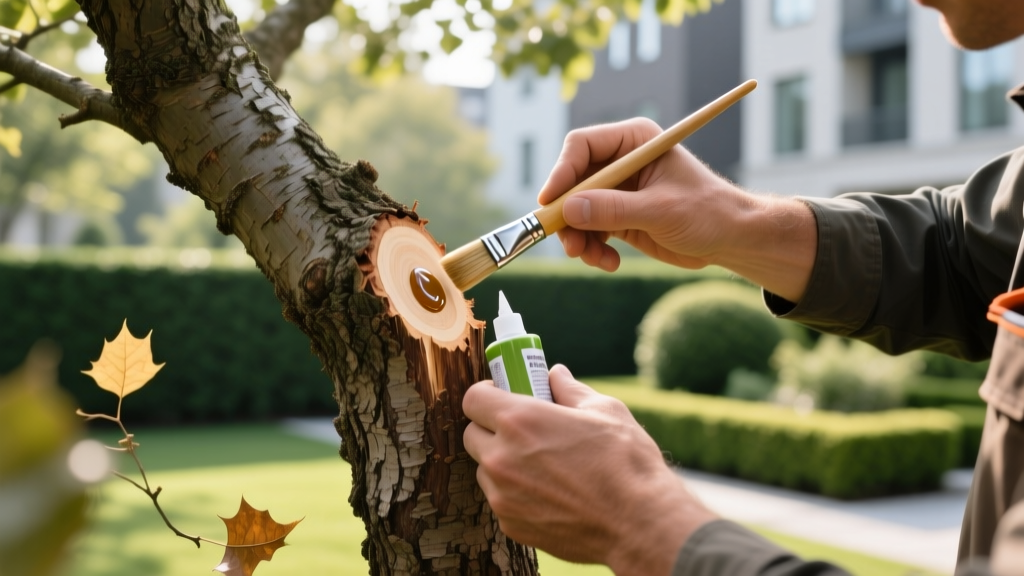
Pruning Seal for Tree Wounds: When to Use and Avoid
The Short Answer: Why Modern Arboriculture Rejects Pruning Seal
For decades, homeowners and landscapers routinely painted pruning cuts with black, tar-like pruning seal to "protect" the tree from disease and insects. Today, the scientific consensus among certified arborists and university forestry extensions is definitive: do not use pruning seal on standard tree wounds.
Trees do not "heal" in the way human skin does; they compartmentalize damage. Applying petroleum-based or asphalt-based wound dressings actively interferes with this biological process, often accelerating decay rather than preventing it. The only major exception to this rule involves specific regional pathogens, such as Oak Wilt, which require immediate intervention.
The Science of CODIT
Developed by Dr. Alex Shigo, the Compartmentalization of Decay in Trees (CODIT) model explains how trees wall off injured tissue. When a branch is removed, the tree forms four chemical and physical "walls" to restrict the spread of decay. The most critical is Wall 4, the barrier zone, which forms new wood to physically cover the wound. Pruning seal physically blocks the cambium layer from rolling over the cut, stunting Wall 4 formation and leaving the tree permanently vulnerable.
The Hidden Dangers of Petroleum-Based Wound Dressings
Commercial pruning seals (often sold in aerosol cans or brush-on tins for $8 to $15) are typically composed of asphalt, mineral spirits, and petroleum resins. While they may look like a protective bandage, they create a micro-environment that favors wood-rotting fungi.
- Moisture Trapping: Sealants trap existing moisture inside the wood. If the cut was made on a humid day or if the wood is already damp, the seal creates an anaerobic (oxygen-free) environment where aggressive decay fungi thrive.
- Micro-Cracking: As the tree grows and the wood expands and contracts with seasonal temperature shifts, the rigid sealant cracks. These micro-fissures allow rainwater and fungal spores to enter, but the sealant prevents evaporation, essentially creating a greenhouse for rot.
- Phytotoxicity: The volatile organic compounds (VOCs) and solvents in aerosol pruning paints can kill the delicate callus tissue (woundwood) at the very edge of the cut, delaying closure by months or even years.
Sealed vs. Unsealed Wounds: A Biological Comparison
| Factor | Unsealed Cut (Natural) | Sealed Cut (Petroleum/Asphalt) |
|---|---|---|
| Callus Tissue (Wall 4) | Forms rapidly, rolling over the wound edge. | Solvents kill edge cells; callus formation is stunted. |
| Moisture Dynamics | Wood dries naturally, inhibiting fungal growth. | Traps moisture; creates anaerobic decay pockets. |
| Long-Term Integrity | Wound eventually closes entirely with bark. | Sealant cracks, falls off, and leaves a permanent cavity. |
| Average Cost | $0.00 | $8.00 - $15.00 per application |
The Critical Exception: Oak Wilt Prevention
While the International Society of Arboriculture (ISA) advises against routine sealing, there is one vital exception: preventing Oak Wilt (Bretziella fagacearum). If you live in regions where Oak Wilt is endemic—such as Texas, the Midwest, and parts of the Northeast—fresh pruning cuts on oak trees act as open invitations to nitidulid sap beetles.
These beetles carry fungal spores from infected trees to fresh wounds. To prevent transmission, all oak pruning cuts must be sealed within 15 minutes of the cut being made. In this specific scenario, the mechanical barrier of the sealant outweighs the long-term decay risks because an unsealed oak tree infected with Oak Wilt will die within weeks to months.
Step-by-Step Oak Wilt Sealing Protocol
- Timing is Everything: Only prune oaks during the safest windows (mid-summer or deep winter). Avoid pruning from February through June when beetle activity peaks.
- Choose the Right Product: You do not need expensive branded pruning paint. According to the Texas Oak Wilt Partnership, standard flat latex paint (mixed 50/50 with water) or inexpensive aerosol pruning seal works perfectly. The goal is an immediate physical barrier, not deep wood penetration.
- Apply Immediately: Keep a can of sealant or a brush and paint cup at the base of the tree. As soon as the saw clears the branch, paint the exposed cambium. You have a strict 15-minute window before beetles can detect the tree's distress volatiles.
- Dispose of Debris Properly: If you are pruning a known infected oak, sealing the cut is not enough. The cut wood itself harbors fungal mats. You must tarp the brush, chip it, or burn it immediately to prevent beetles from breeding in the cut branches.
Grafting Wax vs. Pruning Seal: Know the Difference
Do not confuse pruning seal with grafting wax. When propagating trees via cleft, whip, or bark grafting, the scion wood has no root system to draw moisture. The cut surfaces of the graft union must be sealed to prevent desiccation (drying out) while the vascular tissues fuse.
For grafting, use specialized, pliable products like Trowbridge Grafting Wax or Parafilm M grafting tape. These products are designed to stretch with the tree's growth and degrade slowly under UV light, unlike rigid asphalt pruning paints which will snap and tear the delicate graft union.
Best Practices for Clean Pruning Cuts (No Seal Required)
Since you cannot rely on a chemical bandage to save a bad cut, your pruning technique must be flawless. A clean cut minimizes the surface area of exposed wood and preserves the branch collar, allowing the tree to initiate CODIT immediately.
Warning: Avoid Flush Cuts
Never cut a branch flush against the main trunk. Doing so removes the branch collar—the swollen area at the base of the branch that contains the specialized chemical defenses required for Wall 4 formation. A flush cut creates a massive, columnar wound that the tree will likely never close, leading to internal trunk rot.
Tool Sterilization: The Real Disease Prevention
Instead of sealing the wound, focus on sterilizing your tools before moving to the next tree. The University of Minnesota Extension recommends using 70% isopropyl alcohol or a 10% bleach solution to wipe down bypass pruners and chainsaw bars between trees.
Pro Tip: Avoid bleach if possible. Bleach is highly corrosive to high-carbon steel blades and will pit the metal over time. These microscopic pits become permanent hiding spots for bacterial canker and fire blight pathogens, rendering future sterilization attempts less effective. Isopropyl alcohol evaporates cleanly and preserves your steel.
Frequently Asked Questions
Can I use regular house paint instead of commercial pruning seal?
For standard pruning cuts, you should use neither. Let the tree compartmentalize naturally. For the specific exception of Oak Wilt prevention, standard white or flat latex house paint is highly effective, inexpensive, and acts as a sufficient temporary barrier against sap beetles.
Should I seal a storm-damaged branch tear?
No. Storm tears leave jagged, uneven wood fibers. Your first step should be to use a sharp pruning saw to cleanly remove the torn stub just outside the branch collar. Once a clean cut is established, leave it unsealed to dry and compartmentalize. Applying sealant to a jagged, untrimmed tear will only trap moisture in the splintered wood.
How long does it take for a tree to close a pruning wound?
Callus tissue (woundwood) typically grows at a rate of about 0.25 to 0.5 inches per year from the edges of the cut, depending on the species and tree vigor. A 3-inch diameter cut on a healthy maple may take 4 to 6 years to fully close over, while the same cut on a slow-growing oak may take a decade. The wound remains compartmentalized internally long before the bark fully covers the surface.

