Tree Care
How to Recognize and Manage Hypoxylon Canker in Hardwood Trees
Mike RodriguezPublished
How to Recognize and Manage Hypoxylon Canker in Hardwood Trees
Hardwood trees, particularly majestic oaks, hickories, and sycamores, serve as the vital anchors of many residential and commercial landscapes. They provide immense shade, improve air quality, and significantly boost property values. However, these towering giants are not invincible. One of the most destructive and insidious threats to hardwood health is Hypoxylon canker. This fungal disease can rapidly decline a tree’s health, leading to structural instability and eventual death if left unaddressed. Understanding how to recognize the early warning signs and implement proactive management strategies is essential for any homeowner or land manager.
Hypoxylon canker is not a primary pathogen that attacks perfectly healthy trees. Instead, it is an opportunistic fungus that exploits trees already weakened by environmental stressors. By mastering the fundamentals of tree care fundamentals and maintaining a vigilant eye on your landscape, you can protect your valuable hardwoods from this devastating disease. This comprehensive guide will walk you through the identification, underlying causes, cultural prevention methods, and seasonal management techniques required to keep your trees thriving for generations.
Identifying Hypoxylon Canker: Signs and Symptoms
Early detection is the cornerstone of managing any tree disease, and Hypoxylon canker is no exception. The fungus responsible, scientifically known as Biscogniauxia atropunctata (formerly Hypoxylon atropunctatum), exhibits a very distinct progression of symptoms on the trunk and major branches of infected hardwoods. Recognizing these visual cues can help you intervene before the structural integrity of the tree is fatally compromised.
The Sloughing of Outer Bark
The most recognizable and alarming symptom of Hypoxylon canker is the sloughing, or peeling, of the outer bark. As the fungus colonizes the sapwood beneath the bark, it disrupts the vascular system and kills the cambium layer. This causes the outer bark to dry out, crack, and eventually fall away in large, papery sheets or thick plates. When you see patches of bark missing from the trunk or primary scaffolding branches, it is a major red flag that requires immediate investigation.
Formation of Fungal Mats (Stromata)
Once the outer bark has sloughed off, it reveals the fungal fruiting structures known as stromata. The appearance of these mats changes as the fungus matures:
- Early Stage: The exposed stromata initially appear as smooth, white, or tan crusty patches on the surface of the decaying sapwood.
- Intermediate Stage: As the fungus matures, the mats transition to a grayish-brown or olive-green color, developing a slightly textured or velvety appearance.
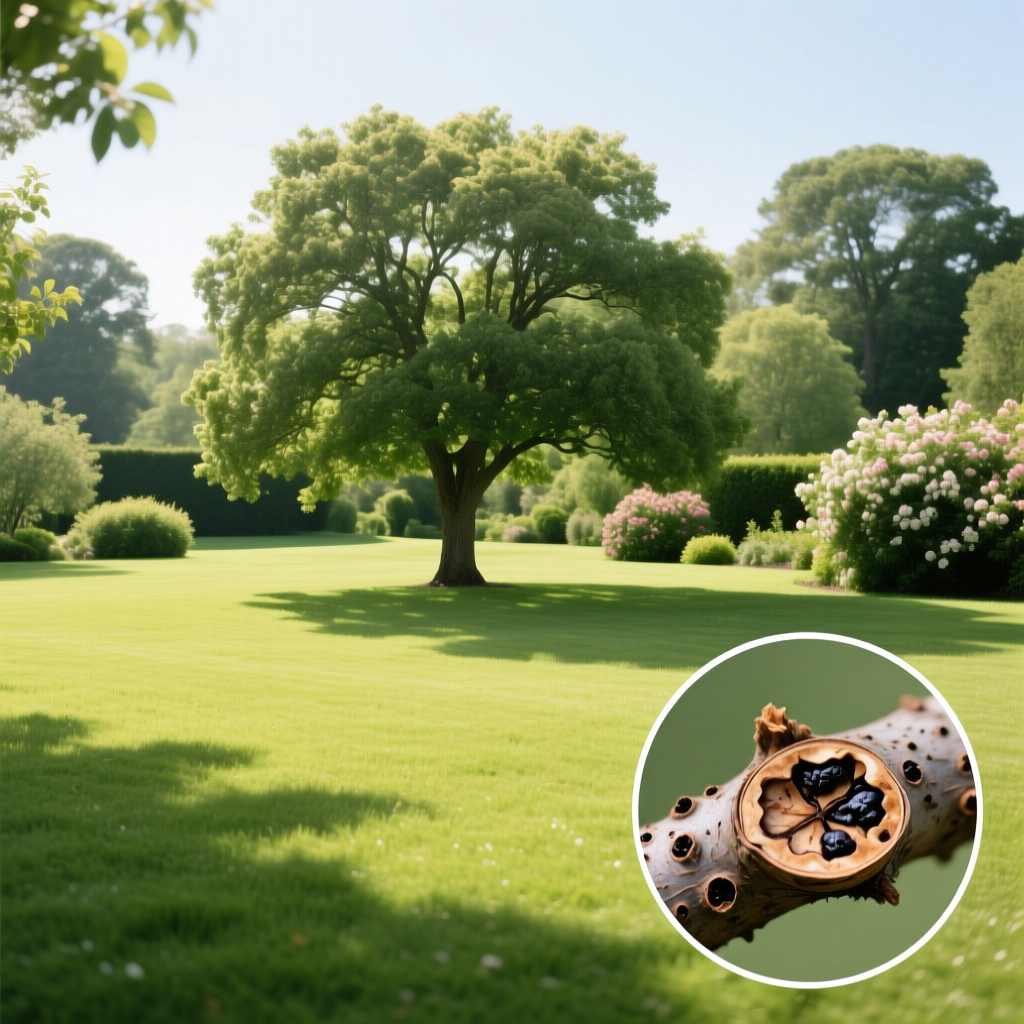
- Late Stage: Eventually, the stromata turn coal-black and become hard and crusty. Tiny, pimple-like bumps called perithecia will cover the surface. These structures contain the spores that will be released into the wind to infect other stressed trees in the vicinity.
Canopy Dieback and Foliage Issues
Above ground, the tree’s canopy will reflect the internal decay. You will notice progressive dieback starting at the outer edges of the crown and moving inward. Leaves may appear undersized, chlorotic (yellowed), or scorched. In severe cases, entire branches will fail to leaf out in the spring, and the tree may exhibit premature fall coloration and early leaf drop. If you notice unexplained canopy thinning alongside patches of missing bark, Hypoxylon canker is the likely culprit.
Understanding the Causes: Why Trees Become Susceptible
To effectively manage Hypoxylon canker, it is crucial to understand that the fungus itself is merely the proximate cause of the tree’s decline; the ultimate cause is almost always environmental stress. Biscogniauxia atropunctata is a common saprophyte, meaning it naturally lives on the outer bark of healthy hardwoods without causing harm. It only becomes a destructive, parasitic pathogen when the tree’s natural defense mechanisms are compromised.
Drought and Moisture Stress
Prolonged periods of drought are the primary trigger for Hypoxylon canker outbreaks. Hardwood trees require massive amounts of water to maintain turgor pressure and produce the chemical defenses needed to wall off invading pathogens. When soil moisture is depleted, the tree closes its stomata to conserve water, halting photosynthesis and depleting its energy reserves. A drought-stressed oak simply lacks the resources to fight off the fungus once it breaches the inner bark.
Soil Compaction and Root Damage
The root system of a mature hardwood extends far beyond its drip line. When heavy machinery, foot traffic, or improper landscaping practices compact the soil, the microscopic root hairs responsible for absorbing water and nutrients are suffocated and destroyed. Similarly, construction activities that involve trenching for utilities or altering the soil grade can sever major structural and feeder roots. If your property has recently undergone construction, or if the soil around your trees is heavily compacted, implementing practices like core aeration and vertical mulching can help restore soil porosity and root health.
Poor Drainage and Grade Changes
While drought is a major stressor, chronic waterlogging is equally destructive. Hardwoods like oaks and hickories despise “wet feet.” If the soil drainage is poor, or if the grade around the tree has been altered to trap water against the trunk, the roots will suffocate and succumb to root rot. A compromised root system cannot support the canopy, leading to the exact type of systemic stress that invites Hypoxylon canker.
Cultural Care Requirements to Prevent Infection
Because there are no effective chemical cures or fungicides that can eradicate Hypoxylon canker once it has colonized the sapwood, prevention through exceptional cultural care is your only reliable line of defense. The goal is to maintain the tree in a state of vigorous health so its natural compartmentalization processes can keep the fungus at bay.
Strategic Deep Watering
Superficial lawn watering is entirely insufficient for mature hardwood trees. Grass roots absorb water in the top few inches of soil, while tree roots require moisture deep in the soil profile. During dry spells, you must provide deep, slow watering that penetrates at least 12 to 18 inches into the ground. Utilizing soaker hoses or drip irrigation lines placed around the drip line of the tree is the most efficient method. Reviewing deep watering schedules can help you balance the needs of your turf with the critical moisture requirements of your canopy trees.
Proper Mulching Techniques
Mulch is a tree’s best friend when applied correctly. A proper mulch ring regulates soil temperature, retains vital moisture, and prevents damaging weed-whacker injuries to the trunk. However, “volcano mulching”—piling mulch high against the trunk—is a fatal mistake that promotes trunk rot and invites pests. Follow the 3-3-3 rule: apply a layer of organic mulch 3 inches deep, extending 3 feet out from the trunk, while keeping it 3 inches away from the actual bark. For a detailed tutorial, refer to our guide on mulching basics.
Cautious Fertilization
While it might seem logical to fertilize a struggling tree, applying high-nitrogen fertilizers to a drought-stressed or diseased hardwood can actually accelerate its decline. Nitrogen forces the tree to push out new, tender foliage, which drains its depleted energy reserves and requires even more water. Only fertilize based on a comprehensive soil test, and favor slow-release, organic amendments that improve soil biology rather than forcing rapid, unsustainable growth.
Pruning and Managing Infected Trees
If you have identified Hypoxylon canker on your property, immediate and decisive action is required to manage the spread and ensure the safety of your landscape. The management approach depends entirely on the severity and location of the infection.
Pruning Localized Infections
If the canker is strictly confined to a single, smaller branch or a minor scaffold limb, and less than 15% to 20% of the overall canopy is affected, pruning may save the tree. You must remove the infected branch entirely, making the cut well outside the infected area, down to healthy, disease-free wood. It is absolutely critical to practice strict sanitation. Pruning tools must be sterilized between every single cut using a solution of 10% household bleach or 70% isopropyl alcohol to prevent mechanically transmitting the spores to healthy tissue. For step-by-step instructions on making the correct cuts, consult our proper pruning techniques guide. Remember, never apply wound dressings or pruning paints to the cut; these trap moisture and actually promote fungal growth.
Managing Trunk Infections and Hazard Trees
When Hypoxylon canker appears on the main trunk or at the base of major structural scaffold branches, the tree’s structural integrity is severely compromised. The fungus causes a white rot that degrades the lignin in the wood, making the tree highly susceptible to catastrophic failure, even in moderate winds. If the trunk is heavily colonized, or if the canopy dieback exceeds 30%, the tree cannot be saved. In these cases, the only safe and responsible management strategy is complete removal by a certified arborist. Leaving a structurally compromised hardwood in place poses a severe liability risk to your home, vehicles, and family.
Disposal of Infected Wood
The wood from a tree removed due to Hypoxylon canker is teeming with fungal spores. It should not be chipped and used as mulch around other susceptible hardwoods. The safest disposal method is to have the wood hauled away to a landfill or burned, depending on local municipal regulations. If you must store the wood for firewood, keep it far away from healthy trees and cover it with a tarp to prevent spore dispersal.
Seasonal Tree Care Tips for Hardwoods
Maintaining tree health is a year-round endeavor. Adapting your landscape management practices to the changing seasons will help your hardwoods build the resilience needed to fend off opportunistic pathogens like Hypoxylon canker.
Spring: Monitoring and Assessment
As the canopy leafs out in spring, conduct a thorough visual inspection of your hardwoods. Look for areas of the trunk where the bark has failed to expand with the spring growth, or sections that appear sunken and discolored. Monitor the canopy for delayed bud break or abnormally small, pale leaves. Spring is also the ideal time to apply a fresh layer of mulch and address any drainage issues caused by winter rains.
Summer: Drought Mitigation
Summer is the most critical season for preventing the environmental stress that triggers Hypoxylon canker. Monitor local rainfall and supplement with deep watering during dry spells. Pay close attention to trees situated near paved surfaces, as asphalt and concrete radiate heat and accelerate soil moisture evaporation. Avoid any root-disturbing construction or trenching projects during the peak heat of summer.
Fall: Soil Amendment and Protection
Autumn is an excellent time to address soil health. As trees prepare for dormancy, they are actively storing energy in their root systems. Applying a layer of compost or specialized organic soil conditioners in the fall allows nutrients to slowly integrate into the soil profile over the winter. Fall is also a good time to install physical barriers around vulnerable trees if you are planning any landscaping projects that might lead to soil compaction.
Winter: Dormant Pruning and Structural Training
Winter is the optimal time for major pruning. With the leaves gone, the branch architecture is fully visible, making it easier to identify structural defects, crossing branches, and deadwood. Furthermore, pruning during the dormant season minimizes the risk of attracting wood-boring insects or spreading active fungal spores, as most pathogens are inactive in freezing temperatures. Use this time to hire a professional arborist to perform structural pruning and crown cleaning.
Frequently Asked Questions About Hypoxylon Canker
Can Hypoxylon canker spread to other trees?
Yes, Hypoxylon canker can spread to other trees, but it is important to understand how. The fungus releases millions of microscopic spores from the black, crusty stromata on infected trees. These spores are carried by the wind to neighboring trees. However, simply landing on a healthy tree will not cause an infection. The spores can only colonize trees that are already suffering from severe environmental stress, such as drought, root damage, or soil compaction. Therefore, the best way to prevent the “spread” of the disease is to ensure all trees in your landscape are well-watered and stress-free.
Is there a chemical treatment or fungicide for Hypoxylon canker?
Currently, there are no chemical treatments, systemic fungicides, or trunk injections that can cure or eradicate Hypoxylon canker once it has invaded the sapwood. The fungus resides deep within the vascular tissue and causes a physical decay of the wood that chemicals cannot reverse. Any product claiming to “cure” Hypoxylon canker is ineffective. Management relies entirely on preventative cultural care to reduce tree stress, surgical pruning of minor infections, and the prompt removal of severely infected, hazardous trees.
How long does it take for a tree to die from Hypoxylon canker?
The timeline for a tree’s decline varies based on the severity of the initial stress and the overall vigor of the tree. In cases of extreme, prolonged drought combined with severe root damage, a mature oak can succumb to Hypoxylon canker and die within one to two growing seasons. In other cases, where the stress is more moderate, the fungus may progress slowly, causing gradual canopy dieback and localized trunk decay over a period of three to five years. Regardless of the timeline, once the main trunk is heavily colonized, the tree’s eventual death and structural failure are inevitable.
Should I remove a tree with Hypoxylon canker immediately?
Not necessarily, but it requires a professional assessment. If the canker is limited to a single, removable branch and the overall tree is vigorous, pruning and intensive cultural care may save it. However, if the canker is present on the main trunk, especially near the base or on major structural limbs, the wood is actively decaying. A certified arborist should perform a risk assessment to determine if the tree poses a hazard to targets like your home, driveway, or pedestrian areas. If it is a hazard tree, immediate removal is strongly advised to prevent property damage or personal injury.
Can proper lawn care help prevent tree diseases?
Absolutely. The health of your lawn and the health of your trees are deeply interconnected. Practices that improve soil structure, such as core aeration, alleviate soil compaction, allowing vital oxygen and water to reach the deep roots of your hardwoods. Furthermore, adjusting your lawn care routines to accommodate tree needs—such as avoiding heavy nitrogen fertilizers that promote shallow grass roots at the expense of tree roots, and ensuring your irrigation system provides deep, infrequent soaking rather than shallow daily sprays—will create a landscape ecosystem where both your turf and your trees can resist diseases and thrive.