
Tree Care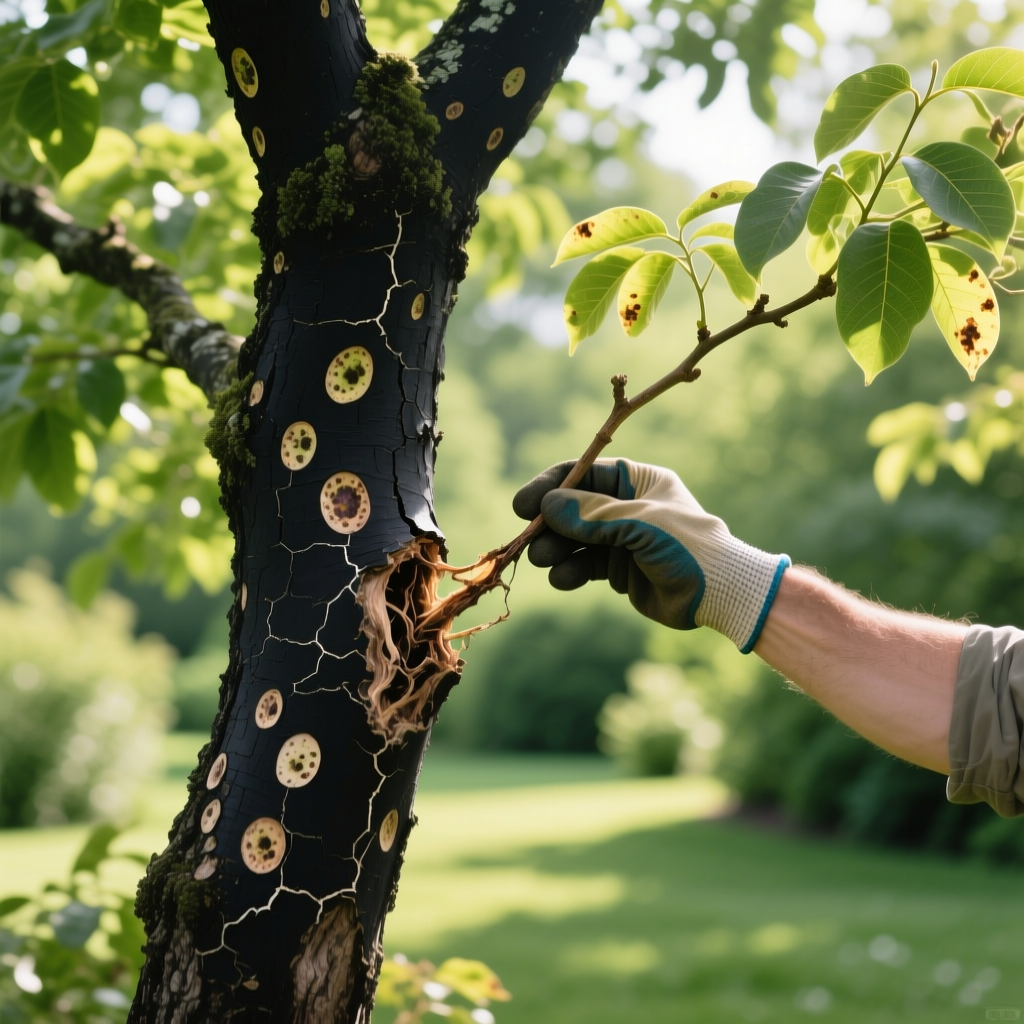
Recognize & Manage Thousand Cankers Disease in Black Walnut Trees
James MillerPublished
Recognize & Manage Thousand Cankers Disease in Black Walnut Trees
Black walnut trees (Juglans nigra) are among the most majestic and valuable native trees in North America. Prized for their rich, dark timber and nutritious nuts, these stately giants can live for decades when properly cared for. However, a devastating fungal disease known as thousand cankers disease (TCD) poses one of the most serious threats to black walnut populations across the continent. If left unchecked, this disease can kill a mature tree within just a few years.
Thousand cankers disease is caused by a combination of two organisms working together: the walnut twig beetle (Pityophthorus juglandis) and a fungus called Geosmithia morbida. The tiny beetles carry fungal spores on their bodies and introduce them into the tree's vascular system as they tunnel beneath the bark to feed and reproduce. Each tunneling site develops into a small, dark canker, and over time, thousands of these cankers coalesce, girdling branches and eventually the trunk, cutting off the flow of water and nutrients.
For homeowners, landowners, and tree care professionals, understanding how to recognize the early warning signs of thousand cankers disease and implementing effective management strategies is essential. In this comprehensive guide, we will walk you through everything you need to know about protecting your black walnut trees — from identification and prevention to treatment options and long-term care practices. For broader guidance on keeping your entire landscape healthy, explore our lawn care guides and tree care resources.
Identifying the Symptoms of Thousand Cankers Disease
Early detection is the single most important factor in managing thousand cankers disease. Because the causal agents — the walnut twig beetle and the Geosmithia morbida fungus — work beneath the bark, visible symptoms often do not appear until the disease is already well-established. Learning to spot the subtle early signs can give you a critical head start.
Crown and Foliage Symptoms
The first visible symptoms typically appear in the upper crown of the tree. You may notice:
- Yellowing or flagging leaves on individual branches while the rest of the tree still appears healthy
- Wilting foliage that progresses to browning and leaf drop, often starting at the tips of branches
- Thinning canopy as more branches decline and die back over successive seasons
- Epicormic sprouting — the sudden growth of small, bushy shoots along the trunk or lower branches as the tree attempts to compensate for lost canopy
These symptoms can be easily confused with drought stress, root damage, or other diseases, which is why it is important to look deeper. If you notice unexplained branch dieback in a black walnut, especially during the growing season, investigate further before dismissing it as a seasonal anomaly.
Bark and Canker Symptoms
The most definitive signs of thousand cankers disease are found beneath the bark. To inspect for cankers:
- Choose a branch that shows early signs of decline.
- Carefully peel back the outer bark using a sharp knife or chisel.
- Look for small, dark, sunken areas in the inner bark and phloem tissue. These are the individual cankers.
- Check for tiny beetle entry holes — roughly the diameter of a pencil lead — often surrounded by small piles of sawdust-like frass.
- Note the presence of dark staining around beetle galleries, which indicates fungal colonization.
In advanced infections, thousands of these small cankers merge into large, girdling lesions that effectively strangle the branch or trunk. The wood beneath the bark may appear mottled with dark brown and black streaks.
Distinguishing TCD from Other Walnut Problems
Several other issues can cause similar symptoms in black walnut trees, including common tree diseases such as anthracnose, fusarium canker, and bacterial blight. Walnut husk fly damage, frost cracks, and mechanical injuries can also mimic some TCD signs. The key differentiator is the presence of numerous small, discrete cankers combined with walnut twig beetle galleries beneath the bark. If you are uncertain, contact your local university extension office or a certified arborist for a professional diagnosis.
Understanding the Disease Cycle and Spread
To effectively manage thousand cankers disease, it helps to understand how the walnut twig beetle and Geosmithia morbida fungus interact and spread from tree to tree.
The Walnut Twig Beetle
The walnut twig beetle is a very small bark beetle, measuring only about 1.5 to 2 millimeters in length — roughly the size of a grain of rice. Despite its tiny stature, it is the primary vector for the TCD fungus. Adult beetles are most active during two main flight periods:
- Spring emergence (typically late April through June, depending on your climate zone)
- Summer flight (July through August)
During these periods, adult beetles fly to new host trees, bore through the bark, and create galleries in the phloem where they mate and lay eggs. As they tunnel, fungal spores carried on their bodies are deposited into the tree's living tissue. The fungus then colonizes the surrounding area, creating a canker that disrupts the flow of nutrients.
Fungal Colonization and Canker Formation
Geosmithia morbida is an aggressive pathogen that thrives in the warm, moist environment of the walnut tree's inner bark. Once introduced by the beetle, the fungus spreads radially through the phloem and cambium, killing living cells and forming a discrete canker. Each canker may be only a few centimeters across, but a heavily infested tree can harbor thousands of them — hence the name "thousand cankers disease."
As cankers multiply and merge, they girdle branches and eventually the main trunk. This girdling cuts off the phloem, preventing sugars produced in the leaves from reaching the roots. Over time, the root system starves, and the entire tree declines. Most infected trees die within two to four years after the onset of visible crown symptoms.
How the Disease Spreads
Thousand cankers disease spreads primarily through:
- Natural beetle flight — walnut twig beetles can fly short distances (up to several hundred yards) to find new host trees
- Movement of infested wood — transporting firewood, logs, nursery stock, or mulch made from infected walnut trees is the most significant pathway for long-distance spread
- Storms and wind — strong winds can carry beetles to new locations beyond their normal flight range
This is why quarantines on walnut wood movement are critical in many states. Never transport walnut firewood or lumber from a known TCD area, and always source nursery stock from reputable growers who follow best management practices. For more on maintaining a healthy landscape that resists pests and diseases, see our organic lawn care guide.
Prevention and Management Strategies
While there is currently no cure that can reliably save a tree once it is heavily infected with thousand cankers disease, a combination of preventive measures and early intervention strategies can significantly slow the spread and protect vulnerable trees.
Preventive Measures
Prevention is always the most effective approach. Here are the key steps you can take to protect your black walnut trees:
- Do not move walnut wood. Never transport walnut firewood, logs, burls, or mulch from areas where TCD is known to occur. This is the single most impactful action you can take to prevent long-distance spread.
- Inspect trees regularly. Walk your property at least once per month during the growing season and examine your walnut trees for signs of crown thinning, branch dieback, and bark abnormalities.
- Keep trees healthy. Stressed trees are more susceptible to beetle attack. Ensure your black walnuts receive adequate water during drought periods, apply mulch around the root zone to conserve moisture and regulate soil temperature, and avoid wounding the trunk or roots with mowing equipment. Proper tree watering practices are essential for maintaining vigor.
- Remove and properly dispose of infected material. If you must remove a declining tree, have the wood chipped to pieces smaller than one inch or burned on-site. Do not store walnut logs or firewood for later use.
- Consider resistant species. If you are planting new trees in an area where TCD is present, consider alternative species. While no black walnut cultivar is fully resistant, some related species such as butternut (Juglans cinerea) show varying levels of tolerance. Arizona walnut (Juglans major) is considered moderately resistant.
Chemical Management Options
Chemical treatments for thousand cankers disease are limited and are most effective when used as part of an integrated management plan on high-value trees that are not yet heavily infected.
- Systemic fungicides. Trunk injections of emamectin benzoate have shown some promise in reducing canker formation and slowing disease progression. These treatments must be applied by a licensed professional and repeated annually.
- Insecticides targeting the walnut twig beetle. Systemic insecticides such as imidacloprid or dinotefuran can be applied as trunk injections or soil drenches to reduce beetle populations. Contact insecticides applied as trunk sprays during beetle flight periods can also provide a protective barrier. Always follow label instructions and consult with a certified arborist before applying any chemical treatment.
- Pheromone-baited traps. Walnut twig beetle traps are available for monitoring purposes. While they are not effective for population control, they can help you determine when beetles are active in your area so you can time protective insecticide applications more effectively.
It is important to set realistic expectations. Chemical treatments can slow disease progression and protect high-value landscape trees for a period of time, but they are not a permanent solution. The cost of annual treatment may not be justified for trees of lower economic or sentimental value.
Tree Removal and Disposal
When a black walnut tree has advanced thousand cankers disease with extensive crown dieback (more than 50 percent of the canopy affected), removal is often the most practical option. Proper disposal is critical to prevent the disease from spreading to neighboring trees:
- Hire a professional tree service experienced with TCD protocols.
- Chip all wood — including branches, trunk sections, and roots above ground — into pieces no larger than one inch.
- Burn infested wood if local regulations permit and chipping is not feasible.
- Do not leave stumps standing. Grind stumps below grade or treat them with an appropriate herbicide to prevent sprouting, as sprouts can harbor beetles and fungus.
- Clean all tools and equipment after working with infected trees to avoid transferring fungal spores or beetles to healthy trees.
For guidance on what to plant after removing a diseased tree, check out our guide to the best shade trees for your landscape.
Seasonal Care Tips for Black Walnut Trees
Consistent, seasonally appropriate care helps keep your black walnut trees vigorous and better able to withstand pest pressure, including thousand cankers disease. Here is a season-by-season care calendar.
Spring
- Inspect the crown and trunk for new symptoms of dieback or canker formation as leaves emerge.
- Apply fresh mulch around the base of the tree, maintaining a layer two to four inches deep and keeping it several inches away from the trunk to prevent rot.
- If you plan to use preventive insecticide treatments, apply them before or during the spring beetle flight period for maximum effectiveness.
- Prune out dead or declining branches using clean, sharp tools. Make clean cuts just outside the branch collar. Disinfect pruning tools between cuts when working on trees suspected of having TCD.
- For tips on seasonal yard cleanup that supports tree and lawn health, visit our spring lawn care guide.
Summer
- Monitor trees closely during the summer beetle flight period (July through August).
- Water deeply during dry spells. Black walnuts benefit from slow, deep watering that moistens the soil to a depth of 12 to 18 inches. Use a soaker hose or drip irrigation for best results.
- Avoid pruning during peak beetle activity if possible, as fresh wounds can attract beetles and provide entry points for the fungus.
- Watch for epicormic sprouts on the trunk and lower branches, which can indicate internal stress or early-stage TCD.
Fall
- Conduct a thorough end-of-season inspection. Note any branches that failed to leaf out fully or showed premature color change.
- Collect and remove fallen leaves and debris from around the base of the tree. While the TCD fungus is not primarily spread through leaf litter, good sanitation reduces habitat for other pests and diseases.
- Apply a balanced, slow-release fertilizer if a soil test indicates nutrient deficiencies. Avoid excessive nitrogen, which can promote succulent growth that is more attractive to beetles.
- Prepare trees for winter by ensuring adequate soil moisture before the ground freezes.
Winter
- Winter is an excellent time for structural pruning, as the absence of leaves makes it easier to see branch architecture and the tree is dormant.
- Inspect the bark for signs of beetle galleries and cankers that may not have been visible during the growing season.
- Plan your management strategy for the coming year based on your observations. If you detected TCD symptoms, schedule professional consultations and treatment applications for early spring.
- Protect young trees from rodent damage and winter sunscald using tree guards or wraps.
Pruning and Long-Term Tree Health Practices
Good pruning practices and a commitment to long-term tree health are foundational to managing any tree disease, including thousand cankers disease. A well-maintained tree has more resources to fight off infections and recover from minor damage.
Pruning Best Practices for Black Walnut
- Prune during dormancy. Late fall through late winter is the safest time to prune black walnut trees, as beetle activity is minimal.
- Make proper cuts. Use the three-cut method for large branches to avoid tearing the bark. Always cut just outside the branch collar to promote proper wound closure.
- Disinfect tools. When working on a tree that may be infected, wipe pruning tools with 70 percent isopropyl alcohol or a 10 percent bleach solution between every cut to prevent spreading the fungus.
- Avoid over-pruning. Never remove more than 25 percent of the live canopy in a single season. Excessive pruning stresses the tree and can stimulate excessive epicormic growth.
- Remove dead wood promptly. Dead and dying branches are prime breeding sites for walnut twig beetles. Remove them as soon as they are identified, and dispose of them properly.
Soil Health and Root Zone Management
The health of your black walnut tree starts below ground. A robust root system supports a vigorous canopy that is better equipped to resist pests and diseases.
- Avoid soil compaction. Keep heavy equipment, vehicles, and frequent foot traffic away from the root zone, which extends well beyond the drip line of the tree.
- Maintain proper drainage. Black walnuts prefer well-drained, deep, fertile soils. If your site has poor drainage, consider installing French drains or grading to redirect excess water.
- Test your soil. A soil test every two to three years will help you identify nutrient deficiencies or pH imbalances that may be limiting tree growth. Black walnuts prefer a soil pH between 6.0 and 7.0.
- Mulch properly. A wide ring of organic mulch around the tree conserves moisture, moderates soil temperature, and reduces competition from grass and weeds. For more on mulching techniques, see our mulching guide.
Integrating Tree Care with Overall Landscape Health
Your black walnut trees do not exist in isolation — they are part of a broader landscape ecosystem. Maintaining a healthy lawn, managing irrigation effectively, and controlling other pests and diseases all contribute to the overall resilience of your trees. A well-maintained lawn reduces the need for herbicide applications near tree roots, and proper lawn fertilization practices prevent nutrient runoff that can affect soil chemistry in the root zone.
Additionally, black walnut trees produce juglone, a natural compound that can inhibit the growth of many nearby plants. Understanding what plants can thrive near walnut trees helps you design a landscape that supports both your trees and surrounding vegetation.
Frequently Asked Questions About Thousand Cankers Disease
Can a black walnut tree recover from thousand cankers disease once infected?
Unfortunately, once a black walnut tree is heavily infected with thousand cankers disease, recovery is extremely unlikely. The disease is progressive and ultimately fatal in most cases. Early detection combined with aggressive chemical treatment may slow the decline and extend the life of a high-value tree for several years, but it will not eliminate the disease entirely. Trees with more than 50 percent crown dieback are generally beyond saving and should be removed to protect nearby healthy walnuts.
Are all walnut species susceptible to thousand cankers disease?
Black walnut (Juglans nigra) is the most susceptible species and suffers the highest mortality rates. English walnut (Juglans regia), commonly grown for nut production, is also susceptible but may show symptoms more slowly. Arizona walnut (Juglans major) and California walnut (Juglans californica) show moderate resistance, while butternut (Juglans cinerea) and heartnut (Juglans ailantifolia var. cordiformis) exhibit varying levels of tolerance. The walnut twig beetle can colonize all Juglans species, but the severity of the fungal infection varies significantly.
How can I tell the difference between thousand cankers disease and drought stress?
Both TCD and drought stress can cause wilting, leaf yellowing, and branch dieback, which makes visual diagnosis challenging. The key differences lie in the pattern and underlying evidence. Drought stress typically affects the entire tree relatively uniformly, with symptoms appearing during or shortly after a dry period, and trees often recover with adequate watering. TCD symptoms usually begin in scattered branches, creating a patchy pattern of decline that does not improve with irrigation. The definitive test is to peel back the bark on affected branches and look for the characteristic small, dark cankers and beetle galleries that are hallmarks of TCD.
Should I plant black walnut trees if TCD is present in my region?
Planting black walnut trees in areas where thousand cankers disease is active carries significant risk. If you choose to plant them, select a site with optimal growing conditions — deep, well-drained soil with full sun — to give the tree the best chance of maintaining vigor. Commit to a long-term monitoring and preventive treatment plan, and be prepared for the possibility that the tree may eventually succumb to the disease. Consider consulting with a certified arborist or your local extension office to understand the current TCD status in your area and evaluate whether alternative species might be a wiser choice for your landscape.
What should I do if I suspect my tree has thousand cankers disease?
If you suspect thousand cankers disease, take the following steps immediately:
- Do not move any wood from the tree — including branches, logs, or chips — to prevent potential spread.
- Document your observations. Take clear photographs of the symptoms, including close-ups of the crown, any bark abnormalities, and the overall tree.
- Contact your local university extension office or state department of agriculture. Many states have diagnostic labs that can confirm the presence of Geosmithia morbida and the walnut twig beetle.
- Consult a certified arborist who has experience with TCD to discuss management options, including whether chemical treatment is warranted or if removal is the best course of action.
- Monitor nearby walnut trees for early symptoms and begin a preventive care program for healthy trees in the vicinity.
By staying vigilant and acting quickly, you can help slow the spread of thousand cankers disease and protect the black walnut trees that are such a valuable part of our natural heritage. For more expert advice on tree care, lawn maintenance, and creating a thriving outdoor space, explore the full library of guides at Lawns Guide.

