
Tree Care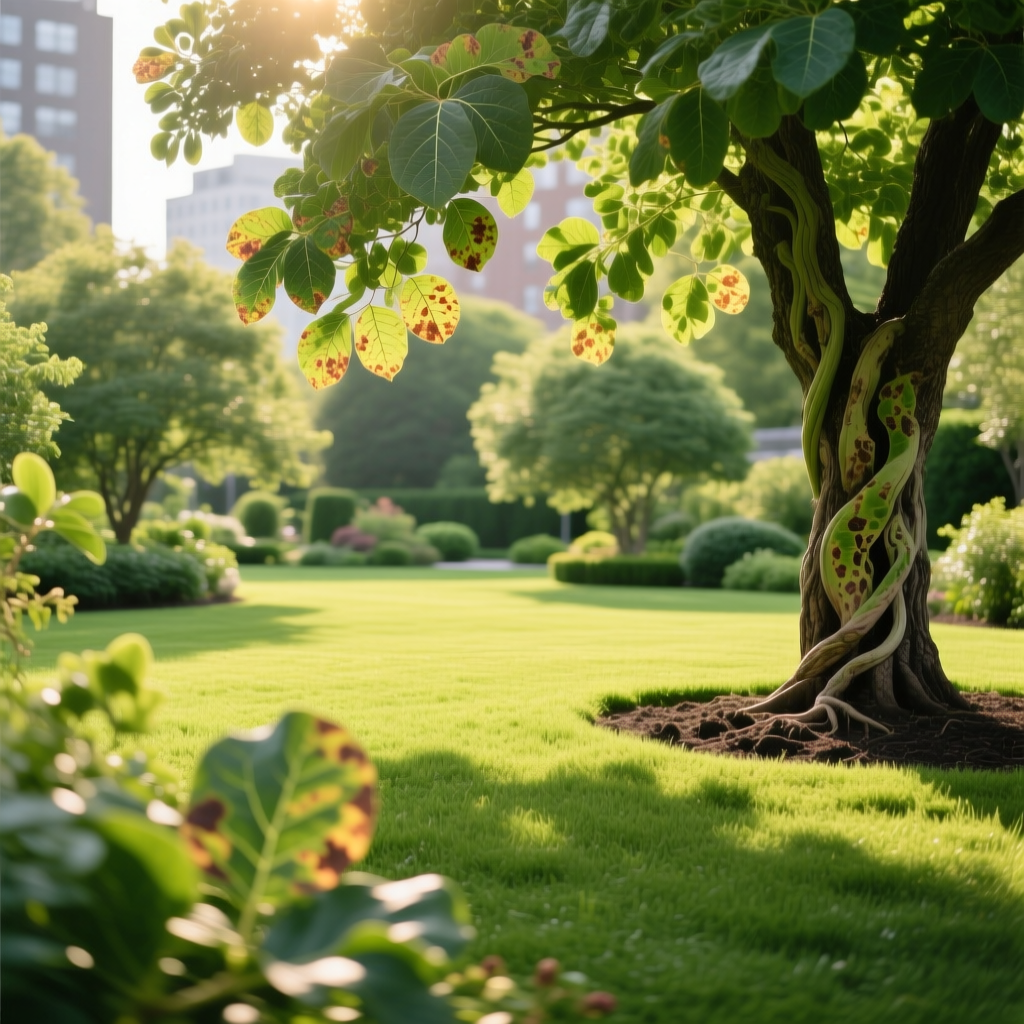
How to Recognize & Prevent Herbicide Damage in Landscape Trees
Robert HayesPublished
How to Recognize & Prevent Herbicide Damage in Landscape Trees
Landscape trees represent a significant investment in your property's beauty, shade, and long-term value. Yet one of the most insidious threats to their health comes not from insects or storms but from chemicals designed to keep your lawn pristine. Herbicide damage in landscape trees is a widespread problem that often goes misdiagnosed, leading homeowners down the wrong path of treatment while the real culprit continues to wreak havoc beneath the surface.
Whether you're applying weed killers to your lawn yourself or hiring a professional service, understanding how herbicides interact with trees is essential. Many common herbicides used in lawn care routines can cause severe damage to nearby trees through root uptake, drift, or even volatilization. The symptoms can be subtle at first — slightly curled leaves, unusual yellowing, or stunted new growth — but without intervention, the damage can escalate to branch dieback, chronic decline, and eventually tree death.
This comprehensive guide will walk you through everything you need to know about recognizing herbicide injury in your landscape trees, understanding the mechanisms behind the damage, and implementing proven prevention strategies that protect both your lawn and your trees. If you've ever noticed your trees looking sickly after a round of weed control, this article will help you connect the dots and take corrective action.
Recognizing the Signs of Herbicide Damage in Trees
One of the greatest challenges in diagnosing herbicide damage is that the symptoms often mimic other common tree problems such as drought stress, nutrient deficiencies, fungal diseases, or insect infestations. However, there are distinctive patterns and clues that can help you differentiate herbicide injury from other issues affecting your landscape trees.
Foliar Symptoms to Watch For
The leaves of an affected tree often tell the first and most visible story. Depending on the type of herbicide involved, you may notice one or more of the following symptoms:
- Leaf cupping or curling: Leaves may twist, curl, or cup in unusual ways. This is particularly common with growth-regulator herbicides like 2,4-D and dicamba, which disrupt normal cell division and elongation in broadleaf plants.
- Veinal chlorosis: Yellowing that follows the leaf veins while the tissue between veins remains green is a classic sign of certain herbicide injuries, especially from soil-active products.
- Epinasty: This refers to a downward bending or drooping of leaf petioles and stems, giving the tree a wilted appearance even when soil moisture is adequate.
- Strap-like or elongated leaves: New growth may emerge unusually narrow, elongated, or deformed. This symptom is strongly associated with auxin-type herbicides that disrupt hormonal balance.
- Marginal necrosis: Browning or death of leaf tissue starting at the edges and progressing inward can indicate root uptake of soil-residual herbicides.
- Stunted or tufted new growth: Emerging shoots may appear compressed, bunched, or fail to elongate properly, creating a "tufted" or "rosette" appearance at branch tips.
Timing & Pattern Clues
Beyond individual leaf symptoms, the timing and spatial pattern of damage across your landscape can provide critical diagnostic information. Herbicide damage typically appears within days to weeks after application, depending on the product and the route of exposure. Trees closest to the treated area usually show the most severe symptoms, while those farther away may show milder effects or none at all.
If multiple unrelated tree species in the same area develop similar symptoms simultaneously, herbicide exposure becomes a prime suspect. In contrast, disease and insect problems tend to target specific species rather than affecting everything in the vicinity. Pay attention to whether symptoms appear on the side of the tree facing a recently treated lawn, as this pattern strongly suggests spray drift rather than root uptake.
For more information on maintaining overall tree health and recognizing stress signals early, explore our tree care resources to build a strong foundation of knowledge.
Distinguishing Herbicide Damage from Other Problems
Before concluding that herbicides are to blame, it's important to rule out other potential causes. Drought stress typically causes uniform wilting and browning that begins at the top of the tree and on south- or west-facing sides. Nutrient deficiencies tend to produce more uniform, symmetrical patterns of discoloration. Fungal diseases often show distinct fruiting bodies, spots with defined margins, or progressive spread patterns that differ from the sudden, widespread onset typical of herbicide injury.
When in doubt, consider the recent history of chemical applications on your property and neighboring properties. Keep records of all herbicide treatments, including dates, products used, and weather conditions at the time of application. This documentation can prove invaluable when trying to diagnose mysterious tree decline.
Common Herbicides That Damage Landscape Trees
Not all herbicides pose the same level of risk to your trees. Understanding which products carry the greatest danger — and how they move through the environment — is essential for making informed decisions about your weed control strategy.
Growth Regulator Herbicides (Auxin Mimics)
Products containing 2,4-D, dicamba, MCPP, and triclopyr are among the most widely used broadleaf weed killers in residential lawn care. These chemicals mimic the plant hormone auxin, causing uncontrolled, disorganized growth that ultimately kills susceptible broadleaf plants. Unfortunately, landscape trees are broadleaf plants too, and they are highly sensitive to even trace amounts of these chemicals.
Dicamba is particularly problematic because it has significant soil activity and can be absorbed by tree roots long after application. It can also volatilize — transforming from a liquid into a gas — under warm conditions, drifting well beyond the target area and damaging trees hundreds of feet away. Many homeowners are surprised to learn that their tree damage occurred not from direct contact with spray but from invisible vapors rising from a treated lawn on a warm afternoon.
Non-Selective Herbicides (Glyphosate & Glufosinate)
Glyphosate, the active ingredient in many popular weed killers, is non-selective, meaning it will damage or kill virtually any plant it contacts. While glyphosate has relatively low soil activity and does not typically move far through the soil profile, it can cause serious damage when sprayed directly on tree trunks, exposed roots, or the foliage of low-hanging branches.
Young trees and those with thin bark are especially vulnerable to glyphosate damage. Repeated exposure of the trunk base to glyphosate can cause bark cracking, girdling, and eventual tree death. Even small amounts of spray drift landing on tree foliage can cause chlorosis, stunted growth, and branch dieback over time. If you're dealing with stubborn weeds near trees, consider reading our guide on natural weed control methods for safer alternatives.
Soil-Residual Herbicides
Products containing imazapyr, prometon, or sulfometuron are sometimes used for long-term vegetation control in areas like driveways, fence lines, and paths. These herbicides persist in the soil for months or even years and can be absorbed by tree roots that extend far beyond the visible canopy. Because tree root systems typically extend two to three times the width of the canopy, applications made well outside the dripline can still result in root uptake and severe tree damage.
The damage from soil-residual herbicides is often slow to appear and may not become obvious for one to three years after application. By the time symptoms are visible, the tree may have sustained irreversible damage to its root system and vascular tissues. This delayed onset makes these products particularly dangerous around valuable landscape trees.
How Herbicides Reach & Damage Trees
Understanding the pathways by which herbicides reach trees is fundamental to preventing damage. Herbicides can affect trees through several distinct mechanisms, and in many cases, multiple pathways may be at work simultaneously.
Root Uptake from Soil Applications
When herbicides are applied to the soil surface — whether as granular products, liquid sprays, or through irrigation water — they can be absorbed by tree roots. This is the most common and often the most damaging route of exposure. Many homeowners don't realize that a tree's root system extends far beyond the visible drip line, often reaching under patios, sidewalks, and into neighboring lawns.
Soil-applied herbicides move through the soil profile at different rates depending on the product's chemical properties, soil type, organic matter content, and rainfall or irrigation patterns. Sandy soils with low organic matter allow herbicides to move more freely and reach tree roots faster, while heavy clay soils may slow movement but can also cause herbicides to accumulate in the root zone over time.
Spray Drift During Application
Wind-borne spray drift is one of the most visible causes of herbicide damage. Even on seemingly calm days, small droplets from herbicide applications can travel significant distances, especially when applied with high-pressure sprayers or when droplet sizes are very fine. The risk increases dramatically when wind speeds exceed five to ten miles per hour or when applications are made during temperature inversions, which can trap spray particles close to the ground and allow them to drift laterally for long distances.
Drift damage typically appears on the side of the tree facing the direction of application and is most severe on the outermost foliage. In severe cases, entire sections of the canopy can show distortion, browning, and dieback. Proper sprayer calibration and nozzle selection are critical for minimizing drift risk during lawn spraying applications.
Volatilization & Vapor Drift
Some herbicides, particularly ester formulations of 2,4-D and dicamba, can volatilize after application, converting from a liquid on the leaf or soil surface into a gas that moves through the air. This vapor drift can occur hours or even days after the original application and can affect trees at much greater distances than spray drift. Volatilization is most severe when temperatures exceed 85°F and when applications are made to dry, warm soil surfaces.
Because vapor drift involves invisible gases rather than visible spray droplets, it is often the most confusing form of herbicide damage for homeowners to diagnose. Trees may show symptoms days after a nearby application, making it difficult to connect the damage to a specific event.
Trunk & Bark Absorption
Herbicides that contact tree trunks directly — whether through careless spraying, splashing, or runoff — can be absorbed through the bark, especially on young trees with thin bark or on species with naturally thin or smooth bark such as beech, maple, and crape myrtle. Repeated contact with glyphosate or other non-selective herbicides at the base of trees can damage the cambium layer, disrupt nutrient transport, and create entry points for decay organisms and boring insects.
Prevention Strategies to Protect Your Trees
Preventing herbicide damage is far easier and more cost-effective than trying to save a tree after injury has occurred. By implementing the following strategies, you can maintain a beautiful, weed-free lawn while keeping your landscape trees safe and healthy.
Create Herbicide-Free Buffer Zones
Establish a clear buffer zone around every tree in your landscape where no herbicides are applied. A minimum buffer of three to five feet from the trunk is recommended for small trees, while larger, mature trees should have a buffer extending at least to the drip line — the outer edge of the canopy. Within these zones, use mulch, ground covers, or careful hand-weeding to manage vegetation instead of chemical controls.
Maintaining a healthy layer of organic mulch around your trees not only eliminates the need for herbicides near the trunk but also provides numerous other benefits. Learn more about proper mulching techniques in our guide to mulching trees correctly.
Choose the Right Products & Formulations
When herbicide use is necessary near trees, select products with the lowest risk of non-target damage. Amine formulations of 2,4-D are far less volatile than ester formulations and significantly reduce the risk of vapor drift. Avoid using dicamba-based products near trees entirely, as dicamba has both significant soil activity and volatility potential.
For spot-treating weeds near trees, consider using a ready-to-use gel or wipe-on applicator rather than a spray. These targeted application methods virtually eliminate drift risk and give you precise control over where the herbicide is placed. Always read the product label carefully — it will list specific warnings about use near trees and desirable plants.
Apply Herbicides Under Ideal Conditions
Weather conditions at the time of application play a critical role in preventing off-target damage. Follow these guidelines:
- Wind speed: Apply herbicides only when wind speeds are between three and ten miles per hour. Calm conditions can indicate a temperature inversion, which traps spray particles and allows them to drift unpredictably.
- Temperature: Avoid applications when temperatures exceed 85°F, as volatilization risk increases dramatically in hot weather.
- Humidity: Low humidity causes spray droplets to evaporate quickly, creating tiny particles that drift farther. Moderate to high humidity helps droplets reach their target.
- Timing: Early morning applications, after dew has dried but before temperatures peak, generally offer the safest window for herbicide use.
For more tips on maintaining a healthy lawn without putting your trees at risk, check out our comprehensive seasonal lawn maintenance guide.
Use Physical Barriers & Shielding
When spraying herbicides near trees, use a physical shield — such as a piece of cardboard, a commercial spray shield, or a cone-shaped nozzle guard — to prevent spray from contacting the trunk, exposed roots, or low-hanging foliage. This simple step can prevent years of cumulative trunk damage that eventually compromises tree health and structural integrity.
Consider Non-Chemical Weed Management
The most effective way to prevent herbicide damage to trees is to reduce your reliance on chemical weed control altogether. A thick, healthy lawn is naturally resistant to weed invasion. Proper mowing height, adequate fertilization, timely core aeration, and appropriate irrigation all contribute to a dense turf that leaves little room for weeds to establish.
In landscape beds around trees, a two- to four-inch layer of organic mulch suppresses most weeds effectively while improving soil moisture retention and temperature regulation. For persistent perennial weeds, hand-pulling or targeted use of boiling water or horticultural vinegar can provide control without risking tree health.
What to Do If Your Tree Has Been Exposed to Herbicide
If you suspect that a tree has been damaged by herbicide exposure, taking prompt and appropriate action can improve its chances of recovery. The severity of the damage, the species of tree, its overall health prior to exposure, and the type of herbicide involved will all influence the prognosis.
Immediate Steps After Suspected Exposure
If you realize that herbicide has contacted tree foliage or bark, act quickly. Flush the affected foliage with a thorough rinsing of clean water as soon as possible — ideally within minutes of exposure. For trunk contact, wash the bark with water and a mild soap solution. If a soil-active herbicide was applied within the root zone, deep watering can help dilute the chemical concentration in the soil and move it below the active root zone, though this approach is most effective with products that are water-soluble and not tightly bound to soil particles.
Activated charcoal, applied to the soil surface around the tree at a rate recommended by an arborist, can help adsorb certain herbicides and reduce root uptake. This treatment is most effective when applied as soon as possible after the herbicide application and before significant root absorption has occurred.
Supporting Tree Recovery
Once herbicide damage has occurred, focus on reducing additional stress to the tree. Ensure adequate but not excessive watering, particularly during dry periods. Avoid fertilizing a herbicide-damaged tree immediately, as the flush of new growth that fertilization promotes can actually worsen the effects of growth-regulator herbicides. Instead, wait until the tree shows signs of recovery before resuming a normal tree fertilization program.
Prune out dead or severely damaged branches, but avoid heavy pruning that would further stress the tree. Remove no more than 15 to 20 percent of the canopy in any single season. Monitor the tree closely for secondary problems such as insect borers or fungal diseases, which frequently attack trees weakened by herbicide stress.
In cases of severe or repeated exposure, consult a certified arborist who can assess the extent of damage, provide targeted treatments such as trunk injections or soil amendments, and advise on whether the tree can be saved or should be removed for safety reasons.
Frequently Asked Questions
How long does it take for herbicide damage symptoms to appear on trees?
The timeline varies significantly depending on the herbicide type, the route of exposure, and environmental conditions. Spray drift damage to foliage can appear within 24 to 72 hours, often showing as leaf curling or distortion on the exposed side of the tree. Root uptake of soil-active herbicides may take one to four weeks to produce visible symptoms, and in some cases with slow-acting soil residuals, damage may not become apparent for one to three growing seasons. This delayed onset is one reason herbicide damage is so frequently misdiagnosed.
Can a tree recover from herbicide damage?
Recovery depends on the severity of exposure, the tree species, and the overall health of the tree before the incident. Trees that experience a single, mild exposure to a growth-regulator herbicide often recover within one to two growing seasons, although they may show distorted growth during the recovery period. Trees subjected to repeated exposures, high doses, or soil-residual herbicides face a more uncertain prognosis. Young trees, already stressed trees, and species particularly sensitive to herbicides — such as redbuds, dogwoods, and maples — have lower recovery rates. Consistent supportive care, including proper watering, mulching, and protection from additional stressors, gives damaged trees the best chance of recovery.
Is it safe to use weed-and-feed products on lawns with established trees?
Weed-and-feed products combine fertilizer with broadleaf herbicides, typically 2,4-D and sometimes dicamba. While the fertilizer component benefits your lawn, the herbicide component can be absorbed by tree roots within the treated area. Using these products within the drip line of established trees carries a real risk of damage, particularly with products containing dicamba. If you choose to use weed-and-feed products, apply them only outside the tree's drip line and avoid products containing dicamba near any trees you wish to protect. A better approach is to separate your fertilization and weed control programs, using targeted spot treatments for weeds rather than blanket applications across the entire lawn.
What trees are most sensitive to herbicide damage?
While virtually all broadleaf trees can be damaged by herbicides, some species are notably more sensitive than others. Among the most vulnerable are redbud, dogwood, maple (especially Japanese maple), birch, linden, elm, sycamore, boxelder, and honeylocust. Fruit and nut trees — including apple, cherry, peach, pecan, and walnut — are also highly sensitive, particularly to 2,4-D and dicamba. Evergreen conifers tend to be somewhat more tolerant of broadleaf herbicides but can still be damaged by non-selective products like glyphosate and by soil-active herbicides. When planning your landscape and your lawn care program, knowing which species are most at risk can help you prioritize protection efforts.
How can I tell if my neighbor's herbicide application damaged my trees?
If you suspect that herbicide drift from a neighboring property has damaged your trees, look for several key indicators. Symptoms are typically most severe on the side of the tree facing the neighbor's property. The damage may appear in a gradient, with the worst effects on the outermost and lowest branches and diminishing toward the interior of the canopy and the side facing away from the application. Document the symptoms with dated photographs, note the timing of any known herbicide applications nearby, and record weather conditions — particularly wind direction and temperature — on the dates in question. A certified arborist or your local extension office can help confirm whether the symptoms are consistent with herbicide drift and may be able to identify the likely class of herbicide involved based on the specific symptom pattern.
