
Tree Care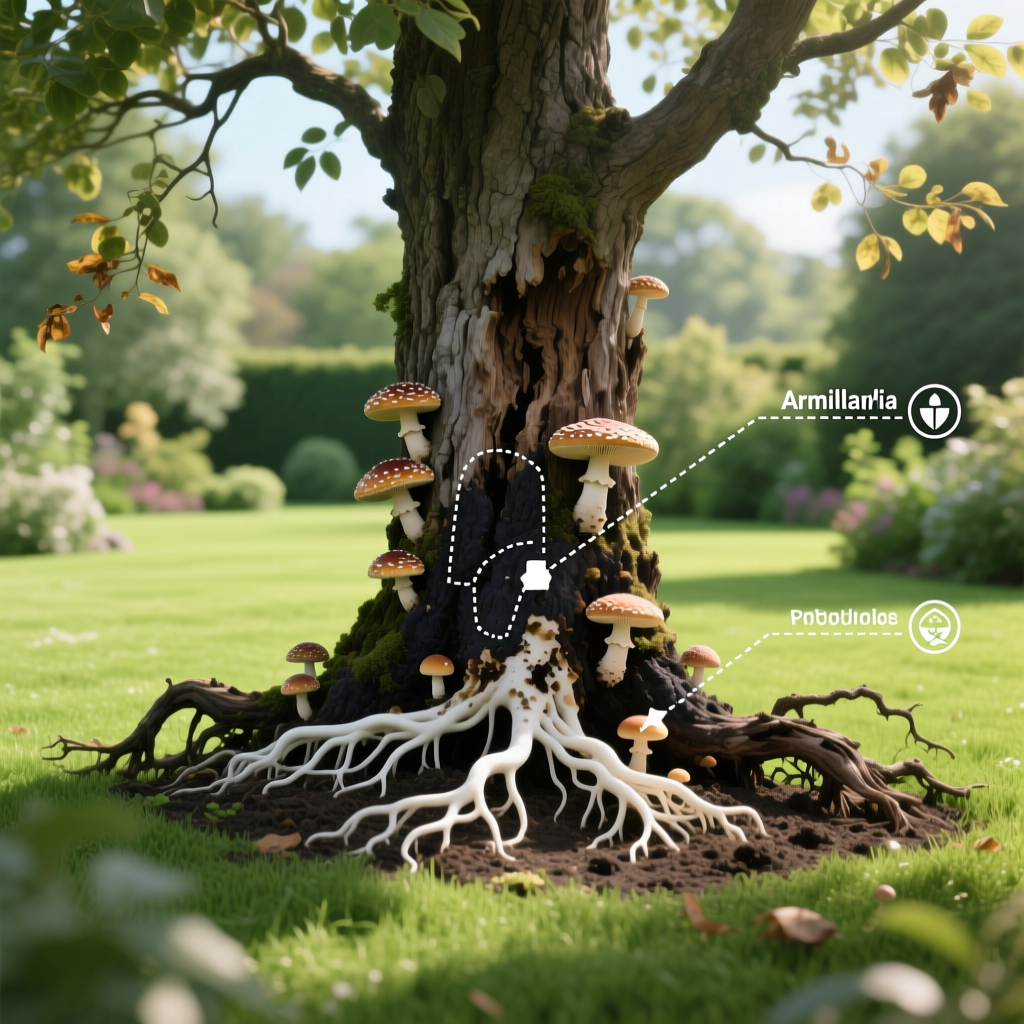
Recognizing & Treating Armillaria Root Rot in Hardwood Trees: A Complete Guide
Lisa ThompsonPublished
Recognizing & Treating Armillaria Root Rot in Hardwood Trees
Armillaria root rot, sometimes called oak root fungus or honey fungus, is one of the most destructive and widespread tree diseases affecting hardwood species across North America and beyond. Caused by fungi in the genus Armillaria, this disease silently attacks the root systems of trees, often going unnoticed until significant damage has already occurred. For homeowners, arborists, and land managers, understanding how to recognize the early warning signs and implement effective treatment strategies is essential for preserving the health and longevity of valuable hardwood trees.
Unlike many foliar diseases that primarily affect appearance, Armillaria root rot compromises the structural integrity and vital functions of a tree's root system. Left unchecked, it can kill mature trees and spread aggressively to neighboring plants through underground rhizomorphs — dark, shoestring-like fungal structures that extend through the soil in search of new hosts. Whether you maintain a small backyard garden or manage acres of hardwood forest, this comprehensive guide will walk you through everything you need to know about identifying, treating, and preventing Armillaria root rot.
Healthy trees start with healthy soil and proper landscape maintenance. If you're also working on maintaining the areas around your trees, our lawn care guides offer excellent complementary strategies for keeping your entire outdoor space thriving.
Understanding Armillaria Root Rot: Causes, Lifecycle & Spread
Before you can effectively treat Armillaria root rot, it is important to understand what causes it and how the disease progresses. Several species within the Armillaria genus are responsible for root rot in hardwood trees, with Armillaria mellea, Armillaria ostoyae, and Armillaria gallica being among the most commonly encountered pathogens. These fungi are natural inhabitants of many forest ecosystems, where they play a role in decomposing dead wood. However, they become aggressive pathogens when trees are stressed, wounded, or otherwise compromised.
The Lifecycle of Armillaria Fungi
The Armillaria fungus survives in the soil and in infected root systems for decades, even after the host tree has died. The lifecycle begins when fungal spores or rhizomorphs come into contact with susceptible root tissue. The fungus then colonizes the cambium — the thin layer of actively dividing cells between the bark and the wood — effectively girdling the roots and cutting off the flow of water and nutrients between the roots and the canopy.
As the infection progresses, the fungus produces fan-shaped mycelial mats (white or cream-colored sheets of fungal tissue) beneath the bark at the root collar and on major lateral roots. In autumn or early winter, the fungus may produce clusters of honey-colored mushrooms at the base of infected trees. These mushrooms release spores that can establish new infections, though the primary method of spread is through rhizomorphs that grow through the soil from infected roots to healthy neighboring roots.
How the Disease Spreads
Armillaria spreads primarily through direct root-to-root contact and through rhizomorphs that can extend several meters through the soil. The disease often moves in a radial pattern through a landscape or forest, killing trees in expanding circles or clusters. Stumps and buried wood debris serve as reservoirs of infection, harboring the fungus for years and providing a continuous source of inoculum. Construction damage, soil compaction, drought stress, and poor drainage all increase a tree's susceptibility to infection.
Understanding how soil conditions affect tree health is critical. Proper tree care practices that maintain good soil structure and drainage can significantly reduce the risk of Armillaria infection and many other root diseases.
Recognizing the Symptoms of Armillaria Root Rot in Hardwood Trees
Early detection is the cornerstone of effective Armillaria management. Unfortunately, the below-ground nature of this disease means that visible symptoms in the canopy often appear only after the root system has been extensively colonized. Knowing what to look for — both above and below ground — can help you catch infections early enough to take meaningful action.
Above-Ground Symptoms
The canopy of an infected hardwood tree often shows a gradual decline that can be mistaken for drought stress, nutrient deficiency, or general aging. Key above-ground symptoms include:
- Thinning canopy and reduced leaf size: One of the earliest signs is a noticeable reduction in foliage density. Leaves may be smaller than normal, and the overall canopy appears sparse, particularly in the upper branches.
- Yellowing or chlorotic foliage: Leaves may turn yellow or pale green, starting at the margins and progressing inward. This chlorosis results from the tree's inability to transport adequate nutrients from compromised roots.
- Premature fall coloration and leaf drop: Infected trees often display autumn colors weeks earlier than healthy trees of the same species. Leaves may drop prematurely, sometimes as early as midsummer in severe cases.
- Dieback of branches: Branches, particularly in the upper canopy, begin to die back from the tips. This dieback may be scattered throughout the crown or concentrated on one side of the tree if the infection is localized to roots on that side.
- Reduced growth rate: Annual twig growth and trunk diameter increase slow noticeably. Comparing current growth to previous years can reveal a progressive decline spanning several seasons.
- Resin or gum exudation: Some hardwood species respond to Armillaria infection by exuding sap, resin, or gum from the lower trunk near the soil line, though this symptom is more commonly associated with conifers.
Below-Ground and Trunk-Base Symptoms
The most diagnostic signs of Armillaria root rot are found at the base of the trunk and on the roots themselves. To inspect for these signs, carefully remove soil and mulch from around the root collar and examine the bark surface:
- Mycelial fans beneath the bark: Peel back sections of bark at the root collar and on major roots. The presence of white to cream-colored, fan-shaped sheets of fungal mycelium between the bark and the wood is a hallmark sign of Armillaria infection. These fans often have a distinctive mushroom-like odor.
- Rhizomorphs on root surfaces: Dark brown to black, shoestring-like structures (rhizomorphs) may be visible on the surface of infected roots and in the surrounding soil. These can range from fine threads to structures as thick as a pencil.
- Decayed and brittle roots: Infected roots become soft, spongy, and water-soaked in the early stages of decay. As decomposition progresses, the wood becomes dry, brittle, and stringy, often with distinct zone lines (dark boundaries between decayed and sound wood).
- Honey-colored mushrooms: In autumn or early winter, clusters of honey-colored to brownish mushrooms may appear at the base of infected trees or on nearby stumps. These fruiting bodies typically have a ring (annulus) on the stem and white spore prints. While their presence confirms Armillaria, their absence does not rule out infection, as the fungus often colonizes roots extensively without producing mushrooms.
If you notice any of these symptoms, it is wise to consult a certified arborist for a professional diagnosis. Many of the above-ground symptoms overlap with other tree health issues, including other common tree diseases, and accurate identification is essential for choosing the right treatment approach.
Treatment Strategies for Armillaria Root Rot
Once Armillaria root rot has been confirmed, the treatment approach depends on the severity of the infection, the value and condition of the affected tree, and the risk of spread to nearby plants. It is important to set realistic expectations: there is no single cure that will completely eradicate Armillaria from an infected tree's root system. However, a combination of cultural, biological, and chemical strategies can slow the disease, prolong the life of mildly infected trees, and protect surrounding vegetation.
Cultural and Mechanical Controls
Cultural practices form the foundation of any Armillaria management program. These methods focus on reducing stress on the tree and creating conditions that are less favorable for fungal growth:
- Improve drainage and avoid overwatering: Armillaria thrives in moist, poorly drained soils. Correct grading issues, install French drains if necessary, and ensure that irrigation systems are not saturating the root zone. Maintaining proper soil moisture is just as important for tree roots as it is for the turfgrass growing nearby.
- Remove infected material: For trees that are severely infected and beyond recovery, complete removal — including as much of the root system as possible — is recommended. Stump grinding alone is insufficient, as the fungus can persist in remaining root fragments. Where feasible, excavate major roots and remove them from the site.
- Root collar excavation: For mildly infected trees, carefully exposing the root collar and upper portions of major roots to air can slow fungal progression. Armillaria is sensitive to desiccation and heat, and exposure to sunlight and air circulation can inhibit mycelial growth near the soil surface.
- Reduce competition: Remove grass, weeds, and competing vegetation from beneath the tree's drip line. Apply a thin layer of coarse mulch (no more than two to three inches deep, and kept away from the trunk) to moderate soil temperature and retain moisture without creating the constantly damp conditions the fungus favors.
- Fertilize judiciously: A soil test can reveal nutrient deficiencies that may be stressing the tree. Apply balanced, slow-release fertilizers based on test results, but avoid excessive nitrogen, which promotes succulent growth that is more susceptible to disease. Our soil testing guide explains how to collect and interpret soil samples effectively.
Biological Control Options
Biological control of Armillaria is an area of active research, and several promising approaches are available:
- Trichoderma species: Beneficial fungi in the genus Trichoderma can antagonize Armillaria through competition and mycoparasitism. Commercially available Trichoderma products can be applied to the soil around at-risk trees or incorporated into backfill soil when planting new trees near known infection sites.
- Competitive colonization with non-pathogenic fungi: Inoculating stumps and wood debris with saprophytic (non-disease-causing) fungi can prevent Armillaria from colonizing these materials. This approach is most practical in managed forest settings or during land clearing operations.
- Promoting beneficial soil biology: Maintaining healthy populations of mycorrhizal fungi and beneficial bacteria in the soil creates a more resilient root environment. Avoid broad-spectrum fungicides that harm beneficial organisms, and consider applying compost teas or microbial inoculants to the root zone.
Chemical Treatment Considerations
Chemical control of Armillaria root rot is limited, and no fungicide is universally effective against this disease once it has become established in the root system. However, certain chemical treatments may play a supportive role:
- Soil fumigation: In commercial settings such as orchards or nurseries, soil fumigation with products containing metam sodium or chloropicrin can reduce Armillaria inoculum before replanting. This approach is expensive, environmentally disruptive, and generally impractical for residential landscapes.
- Systemic fungicides: Propiconazole and other triazole fungicides have shown some efficacy when applied as soil drenches or trunk injections in the early stages of infection. These treatments do not eradicate the fungus but may slow its progression enough to buy time for the tree. Applications should be made by a licensed professional and repeated according to label directions.
- Wound protectants: Applying a registered wound sealant to pruning cuts and root injuries can reduce the chances of fungal entry, though the effectiveness of wound paints is debated among arborists.
For more information on responsible chemical use in landscape management, including timing and application techniques, explore our fertilizer and soil amendment guides.
Prevention & Seasonal Care Tips to Protect Hardwood Trees
Preventing Armillaria root rot is far more effective and economical than treating it after the fact. By incorporating the following strategies into your regular tree care routine, you can significantly reduce the risk of infection and create a landscape where hardwood trees thrive for generations.
Site Selection and Planting Practices
Prevention begins before a tree is even planted. Choose species and cultivars that are known to be resistant or tolerant of Armillaria when planting in areas with a history of the disease. Some hardwood species with notable resistance include:
- Ginkgo (Ginkgo biloba)
- Sweetgum (Liquidambar styraciflua)
- Bald cypress (Taxodium distichum) — technically a deciduous conifer but often grouped with hardwoods in landscape settings
- Certain oak species, including live oak (Quercus virginiana) and bur oak (Quercus macrocarpa), show moderate tolerance
When planting, ensure proper depth — the root flare should be visible at or slightly above the soil surface. Avoid planting in heavy clay soils without first amending the planting area or installing raised beds. Do not plant trees in areas where old stumps or buried wood debris remain, as these can harbor Armillaria for years.
Seasonal Care Calendar
Maintaining tree health throughout the year reduces stress and builds resilience against Armillaria and other pathogens:
- Spring: Inspect trees for new symptoms as leaves emerge. Look for delayed bud break, sparse foliage, or dieback that was not present the previous season. Apply balanced fertilizer if a soil test indicates deficiencies. Ensure that mulch is not piled against the trunk, as "volcano mulching" traps moisture and creates ideal conditions for fungal growth at the root collar.
- Summer: Monitor trees during periods of heat and drought stress. Provide deep, infrequent watering during dry spells, applying water slowly to the entire root zone rather than just the area immediately around the trunk. Avoid heavy pruning during summer, as fresh wounds can attract spores. Keep lawn areas around trees healthy with proper summer lawn care practices to reduce competition for water and nutrients.
- Autumn: This is the prime season for scouting Armillaria mushrooms at the base of trees. Note their location and photograph them for identification purposes. Fall is also an excellent time for pruning hardwood trees, as wounds heal more quickly during dormancy and the branching structure is easier to evaluate without leaves.
- Winter: Dormant-season inspections allow you to assess overall tree structure and identify dead or declining branches. Take advantage of leafless conditions to examine the trunk and root collar for signs of mycelial fans, bark discoloration, or structural weaknesses. Schedule any necessary removals or major pruning while the tree is dormant and the ground is firm enough to support equipment.
Protecting Trees During Construction and Landscaping
Root damage from construction activities is one of the most common predisposing factors for Armillaria infection. Heavy equipment compacts soil, severs roots, and alters drainage patterns, creating stress that makes trees vulnerable to opportunistic pathogens. To protect existing hardwood trees during construction projects:
- Establish protective fencing around the drip line (or beyond) of trees to be preserved.
- Prohibit storage of materials, soil stockpiling, and vehicle parking within the protected zone.
- Use tunneling or boring techniques rather than trenching when utilities must pass near tree roots.
- Consult a certified arborist before and during construction to monitor tree health and recommend protective measures.
Sanitation and Long-Term Management
If Armillaria is present on your property, ongoing sanitation practices can help limit its spread:
- Remove and destroy (do not compost) wood chips, stumps, and root fragments from infected trees.
- Clean and disinfect tools, mower blades, and equipment after working around infected trees to avoid transporting rhizomorphs or contaminated soil to healthy areas.
- Consider planting a physical barrier — such as a trench lined with heavy-gauge plastic — between infected and healthy zones to block the spread of rhizomorphs through the soil.
- Monitor at-risk trees annually and document changes in canopy condition, growth rate, and any new signs of fungal activity.
Frequently Asked Questions About Armillaria Root Rot
Can a tree recover from Armillaria root rot once it is infected?
Complete recovery from Armillaria root rot is rare once the fungus has extensively colonized the root system. However, trees with mild, early-stage infections can sometimes be stabilized and their decline slowed significantly through aggressive cultural management. Root collar excavation, improved drainage, proper mulching, and reducing environmental stress can extend the life of an infected tree for many years. The key is early detection and consistent intervention. Trees that have lost more than one-third of their canopy to dieback are generally too far gone to save and should be evaluated for removal to protect nearby trees and structures.
Which hardwood tree species are most susceptible to Armillaria root rot?
Armillaria is remarkably non-selective and can infect hundreds of hardwood species. However, some species are particularly vulnerable, including birch (Betula spp.), beech (Fagus spp.), maple (Acer spp.), willow (Salix spp.), poplar (Populus spp.), and many fruit and nut trees such as apple, cherry, pecan, and walnut. Oak species vary widely in susceptibility, with some red oaks being quite vulnerable while white oak group species tend to be more tolerant. Stressed trees of any species are at higher risk than healthy, vigorously growing specimens. When selecting trees for a site with known Armillaria presence, consult a local extension service or certified arborist for species recommendations suited to your region.
Are Armillaria mushrooms edible, and do they indicate a tree is dying?
Some species of Armillaria mushrooms, particularly Armillaria mellea, are considered edible by experienced foragers when properly cooked. However, we strongly advise against consuming any wild mushroom without absolute certainty of identification, as some look-alike species are toxic. The presence of Armillaria mushrooms at the base of a tree is a strong indicator that the fungus has extensively colonized the root system. By the time fruiting bodies appear, the tree has often been infected for several years and has significant internal decay. While the tree may not die immediately, its structural stability is compromised, and it poses an increasing risk of failure, especially during storms. Any tree producing Armillaria mushrooms should be evaluated by a certified arborist for hazard assessment.
How can I distinguish Armillaria root rot from Phytophthora root rot or other root diseases?
Distinguishing between root diseases requires careful examination of the affected roots and trunk base. Armillaria root rot is characterized by the presence of white mycelial fans beneath the bark, dark rhizomorphs on root surfaces, and a distinctive mushroom odor. The decayed wood is typically dry and stringy with visible zone lines. In contrast, Phytophthora root rot (caused by water mold organisms) produces a dark, water-soaked discoloration of the inner bark at the root collar, often with a sharp boundary between infected and healthy tissue, and no mycelial fans or rhizomorphs. Phytophthora-infected roots tend to be dark, slimy, and foul-smelling rather than dry and stringy. Verticillium wilt, another common vascular disease, causes staining of the sapwood that is visible when branches are cut cross-sectionally, a symptom not associated with Armillaria. When in doubt, submit root and bark samples to a plant diagnostic laboratory for definitive identification.
Is it safe to replant in the same spot after removing a tree killed by Armillaria?
Replanting in the same location where a tree was killed by Armillaria carries significant risk, as the fungus can survive in residual root fragments and soil for many years. If replanting is desired, take the following precautions: remove as much of the old root system as possible, including all roots larger than one inch in diameter; allow the site to remain fallow for one to two growing seasons if possible; solarize the soil by covering it with clear plastic during the hottest months to reduce fungal inoculum; select a resistant or tolerant species for replanting; and consider amending the soil with compost and beneficial microbial inoculants to promote a healthy soil biology that can compete with residual Armillaria. Alternatively, consider planting in a different location on your property where the soil has not been contaminated. For more guidance on establishing healthy new plantings, our tree planting guides provide step-by-step instructions for successful establishment.
Conclusion
Armillaria root rot is a formidable adversary for hardwood trees, but it is not an unstoppable force. By learning to recognize the subtle early symptoms — thinning canopies, premature fall color, and the telltale mycelial fans beneath the bark — you can intervene before the disease reaches an advanced stage. Combining cultural practices that reduce tree stress with targeted biological and chemical treatments offers the best chance of managing this disease in a residential or managed landscape setting.
Prevention remains the most powerful tool in your arsenal. Choose resistant species, protect root zones from damage, maintain proper soil drainage, and follow a consistent seasonal care calendar to keep your hardwood trees vigorous and resilient. A healthy tree with an intact root system and minimal environmental stress is far less likely to succumb to Armillaria than one weakened by drought, compaction, or construction damage.
If you suspect Armillaria root rot on your property, do not wait for the situation to worsen. Contact a certified arborist or your local cooperative extension office for a professional assessment and customized management plan. And remember that tree health is closely connected to the overall condition of your landscape — explore our complete library of lawn care and tree care resources to build a thriving, resilient outdoor environment from the ground up.

