
Tree Care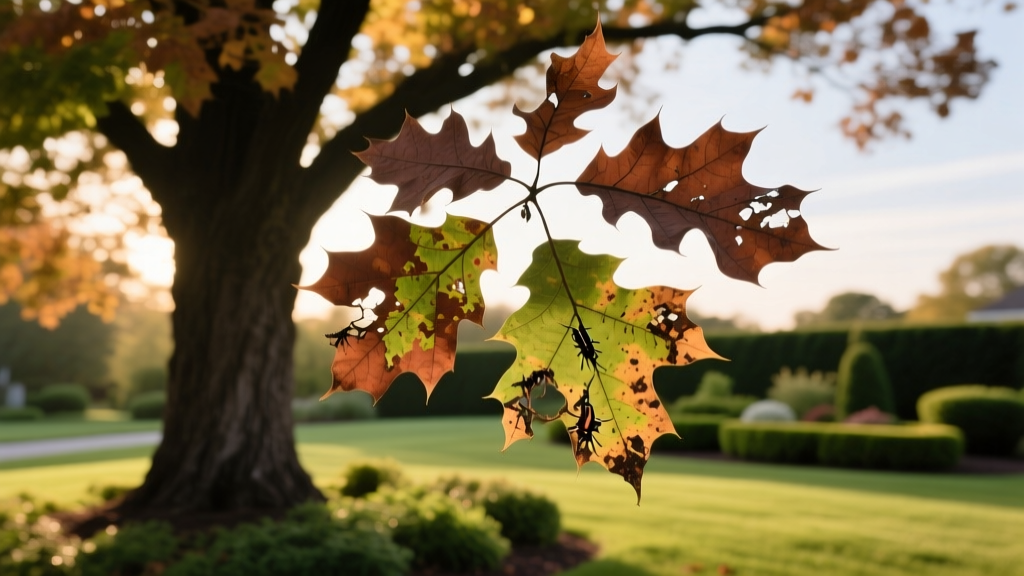
Brown Leaves of a Red Oak Tree: Diagnosis and Solutions
Decoding Foliage Distress in Quercus rubra
Northern red oaks (Quercus rubra) are cornerstone shade trees prized for their rapid growth, towering canopy, and brilliant crimson autumn display. However, when the leaves of a red oak tree exhibit premature browning, spotting, or curling outside of the natural fall dormancy window, it signals severe physiological or pathological distress. Unlike white oaks, red oaks possess large, open xylem vessels that make them highly susceptible to rapid vascular wilts and specific fungal pathogens.
Accurate diagnosis requires moving beyond generic "tree sickness" assumptions. Below is a clinical framework for identifying the exact stressor affecting your red oak's foliage, paired with actionable, commercial-grade treatment protocols.
Diagnostic Quick-Reference Matrix
- Veinal browning + leaf curl in spring: Anthracnose (Fungal)
- Entire crown browns in 3-6 weeks during summer: Oak Wilt (Vascular Fungus)
- Interveinal yellowing with green veins: Iron Chlorosis (Abiotic/pH)
- Papery brown margins in July/August: Environmental Drought Scorch
Fungal Pathogens: Anthracnose vs. Oak Leaf Blister
Anthracnose (Apiognomonia quercina)
Anthracnose thrives in cool, wet spring weather. On the leaves of a red oak tree, this pathogen manifests as irregular brown necrotic lesions that specifically follow the leaf veins, eventually causing the leaf to curl and drop prematurely. While rarely fatal to established trees, consecutive years of severe defoliation will deplete the tree's carbohydrate reserves, leading to secondary borer infestations.
Treatment Protocol: Fungicide applications are only effective if timed precisely at bud break. Use a contact fungicide containing chlorothalonil (e.g., Daconil WeatherStik) or mancozeb. Apply at 14-day intervals until the leaves are fully expanded. According to the University of Minnesota Extension, improving canopy airflow via dormant-season pruning is equally critical to reduce the humid microclimates where spores germinate.
Oak Leaf Blister (Taphrina caerulescens)
This fungus causes raised, pale green or yellowish blisters on the upper leaf surface, which eventually turn gray-brown. It is primarily a cosmetic issue. Chemical intervention is rarely justified unless the tree is a young specimen experiencing severe stunting. A single dormant-season application of a copper-based fungicide (e.g., Kocide 3000) before bud swell will neutralize overwintering spores.
The Lethal Threat: Oak Wilt in Red Oaks
Oak wilt, caused by the vascular fungus Bretziella fagacearum, is the most catastrophic threat to red oaks. Because red oaks lack tyloses (the plug-forming structures in white oak xylem that slow fungal spread), the fungus moves rapidly through the vascular system, blocking water transport. The leaves of a red oak tree will turn dull green, then bronze, and drop rapidly—often killing a mature 50-foot tree in just 3 to 6 weeks.
The disease spreads locally through root grafts and over long distances via sap-feeding nitidulid beetles carrying fungal spores from fresh wounds.
Arresting the Spread: Trenching and Injection
- Root Graft Severance: If a neighboring red oak is infected, immediately sever root grafts using a vibratory plow to a depth of 48 inches, creating a 50-foot buffer zone around the healthy tree.
- Propiconazole Injection: For high-value, uninfected trees in the buffer zone, hire a certified arborist to perform macro-infusion of propiconazole 14.3% (Alamo). The dosage is strictly calculated based on the Diameter at Breast Height (DBH). Expect to pay between $15 and $25 per inch of DBH for professional injection services.
Critical Warning: Never prune, wound, or stake a red oak between April 1 and July 1. The nitidulid beetles that vector oak wilt are most active during this window and are highly attracted to the volatile compounds released by fresh pruning cuts. If emergency storm damage occurs during this period, immediately seal the wound with a commercial tree wound paint or latex paint to mask the scent.
Abiotic Stressors: Iron Chlorosis and Soil pH
When the leaves of a red oak tree exhibit bright yellowing between the veins while the veins themselves remain distinctly green, the tree is suffering from iron chlorosis. This is not necessarily a lack of iron in the soil, but rather a chemical lockout caused by high soil alkalinity. Red oaks require an acidic soil pH between 4.5 and 6.5 to absorb iron.
Selecting the Correct Chelate
Homeowners often waste money on standard iron supplements that fail in alkaline soils. You must match the iron chelate to your specific soil pH:
| Chelate Type | Effective pH Range | Product Example | Application Rate |
|---|---|---|---|
| Fe-EDTA | Up to 6.5 | Standard Ironite | Fails in alkaline soils |
| Fe-DTPA | Up to 7.5 | Sprint 330 | 1-2 lbs / 1000 sq ft |
| Fe-EDDHA | Up to 9.0 | Sprint 138 / Sequestrene 138 | 2-3 lbs / 1000 sq ft |
For severe cases where soil pH exceeds 7.5, soil drenches are too slow. Opt for direct trunk injections of iron citrate or iron sulfate performed by an arborist, which will green up the canopy within 14 to 21 days. As noted by Clemson University HGIC, long-term remediation requires incorporating elemental sulfur into the root zone to gradually lower the soil pH over several seasons.
Sanitation and Tool Hygiene
Cross-contamination is a primary vector for spreading foliar diseases and vascular wilts. When removing infected branches or performing structural pruning during the safe dormant window (November through February), strict tool hygiene is non-negotiable.
- Submerge pruning saws and lopper blades in a 10% bleach solution (1 part household bleach to 9 parts water) or 70% isopropyl alcohol for 60 seconds between every single cut.
- Wipe blades dry and apply a light coat of 3-in-One oil to prevent the bleach from corroding the steel components of your tools.
- Never chip and use wood from an oak wilt-infected red oak as mulch around healthy trees. The fungal mats can survive in unseasoned wood and attract vector beetles.
When to Call a Certified Arborist: Cost Expectations
While homeowners can manage mild anthracnose and surface-level chlorosis, vascular diseases and deep-root compaction require professional intervention. According to the Texas Oak Wilt Information Partnership, early detection by a professional is the only reliable way to save a red oak from vascular wilt. Expect the following baseline costs for professional tree care services:
- Air Spade Root Zone Aeration: $300 - $600 per tree. Relieves soil compaction that mimics drought stress and prevents water uptake.
- Deep Root Fertilization & Bio-Stimulants: $150 - $250 per tree. Injects liquid humic acids and slow-release nitrogen directly into the root flare.
- Trunk Injections (Fungicide/Iron): $15 - $25 per inch of DBH. A 20-inch red oak will cost between $300 and $500 per treatment, which typically lasts 24 months.
By accurately identifying the specific symptom patterns on the leaves of a red oak tree and applying targeted, science-backed treatments, you can preserve the structural integrity and aesthetic value of these magnificent legacy trees for decades.

