
Tree Care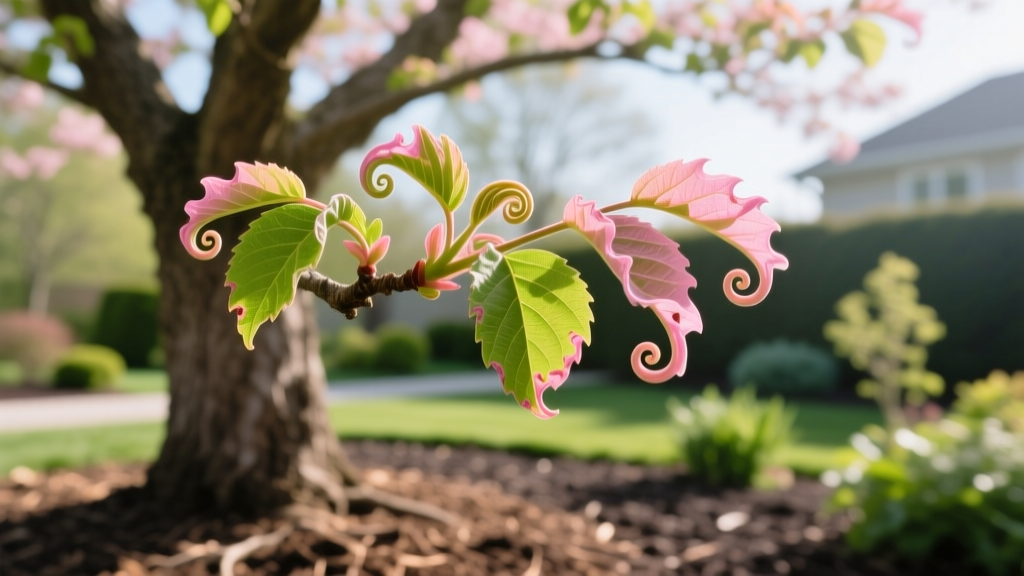
Redbud Leaves Curling: 4 Root Causes and Rescue Fixes
When Eastern redbud (Cercis canadensis) foliage begins to twist, cup, or roll inward, it is a physiological distress signal. Because redbuds are relatively shallow-rooted and highly sensitive to both chemical and environmental shifts, leaf curling is rarely a singular-issue problem. Misdiagnosing the curl often leads to applying the wrong treatment, which can accelerate canopy decline.
According to plant pathology data from Penn State Extension, redbuds are particularly susceptible to abiotic stressors and specific defoliating insects. Below is a comprehensive diagnostic framework to identify the exact trigger behind your redbud leaves curling and the precise rescue protocols required to save the canopy.
The Diagnostic Matrix: Identifying the Curl Pattern
Before purchasing any treatments, match your tree's specific visual symptoms to the matrix below. The morphology of the curl dictates the root cause.
| Curl Morphology | Secondary Visual Clues | Primary Suspect | Immediate Triage Action |
|---|---|---|---|
| Severe cupping, strappy veins, twisted petioles | New growth affected most; no insect webbing or spots | Herbicide Drift (2,4-D / Dicamba) | Deep soil leaching; do not prune |
| Margins rolling inward or folding like a taco | Silk webbing inside the fold; skeletonized leaf tissue | Redbud Leaffolder (Fascista cercerisella) | Targeted Btk (Bacillus thuringiensis) spray |
| Upward curling with stippling or yellowing | Tiny wedge-shaped insects jumping when disturbed | Leafhoppers | Systemic soil drench (post-bloom) |
| Inward rolling with crispy, necrotic brown edges | Soil is dry 4 inches down; canopy thinning | Abiotic Drought / Root Girdling | Caliper-based deep root watering |
Scenario 1: Herbicide Drift and Chemical Epinasty
If your redbud leaves are curling into tight, deformed cups with elongated, strappy veins, you are likely looking at herbicide damage. Broadleaf weed killers containing 2,4-D or dicamba are highly volatile. Even if you applied the product on a calm day, temperature inversions can carry vapor drift up to a mile, settling on your redbud's canopy.
The Mechanism: Epinasty
Synthetic auxins (like 2,4-D) mimic plant growth hormones. They cause the cells on the upper surface of the leaf to multiply faster than the cells on the lower surface. This differential growth rate physically forces the leaf to curl downward or cup severely.
Rescue Protocol for Herbicide Damage:
- Do Not Prune: The tree needs every remaining photosynthetic surface to metabolize the toxin and push new growth. Pruning adds compounding stress.
- Leach the Soil: Apply 2 to 3 inches of water over the entire root zone (extending to the drip line) to push any soil-bound herbicide residues below the active root profile.
- Activated Charcoal: For severe soil contamination, apply a granular activated charcoal product at a rate of 5 lbs per 1,000 square feet to bind the chemical molecules.
Scenario 2: Insect Pests (Leaffolders and Leafhoppers)
Redbuds host several specialized pests that physically manipulate the leaves for shelter. The Missouri Botanical Garden notes that while these pests rarely kill mature trees, severe infestations cause premature defoliation and stunt spring growth.
The Redbud Leaffolder
The redbud leaffolder (Fascista cercerisella) is a small moth whose caterpillars literally fold the leaf margins over their bodies, securing them with silk webbing. Inside this curled shelter, they skeletonize the leaf tissue.
- Diagnosis: Look for leaves folded longitudinally. If you gently pull the fold apart, you will see frass (insect excrement) and a small green or brown caterpillar.
- Rescue Fix: Spray the canopy with a product containing Bacillus thuringiensis var. kurstaki (Btk), such as Monterey B.t. ($15-$20 per 16oz bottle). Btk must be ingested by the caterpillar, so thorough coverage of the leaf undersides is mandatory. Apply at the first sign of folding, usually in late May to early June.
Leafhoppers and the Pollinator Warning
Leafhoppers pierce the leaf veins to extract sap, causing the edges to curl upward and the tissue to turn yellow (hopperburn). While systemic neonicotinoids like Imidacloprid (e.g., Bayer BioAdvanced 12-Month Tree & Shrub) are highly effective against leafhoppers, timing is critical.
Critical Pollinator Warning: Redbuds bloom in early spring before they leaf out. Imidacloprid is highly toxic to bees. Never apply a systemic soil drench while the tree is in bloom or just before bud break. Wait until after complete petal fall and initial leaf expansion to apply the drench. Use the standard dosage of 1.5 fluid ounces per inch of trunk caliper, mixed with 1 gallon of water per inch of caliper.
Scenario 3: Anthracnose and Fungal Leaf Distortion
While less common than environmental curling, fungal pathogens like Anthracnose (Apiognomonia veneta) can cause redbud leaves to curl, distort, and develop necrotic margins. This is most prevalent in regions with cool, wet springs, as noted by NC State Extension.
Fungal Symptom Progression
- Early Stage: Small, angular, water-soaked spots appear on the leaf surface.
- Mid Stage: The spots expand, turn brown, and cause the leaf tissue to contract, resulting in an inward curl.
- Late Stage: Severe premature leaf drop occurs by mid-summer.
Fungal Rescue Strategy
Fungicides are protective, not curative. Once a leaf is heavily curled and necrotic, it will not uncurl. The goal is to protect the emerging secondary flush of growth.
- Sanitation: Rake and destroy all fallen, curled leaves. Do not compost them, as fungal spores will overwinter in the mulch pile.
- Chemical Control: Apply a liquid copper octanoate fungicide (e.g., Bonide Liquid Copper Fungicide, ~$18) just as the new buds are swelling in early spring, and repeat at 14-day intervals if wet weather persists. Ensure the product is specifically labeled for ornamental anthracnose control.
Scenario 4: Abiotic Stress and Hydraulic Failure
If the leaf curling is accompanied by crispy, scorched margins and the leaves are rolling inward like a cigar, the tree is experiencing hydraulic failure. Redbuds have relatively large, broad leaves that transpire moisture rapidly. When the soil moisture drops below the permanent wilting point, the leaves curl inward to reduce their surface area and minimize solar exposure.
Calculating Exact Watering Volumes
Sprinkling the base of the tree with a hose for 10 minutes is insufficient. You must calculate the exact water volume based on the tree's trunk caliper (measured 6 inches above the soil line for young trees, or at breast height for mature ones).
| Trunk Caliper (Diameter) | Required Water Volume | Application Method |
|---|---|---|
| 1 - 2 inches | 10 - 20 gallons | Slow drip hose over root ball |
| 3 - 4 inches | 30 - 40 gallons | Soaker hose extending to drip line |
| 5+ inches | 50+ gallons | Deep root water probe (12-inch depth) |
The Girdling Root Edge Case: If you are watering adequately but the leaves still curl and crisp, excavate the root flare. Redbuds are notorious for developing girdling roots in heavy clay soils. If a root is wrapping around the main trunk and choking the phloem, carefully sever it using a sterilized pruning saw during the dormant season to restore hydraulic flow.
Summary: Your 48-Hour Triage Checklist
When you notice redbud leaves curling, execute this sequence to prevent compounding errors:
- Inspect the undersides and folds: Look for webbing, frass, or jumping insects to rule in/out pests.
- Check the soil moisture: Use a 12-inch soil probe. If it comes up dry and dusty, initiate caliper-based deep watering immediately.
- Review neighborhood chemical use: Ask neighbors if they recently sprayed broadleaf herbicides on their lawns. If yes, assume drift and begin soil leaching.
- Hold off on fertilizer: Never apply high-nitrogen fertilizer to a stressed, curling redbud. Forcing rapid new growth on a compromised vascular system will invite secondary borers and exacerbate drought stress.

