
Tree Care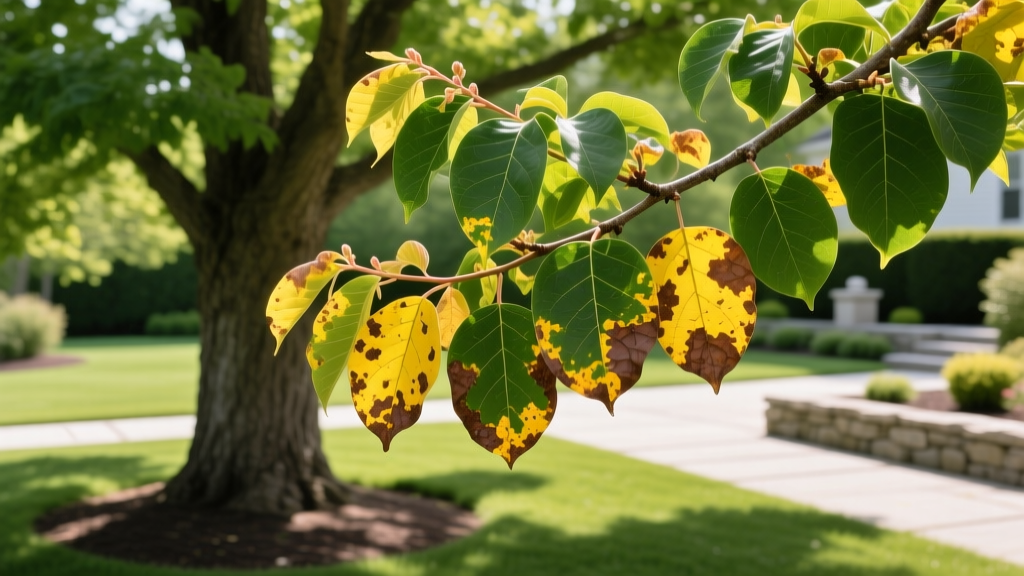
Why Are My Redbud Leaves Turning Yellow or Brown? (Diagnosis & Fixes)
The Eastern Redbud (Cercis canadensis) is prized for its vibrant spring blooms, but its distinctive heart-shaped leaves are the true indicator of the tree's underlying health. When redbud leaves begin to yellow, brown, curl, or develop spots, it is rarely a random occurrence. These visual cues point directly to specific soil imbalances, fungal pathogens, or environmental stressors. Accurately reading these foliar symptoms is the first step in saving your tree.
The Redbud Leaf Diagnostic Matrix
Before applying any treatments, match your tree's specific foliar symptoms to the diagnostic matrix below. Misdiagnosing a soil pH issue as a fungal disease will waste time and money while the tree's root system continues to degrade.
| Symptom Presentation | Pattern on Leaf | Primary Suspect | Immediate Action Required |
|---|---|---|---|
| Yellowing with green veins | Interveinal chlorosis, starting on new growth | Iron/Manganese Deficiency (High Soil pH) | Apply Fe-EDDHA chelated iron drench |
| Brown, crispy margins | Scorched edges, uniform across canopy | Environmental Leaf Scorch (Water Stress) | Deep root watering; apply 3-inch mulch ring |
| Brown spots with irregular halos | Random patches, mostly on lower canopy | Anthracnose (Fungal) | Prune affected limbs; apply Chlorothalonil |
| Wilting and browning on one side | Asymmetric branch dieback, vascular staining | Verticillium Wilt | Remove dead wood; heavy fertilization; no cure |
| Perfect semi-circle cutouts | Clean edges removed from leaf margin | Leafcutter Bees | None (Beneficial insect; do not treat) |
Step-by-Step Troubleshooting for Yellowing Redbud Leaves
Chlorosis (yellowing) is the most common complaint among homeowners growing redbuds, particularly in regions with heavy clay or alkaline soils. However, the type of yellowing dictates the exact chemical intervention required.
Iron Chlorosis vs. Nitrogen Deficiency
If the entire leaf turns a pale, uniform yellow starting from the older, inner canopy outward, your tree likely lacks nitrogen. A standard application of a balanced 10-10-10 granular fertilizer at a rate of 1 pound per 100 square feet of root zone will resolve this.
Conversely, if the leaf tissue turns yellow but the veins remain distinctly dark green (interveinal chlorosis), and this appears first on the newest leaves at the branch tips, you are dealing with iron or manganese deficiency. This is not usually because iron is absent from the soil, but because the soil pH is above 7.0, locking the minerals into an insoluble state that redbud roots cannot absorb.
Arborist Insight: The Chelate Trap
Most hardware stores sell inexpensive Fe-EDTA iron supplements. Fe-EDTA breaks down and becomes completely ineffective in soils with a pH above 7.0. If your soil is alkaline, you must purchase a chelated iron product specifically formulated with Fe-EDDHA. Products like Miller's Ferriplus or custom EDDHA drenches cost more ($25–$45 per quart) but are the only formulations that remain stable and bioavailable in high-pH soils.
The Threat of Verticillium Wilt
If yellowing is accompanied by sudden wilting, branch dieback, and a distinct asymmetrical pattern (e.g., the left side of the tree is dying while the right side looks healthy), suspect Verticillium wilt. According to Penn State Extension, this soil-borne fungus invades the xylem, blocking water transport. To confirm, peel back the bark on a dying branch; if you see dark green or black streaking in the sapwood, Verticillium is present. There is no chemical cure. Management requires pruning out dead wood, sanitizing tools with a 10% bleach solution between cuts, and providing heavy watering and balanced fertilization to help the tree compartmentalize the infection.
Managing Brown, Crispy, or Spotted Foliage
Browning redbud leaves generally fall into two categories: abiotic (environmental) stress and biotic (pathogenic) infections.
Environmental Leaf Scorch
Redbuds possess shallow root systems and are highly susceptible to summer drought stress. Leaf scorch manifests as brown, crispy tissue starting at the leaf margins and progressing inward. The Clemson University Home Garden Information Center notes that redbuds require consistent moisture, especially during their first three years of establishment.
- Watering Metric: Provide 1.5 inches of water per week. Use a rain gauge to measure natural precipitation and supplement with a soaker hose.
- Application Method: Run the soaker hose in a spiral pattern from the trunk out to the drip line for 2 to 3 hours, rather than using a high-pressure sprinkler that only wets the top inch of soil.
Anthracnose and Fungal Leaf Spots
If the brown areas appear as distinct spots with irregular margins, often surrounded by a yellow halo, your tree is likely battling Anthracnose or Mycosphaerella leaf spot. These fungi thrive in wet, humid spring conditions.
- Sanitation: Rake and destroy all fallen leaves in the autumn. The fungus overwinters in leaf litter.
- Pruning: Thin the canopy to increase airflow, removing any crossing or inward-growing branches.
- Chemical Control: If the tree is highly valued and defoliation is severe, apply a fungicide containing Chlorothalonil (e.g., Daconil) or a copper-based Bordeaux mixture. Mix Chlorothalonil at a rate of 1.5 tablespoons per gallon of water, spraying until runoff just as the leaves emerge in spring, followed by a second application 14 days later.
Warning: Do Not Treat Leafcutter Bees
If your redbud leaves feature perfectly smooth, semi-circular cutouts along the edges, put away the pesticides. This is the work of native leafcutter bees (Megachile species). They use the leaf fragments to line their nesting cavities. This cosmetic damage does not harm the tree's photosynthetic capacity, and these bees are vital, non-aggressive pollinators.
Soil Testing and Amendment Protocol
Healthy redbud leaves start with an optimized root zone. Before purchasing fertilizers, invest $15 to $30 in a professional soil test through your local university extension office. Redbuds thrive in a soil pH between 6.0 and 7.0.
- If pH is below 6.0 (Too Acidic): Apply pelletized garden lime at a rate of 5 pounds per 100 square feet to raise the pH.
- If pH is above 7.5 (Too Alkaline): Apply elemental sulfur or a soil acidifier (like Espoma Organic Soil Acidifier) at the rate specified on the package, usually 1 to 2 cups per 10 square feet. Note that lowering pH is a slow process that takes 6 to 12 months to reflect in the soil test.
- Mulching Rules: Apply a 3-inch layer of shredded hardwood mulch over the root zone to retain moisture and regulate soil temperature. Crucially, keep the mulch at least 3 inches away from the trunk flare to prevent Phytophthora root rot and rodent girdling.
Preventative Seasonal Maintenance Calendar
Maintaining pristine redbud foliage requires a proactive, season-specific approach rather than reactive treatments.
Spring (March - May)
- Inspect emerging leaves for signs of Anthracnose; apply preventative fungicides if the tree has a history of severe defoliation.
- Apply a 2-inch layer of compost around the drip line to provide a slow-release nutrient boost.
Summer (June - August)
- Monitor soil moisture weekly. Insert a 6-inch soil probe; if the soil feels dry at a 4-inch depth, initiate deep watering.
- Watch for webbing in the canopy, which indicates spider mites. Blast the underside of the leaves with a strong stream of water to dislodge them before resorting to horticultural oils.
Fall (September - November)
- Rake and remove all fallen foliage to break the life cycle of overwintering fungal spores.
- Apply a dormant horticultural oil spray in late November to suffocate overwintering scale insects.
Winter (December - February)
- Perform structural pruning while the tree is dormant and the branching architecture is visible. Remove dead, diseased, or rubbing branches to promote a strong canopy that allows light and air penetration the following spring.
For comprehensive botanical data and cultivar-specific traits, consult the Missouri Botanical Garden's Eastern Redbud profile. By accurately diagnosing foliar symptoms and implementing targeted soil and canopy management, you can ensure your redbud maintains a dense, vibrant canopy of heart-shaped leaves from spring emergence through autumn color change.

