Tree Care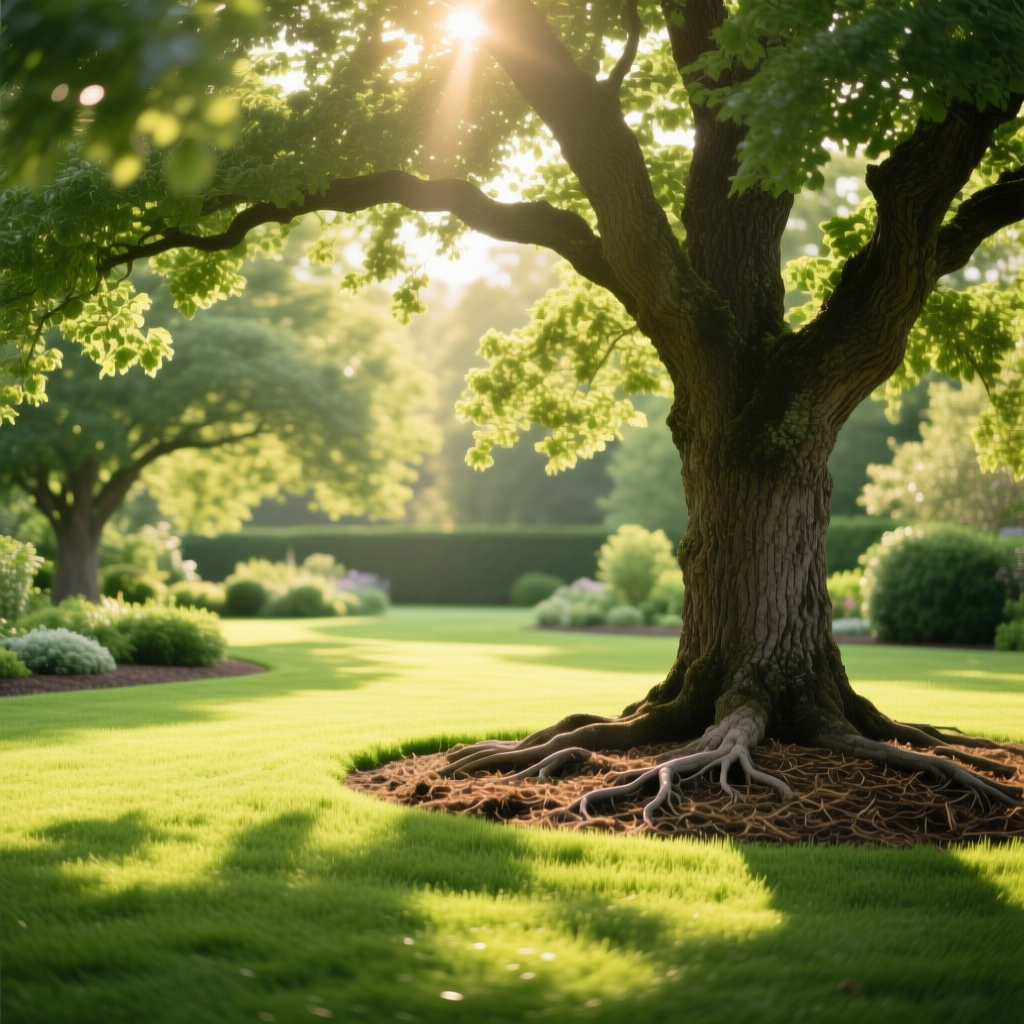
Reducing Turfgrass Competition Around Mature Trees: A Complete Guide
Robert HayesPublished
When we picture a classic, picturesque landscape, we often imagine a majestic, mature tree casting a cool shadow over a pristine, emerald-green lawn. While this image is aesthetically pleasing to the human eye, it represents a biological battleground beneath the soil. In nature, trees and turfgrass rarely coexist in the same immediate space. Trees typically grow in forested environments with deep, organic leaf litter, while grasses thrive in open, sunlit meadows. Forcing these two distinct plant types to share the same soil profile creates intense competition for vital resources, often leaving the mature tree stressed, vulnerable to pests, and prone to decline.
Reducing turfgrass competition around mature trees is one of the most impactful tree care practices you can implement. By removing the grass from the critical root zone and replacing it with appropriate mulch or shade-tolerant groundcovers, you dramatically improve the tree’s access to water, nutrients, and oxygen. This comprehensive guide will explore the biology behind this competition, safe removal strategies, proper mulching techniques, canopy management, and seasonal care tips to ensure your mature trees thrive for decades to come.
Understanding the Root of the Problem: Care Requirements & Biology
To understand why turfgrass is detrimental to mature trees, we must look beneath the surface. The majority of a tree’s feeder roots—the tiny, hair-like roots responsible for absorbing water and nutrients—are located in the top 12 to 18 inches of soil. Coincidentally, this is the exact same soil horizon where turfgrass roots are most densely concentrated. When grass grows right up to the trunk of a mature tree, it creates a dense, fibrous mat that acts as a barrier.
The Battle for Water and Nutrients
Turfgrass is an aggressive competitor. Its dense root system intercepts rainfall and irrigation before it can percolate deeper into the soil where the tree’s larger structural and feeder roots reside. Furthermore, standard lawn fertilizers are typically high in nitrogen and formulated for the rapid, blade-focused growth of grass. When a tree absorbs this excess nitrogen, it can lead to weak, succulent growth that is highly susceptible to sap-sucking insects and fungal pathogens. For a deeper understanding of how soil nutrients affect your landscape, reviewing our guide on soil testing and amendments can help you balance the needs of your entire yard.
Oxygen Deprivation and Soil Compaction
Tree roots require a constant supply of oxygen to perform cellular respiration and absorb nutrients. A thick layer of turfgrass, combined with the frequent foot traffic and heavy mowing equipment associated with lawn maintenance, leads to severe soil compaction. Compacted soil loses its pore space, effectively suffocating the tree’s root system. By removing the grass, you eliminate the need for heavy mowers in the critical root zone, instantly alleviating compaction and allowing the soil to breathe.
Effective Strategies for Removing Turfgrass Safely
Removing grass around a mature tree requires care and precision. The goal is to eliminate the turf without severing the tree’s vital feeder roots, which are often intertwined with the grass roots in the top few inches of topsoil. Never use a rototiller or deep mechanical edging tools near a mature tree, as this will cause catastrophic root damage and invite severe decay.
The Sheet Mulching Method (Smothering)
The safest and most effective way to remove turfgrass around a tree is through sheet mulching. This organic method kills the grass while simultaneously improving the soil structure beneath it.
- Step 1: Mow the grass around the tree as short as possible.
- Step 2: Water the area thoroughly to activate soil microbes.
- Step 3: Lay down overlapping layers of plain, uncoated cardboard or several sheets of newspaper directly over the grass. Ensure there are no gaps where grass can push through.
- Step 4: Wet the cardboard to keep it in place and begin the decomposition process.
- Step 5: Cover the cardboard with a 2 to 4-inch layer of organic mulch.
Over the next few months, the cardboard will block sunlight, killing the grass, while earthworms and microbes break down the organic matter, leaving behind rich, friable soil. If you are dealing with stubborn, invasive grasses, you may need to explore organic weed control methods prior to laying your cardboard.
Manual Removal and Herbicide Considerations
If you prefer to remove the grass manually, use a hand trowel or a specialized weeding tool to carefully slice the turf just below the soil surface, peeling it back like a carpet. Avoid digging deep into the soil. While chemical herbicides like glyphosate can kill grass quickly, they are generally discouraged in the immediate root zone of mature trees. Some herbicides can be absorbed by the tree’s shallow roots or translocated through root grafts if nearby trees share a root system. Always prioritize mechanical or smothering methods to protect the tree’s long-term health.
Designing the Perfect Tree Ring & Mulching Techniques
Once the turfgrass is removed, the exposed soil must be protected and nurtured. This is where proper mulching comes into play. A well-designed tree ring mimics the natural forest floor, regulating soil temperature, retaining moisture, and suppressing weed growth.
Sizing the Mulch Ring
Ideally, the mulch ring should extend to the tree’s drip line (the outer edge of the canopy). However, in a managed landscape, this is rarely practical. As a general rule, the mulch ring should have a radius of at least 3 to 6 feet from the trunk, or roughly one foot of radius for every inch of trunk diameter. The larger the mulch ring, the greater the benefit to the tree.
The Donut Method: Avoiding Volcano Mulching
One of the most common and fatal mistakes in tree care is “volcano mulching,” where mulch is piled high against the trunk in a cone shape. This practice traps moisture against the bark, leading to trunk rot, girdling roots, and providing a hidden habitat for rodents that chew on the cambium layer. Instead, use the “donut method.”
- Keep the mulch 3 to 5 inches away from the base of the trunk, exposing the root flare (the area where the trunk widens and meets the soil).
- Apply the mulch in a layer 2 to 4 inches deep. Any deeper, and you risk blocking oxygen and water from reaching the soil.
- Ensure the outer edge of the mulch ring tapers down to the soil level to prevent water runoff.
For more detailed instructions on selecting the right materials, check out our comprehensive guide on mulching basics for tree health.
Pruning & Canopy Management for Under-Tree Health
The relationship between the tree’s canopy and the ground below is deeply interconnected. A dense, unpruned canopy creates deep, heavy shade and intercepts the majority of rainfall, leaving the soil beneath bone-dry and barren. While removing the grass solves the competition issue, managing the canopy can improve the microclimate and allow for the introduction of shade-tolerant groundcovers if you prefer a living mulch over wood chips.
Crown Thinning and Light Penetration
Crown thinning involves the selective removal of smaller, inner branches to allow dappled sunlight to reach the ground. This reduces the humidity trapped beneath the canopy, which can lower the risk of fungal foliar diseases. However, it is crucial not to over-prune. Removing more than 15% to 20% of the live canopy in a single season can shock a mature tree and trigger a stress response that leads to excessive, weak water sprout growth. Always adhere to proper tree pruning techniques to ensure clean cuts that heal rapidly.
Elevating the Lower Canopy
If the lower branches of your mature tree are drooping and touching the ground, they can trap moisture and create a haven for pests. Carefully elevating the lower canopy by removing the lowest limbs improves air circulation across the mulch bed and makes landscape maintenance significantly easier. Always cut just outside the branch collar to allow the tree to compartmentalize the wound effectively.
Preventing Diseases & Pest Issues in Transition Zones
The transition zone between a lawn and a tree bed is a hotspot for mechanical damage and disease. By eliminating the grass, you inherently solve one of the biggest threats to urban and suburban trees: “mower blight.”
Eliminating Mechanical Damage
String trimmers (weed whackers) and lawnmower decks frequently scrape against the base of trees, slicing through the bark and damaging the vascular cambium. This damage restricts the flow of water and nutrients from the roots to the canopy. Over time, repeated girdling from lawn equipment will slowly starve and kill a mature tree. A wide, grass-free mulch ring creates a physical buffer zone, ensuring that mowers and trimmers never come close to the vulnerable trunk.
Monitoring for Fungal Pathogens and Borers
Trees stressed by turfgrass competition are highly susceptible to secondary invaders, such as wood-boring insects and opportunistic fungi. Once the grass is removed and the tree is properly mulched, its natural defenses will improve. However, you should still monitor the trunk for signs of trouble, such as oozing sap, sawdust-like frass, or fungal conks (mushrooms) growing directly on the bark. If you notice these symptoms, consult our resource on identifying and treating tree diseases to take immediate corrective action.
Seasonal Tips for Maintaining Tree Beds
A grass-free tree ring is not a “set it and forget it” solution. It requires seasonal attention to ensure the mulch remains effective and the tree continues to receive the care it needs throughout the year.
Spring: Refreshing and Inspecting
In early spring, pull back any mulch that may have migrated against the trunk over the winter. Check for signs of rodent damage under the snow line. Refresh the mulch layer if it has decomposed below the 2-inch mark, but avoid adding new mulch on top of old, matted layers. Fluff the existing mulch with a rake to restore its porosity and water-permeability.
Summer: Deep Watering and Drought Monitoring
During the heat of summer, mature trees require deep, infrequent watering. Without the grass to intercept it, water can now reach the root zone. Use a soaker hose coiled around the drip line to deliver a slow, deep soaking. Avoid frequent, shallow sprinkling, which encourages roots to grow upward toward the surface in search of moisture, making them vulnerable to heat and drought.
Fall: Leaf Management and Winterizing
In the autumn, allow fallen leaves to remain in the tree bed. Shredding them with a mower and leaving them in the mulch ring provides a massive influx of free, nutrient-rich organic matter that perfectly mimics the natural forest floor. If you must plant beneath the tree, fall is the ideal time to install shade-tolerant perennials, as the cooler temperatures and autumn rains help them establish before the summer heat returns.
Winter: Protecting the Trunk
For younger mature trees with thin bark (such as maples or beeches), winter sunscald and frost cracking can be an issue. Ensure the mulch ring is maintaining a consistent soil temperature, but keep it away from the trunk to prevent mice and voles from nesting in the mulch and chewing the bark during the winter months.
Frequently Asked Questions (FAQ)
Can I plant flowers or groundcovers instead of grass under my tree?
Yes, but you must choose shade-tolerant, shallow-rooted plants that will not compete aggressively with the tree. Excellent options include hostas, ferns, coral bells, and creeping jenny. When planting, dig individual, small holes for each plant rather tilling the entire bed, which would destroy the tree’s feeder roots. If you are struggling to grow anything at all due to deep shade, you might want to review shade-tolerant grass varieties, though a pure mulch bed is almost always the healthier choice for the tree.
How far out should the mulch ring extend from the trunk?
The absolute minimum radius for a mulch ring is 3 feet from the trunk. However, the ideal radius extends to the tree’s drip line (the outer edge of the branches). For large, mature oaks or maples, this could mean a ring that is 20 to 30 feet across. Expand the ring gradually over a few years if removing a massive section of lawn all at once is aesthetically jarring or impractical for your landscape design.
Will removing the grass around my tree damage its roots?
If done correctly, no. The danger lies in the method of removal. Using a rototiller, heavy sod-cutting machines, or digging deeply with a shovel will sever vital feeder roots and cause severe stress. Smothering the grass with cardboard and mulch, or carefully slicing the turf just at the soil surface by hand, leaves the tree’s root system completely intact and unharmed.
What is “volcano mulching” and why is it bad for mature trees?
Volcano mulching is the practice of piling mulch high against the trunk of a tree in a cone or volcano shape. This is incredibly harmful because tree bark is designed to be exposed to the air, not buried in constant moisture. Volcano mulching causes the bark to rot, invites fungal diseases, encourages the growth of secondary roots that can eventually girdle and strangle the tree, and provides a warm, hidden winter home for bark-chewing rodents.
How often should I water a mature tree after removing the surrounding lawn?
Mature trees generally rely on natural rainfall, but during periods of drought, they require supplemental watering. Without the turfgrass to absorb the surface water, you can water more efficiently. Apply roughly 10 to 15 gallons of water per inch of trunk diameter, delivered slowly via a soaker hose or drip irrigation, once every two to three weeks during dry summer spells. Always check the soil moisture beneath the mulch before watering to ensure you are not over-saturating the root zone.