
Tree Care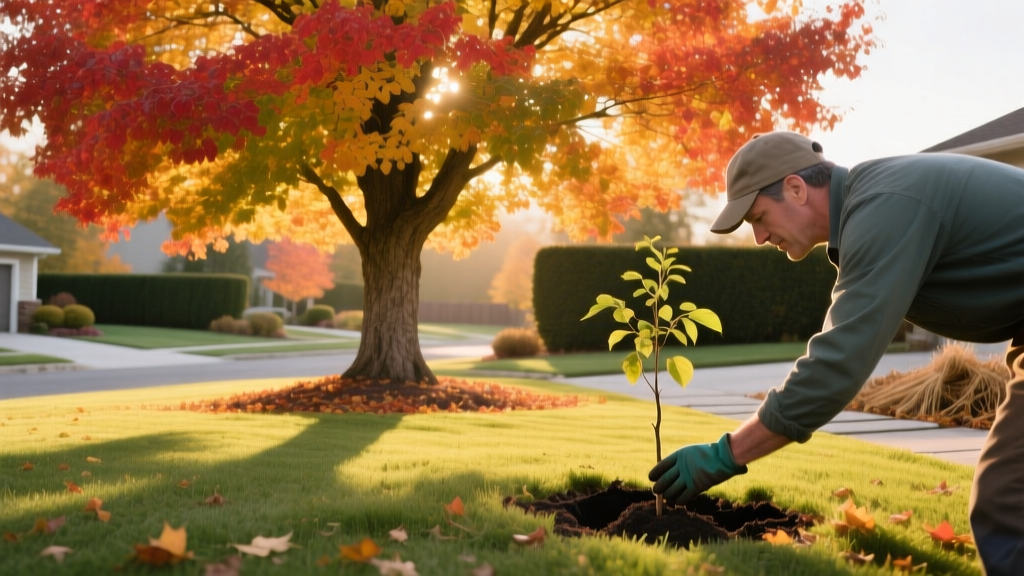
When to Plant Beautiful Fall Trees: A Regional Timing Guide
The Physiology of Autumn Color: Why Planting Timing Dictates Foliage
Achieving vibrant autumn foliage is not merely a matter of selecting the right species; it is a physiological race against time. The brilliant reds and purples seen in SUNY College of Environmental Science and Forestry research are driven by anthocyanins, which are synthesized in the leaf only after the abscission layer begins to form and trap sugars. If a tree is planted too late in the season, its root system fails to establish sufficient hydraulic conductivity, leading to drought stress that triggers premature leaf drop before the 14-to-21-day color development window completes.
Conversely, planting too early in late summer exposes newly transplanted root balls to heat stress, depleting the carbohydrate reserves the tree needs to produce those late-season pigments. To cultivate beautiful fall trees that actually perform as advertised, you must align your planting schedule with specific soil temperature thresholds rather than arbitrary calendar dates.
Regional Planting Calendars by USDA Hardiness Zone
According to the Arbor Day Foundation, fall planting capitalizes on warm soil and cool air, promoting root growth without the energy drain of top-growth. However, the exact window shifts dramatically by region. Use the matrix below to time your installation based on your local 6-inch soil temperature readings.
| USDA Zone | Optimal Planting Window | Soil Temp Threshold | Top Regional Performers |
|---|---|---|---|
| Zones 3-4 | Aug 15 – Sep 15 | Plant while soil is >55°F | Quaking Aspen, Paper Birch, Amur Maple |
| Zones 5-6 | Sep 1 – Oct 15 | Plant while soil is 50°F–65°F | Red Sunset Maple, Sugar Maple, Black Gum |
| Zones 7-8 | Oct 15 – Dec 1 | Plant while soil is 45°F–60°F | Autumn Gold Ginkgo, Sweetgum, Chinese Pistache |
| Zones 9-10 | Nov 1 – Jan 15 | Plant during winter dormancy | Crape Myrtle, Bald Cypress, Texas Red Oak |
Cultivar Spotlight: High-Performance Species for Predictable Color
Skip generic seed-grown stock, which offers highly variable color expression. For guaranteed, high-impact autumn displays, invest in vegetatively propagated cultivars. Expect to pay between $140 and $190 for a 15-gallon nursery container, or $350 to $500 for a 2.5-inch caliper balled-and-burlapped (B&B) specimen at retail in 2026.
1. Acer rubrum 'Red Sunset' (USDA Zones 4-8)
The undisputed standard for reliable, early-to-mid autumn red color. 'Red Sunset' thrives in slightly acidic soils (pH 5.5 to 6.5). If your soil pH exceeds 7.0, the tree will develop manganese chlorosis, resulting in sickly yellow leaves with green veins rather than the desired crimson. Always perform a $15-$25 professional soil test before purchasing.
2. Ginkgo biloba 'Autumn Gold' (USDA Zones 4-9)
Offers a sudden, striking transition to fluorescent yellow. Unlike maples, this male clone is highly tolerant of urban compaction and alkaline soils up to pH 7.5. The critical failure mode for Ginkgo is planting it too deeply; the root flare must be visibly exposed 2 inches above grade to prevent fatal phytophthora root rot.
3. Nyssa sylvatica 'Wildfire' (USDA Zones 4-9)
Black gum produces a deep, almost purple-red color that persists weeks longer than maples. It requires consistent moisture and performs poorly in heavy, unamended clay. When backfilling the planting hole, integrate 20% organic compost by volume to improve soil structure and water retention.
The 6-Week Pre-Dormancy Establishment Protocol
Once your beautiful fall trees are in the ground, the next 42 days dictate their survival and next year's color intensity. Follow this exact protocol to prepare the root zone for winter:
- Hydration Metrics: Apply 1.5 gallons of water per inch of trunk caliper every three days if there is no measurable rainfall. Continue this until the ground freezes solid.
- The Mulch Donut: Apply exactly 3 inches of double-shredded hardwood mulch in a 36-inch diameter ring. Keep the mulch 3 inches away from the trunk flare to prevent bark decay and rodent girdling.
- Anti-Desiccant Application: For broadleaf evergreens or late-planted deciduous stock, spray an anti-transpirant (like Wilt Pruf) at a 10:1 water-to-concentrate ratio when daytime temperatures are between 40°F and 50°F, ensuring the liquid dries before nightfall.
CRITICAL WARNING: Never apply high-nitrogen synthetic fertilizers (e.g., 46-0-0 urea) to newly planted fall trees. Nitrogen stimulates tender top-growth that will not harden off before the first freeze, resulting in severe dieback. If a soil test indicates a phosphorus or potassium deficiency, apply a slow-release organic amendment like bone meal or greensand, but withhold nitrogen until the following spring.
Troubleshooting Matrix: Why Your Trees Fail to Color
If your trees drop brown leaves or turn pale yellow instead of vibrant red or gold, diagnose the issue using this framework. Note that early coloration in late August or early September is rarely a sign of a "fast-acting" cultivar; according to University of Minnesota Extension experts, it is almost always a symptom of severe environmental stress.
| Visual Symptom | Underlying Physiological Cause | Actionable Correction |
|---|---|---|
| Leaves turn brown and crispy on the margins before dropping early. | Hydraulic failure; roots cannot pull enough water to offset transpiration. | Check soil moisture at 6 inches deep. If dry, deep-water immediately. Check for root-bound circling roots in container stock. |
| Leaves turn pale yellow with green veins (interveinal chlorosis). | High soil pH locking out iron and manganese uptake. | Apply chelated iron (Fe-EDDHA) as a soil drench. Long-term: lower soil pH using elemental sulfur in early spring. |
| Top canopy colors beautifully, but lower branches drop green leaves. | Canopy shading inhibiting anthocyanin synthesis on lower branches. | Thin the upper canopy by 15% during winter dormancy to increase light penetration to the interior and lower scaffolds. |
| Entire tree colors up 3-4 weeks earlier than neighboring trees. | Girdling roots choking the vascular cambium, or severe trunk damage. | Excavate the root flare with an air spade or careful hand-digging. Sever any roots wrapping around the main trunk. |
By aligning your planting schedule with regional soil temperatures and strictly managing the post-installation hydration window, you secure the physiological foundation required for spectacular autumn displays year after year.

