
Tree Care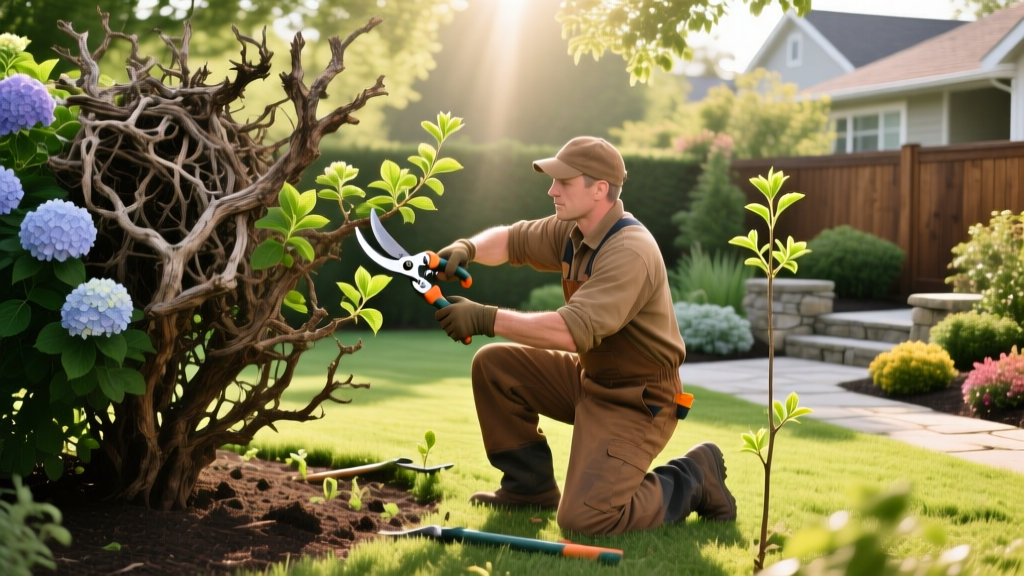
How to Fix Overgrown Shrubs: Rejuvenation Pruning Guide
The Hidden Cost of Overgrown Shrubs
When shrubs outgrow their designated landscape zones, they transition from aesthetic assets to structural liabilities. Overgrown shrubs obscure window sightlines, trap moisture against home siding (accelerating wood rot), and create dense, humid microclimates that harbor fungal pathogens like powdery mildew and spider mites. Homeowners often attempt to manage this growth with gas-powered hedge trimmers, resulting in the infamous "meatball" effect. This practice stimulates dense outer foliage while starving the interior canopy of sunlight, ultimately causing the inner branches to die back completely.
To permanently resolve this issue, you must abandon surface-level shearing and implement rejuvenation pruning. This diagnostic and surgical approach forces the plant to regenerate from its root system or latent buds, restoring its natural architectural form and long-term vigor. According to the University of Minnesota Extension, proper rejuvenation can extend the functional lifespan of a deciduous shrub by 10 to 15 years, delaying the need for costly total removal and replanting.
Diagnosing Your Overgrown Shrubs: Can They Be Saved?
Before making a single cut, you must evaluate the shrub's species, structural integrity, and overall health. Not all plants survive severe pruning. Use the diagnostic matrix below to determine your intervention strategy.
| Shrub Condition / Species Type | Diagnostic Indicator | Recommended Action |
|---|---|---|
| Deciduous (Lilac, Forsythia, Spirea, Privet) | Thick, crossing canes; dead interior; bare lower stems. | Hard Rejuvenation (Cut to 4-6 inches). |
| Broadleaf Evergreen (Boxwood, Holly, Yew) | Dense outer shell, hollow center, misshapen from shearing. | Gradual Renewal (1/3 removal over 3 years). |
| Needled Evergreen (Juniper, Arborvitae, Pine) | Browning interior, branches extending past property lines. | Do Not Hard Prune. Selective thinning only; consider removal if severely overgrown. |
| Any Species with Severe Borer Damage / Cankers | Sawdust at base, oozing sap, D-shaped exit holes in bark. | Complete removal. Pruning will not save structurally compromised wood. |
The Physiology of Rejuvenation: Why Hard Cuts Work
Deciduous shrubs possess latent buds buried deep within the older, thicker wood near the soil line. When the upper canopy is removed, the plant's apical dominance is broken. This triggers a massive hormonal shift—specifically, a drop in auxin production from the removed terminal buds—which signals the latent buds to break dormancy. The root system, which is still fully intact and robust, pushes stored carbohydrates upward, resulting in explosive new growth that can reach 3 to 5 feet in the first season alone.
Warning: The Conifer Exception
Needled evergreens (with the exception of Yews/Taxus) lack latent buds on old, brown wood. If you cut a Juniper or Arborvitae back past the green foliage into the "dead zone," that branch will never regenerate. It will remain a permanent brown stub. For these species, you must rely on selective, shallow thinning cuts or plan for complete extraction.
Method 1: Hard Rejuvenation (The 6-Inch Rule)
Hard rejuvenation is the fastest way to reclaim space, but it leaves your landscape looking barren for one full growing season. This method is ideal for multi-stemmed deciduous shrubs that have become a tangled, unmanageable thicket.
Step-by-Step Execution
- Timing is Critical: Execute hard pruning in late winter or very early spring (February to early March in USDA Zones 5-7), just before the sap begins to flow and buds swell. Pruning too early in winter risks frost desiccation on the exposed cuts; pruning too late in spring drains the plant's stored energy reserves.
- Clear the Base: Rake away all mulch, leaf litter, and soil from the base of the shrub to expose the root flare. This prevents you from accidentally burying the new cuts, which invites crown rot.
- Make the Cuts: Using a pruning saw or heavy-duty loppers, cut every single cane back to a height of 4 to 6 inches above the soil line. Do not leave 12-inch stubs; the plant needs to push growth from the very base to maintain a natural, arching form.
- Angle the Cuts: Make cuts at a slight 45-degree angle, sloping away from the center of the plant, to ensure rainwater runs off the exposed wood rather than pooling and causing fungal decay.
Method 2: Gradual Renewal (The 3-Year Plan)
If the aesthetic shock of hard pruning is unacceptable, or if you are working with broadleaf evergreens like Boxwoods and Rhododendrons, utilize the gradual renewal method. This approach maintains the shrub's overall shape while systematically replacing old wood with new growth.
- Year 1: Identify and remove the oldest, thickest one-third of the canes at ground level. Thin out any crossing or rubbing branches in the interior to allow light penetration.
- Year 2: Remove the next oldest one-third of the remaining canes. You will now see new, vigorous shoots emerging from the base where you made cuts in Year 1.
- Year 3: Remove the final third of the original old wood. By the end of this cycle, the entire shrub will consist of fresh, youthful canes that are structurally sound and densely foliated from top to bottom.
Research from Michigan State University Extension confirms that gradual renewal minimizes the physiological shock to broadleaf evergreens, which rely heavily on their existing leaf mass for photosynthesis and winter hardiness.
Essential Tools for Severe Pruning
Attempting to cut 2-inch thick, aged canes with cheap, bypass pruners will result in crushed cambium layers, jagged tears, and immediate pathogen entry points. Invest in high-carbon steel tools that slice cleanly.
| Tool Category | Recommended Model | Approximate Cost | Use Case |
|---|---|---|---|
| Hand Pruners | Felco F-2 Classic Bypass | $60 - $65 | Stems up to 1 inch diameter; precise interior thinning. |
| Bypass Loppers | Fiskars 32" PowerGear2 | $45 - $55 | Canes 1 to 2.5 inches; provides 3x leverage for deep reach. |
| Folding Pruning Saw | Silky Gomboy 240 (Medium Teeth) | $55 - $65 | Thick, woody canes over 2.5 inches; leaves a glass-smooth finish. |
| Wound Sealant | None (Omit entirely) | $0 | Modern arboriculture proves sealants trap moisture and accelerate rot. |
Post-Pruning Care and Fertilization Schedule
A severely pruned shrub has just undergone major surgery. Its root-to-shoot ratio is entirely unbalanced. The immediate post-pruning environment dictates whether the shrub rebounds vigorously or succumbs to environmental stress.
Watering and Mulching Protocol
Without a canopy to transpire water, the root system can easily become waterlogged if you maintain your standard irrigation schedule. Reduce automatic drip irrigation by 40% for the first six weeks. Instead, monitor soil moisture manually. When the top 3 inches of soil are dry, apply exactly 1.5 gallons of water per square foot of the root zone. Apply a 2-inch layer of shredded hardwood mulch over the root zone to regulate soil temperature, but keep the mulch at least 3 inches away from the 6-inch pruning stubs to prevent collar rot.
Targeted Fertilization
Do not blast the plant with high-nitrogen synthetic fertilizers immediately after pruning. This forces weak, spindly growth that is highly susceptible to aphid infestations and wind breakage. Wait until the new shoots have reached 6 to 8 inches in length and the leaves have fully expanded and turned dark green (usually late May or early June). At this stage, apply a balanced, slow-release granular fertilizer with an NPK ratio of 10-6-4 or 14-14-14 at a rate of 1 pound per 100 square feet of bed space. Alternatively, top-dress the root zone with a half-inch layer of screened compost, which provides a steady micronutrient release without the risk of root burn.
When to Abandon Pruning and Choose Removal
Rejuvenation pruning requires patience and physical labor. In certain scenarios, the return on investment for saving an overgrown shrub is negative. You should bypass pruning and schedule complete stump grinding and removal if:
- The shrub is a species that does not tolerate hard cuts (e.g., Juniper, False Cypress) and is physically encroaching on hardscaping or foundations.
- More than 30% of the base canes show signs of advanced heartwood decay, indicated by soft, crumbly wood or the presence of shelf fungi (conks) at the soil line.
- The plant is located in a narrow utility easement where its natural mature width will perpetually conflict with overhead power lines or underground transformer access, requiring you to repeat the pruning cycle every three years indefinitely.
By accurately diagnosing the species and structural health of your overgrown shrubs, and applying the correct rejuvenation technique with professional-grade tools, you can reclaim your landscape sightlines and restore the natural, architectural beauty of your property's foundation plantings.

