
Tree Care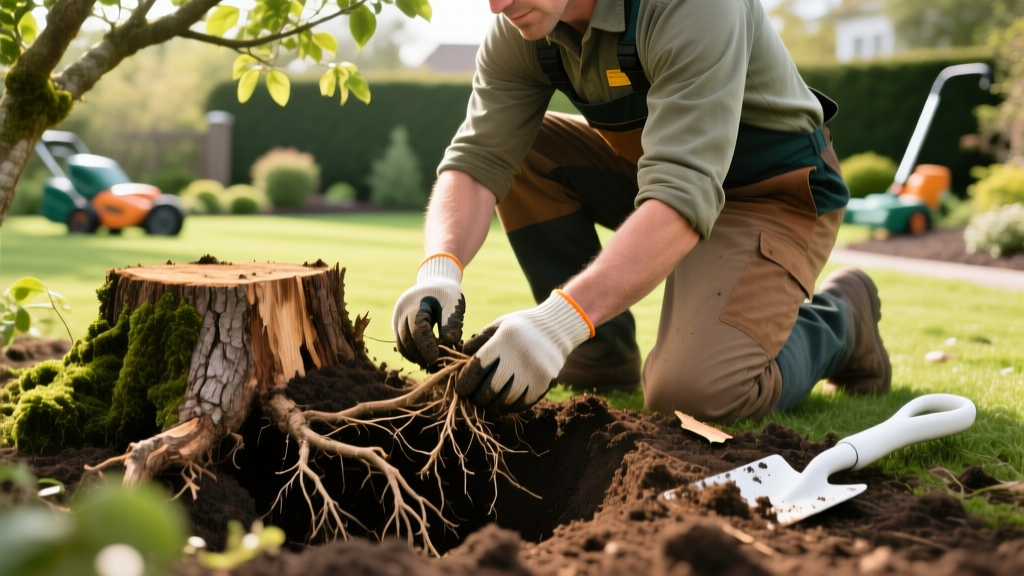
How to Remove a Stump by Hand: The Pest Control Playbook
Leaving a decaying tree stump in your yard is not merely an aesthetic compromise; it is an active invitation to structural pests and invasive weeds. From the perspective of integrated pest management, an abandoned stump acts as a biological incubator. It harbors subterranean termites, provides nesting galleries for carpenter ants, and serves as a reservoir for fungal pathogens like Armillaria root rot. Furthermore, residual root systems frequently trigger aggressive suckering in invasive species such as the Tree of Heaven (Ailanthus altissima) and Bradford Pear, turning a single tree removal into a multi-year weed battle.
While stump grinding shreds the visible wood, it leaves the deep taproot and lateral root network intact, failing to resolve the underlying pest and weed liabilities. Learning how to remove a stump by hand ensures the complete extraction of the root crown and primary laterals, physically eliminating the cellulose food source for borers and the hormonal triggers for weed suckers. This playbook details the manual extraction process with a strict focus on long-term pest and weed eradication.
The Pest and Weed Liability of Abandoned Stumps
Before breaking ground, it is critical to understand the specific biological threats a retained stump poses to your landscape and home foundation. According to entomological research on subterranean termites, decaying wood in direct contact with soil creates the exact moisture and temperature parameters required for Reticulitermes flavipes (Eastern Subterranean Termite) colonies to thrive. Once established in a stump, these colonies will inevitably forage toward nearby structural timber.
Critical Pest Warning: Stump grinding leaves behind a massive pile of woodchips and buried root fragments. If these chips are used as mulch near your home's foundation, they can bridge the gap between soil and siding, bypassing chemical termite barriers. Manual extraction removes the biomass entirely.
Beyond insects, stumps are ground zero for aggressive weed regrowth. Species like the Tree of Heaven store massive carbohydrate reserves in their lateral roots. If the root crown is not physically removed, the plant will push up dozens of vertical suckers through the surrounding turf, rendering standard broadleaf herbicides ineffective due to the sheer volume of the subterranean root network. Furthermore, fungal pathogens such as Armillaria mellea (honey fungus) survive in dead roots and will spread via rhizomorphs to infect healthy, adjacent landscape trees, as noted in university plant pathology guidelines.
Essential Toolkit for Manual Extraction
Manual stump removal relies on leverage and severing, not brute force. Equipping yourself with the correct 2026-specification tools reduces physical strain and prevents the tool failures common with budget-grade implements.
| Tool | Recommended Spec / Brand | Est. Cost | Primary Function in Playbook |
|---|---|---|---|
| Cutter Mattock | Fiskars Pro 5-lb (36-inch handle) | $45 - $55 | Severing lateral roots up to 2.5 inches thick. |
| Digging Bar | True Temper 72-inch Solid Steel | $35 - $45 | Undercutting the taproot and acting as a primary fulcrum. |
| Bypass Loppers | Felco 200 (24-inch) | $60 - $75 | Clean-cutting fibrous feeder roots in tight trench spaces. |
| Drain Spade | Bully Tools 14-Gauge Steel | $40 - $50 | Excavating the narrow perimeter trench around the root ball. |
Step-by-Step Execution: How to Remove a Stump by Hand
The following procedure is optimized for stumps ranging from 6 to 18 inches in diameter. For larger specimens, the physics of manual leverage become unsafe, and mechanical extraction is advised.
Step 1: Excavate the Perimeter Trench
Using your drain spade, dig a continuous trench completely encircling the stump. The trench should be positioned 18 to 24 inches away from the base of the trunk and dug to a depth of 12 to 16 inches. This specific distance exposes the primary lateral roots before they taper into unmanageable, sprawling networks. Remove all loose soil from the trench to create a clear workspace for your cutting tools.
Step 2: Sever the Lateral Roots
With the roots exposed, use the cutter mattock to chop through laterals thicker than 1 inch. Strike at a 45-degree angle to create a beveled cut, which prevents the root from wedging against the blade. For fibrous roots under 1 inch, use the bypass loppers. Critical detail: Do not just cut the roots; remove a 2-inch section of each lateral root. This prevents the severed ends from fusing back together or pushing immediate suckers upward.
Step 3: Undercut the Taproot
Once all laterals are severed, the stump is anchored only by its central taproot or deep sinker roots. Drive the 72-inch digging bar straight down into the soil directly beneath the stump's center, angling it slightly inward. Work the bar in a circular motion to fracture the deep soil and snap the taproot. If you encounter bedrock or heavy clay, use the bar to carve a V-notch under the root ball.
Step 4: Fulcrum Extraction
Place a solid wooden block or a secondary steel bar on the edge of your trench to act as a fulcrum. Slide the digging bar under the lowest exposed root crown. Apply downward pressure on the top of the bar to lever the stump upward. Rock the stump back and forth to break the final soil suction. Once the stump is freed, drag it out of the hole immediately to prevent it from settling back into the cavity.
Post-Extraction Soil and Pest Treatment
Extracting the wood is only half the pest and weed removal playbook. The resulting void in the soil must be treated to prevent secondary infestations.
- Root Sweeping: Inspect the walls of the empty hole. Use loppers to snip away any remaining root fragments larger than a pencil. Even small fragments of invasive species can regenerate.
- Fungal Mitigation: If the removed tree died of a fungal disease, do not replant a susceptible species in the exact same spot. The University of Minnesota Extension recommends amending the backfill soil with high-quality compost to introduce competitive, beneficial soil microbes that outcompete residual pathogens.
- Pre-Emergent Weed Control: The act of digging brings dormant weed seeds to the surface. Before laying new sod or seed over the patched area, apply a pre-emergent herbicide containing prodiamine (e.g., Barricade) at a rate of 1.5 lbs per 1,000 square feet to prevent crabgrass and spurge from colonizing the disturbed soil.
Method Comparison: Hand Removal vs. Grinding vs. Chemical
Understanding where manual removal fits into the broader landscape management strategy helps justify the physical labor involved.
| Method | Pest Eradication Efficacy | Weed Sucker Risk | Cost (DIY/Pro) | Best Use Case |
|---|---|---|---|---|
| Manual Hand Removal | 100% (Biomass removed) | Near Zero | $150 (Tools) / N/A | Pest-prone zones, invasive species, small-to-medium stumps. |
| Stump Grinding | Low (Leaves buried chips) | High (Roots remain) | $150-$400 (Pro) | Quick aesthetic clearing, large stumps where replanting isn't planned. |
| Chemical Decay (KNO3) | Moderate (Takes 1-2 years) | High (Prolonged decay) | $20-$40 (DIY) | Budget constraints, non-urgent removal, non-invasive species. |
Edge Cases and Troubleshooting
The Rotted Taproot Dilemma: If the stump is heavily decayed, the digging bar may simply punch through the taproot rather than leveraging it. In this scenario, abandon the fulcrum method. Use a reciprocating saw with a 12-inch pruning blade to slice horizontally through the soil directly beneath the root crown, severing the rotted anchor cleanly.
When dealing with heavy clay or rocky soil, the perimeter trench will resist standard spades. Switch to a pick-mattock to fracture the clay pan before attempting to dig. If you encounter large glacial stones wedged against the lateral roots, do not attempt to pry them out; instead, use the loppers to cut the roots flush against the stone, leaving the root fragment attached to the rock where it will safely decay without triggering surface suckers.
By treating stump removal not as a mere landscaping chore, but as a critical node in your property's pest and weed defense strategy, you protect your home's structural integrity and maintain a pristine, manageable turf. Manual extraction demands physical effort, but the absolute elimination of the root system provides a permanent resolution that grinders and chemicals simply cannot match.

