
Tree Care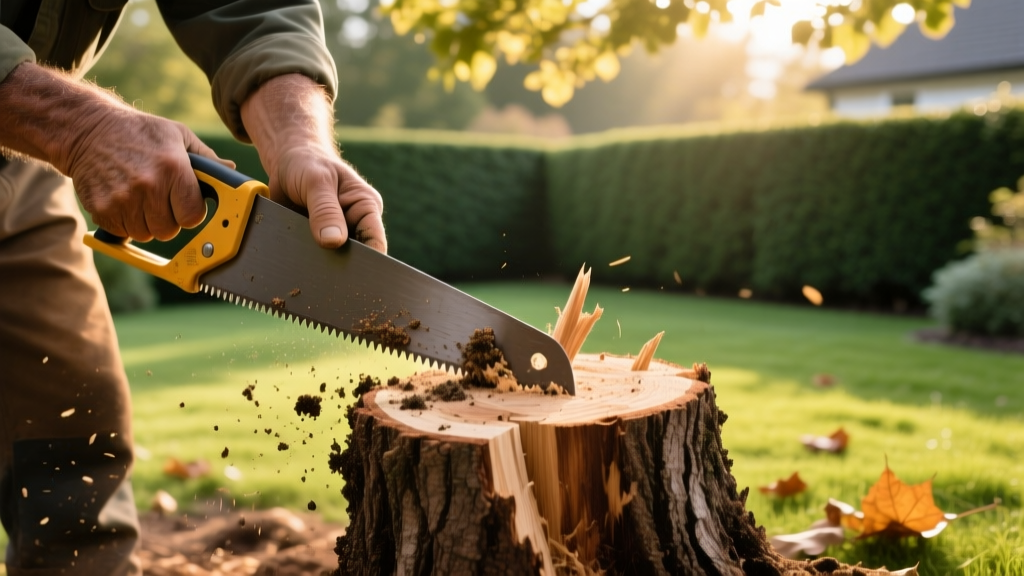
How to Remove a Stump Without a Stump Grinder: 4 Proven Methods
The Hidden Pest and Weed Threats of Tree Stumps
Leaving a tree stump in your yard is not merely an aesthetic compromise; it is an active biological hazard. Decaying wood serves as a primary foraging hub for Eastern subterranean termites (Reticulitermes flavipes) and carpenter ants (Camponotus pennsylvanicus). According to the U.S. Environmental Protection Agency, termite colonies use stumps as satellite feeding stations, eventually bridging the gap to your home's foundation if the stump is within 20 feet of the structure.
Furthermore, stumps act as weed incubators. Species like Tree of Heaven, Honey Locust, and Chinese Tallow aggressively push root suckers through your turf for years. Even after the tree is felled, the root system remains alive, siphoning water and nutrients away from your lawn while sprouting invasive shoots. If you need to know how to remove a stump without a stump grinder, you must choose a method that neutralizes both the physical wood and the underlying root network to permanently sever the pest and weed lifecycle.
Warning: The Rock Salt Myth
Never use sodium chloride (rock salt or table salt) to kill a stump. While it will dehydrate and kill the wood, sodium permanently alters the soil structure, causing clay particles to bind tightly and destroying soil permeability. This sterilizes the earth, making it nearly impossible to grow grass or plant new shrubs in that spot for years.
Never use sodium chloride (rock salt or table salt) to kill a stump. While it will dehydrate and kill the wood, sodium permanently alters the soil structure, causing clay particles to bind tightly and destroying soil permeability. This sterilizes the earth, making it nearly impossible to grow grass or plant new shrubs in that spot for years.
Method 1: The Epsom Salt Accelerated Decay Technique
Epsom salt (100% magnesium sulfate) draws moisture out of the wood cells while simultaneously introducing magnesium to the soil, which is a beneficial secondary macronutrient for turfgrass. This method does not remove the stump instantly but accelerates fungal decomposition, turning the wood into soft, crumbly organic matter in 4 to 8 weeks.
Step-by-Step Execution
- Drill the Pattern: Use a cordless drill with a 1-inch spade bit or auger bit. Drill holes 8 to 12 inches deep into the stump. Space the holes 3 inches apart in concentric rings, starting 2 inches from the bark edge and working inward.
- Fill the Reservoirs: Pour pure, unscented Epsom salt into each hole until it is completely full. Do not use bath salts containing added oils, fragrances, or boron.
- Activate the Solution: Using a watering can with a narrow spout, add just enough water to each hole to dissolve the top layer of salt and carry it deep into the wood's vascular tissue. Avoid overflowing, which wastes the compound.
- Seal and Starve: Cover the entire stump with a heavy-duty black polyethylene tarp (minimum 6 mil thickness). Weigh down the edges with rocks or soil to block sunlight and rain. This traps the chemical reaction and prevents the stump from sprouting new suckers.
Cost & Timeline: Approximately $15 to $25 for a bulk bag of agricultural-grade magnesium sulfate. The stump will be soft enough to break apart with a mattock in 4 to 8 weeks, depending on the wood species and ambient temperature.
Method 2: Manual Extraction with Leverage and Root Pruning
For stumps under 18 inches in diameter, manual removal is the fastest way to physically extract the wood and eliminate the pest habitat immediately. This requires specific leverage tools rather than brute force.
Tool Checklist: Fiskars Pro Isocore 48-inch Pick Mattock, Silky Tsurugi 1300 Root Pruning Saw, and a Truper 60-inch San Angelo Steel Digging Bar for cantilever leverage.
The Trench and Sever Protocol
- Excavate the Perimeter: Dig a circular trench 18 inches deep and 12 inches wide around the stump. This exposes the primary lateral roots.
- Sever the Laterals: Use the root pruning saw to cut through all lateral roots. The Silky Tsurugi's impulse-hardened teeth clear soil and wood simultaneously without binding.
- Undermine the Taproot: Dig directly beneath the stump to expose the central taproot. Sever it as deep as your trench allows.
- Apply Cantilever Force: Slide the 60-inch steel digging bar under the stump base, resting it on a solid fulcrum (like a block of wood or a heavy rock). Push down on the long end of the bar to pop the stump out of the ground.
Cost & Timeline: $0 if you own the tools, or roughly $120 to purchase the specialized bar and saw. Time required is 2 to 4 hours of intense physical labor.
Method 3: Potassium Nitrate (Saltpeter) Chemical Rot
Potassium nitrate (KNO3) is the active ingredient in commercial stump removers like Spectracide Stump Remover. It works by feeding wood-decaying fungi (such as Armillaria), hyper-accelerating the rotting process. It is highly effective for dense, resinous woods like pine or oak that resist Epsom salt.
Follow the exact same drilling protocol as Method 1, but fill the holes with potassium nitrate granules. Water it in and cover with a tarp. Crucial Safety Note: Potassium nitrate is a primary oxidizer used in pyrotechnics. Once the stump is saturated and rotting, it becomes highly flammable and can smolder underground for weeks if exposed to a heat source. Do not use this method if you plan to burn the stump later, and keep it away from fire pits.
According to Penn State Extension, chemical accelerants are best applied in late autumn when the tree's vascular system is pulling nutrients (and the chemical) down into the root system for winter storage, ensuring the roots are killed alongside the stump.
Method 4: The Controlled Smolder Burn
If local municipal codes and HOA regulations permit open burning, you can use the potassium nitrate method to transition into a controlled burn. After the KNO3 has soaked into the wood for 4 weeks, drill additional holes and fill them with vegetable oil or kerosene. Ignite the stump. The potassium nitrate lowers the ignition temperature of the wood, allowing the stump to smolder internally down to the root collar without requiring a massive, dangerous bonfire. You must monitor the smoldering stump for up to 72 hours, as underground root fires can travel laterally and ignite nearby dry turf or peat beds.
Comparison Matrix: Stump Removal Methods
| Method | Time to Result | Estimated Cost | Physical Effort | Soil Impact |
|---|---|---|---|---|
| Epsom Salt | 4 - 8 Weeks | $15 - $25 | Low (Drilling) | Positive (Adds Mg) |
| Manual Extraction | 2 - 4 Hours | $0 - $120 | Very High | Neutral (Disturbed) |
| Potassium Nitrate | 6 - 10 Weeks | $10 - $15 | Low (Drilling) | Neutral (Adds K) |
| Controlled Burn | 1 - 3 Days (after prep) | $15 - $25 | Moderate (Monitoring) | Positive (Adds Ash) |
Post-Removal Soil Remediation: Stopping the Weed Cycle
Once the stump is removed or fully decomposed, the soil left behind is severely nitrogen-depleted. The fungi and bacteria that broke down the wood consumed massive amounts of nitrogen to process the carbon-heavy cellulose, creating an inverted C:N (Carbon to Nitrogen) ratio. If you immediately lay sod or drop grass seed into this void, the grass will emerge pale yellow and stall out, allowing opportunistic weeds like creeping charlie or bindweed to take over.
Before backfilling the hole with topsoil, mix in a high-nitrogen amendment. Apply 1 pound of actual nitrogen per 100 square feet of the stump zone. This translates to roughly 2 pounds of 46-0-0 Urea fertilizer, or 8 pounds of organic blood meal (12-0-0). Backfill with a 50/50 mix of native soil and compost, tamp it down firmly to prevent future sinking, and water deeply to integrate the nitrogen into the surrounding root zone.
Frequently Asked Questions
Will Epsom salt kill the surrounding grass?
No. In moderate amounts, magnesium sulfate is a beneficial nutrient that corrects magnesium deficiencies in turfgrass. It only becomes toxic to plants in massive, concentrated surface applications, which is why it must be contained inside the drilled stump holes and covered with a tarp.
How deep do tree roots go after the stump is gone?
Most lateral roots reside in the top 18 inches of soil. Once the stump is severed or killed, these lateral roots will die and decompose naturally over 2 to 5 years. You do not need to excavate the entire root network; leaving the deep roots to rot actually helps maintain soil aeration and drainage channels, as noted by University of Kentucky Entomology regarding the slow breakdown of subterranean wood structures.

