Tree Care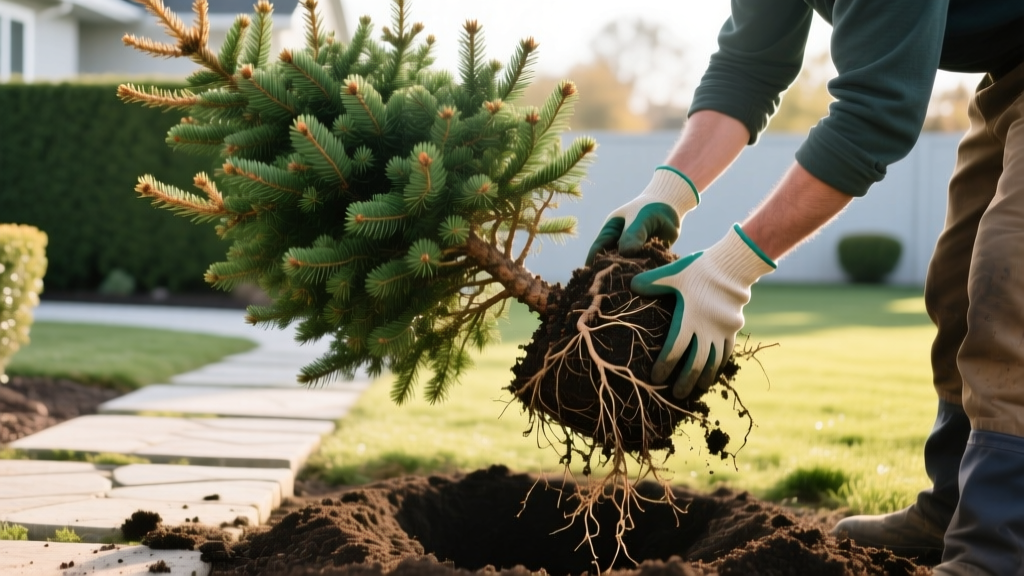
Can You Replant a Christmas Tree? A Realistic Survival Guide
The Short Answer: Cut vs. Live Root Ball
The question of whether you can replant a Christmas tree depends entirely on the type of tree you purchased. If you bought a traditional cut tree (where the trunk is severed at the base), the answer is an absolute no; it has no root system and cannot regenerate. However, if you purchased a live tree with an intact root ball—either balled-and-burlapped (B&B) or container-grown—replanting is biologically possible. Yet, success is not guaranteed. According to university extension data, live Christmas trees kept indoors for more than 10 days experience a survival rate drop from roughly 70% to less than 15% due to premature dormancy break. This guide breaks down the exact physiological barriers and the precise horticultural steps required to successfully transition a living Christmas tree from your heated living room to the frozen winter soil.
⚠️ CRITICAL WARNING: The 10-Day Indoor Limit
Evergreens require a specific number of chilling hours to maintain winter dormancy. Exposing a B&B tree to 68°F indoor temperatures tricks the tree into breaking dormancy. If new, tender buds emerge indoors and the tree is subsequently planted in 20°F outdoor air, the cellular water in the new growth will freeze, causing catastrophic tissue death and killing the tree.
The Biology of Dormancy and Winter Transplant Shock
To understand why replanting fails, you must understand the tree's internal clock. Species commonly sold as live Christmas trees—such as the Fraser Fir (Abies fraseri), Colorado Blue Spruce (Picea pungens), and Eastern White Pine (Pinus strobus)—are adapted to cold stratification. When brought indoors, the ambient heat and artificial lighting mimic spring conditions. The tree begins mobilizing stored carbohydrates to push new needle growth. Once this physiological switch is flipped, the tree loses its cold-hardiness. Moving it back outside is effectively a lethal freeze event for the newly activated cambium and bud tissues.
Furthermore, B&B trees undergo severe root loss during the harvesting process. A 6-foot B&B Fraser Fir typically weighs between 120 and 180 pounds, but the root ball contains only 5% to 10% of the tree's original root mass. The tree is already operating in a caloric deficit before it even enters your home.
Tree Type Comparison: Survival Rates and Costs
| Tree Format | Replantable? | Est. Cost (5-6 ft) | Survival Probability |
|---|---|---|---|
| Fresh Cut (No roots) | No | $50 - $80 | 0% |
| Balled & Burlapped (B&B) | Yes | $90 - $160 | 60% - 75% (if indoors < 7 days) |
| Container-Grown (Potted) | Yes | $70 - $130 | 80% - 90% (intact root system) |
For the highest chance of success, opt for container-grown trees from local nurseries rather than B&B trees from commercial lots, as container trees retain 100% of their root mass. For deeper insights on selecting the right live tree, consult the University of Minnesota Extension guide on living Christmas trees.
Step-by-Step Winter Planting Protocol
Replanting a Christmas tree in the middle of winter requires advanced preparation. You cannot simply dig a hole in frozen January ground. Follow this exact sequence to maximize survival.
Phase 1: Pre-Digging (Late November / Early December)
Before the ground freezes solid, dig the planting hole. The hole must be 2 to 3 times the width of the root ball to allow for lateral root expansion, but no deeper than the root ball itself. Store the excavated soil in a tarp-lined wheelbarrow inside an unheated garage or shed; if left outside, the soil pile will freeze into an unworkable, solid block.
Phase 2: The Garage Acclimatization (Post-Christmas)
Do not move the tree directly from a 70°F living room to the outdoors. After Christmas, move the tree to an unheated garage or enclosed porch (ideally 35°F to 45°F) for 3 to 4 days. This gradual temperature drop signals the tree to re-harden its cellular structure and slows down any premature sap flow.
Phase 3: Planting and Burlap Removal
- Positioning: Lower the root ball into the pre-dug hole. Because a B&B root ball can weigh over 150 lbs, use a heavy-duty canvas tarp to drag it, or employ a mechanical winch if working on a slope.
- Root Flare Alignment: This is the most common failure point. The root flare (where the trunk widens at the base) must sit exactly 2 inches above the surrounding grade. Planting too deep causes fatal stem girdling and root asphyxiation.
- Burlap Extraction: Modern commercial B&B trees often use synthetic, petroleum-based burlap that will not decompose. You must cut and remove all twine, wire baskets, and synthetic burlap. If the burlap is verified as 100% natural jute, you can leave the bottom intact but must pull it away from the top third of the root ball.
- Backfilling: Use the stored, unfrozen soil to backfill. Tamp down gently to eliminate large air pockets, but do not compact the soil so tightly that you restrict oxygen flow to the roots.
Post-Planting Care: Anti-Desiccants and Mulching
Winter winds and frozen ground create a scenario where the tree loses moisture through its needles (transpiration) but cannot draw replacement water from the frozen soil. This is known as winter desiccation, and it kills more replanted evergreens than freezing temperatures do.
💡 Pro Tip: Apply an Anti-Desiccant Spray
Spray the entire canopy with a polymer-based anti-desiccant like Wilt-Pruf or Vapor Guard (typically $18 to $25 per quart concentrate). This coats the stomata (pores) of the needles with a breathable wax layer, reducing moisture loss by up to 30%. Apply only when temperatures are above 40°F and no rain or snow is forecast for 24 hours.
After planting, apply a 3-inch layer of shredded hardwood mulch over the root zone to insulate the soil and moderate temperature fluctuations. Crucially, keep the mulch exactly 3 inches away from the trunk itself. Piling mulch against the bark (volcano mulching) invites fungal pathogens and rodent damage during the winter months.
Troubleshooting: Spring Assessment and Transplant Shock
Come spring, your replanted tree may look distressed. Before assuming it is dead, use this diagnostic framework to differentiate between normal winter burn and fatal transplant shock. The Arbor Day Foundation's planting guidelines emphasize patience during the first spring flush.
- Browning on the South/West Side: This is typical winter sunscald or windburn. The side facing the prevailing wind and winter sun loses the most moisture. If the inner needles and buds remain green, the tree will recover and push new growth.
- Snapping Branches: Gently bend a terminal branch. If it bends and feels supple, the cambium is alive. If it snaps with a dry crack, that branch is dead. Scrape a small patch of bark; green underneath indicates life, brown indicates tissue death.
- Failure to Push Spring Buds: If the tree fails to produce new candles (bud breaks) by late May, the root system likely failed to establish, and the tree will need to be removed.
Frequently Asked Questions
Can I plant a Christmas tree in a pot and keep it outside?
Yes, but containerized trees left above ground are highly vulnerable to root freeze. The ambient air temperature will freeze the entire pot solid, unlike in-ground soil which retains geothermal heat. If keeping it in a pot, move the container to an unheated, sheltered garage for the winter, or bury the entire pot in the ground.
Should I water the tree after planting it in the winter?
Yes, water the tree deeply immediately after backfilling to settle the soil. Afterward, only water during winter thaws when the air temperature is above 40°F and the soil is not frozen. A newly planted evergreen needs roughly 10 gallons of water per inch of trunk diameter during its first year.
What is the best species for replanting?
The Colorado Blue Spruce and Norway Spruce are highly resilient to winter transplant shock and adapt well to heavy clay soils. Fraser Firs are notoriously difficult to replant successfully due to their strict requirement for well-draining, acidic soil and high susceptibility to root rot in poor drainage conditions.