Tree Care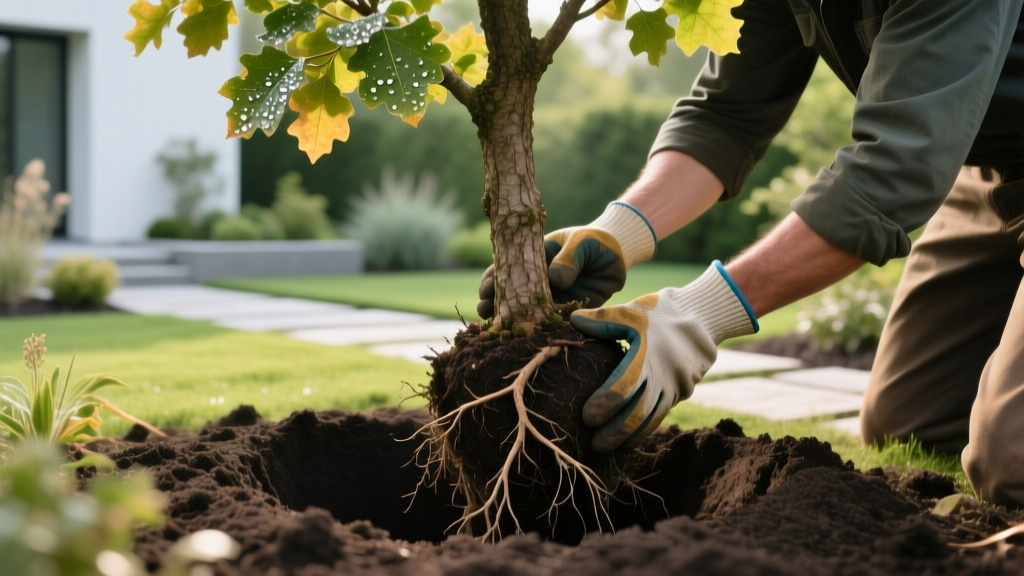
Replanting Trees Successfully: A Step-by-Step Guide
The Reality of Transplant Shock
Replanting trees is a high-stakes horticultural procedure. When you sever a tree's root system, you instantly remove up to 90% of its water and nutrient-gathering capacity. The resulting physiological stress, known as transplant shock, can kill up to 30% of relocated specimens within the first two years if not managed correctly. Success does not rely on luck; it relies on precise root-to-shoot ratio management, proper soil physics, and strict hydration protocols. This guide provides the exact measurements, tools, and timelines required to replant trees with professional-grade survival rates.
Decision Matrix: Should You Move or Replace?
Before breaking ground, evaluate the tree's trunk caliper (diameter measured 6 inches above the soil line). The caliper dictates the root ball weight, which determines whether replanting trees is a viable DIY project or requires heavy machinery. As of 2026, professional tree spade services typically charge between $800 and $1,500 for a 4-inch caliper move.
| Trunk Caliper | Root Ball Diameter | Est. Root Ball Weight | Recommended Method | Est. Professional Cost |
|---|---|---|---|---|
| Under 2 inches | 24 inches | ~250 lbs | DIY (2 people) | N/A |
| 2 to 3 inches | 24 - 36 inches | 400 - 800 lbs | DIY (equipment assist) or Pro | $400 - $700 |
| 3 to 5 inches | 36 - 60 inches | 1,000 - 2,500 lbs | Professional Tree Spade | $800 - $1,500 |
| Over 5 inches | 60+ inches | 3,000+ lbs | Heavy Rigging / Air Spade | $2,000+ |
Timing the Move: Dormancy is Non-Negotiable
The timing of your transplant directly impacts the tree's ability to regenerate fine feeder roots. According to the University of Minnesota Extension, replanting trees must align with specific seasonal dormancy windows to minimize moisture loss through the canopy while the root system is compromised.
Deciduous Trees (Maples, Oaks, Birches)
Move in late fall after leaf drop but before the ground freezes, or in early spring just before bud break. Spring is generally superior because the tree has the entire growing season to establish new roots before winter.
Evergreens (Pines, Spruces, Arborvitae)
Move in early spring or late summer (at least 6 weeks before the first hard frost). Never replant evergreens in late fall; they continue to lose moisture through their needles during winter and will suffer fatal desiccation if their root system cannot replace that water.
Calculating the Root Ball: The 12-to-1 Rule
The most common failure point when replanting trees is digging a root ball that is too small. The industry standard, endorsed by The Morton Arboretum, is the 12-to-1 rule: for every 1 inch of trunk caliper, you must preserve 12 inches of root ball diameter.
If you are moving a tree with a 3-inch caliper, your root ball must be at least 36 inches in diameter. The depth of the root ball should be roughly two-thirds of its diameter (in this case, 24 inches deep). Most fine, water-absorbing feeder roots are located in the top 12 to 18 inches of soil. Digging deeper than necessary adds useless subsoil weight without adding functional root mass.
Step-by-Step Execution Protocol
Follow this exact sequence to minimize mechanical damage and hydraulic failure during the move.
- Root Prune (6 Months Prior): If time allows, use a sharp spade to sever roots in a circle around the tree 6 months before the actual move. This forces the tree to grow dense, fibrous feeder roots inside the future root ball, drastically increasing survival rates.
- Trench and Undercut: Dig a vertical trench just outside your calculated diameter line. Once the trench is deep enough, begin undercutting the ball at a 45-degree angle to create a rounded, bowl-like base. Leave the soil in place until the ball is fully wrapped to prevent it from shattering.
- Wrap in Natural Burlap: Use untreated, 100% natural burlap. Synthetic burlap will not decompose, eventually girdling the roots and trapping moisture. Pin the burlap tightly using 6-inch landscaping nails or heavy-duty twine.
- Lift from the Base: Never lift or drag the tree by its trunk. The weight of the root ball will strip the bark and tear the cambium layer from the trunk, causing fatal phloem girdling. Always lift using the burlap-wrapped root ball or slide a plywood board underneath for leverage.
Debunking the Backfill Amendment Myth
A pervasive and damaging myth in landscaping is that you should amend the backfill soil with heavy compost, peat moss, or potting mix when replanting trees. Soil science dictates that you must use the native soil you just dug out of the hole.
When you create a hole filled with loose, highly organic amended soil surrounded by dense, compacted native clay, you create a 'bathtub effect.' Water will rapidly drain into the amended hole but hit a hard barrier at the clay interface, pooling around the root ball and causing hypoxia (oxygen deprivation) and root rot. Furthermore, roots prefer to stay in the fluffy amended soil and will resist expanding into the native soil, leading to a circling, pot-bound root system that will eventually topple in high winds.
Critical Warning: The Trunk Flare
When setting the tree in its new location, the root flare (the widest part of the trunk where it transitions into roots) must sit 1 to 2 inches above the final grade. Planting the flare below grade buries the phloem tissue, leading to stem girdling roots and a slow death over 3 to 5 years. Always err on the side of planting slightly too high rather than too deep.
Post-Transplant Aftercare and Hydration
The first 24 months after replanting trees are critical. The tree has no structural root system to anchor it and a compromised hydraulic system to hydrate it.
The Hydration Schedule
Apply 10 gallons of water per inch of trunk caliper, per week during the growing season. For a 3-inch caliper tree, that is 30 gallons a week. Use a slow-release drip bag (like a Treegator) or a soaker hose to allow water to penetrate deeply without running off the surface. Check soil moisture 6 inches down with a soil probe before watering; the soil should feel like a wrung-out sponge, not mud.
Mulching and Staking
Apply a 3-inch layer of coarse arborist wood chips in a wide ring (at least 4 feet in diameter) around the tree. Keep the mulch strictly 4 to 6 inches away from the trunk flare to prevent rodent damage and fungal rot. Only stake the tree if it is in a high-wind corridor or has a top-heavy canopy; rigid staking prevents the trunk from developing necessary reaction wood and taper. If you must stake, use wide, flexible canvas straps and remove them after exactly one year.
Mycorrhizal Inoculation
To accelerate root regeneration, apply a granular mycorrhizal inoculant (such as Myke Pro Granular or BioWorks) directly to the exposed root ball before backfilling. These beneficial fungi form a symbiotic relationship with the tree's roots, effectively extending their reach by up to 100 times and dramatically improving phosphorus and water uptake during the vulnerable establishment phase.