
Tree Care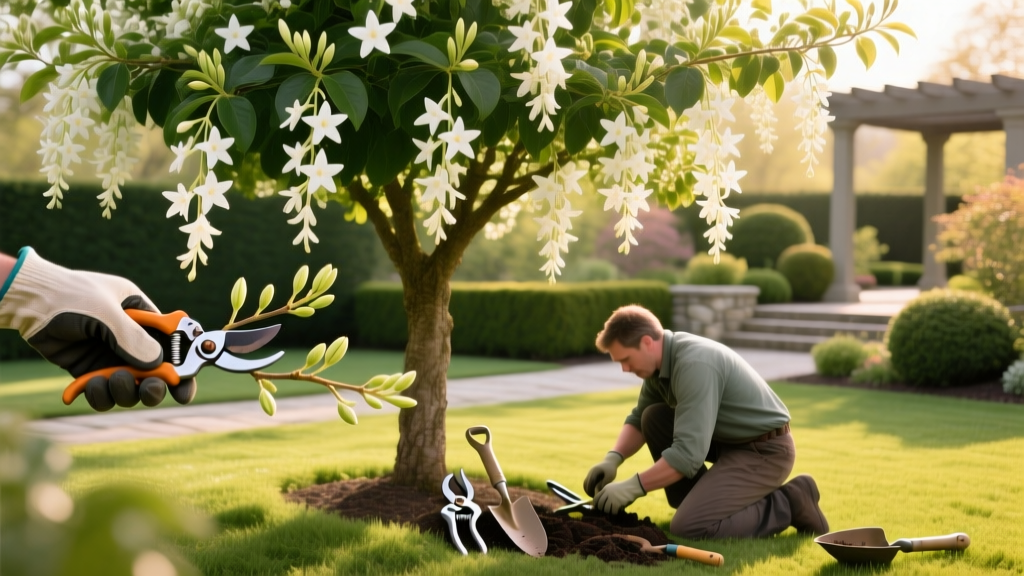
How to Plant and Prune a Bridal Veil Tree for Spring Blooms
The Bridal Veil Tree: A Xeriscape Standout
The bridal veil tree (Retama monosperma), also known as white broom or bridalveil broom, is a striking, drought-tolerant small tree or large shrub prized for its silvery-green weeping canopy and fragrant, pea-like white blossoms that erupt from March through May. Native to the Mediterranean and North Africa, it thrives in hot, arid climates and alkaline soils, making it a cornerstone of xeriscape designs in USDA Hardiness Zones 8b through 10. However, its rapid growth rate and specific flowering habits require precise planting and pruning techniques to prevent structural failure and bloom loss.
Quick Botanical Specs
- Botanical Name: Retama monosperma
- Mature Size: 15–20 ft height, 15–25 ft spread
- Sun Requirement: Full sun (minimum 8 hours direct exposure)
- Soil pH: 7.0–8.5 (highly alkaline tolerant)
- Water Needs: Low (once established)
Site Selection and Soil Preparation
The most common cause of bridal veil tree mortality is root asphyxiation in poorly draining soils. While Retama monosperma tolerates sandy, rocky, and highly alkaline conditions, it is highly susceptible to Phytophthora root rot in heavy clay. Before excavating, perform a percolation test: dig a 12-inch deep test hole, fill it with water, and measure the drain rate. If the water level drops slower than 1 inch per hour, you must elevate the planting grade.
For optimal establishment, conduct a soil test to determine your baseline pH and salinity. If your soil pH is below 6.5, incorporate agricultural lime at a rate of 5 lbs per 100 square feet to raise the alkalinity to the tree's preferred 7.0+ range. Avoid adding organic compost or peat moss to the planting hole; amending the backfill creates a 'bathtub effect' where water pools in the loose organic matter, drowning the roots.
Step-by-Step Planting Protocol
- Excavate the Hole: Dig a hole 2.5 times the width of the root ball, but exactly the same depth. The sides of the hole should be rough, not glazed by a shovel, to allow lateral root penetration.
- Inspect and Tease Roots: Remove the tree from its nursery container. If the roots are circling the perimeter, use a sterilized utility knife to make four vertical, 1-inch deep slices down the sides of the root ball to sever girdling roots.
- Set the Root Flare: Place the tree in the hole. In sandy soils, the root flare (where the trunk widens at the base) should sit exactly at grade. In heavy clay, the root flare must sit 2 to 3 inches above grade to prevent crown rot.
- Backfill and Tamp: Backfill with the native soil you excavated. Do not add fertilizer. Tamp the soil gently with your hands to eliminate large air pockets, but do not compact it tightly.
- Apply Mulch: Spread a 3-inch layer of inorganic mulch (like decomposed granite or pea gravel) over the root zone, keeping it 4 inches away from the trunk. Organic wood mulch retains too much moisture for this species.
Establishment Watering vs. Long-Term Drought Care
A common misconception is that drought-tolerant trees require no water upon planting. The bridal veil tree requires a strict 90-day establishment watering schedule to develop a deep taproot before transitioning to zero supplemental irrigation.
- Months 1–3: Apply 15 gallons of water per week using a slow-release drip emitter (2 GPH) placed 12 inches from the trunk.
- Months 4–6: Reduce to 15 gallons every 14 days.
- Month 7 and Beyond: Cease all supplemental watering. The tree will rely entirely on natural rainfall. Summer irrigation of established trees is the primary trigger for fatal root rot.
Pruning Framework: Protecting the Spring Bloom Cycle
Retama monosperma blooms exclusively on old wood (growth from the previous summer). Pruning in late fall, winter, or early spring will completely obliterate your floral display. According to guidelines on pruning spring-flowering shrubs and trees, cuts must be timed immediately after the petals drop. Furthermore, maintaining the signature weeping 'veil' habit requires selective thinning rather than blunt heading cuts, which stimulate ugly, upright water sprouts.
| Pruning Objective | Timing | Technique | Tool |
|---|---|---|---|
| Deadwood & Disease Removal | Anytime | Cut back to the branch collar | Bypass pruners |
| Canopy Thinning (Airflow) | May/June (post-bloom) | Remove crossing branches at 45-degree crotches | Long-handled loppers |
| Size Reduction / Height Control | May/June (post-bloom) | Drop-crotch cut to a lateral branch | Pruning saw |
| Sucker Removal | As needed | Tear or cut flush at the root crown | Sharp spade / hori-hori |
Expert Rule of Thumb: Never remove more than 15% of the live canopy in a single pruning session. Over-pruning stresses the tree, forcing it to expend energy on vegetative recovery rather than setting next year's flower buds.
Troubleshooting Common Failure Modes
Even in ideal xeriscape environments, bridal veil trees can encounter specific physiological and pathological issues. Here is how to diagnose and correct them:
1. Sudden Branch Dieback and Chlorosis
Cause: Phytophthora cinnamomi root rot, triggered by summer irrigation or heavy clay soils.
Action: Stop all watering immediately. Carefully excavate the mulch near the root flare to expose the crown to air and sunlight. If more than 30% of the canopy is affected, the tree cannot be saved and should be removed to prevent pathogen spread to nearby plants.
2. Lack of Spring Blooms
Cause: Winter pruning (removing old wood) or excessive nitrogen fertilization.
Action: Adjust your pruning calendar to late May/early June. Never apply synthetic lawn fertilizers (which are high in nitrogen) near the tree's drip line; high nitrogen promotes aggressive, weak green growth at the expense of floral reproduction.
3. Sticky Honeydew and Sooty Mold
Cause: Aphid or Oleander scale infestation, usually occurring during rapid spring growth flushes.
Action: Apply a 2% dormant horticultural oil spray in late January before bud break to smother overwintering scale eggs. For active spring aphids, use a strong jet of water from a hose to dislodge them, avoiding systemic insecticides that harm native pollinators visiting the white blooms.
Frequently Asked Questions
Can I grow a bridal veil tree in a container?
Yes, but it requires a minimum 25-gallon pot with excellent drainage. Use a highly porous, inorganic soil mix consisting of 50% pumice, 25% expanded shale, and 25% pine bark. Container specimens will require weekly watering during the summer, unlike their in-ground counterparts.
Will it survive a hard freeze in Zone 8?
Retama monosperma is hardy down to about 15°F (-9°C). In Zone 8, a severe winter freeze may cause tip dieback on the weeping branches. Do not prune the dead tips immediately; wait until new growth emerges in April, then cut back to live, green tissue.

