Tree Care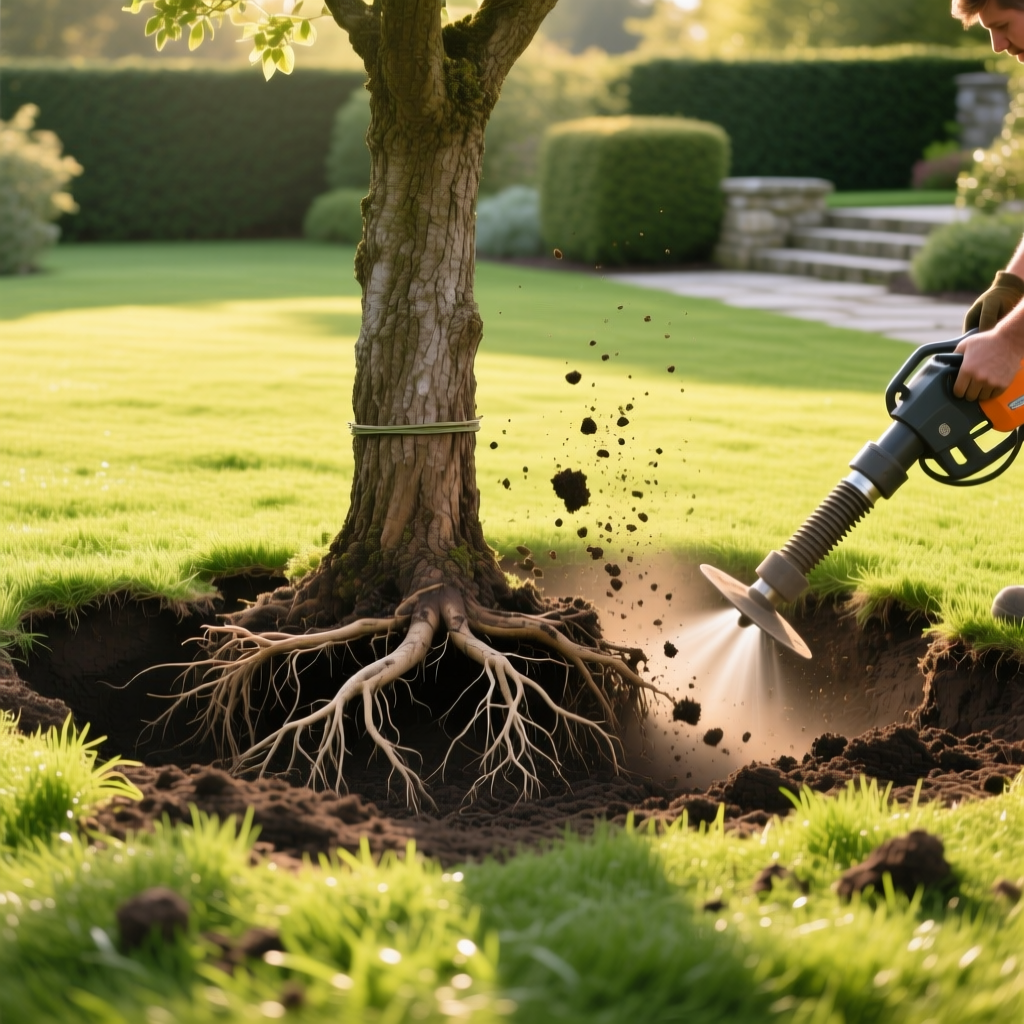
Root Collar Excavation and Air Spading: Rescuing Buried Tree Flares
David ParkPublished
Trees are the crown jewels of any landscape, providing immense value through shade, beauty, and ecological benefits. However, a hidden and often fatal issue lurks beneath the soil line in countless residential and commercial landscapes: the buried root flare. When a tree is planted too deeply or smothered by excessive mulch, the vital transition zone between the trunk and the root system is cut off from essential oxygen. This leads to a cascade of health issues, including stem girdling roots, chronic decline, and eventual tree death. Fortunately, modern arboriculture offers a highly effective, non-destructive solution to this widespread problem through root collar excavation and air spading.
In this comprehensive guide, we will explore the critical biology of the tree flare, the severe consequences of burying it, and the revolutionary air spading process that brings buried trees back to life. Whether you are managing a sprawling estate, integrating trees with your lawn irrigation systems, or simply trying to save a beloved legacy oak, understanding root collar health is paramount for long-term landscape success.
Understanding the Anatomy of the Root Collar and Tree Flare
To appreciate why root collar excavation is necessary, one must first understand the unique anatomy of the base of a tree. The root collar is the exact transition zone where the trunk meets the root system. Unlike the rest of the trunk, which is designed to be exposed to the air and protected by thick, rugged bark, the root collar is a highly specialized area. It is characterized by the root flare—the visible widening of the trunk at the base where the primary structural roots emerge and dive into the soil.
The root flare is not merely a structural anchor; it is a vital respiratory zone. The tissues in this area, including the phloem and the cambium, require a constant exchange of gases. Oxygen from the atmosphere must diffuse into the root system to fuel cellular respiration, while carbon dioxide must be expelled. When soil, sod, or excessive mulch is piled against the trunk, this gas exchange is severely restricted. The root collar essentially suffocates.
Furthermore, the bark at the root flare is not adapted to constant moisture exposure. While the roots themselves thrive in the damp soil environment, the trunk tissue is highly susceptible to fungal and bacterial pathogens when kept perpetually wet. Proper tree planting depth dictates that the root flare must be visible above the final grade. A healthy tree should look like it is growing out of the ground, not planted in a hole like a fence post. When the flare is buried, the tree's natural defenses are compromised, setting the stage for a host of physiological and pathological failures.
The Dangers of Buried Tree Flares and Girdling Roots
When a root flare is buried, the tree attempts to adapt to its suffocating environment, often leading to disastrous consequences. The most common and destructive result of a buried root collar is the formation of stem girdling roots. Because the primary structural roots are buried too deeply to access adequate oxygen, the tree will often initiate the growth of adventitious roots from the trunk above the original root flare. These new roots grow in search of oxygen and moisture, often circling the trunk just beneath the soil or mulch line.
As these girdling roots expand and thicken over the years, they act like a tourniquet around the trunk. They compress the vascular system—specifically the xylem & phloem—restricting the upward flow of water & nutrients and the downward flow of carbohydrates. This stranglehold eventually leads to canopy dieback, premature fall coloration, and structural instability. In severe cases, the tree may snap at the base during high winds because the girdling roots have compromised the structural integrity of the trunk.
Beyond structural failures, buried root flares create an ideal environment for devastating diseases. The constant moisture trapped against the trunk bark invites opportunistic pathogens, most notably Phytophthora species, which cause aggressive root & crown rot. Once Phytophthora infects the cambium at the root collar, it rapidly girdles the tree, cutting off all nutrient transport. Identifying these issues early is critical, and understanding the broader signs of distress can be aided by reviewing our guide on identifying tree diseases. Additionally, landscape practices such as heavy lawn watering can exacerbate the moisture trapped around a buried root collar, accelerating the rot process and making integrated landscape management essential.
Air Spading: The Modern Solution for Root Collar Excavation
Historically, excavating the root collar was a tedious, risky process involving hand trowels and picks, which often resulted in severe damage to the delicate feeder roots and the vital cambium layer of the trunk. Today, certified arborists utilize a revolutionary tool known as an air spade (or air knife) to safely and efficiently perform root collar excavation.
An air spade operates by channeling highly compressed air through a specialized supersonic nozzle. The resulting jet of air moves at speeds exceeding Mach 2, which is powerful enough to fracture and blow away compacted soil, yet gentle enough to leave living tree roots, underground utility lines, and irrigation cables completely unharmed. This technology has transformed tree care, allowing arborists to perform surgical interventions below the soil surface with unprecedented precision.
The air spading process for root collar excavation typically follows a meticulous protocol. First, the arborist removes any excessive mulch or turf grass immediately surrounding the trunk. Then, using the air spade, they carefully excavate the soil in a radial pattern, working outward from the trunk to expose the primary structural roots. The goal is to uncover the true root flare and trace the structural roots until they dive deeply into the native soil. This process not only reveals the buried flare but also alleviates severe soil compaction in the critical root zone. Soil compaction is a major issue in managed landscapes, much like the compaction that necessitates lawn core aeration, and air spading effectively fractures compacted layers, restoring vital pore space for oxygen & water infiltration.
During the excavation, the arborist will also map out the root architecture, identifying any stem girdling roots, circling roots, or roots that are rubbing against one another. This subterranean mapping is crucial for the next phase of the treatment: root pruning and remediation.
Pruning Girdling Roots and Post-Excavation Care
Once the root collar is fully exposed and the true flare is visible, the arborist must address any root defects. Pruning girdling roots is a delicate procedure that requires a deep understanding of tree biology and compartmentalization (the CODIT model). If a girdling root is thick and deeply embedded into the trunk, removing it entirely in one session could shock the tree or remove too much of its vascular capacity. In such cases, the arborist may make strategic relief cuts, severing the root on either side of the trunk to stop the tourniquet effect while allowing the embedded portion to slowly decay and be absorbed by the tree over time.
Smaller circling roots and adventitious roots growing from the trunk can usually be pruned flush to the trunk using sterilized, razor-sharp pruning saws. Clean cuts are essential, as they allow the tree to efficiently seal the wound and prevent the entry of decay organisms. After the root pruning is complete, the excavated area must be managed carefully to ensure the tree's recovery.
It is a common misconception that the excavated hole should be backfilled with amended soil or compost. This is incorrect. The root flare must remain exposed to the air. To protect the newly exposed surface roots from desiccation and extreme temperature fluctuations, a thin layer of arborist wood chips is applied. Proper mulching techniques dictate that the mulch should be spread in a wide, shallow ring—often described as a donut shape—keeping the material entirely away from the trunk bark while covering the shallow feeder roots. This mimics the natural forest floor, retaining soil moisture, moderating temperature, and slowly feeding the soil food web without suffocating the root collar.
Post-excavation watering is also critical. The newly exposed roots are sensitive, and the tree has just undergone a significant stress event. Deep, infrequent watering is preferred over shallow, daily sprinkling. Coordinating your tree's water needs with your turf fertilizing and watering schedules ensures that neither the lawn nor the tree suffers from improper moisture levels.
Seasonal Tips for Root Collar Health and Landscape Integration
Maintaining the health of the root collar is not a one-time event; it requires ongoing observation and seasonal adjustments to your landscape management practices. By integrating tree care with your overall lawn and garden maintenance, you can prevent the re-burial of the root flare and promote enduring tree vigor.
Spring Inspections and Cleanup
As the ground thaws and spring growth begins, take the time to inspect the base of all your major shade trees. Winter snow plows, leaf blowers, and natural settling can cause soil and debris to accumulate against the trunk. Gently pull back any winter debris, rogue mulch, or soil that has washed up against the flare. If you notice the flare is once again obscured, it may be time to schedule a follow-up air spading visit or perform careful hand-excavation to maintain the critical air exchange zone.
Summer Watering and Heat Management
During the heat of summer, the temptation to overwater the landscape is high, especially when trying to maintain a lush, green lawn. However, excessive irrigation directed at the base of the tree can drown the shallow feeder roots and promote crown rot. Utilize drip irrigation or soaker hoses placed near the drip line of the tree rather than at the trunk base. Ensure that your lawn sprinkler heads are adjusted so they do not constantly batter the tree trunk, which keeps the bark perpetually wet and invites fungal pathogens.
Fall Mulching and Preparation
Autumn is the ideal time to refresh the mulch ring around your trees. As leaves fall, avoid allowing thick mats of wet leaves to pile up against the trunk, as this creates a damp, suffocating environment similar to volcano mulching. Shred fallen leaves with your mower and use them as a light top-dressing for your lawn, or apply a fresh, 2-to-3-inch layer of coarse wood chip mulch over the tree's root zone. Always maintain the donut shape, keeping the mulch several inches away from the exposed root flare.
Winter Protection
In regions with harsh winters, the exposed root flare can be susceptible to extreme temperature swings and frost cracking. While the flare needs to breathe, a light, breathable layer of coarse mulch over the broader root zone helps insulate the soil. Avoid using plastic tarps or impermeable landscape fabrics around the base of the tree, as these trap moisture and completely halt the necessary winter gas exchange.
Frequently Asked Questions
How do I know if my tree's root flare is buried?
The most obvious visual indicator of a buried root flare is a trunk that goes straight into the ground like a telephone pole, lacking the natural widening or 'flare' at the base. Other signs include a lack of surface roots, premature autumn coloring, unexplained canopy dieback, and the presence of adventitious roots growing from the lower trunk. If you cannot see the structural roots emerging from the trunk, the flare is likely buried and requires excavation.
Can I excavate the root collar myself, or do I need an arborist?
While you can carefully use a hand trowel or a high-pressure garden hose to remove loose mulch and topsoil, deep root collar excavation should be performed by a certified arborist equipped with an air spade. Hand tools can easily slice through vital structural roots or damage the sensitive cambium layer of the trunk. An arborist has the training to safely expose the roots, identify girdling root defects, and perform the necessary surgical root pruning without causing long-term harm to the tree.
Will air spading damage my lawn or landscape?
Air spading is highly targeted and generally causes minimal disruption to the surrounding landscape. However, the process does involve blowing away the top layer of soil and turf immediately surrounding the tree trunk to access the root flare. While the immediate work zone may look messy during the process, the arborist will clean up the area and apply a proper mulch ring afterward. The long-term benefits of saving a massive shade tree far outweigh the temporary disruption to a small patch of turf grass.
How often should root collar excavation be performed?
Root collar excavation is typically a one-time corrective procedure, provided the tree is properly maintained afterward. Once the flare is exposed, girdling roots are pruned, and a proper mulch ring is established, the tree should remain healthy. However, if soil grades are altered, heavy mulching habits return, or soil erosion deposits new sediment against the trunk, a follow-up inspection and minor hand-excavation may be required every few years to ensure the flare remains exposed.
What is the proper way to mulch after root collar excavation?
After excavation, apply a 2-to-4-inch layer of coarse, organic arborist wood chips over the exposed root zone. The mulch should extend as far out toward the tree's drip line as possible. Crucially, the mulch must be kept at least 3 to 6 inches away from the actual trunk bark to prevent moisture accumulation and rodent damage. The root flare itself should remain completely bare and exposed to the air, creating a shallow, saucer-like depression that facilitates gas exchange while allowing rainwater to infiltrate the broader root zone.