
Tree Care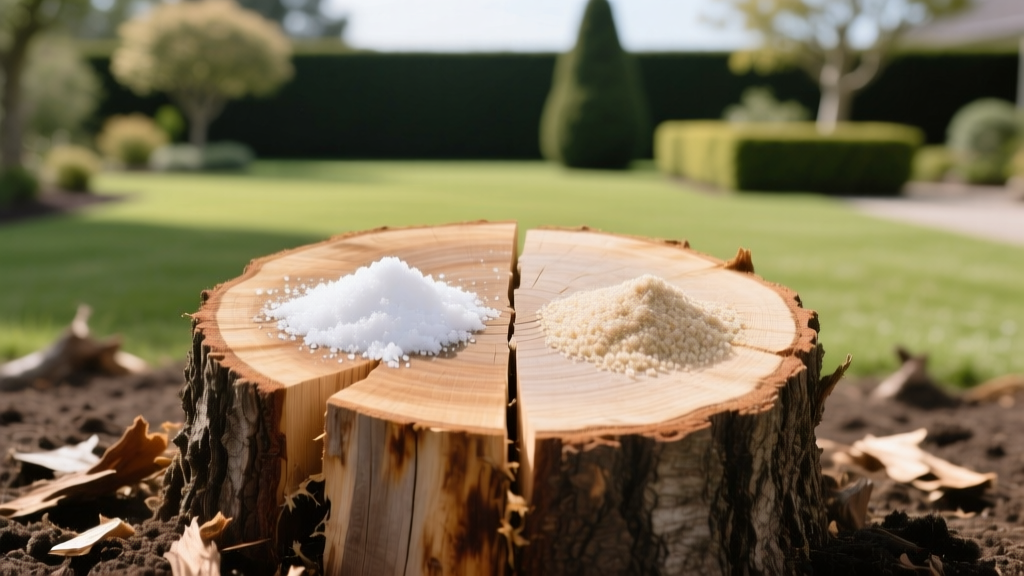
How to Rot a Stump: Epsom Salt vs Potassium Nitrate Guide
Removing a mature tree leaves behind a stubborn root flare and stump that can harbor pests, obstruct landscaping, and complicate lawn mowing. While professional stump grinding remains the fastest removal method, 2026 market rates average $4 to $6 per inch of diameter—often totaling $250 to $450 for a large oak or maple, plus minimum call-out fees. For homeowners seeking a budget-friendly alternative, chemical and desiccation methods offer a highly effective solution. If you are researching how to rot a stump efficiently, the two most reliable DIY protocols rely on potassium nitrate (saltpeter) and Epsom salt (magnesium sulfate).
The Science of Accelerated Wood Decay
Wood is primarily composed of cellulose, hemicellulose, and lignin. In a natural forest environment, fungi and bacteria break down these compounds over decades. However, these microorganisms require abundant nitrogen to metabolize carbon-heavy wood. By artificially introducing nitrogen-rich compounds or utilizing osmotic desiccation, you can compress a 10-year natural decay cycle into a matter of weeks.
⚠️ CRITICAL WARNING: Avoid Rock Salt
Never use standard rock salt (sodium chloride) to rot a stump. While it will kill the wood, sodium chloride causes severe soil salinization. It permanently alters the soil structure, rendering the ground sterile and preventing future grass, shrubs, or trees from growing in that spot for years.
Method 1: Potassium Nitrate (Accelerated Fungal Decay)
Potassium nitrate (KNO3) is the active ingredient in most commercial stump removers, such as Spectracide Stump Remover (typically priced around $12 to $15 for a 16 oz bottle). It works by flooding the wood with nitrogen, creating an ideal breeding ground for wood-decaying fungi.
Step-by-Step Application
- Prepare the Stump: Use a chainsaw or reciprocating saw to cut the stump as close to the ground as possible. A fresh cut exposes the living cambium layer, which absorbs chemicals faster than weathered, sealed wood.
- Drill the Reservoir Holes: Using a heavy-duty drill and a 1-inch spade or auger bit (like the Irwin Speedbor), drill holes 8 to 10 inches deep into the top of the stump. Space the holes 3 inches apart in a grid pattern.
- Drill Angled Perimeter Holes: Drill additional holes at a 45-degree angle around the outer edge of the stump, aiming toward the center to intersect with the vertical holes.
- Apply the Chemical: Fill each hole with potassium nitrate granules, leaving about 1 inch of space at the top.
- Activate with Water: Pour warm water into each hole to dissolve the granules. The water acts as a carrier, pulling the nitrogen deep into the root system.
- Seal and Wait: Cover the stump with a dark, heavy-duty polyethylene tarp and weigh down the edges with bricks. This traps moisture and heat. The stump will become spongy and structurally compromised in 4 to 6 weeks.
Method 2: Epsom Salt (Osmotic Desiccation)
Epsom salt is magnesium sulfate (MgSO4). Instead of feeding fungi, Epsom salt works through osmotic pressure. It aggressively draws moisture out of the wood cells, killing any remaining living tissue and desiccating the stump until it becomes brittle and easy to shatter. Purchase 100% pure agricultural-grade magnesium sulfate (roughly $15 for a 19 lb bag). Avoid scented bath salts, which contain oils and additives that hinder absorption.
Step-by-Step Application
- Drill Deep Holes: Follow the same 1-inch diameter drilling pattern used for potassium nitrate, but drill slightly deeper (10 to 12 inches) to maximize the desiccation surface area.
- Pack the Salt: Fill the holes to the brim with dry Epsom salt. Do not add water immediately; allow the natural sap and ambient moisture to begin dissolving the salt.
- Create a Salt Barrier: Build a small ring of Epsom salt around the base of the stump where it meets the soil to draw moisture from the lateral surface roots.
- Cover and Monitor: Wrap the stump in a plastic tarp to prevent rain from washing the salt away. Check every two weeks to refill the holes as the salt dissolves and settles.
- Timeline: Expect the stump to dry out and become brittle in 8 to 12 weeks, depending on the wood density and ambient humidity.
Comparison Matrix: Potassium Nitrate vs. Epsom Salt
| Feature | Potassium Nitrate (KNO3) | Epsom Salt (MgSO4) |
|---|---|---|
| Primary Mechanism | Accelerates fungal/bacterial decay | Osmotic desiccation (dries wood) |
| Average Material Cost | $12 - $15 per stump | $5 - $8 per stump (bulk bag) |
| Time to Rot/Dry | 4 to 6 weeks | 8 to 12 weeks |
| Final Stump State | Spongy, easily chopped or burned | Brittle, easily shattered with an axe |
| Soil Impact | Adds nitrogen/potassium (fertilizer) | Adds magnesium (beneficial in moderation) |
| Best For | Large, dense hardwoods (Oak, Hickory) | Softwoods and medium-sized stumps (Pine, Birch) |
Critical Drilling Specifications for Maximum Penetration
The most common reason DIY stump rotting fails is inadequate drilling. Simply scratching the surface with a standard twist bit will not deliver the chemical to the deep lateral roots. According to arboricultural best practices outlined by the Tree Care Industry Association, you must penetrate the heartwood and reach the vascular pathways that connect to the root flare.
- Bit Selection: Use a 1-inch or 1.5-inch auger bit. Auger bits pull themselves into the wood and clear shavings efficiently, preventing the bit from binding in deep, sap-heavy hardwoods.
- Depth Rule: Drill to a depth equal to 80% of the stump's visible height. If the stump is 12 inches tall, your holes must be at least 9.5 inches deep.
- The Reservoir Lip: Use a chisel or a larger 2-inch bit to carve a shallow half-inch lip around the top perimeter of the stump. This creates a basin that prevents dissolved chemicals from running down the bark and pooling uselessly on the surrounding soil.
Post-Rot Cleanup and Removal
Once the chemical treatment timeline has elapsed, the stump will no longer be solid wood. Your removal strategy depends on the chemical used.
Chopping a Desiccated Stump (Epsom Salt)
Because Epsom salt removes all moisture, the wood becomes incredibly brittle. Use a heavy splitting maul or a mattock to strike the top of the stump. It will shatter and splinter much like dry firewood. Pry out the fragmented root ball using a digging bar, and backfill the hole with a mix of native soil and organic compost to restore the soil profile.
Controlled Burning (Potassium Nitrate)
Potassium nitrate is a powerful oxidizer—the same compound used in gunpowder and fireworks. A stump treated with KNO3 will burn intensely and continuously, even down into the subterranean roots. If local municipal fire codes permit open burning, you can ignite the top of the spongy stump with charcoal starter fluid. The stump will smolder and consume itself over 12 to 24 hours. Never leave a KNO3 stump fire unattended, as the underground roots can smolder for days and potentially ignite dry subterranean peat or nearby utility lines.
Common Failure Modes and Troubleshooting
Why isn't my stump rotting?
- The Stump is Already Dead and Dry: If the tree was dead for years before removal, the cambium layer is sealed. You must drill deeper and use a surfactant (a few drops of dish soap in the water) to break the surface tension and force the chemical into the dry heartwood.
- Rain Washout: If you failed to cover the stump with a tarp, heavy rainfall will dilute the chemical concentration and wash it into the topsoil before it penetrates the roots. Reapply the chemical and secure a tarp immediately.
- Insufficient Hole Density: A stump wider than 30 inches requires a massive volume of chemical. If you only drilled 5 or 6 holes, the chemical cannot reach the outer perimeter. Drill holes every 3 inches across the entire surface area.
For comprehensive regional guidelines on soil safety and chemical application near water tables, always consult your local cooperative extension office, such as the resources provided by the University of Minnesota Extension. By selecting the right chemical for your specific wood type and adhering to strict drilling specifications, you can successfully rot and remove a stump for a fraction of the cost of professional grinding.

