
Tree Care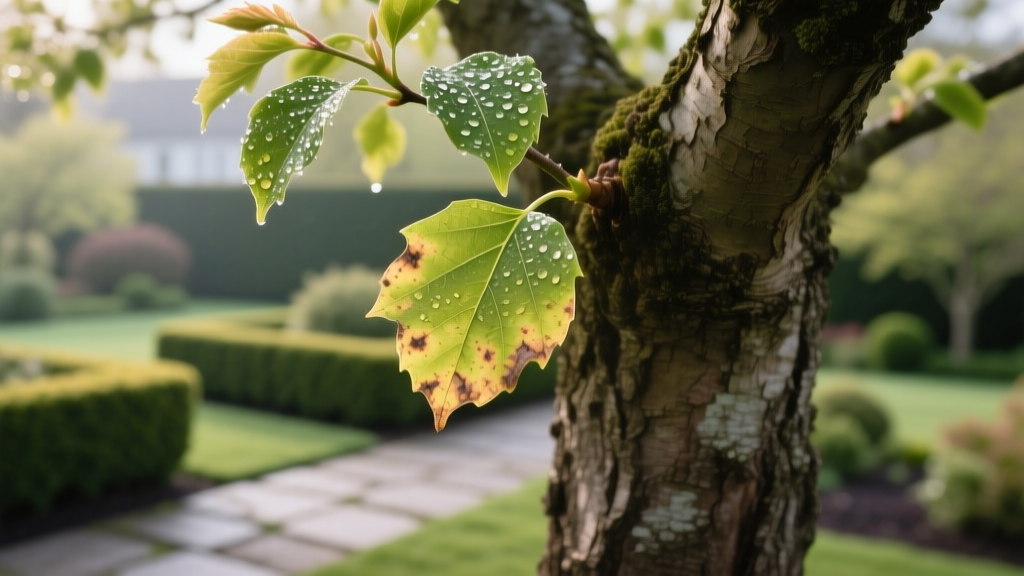
Will Roundup Kill Trees? A Guide to Glyphosate Exposure and Damage
The Short Answer: How Glyphosate Interacts with Tree Biology
Yes, Roundup can kill trees, but the severity of the damage depends entirely on the specific formulation used, the concentration of the active ingredient, and the pathway of exposure. The primary active ingredient in traditional Roundup products is glyphosate, a non-selective, systemic herbicide. According to the Environmental Protection Agency (EPA), glyphosate works by inhibiting the EPSP synthase enzyme. This enzyme is critical for the shikimic acid pathway, which plants use to synthesize essential aromatic amino acids (phenylalanine, tyrosine, and tryptophan).
When a tree absorbs a lethal dose of glyphosate, it loses the ability to produce proteins and secondary metabolites like lignin. The vascular system essentially starves, leading to systemic necrosis. However, unlike contact herbicides that burn foliage on impact, glyphosate is translocated through the phloem to the root system. This systemic movement is what makes it so dangerous to trees when absorbed through roots or green tissue, but it also dictates the timeline of the damage, which often takes weeks to manifest visually.
Pathways of Exposure: How Roundup Reaches Your Trees
Understanding how the chemical enters the tree is the first step in both prevention and diagnosis. Trees are not uniformly vulnerable; their susceptibility changes based on bark maturity and soil chemistry.
1. Root Zone Uptake and Soil Chemistry
Glyphosate binds tightly to soil particles, particularly in soils with high clay content or high organic matter. In these conditions, soil microbes typically break it down within 14 to 45 days, rendering it inactive before roots can absorb it. However, in highly sandy, compacted, or heavily mulched soils, glyphosate remains mobile in the soil solution longer. If sprayed directly over a tree's shallow feeder roots, the tree can absorb the chemical before microbial degradation occurs.
2. Bark, Lenticels, and Sucker Absorption
Mature, thick, and corky bark is largely dead tissue and resists glyphosate absorption. Conversely, young trees (under three years old) with thin, green bark are highly susceptible to trunk-spray damage. Furthermore, basal suckers (water sprouts at the root flare) and open lenticels (breathing pores on the bark) act as direct conduits to the tree's vascular system. Spraying weeds at the base of a tree without a physical shield often results in accidental uptake through these vulnerable tissues.
3. Foliar Drift and Volatilization
Physical drift occurs when wind speeds exceed 5 mph during application, carrying microscopic droplets onto the lower canopy. While less common with glyphosate than with ester-based herbicides like 2,4-D, vapor drift can still occur in high heat (above 85°F), causing localized leaf cupping and chlorosis on the side of the tree facing the application zone.
Formulation Risks: Not All Roundup Products Are Equal
A critical point of confusion for homeowners is the modern Roundup product lineup. Following corporate restructuring and litigation, Bayer altered several residential formulas, replacing glyphosate with alternatives like glufosinate or pelargonic acid in specific 'lawn-safe' products. However, traditional glyphosate-based products remain widely available in hardware stores and professional channels. The National Pesticide Information Center (NPIC) notes that adjuvants (surfactants) in these formulas heavily influence toxicity and soil mobility.
| Product Line | Active Ingredients | Tree Risk Level | Primary Danger Mechanism |
|---|---|---|---|
| Roundup Ready-To-Use (Standard) | 18% Glyphosate, 2% Pelargonic Acid | Moderate | Foliar drift; direct contact with green basal suckers. |
| Roundup Super Concentrate / Pro | 41% - 50.2% Glyphosate | High | Severe root uptake if applied inside the drip line; rapid translocation. |
| Roundup Max Control 365 | 18% Glyphosate, 0.08% Imazapic | Extreme (Lethal) | Imazapic is a soil-residual herbicide. It remains active in soil for months and will kill mature trees via root uptake. |
| Roundup for Lawns (Modern Residential) | MCPA, Quinclorac, Dicamba, Sulfentrazone | Moderate to High | Contains broadleaf herbicides (Dicamba) that are highly toxic to trees via root uptake. |
⚠️ CRITICAL WARNING: Never use 'Extended Control' or '365-Day' weed preventers near trees. These contain pre-emergent residual herbicides (like imazapic or prodiamine) that remain active in the soil profile and will systematically poison the tree's root network over several months.
Identifying Glyphosate Damage: Symptom Progression
Because glyphosate is systemic, symptoms do not appear immediately. Diagnosis requires tracking a specific chronological progression.
- Days 7–14 (Initial Signs): Interveinal chlorosis (yellowing between leaf veins) appears, usually starting on the side of the tree closest to the application or on the lowest branches. Leaves may exhibit 'strapping' or cupping, where they grow unusually narrow and elongated.
- Days 14–30 (Vascular Stress): Premature leaf drop occurs. You may notice a stunted spring flush if the exposure happened the previous fall. The tree attempts to push out new growth, but the shoots quickly wither.
- Months 2–6 (Structural Response): The tree may develop 'witches' broom'—dense, chaotic clusters of weak, spindly twigs forming on branches as the tree's hormonal balance (auxin/cytokinin ratio) is disrupted by the herbicide.
- Year 1–2 (Dieback): Progressive canopy dieback starting from the outer edges inward. Bark on the lower trunk may begin to crack or slough off as the cambium layer dies.
Triage and Mitigation: What to Do After Accidental Exposure
If you realize you have sprayed a concentrated glyphosate product inside a tree's root zone, immediate action can mitigate the damage. The goal is to bind the chemical in the soil and reduce the tree's metabolic stress.
- Apply Activated Charcoal (Within 24-48 Hours): Activated charcoal has a massive surface area and binds tightly to glyphosate molecules, preventing root absorption. Apply a horticultural-grade activated charcoal at a rate of 2 to 4 ounces per square foot of the treated soil area, and water it in lightly to move it into the top 2 inches of soil. A 50 lb bag of horticultural charcoal typically costs between $45 and $65.
- Deep Soil Flushing: If the soil is sandy and well-draining, apply 1 to 2 inches of water over the root zone to push the herbicide below the primary feeder root depth (usually the top 12-18 inches of soil). Note: Do not do this in heavy clay soils, as it will simply create a saturated, mobile pool of herbicide.
- Prune Suckers and Afflicted Foliage: Remove any basal suckers or visibly cupped/yellowing leaves. This removes the localized chemical sink and prevents further translocation to the main trunk.
- Delay Fertilization: Do not apply high-nitrogen fertilizers to 'push' the tree out of stress. Forcing rapid cellular growth on a compromised vascular system will accelerate canopy collapse. Wait until the following spring to apply a slow-release, organic fertilizer.
- Consult an ISA-Certified Arborist: For high-value mature trees, an arborist can perform deep-root soil injections of neutralizing agents or apply specialized biostimulants (like kelp extracts or humic acids) to support root recovery. Expect to pay $150 to $300 for a professional soil-injection treatment.
💡 The Drip Line Rule for Safe Application: A tree's root system extends far beyond its visible branches. The critical root zone is generally calculated as 1.5 feet of radius for every 1 inch of trunk diameter (measured at 4.5 feet high). Always maintain a minimum buffer zone of at least 5 feet from the trunk, and ideally, avoid spraying any herbicides within the entire drip line (the outer edge of the canopy) of mature trees.
Frequently Asked Questions
Can a tree recover from Roundup exposure?
Recovery depends on the dose. If a mature tree experiences minor foliar drift (affecting less than 15% of the canopy), it will typically compartmentalize the damage and recover the following season. If a concentrated 41% solution is absorbed directly into the root flare or major surface roots, the damage is often fatal within 12 to 24 months, as the tree cannot synthesize the lignin required to maintain its vascular structure.
Is it safe to use Roundup on weeds growing out of a tree stump?
If the tree is already dead and you are treating the stump to prevent resprouting, applying glyphosate directly to the freshly cut cambium ring is highly effective and safe for surrounding soil. However, if the stump belongs to a species that root-grafts with nearby living trees of the same species (like aspens or certain oaks), the herbicide can translocate through the shared root network and kill adjacent, healthy trees.

