
Tree Care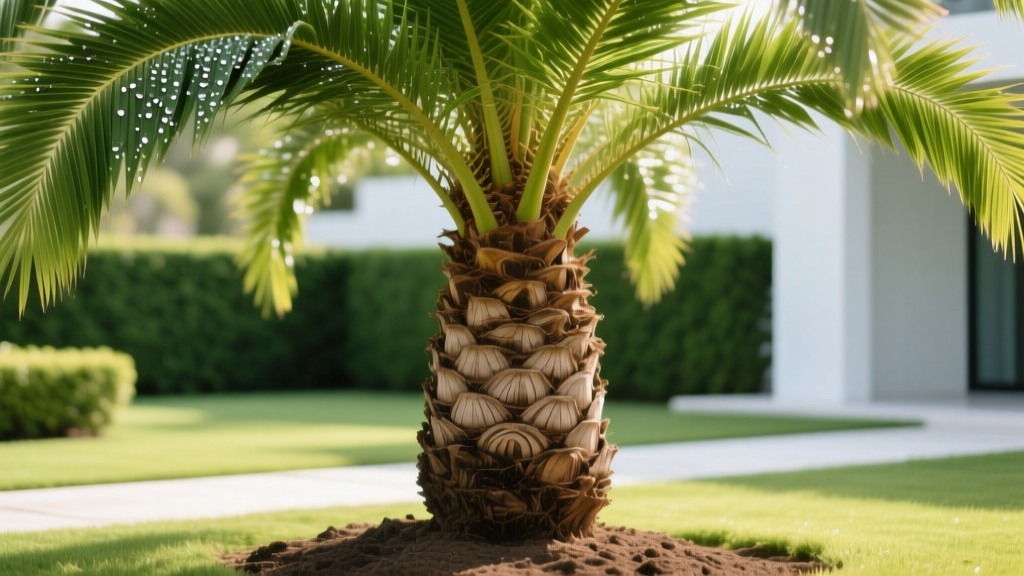
Scientific Name Palm Tree Guide: Identify & Care Tips
Why the 'Scientific Name Palm Tree' Question Has No Single Answer
When homeowners search for the scientific name palm tree, they often expect a single Latin label, much like Acer rubrum for the Red Maple. However, 'palm' is not a single species or even a single genus. It refers to an entire botanical family known as Arecaceae (formerly Palmae). This family encompasses over 2,600 distinct species spread across 181 genera. Understanding this taxonomy is not just an academic exercise; it is the foundation of proper yard maintenance. Misidentifying your palm can lead to fatal fertilization errors, incorrect watering schedules, and devastating cold-weather damage.
For beginner gardeners, mastering the binomial nomenclature (the two-part genus and species name) of your specific yard palms unlocks precise care protocols. A Phoenix roebelenii (Pygmy Date Palm) requires vastly different soil chemistry and winter protection than a Sabal palmetto (Cabbage Palm), even if they look superficially similar to an untrained eye.
The Arecaceae Family: Breaking Down Palm Taxonomy
The Royal Botanic Gardens, Kew classifies the Arecaceae family into five distinct subfamilies. For residential landscaping in North America, you will almost exclusively encounter species from the Coryphoideae (fan palms) and Arecoideae (feather palms) subfamilies. Recognizing which subfamily your tree belongs to dictates its structural growth patterns and pruning requirements.
Pinnate vs. Palmate: The First Clue to Identification
The fastest way to narrow down a palm's scientific name is by examining its leaf morphology. Palms generally exhibit one of two primary leaf shapes:
- Pinnate (Feather-shaped): Leaflets grow outward from a central axis, resembling a bird's feather. Genera include Phoenix, Washingtonia, and Archontophoenix.
- Palmate (Fan-shaped): Leaflets radiate from a single point at the end of the petiole (stem), resembling an open hand or fan. Genera include Sabal, Livistona, and Trachycarpus.
Common Yard Palms: Scientific Names & Care Profiles
Below is a reference matrix of the most frequently planted residential palms. Use this table to match your tree's physical traits to its correct scientific name and baseline care requirements.
| Common Name | Scientific Name | USDA Zones | Mature Height | Ideal Soil pH |
|---|---|---|---|---|
| Cabbage Palm | Sabal palmetto | 8-11 | 40-60 ft | 6.0-7.5 |
| Pygmy Date Palm | Phoenix roebelenii | 10-11 | 6-10 ft | 6.0-6.5 |
| Mexican Fan Palm | Washingtonia robusta | 9-11 | 70-100 ft | 6.0-7.0 |
| Windmill Palm | Trachycarpus fortunei | 7-10 | 20-40 ft | 6.0-7.0 |
| Queen Palm | Syagrus romanzoffiana | 9-11 | 50-65 ft | 5.5-6.5 |
How Knowing the Scientific Name Prevents Fatal Care Mistakes
Generic 'tree spikes' or standard 10-10-10 turf fertilizers will slowly kill a palm. Palms have unique nutritional demands, particularly regarding the ratio of Nitrogen (N) to Potassium (K) and their absolute requirement for Magnesium (Mg) and Manganese (Mn). According to research published by the University of Florida IFAS Extension, the optimal fertilizer for most Arecaceae species is an 8-2-12-4 (N-P-K-Mg) controlled-release blend.
⚠️ Warning: Manganese vs. Magnesium Deficiencies
Do not confuse these two critical micronutrients. If your Syagrus romanzoffiana (Queen Palm) develops 'frizzle top' (new fronds emerging stunted, yellow, and necrotic), it is suffering from Manganese deficiency, common in high-pH soils above 7.0. If the older, lower fronds show broad yellow bands along the edges while the center remains green, it is a Magnesium deficiency. Applying the wrong supplement will not reverse the damage.
Planting Depth and the Root Initiation Zone
Unlike dicot trees, palms do not have a secondary vascular cambium; they cannot heal trunk wounds or generate new bark. Furthermore, their root system emerges from a specific area called the root initiation zone (RIZ). When planting a new Washingtonia robusta, dig the hole exactly two times the width of the root ball, but no deeper than the root ball itself. The RIZ must sit 1 to 2 inches above the surrounding grade. Burying the trunk base even slightly will cause fatal trunk rot within 12 to 18 months.
Step-by-Step: Identifying Your Palm's Scientific Name
If you have inherited a yard with unlabeled palms, follow this diagnostic flowchart to determine their scientific names:
- Check the Leaf Shape: Is it pinnate (feather) or palmate (fan)? This halves your search parameters.
- Examine the Petiole (Stem): Are there sharp, backward-curving spines along the edges? Spiny petioles strongly indicate the Phoenix genus (Date palms). Smooth petioles suggest Sabal or Washingtonia.
- Inspect the Trunk Texture: Does the trunk retain dead, overlapping leaf bases (creating a diamond pattern)? This is characteristic of Phoenix canariensis. Is the trunk smooth and pale gray with visible leaf scars? Likely Washingtonia robusta.
- Look for 'Boots': Some fan palms, like Washingtonia filifera, retain dead fronds that fold down against the trunk, creating a 'shag' or skirt. (Note: Professional arborists recommend removing this skirt to eliminate rat habitats and fire hazards).
Buying Tips: Beating Nursery Mislabeling
Big-box garden centers frequently mislabel palms, which can be disastrous for homeowners in marginal climate zones. A classic example is confusing the Mexican Fan Palm (Washingtonia robusta) with the California Fan Palm (Washingtonia filifera).
While both are towering fan palms, W. robusta is hardy only down to 20°F (USDA Zone 9). In contrast, W. filifera can survive brief drops to 10°F (USDA Zone 8). If a nursery mislabels a robusta as a filifera, a single harsh winter freeze will turn your $400 investment into a dead, rotting trunk.
Always verify the botanical tag. If the tag only says 'Fan Palm' or 'Date Palm' without the italicized Latin binomial, refuse the purchase. You can cross-reference verified species distributions using the USDA Plants Database to ensure the species is genuinely adapted to your local hardiness zone.
The True Cost of Palm Maintenance
Budgeting for palm care requires looking beyond the initial purchase price. A 15-foot Sabal palmetto might cost $250 at the nursery, but you must factor in $65 to $85 for a 50 lb bag of professional 8-2-12-4 palm fertilizer (which covers roughly 4-5 mature palms per application), plus $150-$300 annually for professional canopy pruning. Palms should only be pruned once a year, removing entirely brown fronds and fruit stalks. Never 'hurricane cut' a palm (stripping it down to a few upright green fronds); this starves the tree of potassium and severely weakens the trunk against high winds.

