
Tree Care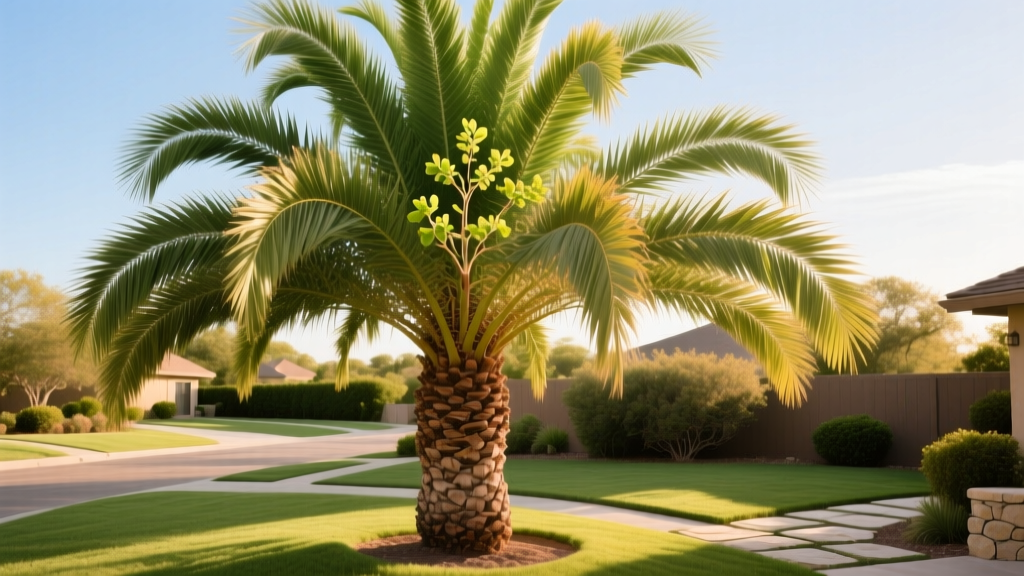
Seasonal Timing and Care Calendar for a Palm Tree in Texas
Texas Hardiness Zones and Palm Species Matrix
Texas spans USDA Hardiness Zones 6b through 10a, meaning a palm tree in Texas requires highly localized care. A species that thrives unassisted in the Rio Grande Valley will suffer lethal cold damage in the Dallas-Fort Worth metroplex. Before executing any seasonal calendar, match your species to your specific microclimate.
| Texas Region (USDA Zone) | Recommended Palm Species | Cold Hardiness Limit | Seasonal Focus |
|---|---|---|---|
| North TX / Panhandle (6b-7b) | Sabal minor (Dwarf Palmetto), Trachycarpus fortunei (Windmill) | 5°F to 10°F | Aggressive winter wrapping, spring soil warming |
| Central TX / Hill Country (8a-8b) | Sabal mexicana (Texas Palmetto), Butia capitata (Jelly Palm) | 10°F to 15°F | Alkaline soil pH management, frost cloth deployment |
| Gulf Coast / Houston (9a-9b) | Phoenix canariensis, Washingtonia robusta (Mexican Fan) | 20°F to 25°F | Hurricane wind-load pruning, humidity disease control |
| South TX / RGV (10a) | Roystonea regia (Royal Palm), Cocos nucifera (Coconut) | 30°F+ | Drought irrigation, lethal yellowing monitoring |
Spring (March–May): Planting Windows and Nutrient Loading
Spring is the only viable window for transplanting container-grown or field-dug palms in Texas. The critical metric is not the air temperature, but the soil temperature. Palm roots will not initiate new growth until the soil at a 6-inch depth consistently reaches 65°F. In North Texas, this usually occurs in late April; in South Texas, early March.
The 8-2-12-4Mg Fertilizer Standard
Texas soils, particularly the heavy clays of the Blackland Prairie and the alkaline caliche of the Hill Country, frequently lock up essential micronutrients. Standard lawn fertilizers (high nitrogen, zero magnesium) will induce severe potassium and magnesium deficiencies in palms, manifesting as translucent yellow banding on older fronds.
Apply a specialized palm fertilizer with an NPK ratio of 8-2-12-4Mg (Nitrogen-Phosphorus-Potassium-Magnesium) plus trace manganese and boron. Products like Lesco Professional Palm Fertilizer (typically $45–$55 per 50lb bag) utilize polymer-coated slow-release prills. Apply 1.5 tablespoons per square foot of canopy area in early April, broadcasting evenly under the drip line. Never pile fertilizer against the trunk, as this causes fatal basal stem rot.
Summer (June–August): Deep Hydration and Wind-Load Management
While established palms are drought-tolerant, Texas summer heat exceeding 100°F causes rapid transpiration. Shallow, frequent watering encourages surface roots that are highly susceptible to desiccation. Instead, utilize a soaker hose coiled around the root zone, delivering 1 to 1.5 inches of water per week in a single, deep 4-hour session.
Managing Gulf Coast Hurricane Winds
For palms in Zones 9a and above, summer brings tropical storm risks. Do not thin the canopy to reduce wind resistance. Research from the University of Florida demonstrates that over-pruning weakens the trunk's structural integrity and reduces the palm's ability to flex. Leave all green fronds intact; only remove fronds that are completely brown and brittle.
Fall (September–November): The "9-to-3" Pruning Protocol
Fall is the time to assess canopy health and execute structural pruning before winter dormancy. The industry standard for palm pruning is the "9-to-3" or "9-to-12" clock face rule. Imagine the palm crown as a clock face viewed from the side. Fronds pointing between 9 o'clock and 3 o'clock (the upper hemisphere) should never be removed, even if they show minor tip burn. Removing green fronds above the horizontal plane starves the apical meristem (the central growth bud) of carbohydrates, stunting the next year's spear growth.
Warning: The "Hurricane Cut" Scam
Never hire a landscaping service that offers to "hurricane cut" your palm by stripping all but the top three or four fronds. This practice, also known as "pencil-pointing," severely stresses the tree, invites lethal Ganoderma butt rot through open wounds, and actually increases the likelihood of trunk snapping during high winds due to the loss of lower-frond structural support.
Fall Disease Diagnostics
Inspect the base of the trunk for Ganoderma zonatum, a fatal fungal pathogen prevalent in Texas's humid coastal regions. Look for a white, spongy basidiocarp (conk) emerging from the lower 4 feet of the trunk, or a hollow sound when tapping the trunk with a mallet. If detected, the tree must be removed immediately by a certified arborist; there is no chemical cure, and the spores will infect adjacent palms.
Winter (December–February): Active Cold Protection Tactics
When Arctic fronts push temperatures below a species' hardiness threshold, the apical meristem is at risk. If the meristem freezes and turns to mush, the palm is dead. Passive protection is insufficient for Zone 7 and 8a palms during hard freezes.
Step-by-Step Winterization for Marginal Zones
- Trunk Wrapping: Wrap the lower 4 to 6 feet of the trunk with a polypropylene frost blanket (e.g., DeWitt Pro-19, approx. $25). Never use plastic sheeting, which traps condensation that freezes against the bark.
- Active Heating: For Zone 7 windmill or dwarf palmettos, wrap the trunk and the base of the crown with UL-listed roof de-icing cables (e.g., EasyHeat, $30–$60). Plug these into a GFCI-protected outdoor outlet during freeze warnings.
- Crown Protection: Tie the upper fronds together loosely with twine to protect the central spear from frost. Drape a secondary frost cloth over the tied crown, securing it to the trunk wrap.
- Mulching: Apply a 3-inch layer of pine bark mulch over the root zone to insulate shallow roots, keeping the mulch exactly 2 inches away from the trunk base to prevent moisture buildup.
Post-Freeze Triage
If a freeze event occurs and the fronds turn brown, do not prune them immediately. The dead fronds act as an insulating layer for the trunk during subsequent cold snaps. Wait until late March when new green spear growth emerges from the central bud before removing the cold-damaged tissue. For comprehensive regional planting data, consult the Arbor Day Foundation Hardiness Zone Map and refer to Texas A&M AgriLife Extension for localized soil amendment guidelines. Detailed nutritional deficiency matrices can be found in the UF/IFAS Palm Nutrition Guide, which remains the gold standard for Southern US palm care.

