
Tree Care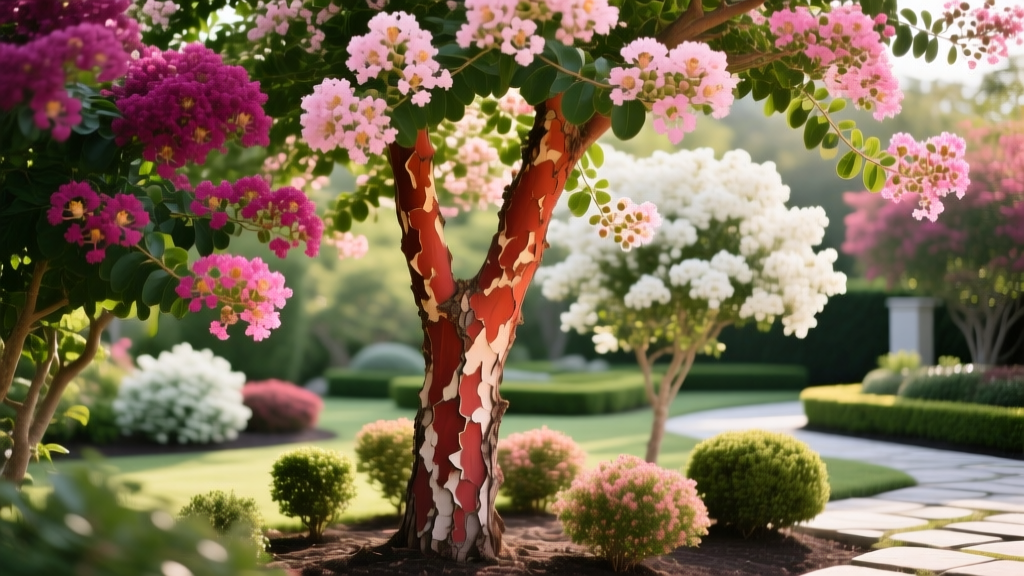
How to Choose and Plant the Right Crepe Myrtle Varieties
The Size-First Selection Framework
The most common mistake homeowners make when purchasing crepe myrtle varieties is ignoring mature canopy spread and height. A shrub that looks manageable in a 3-gallon nursery pot can easily overwhelm a 10-foot setback zone, leading to foundation damage, blocked sightlines, and the destructive pruning practice colloquially known as 'crape murder.' To avoid this, selection must be driven by the specific dimensional constraints of your planting site, not just flower color.
According to the Clemson University Home & Garden Information Center, modern breeding programs have successfully introduced cultivars ranging from 3-foot groundcovers to 30-foot shade trees. Matching the genetic growth habit of the plant to your available space eliminates the need for severe annual topping and preserves the natural, multi-stemmed architectural beauty of the species.
Crepe Myrtle Variety Matrix by Mature Size
| Size Category | Mature Height | Recommended Cultivars | Best Landscape Application |
|---|---|---|---|
| True Dwarf | 3 to 5 feet | 'Pocomoke', 'Chickasaw' | Foundation borders, rock gardens, patio containers |
| Semi-Dwarf | 5 to 15 feet | 'Acoma', 'Hopi', 'Zuni' | Privacy screens, driveway lining, small courtyard focal points |
| Standard / Mid-Sized | 15 to 25 feet | 'Dynamite', 'Arapaho', 'Tuscarora' | Street trees, large island beds, backyard shade |
| Tall / Shade Tree | 25 to 30+ feet | 'Natchez', 'Muskogee' | Prominent estate focal points, high-canopy shade over lawns |
Top Dwarf and Semi-Dwarf Cultivars (Under 15 Feet)
For tight spaces, patios, or low-growing hedges, dwarf varieties are genetically programmed to stay compact without aggressive pruning. These selections are heavily favored in modern suburban landscapes where property lines are narrow.
'Pocomoke' and 'Chickasaw'
'Pocomoke' is a true dwarf, maxing out at just 3 to 4 feet in height with a spread of 4 to 5 feet. It produces deep rose-pink blooms from mid-summer to early fall. Because of its low stature, it requires excellent air circulation at ground level to prevent fungal issues. 'Chickasaw' grows slightly taller (5 to 7 feet) and features lavender-pink flowers. Both are highly resistant to powdery mildew, a critical trait for humid climates in USDA zones 7 through 9.
'Acoma' and 'Hopi'
'Acoma' is a semi-dwarf that reaches 9 to 12 feet, notable for its pure white flowers and striking silver-gray winter bark. It has a slightly weeping growth habit, making it an excellent specimen plant near water features. 'Hopi' stays around 10 to 12 feet and offers light pink blooms that transition to a vibrant orange-red fall foliage, providing multi-season interest.
Standard and Mid-Sized Tree Cultivars (15 to 30 Feet)
When you need vertical scale, canopy shade, or a prominent focal point, standard tree-form varieties are required. These should be planted at least 10 to 15 feet away from structures to accommodate their mature canopy spread and aggressive surface root systems.
'Natchez' and 'Muskogee'
Introduced by the U.S. National Arboretum, 'Natchez' is widely considered the gold standard for tall crepe myrtle varieties. It reaches 25 to 30 feet, featuring massive white panicles and exceptional cinnamon-brown exfoliating bark. The NC State University Cooperative Extension notes that 'Natchez' possesses superior resistance to both powdery mildew and Cercospora leaf spot. 'Muskogee' is a close relative, reaching 20 to 25 feet, but produces soft lavender blooms and has slightly better cold hardiness, surviving down to USDA zone 6b with proper winter protection.
'Dynamite' and 'Arapaho'
For gardeners seeking true red blooms, 'Dynamite' (15 to 20 feet) and 'Arapaho' (20 to 25 feet) are the top performers. 'Dynamite' produces intense cherry-red flowers, though it can fade to pinkish-white if the plant experiences severe drought stress during bud formation. 'Arapaho' offers a darker, more consistent crimson red and features striking maroon-tinted new growth in the spring.
Warning: Avoid 'Crape Murder'
Never top, pollard, or severely cut back the main trunks of standard crepe myrtle varieties in late winter. This practice destroys the natural branching architecture, promotes weak, whip-like growth that cannot support heavy flower panicles, and creates large, unsightly knuckles that are highly susceptible to wood-decaying fungi. Limit pruning to the removal of crossing branches, dead wood, and basal suckers.
Never top, pollard, or severely cut back the main trunks of standard crepe myrtle varieties in late winter. This practice destroys the natural branching architecture, promotes weak, whip-like growth that cannot support heavy flower panicles, and creates large, unsightly knuckles that are highly susceptible to wood-decaying fungi. Limit pruning to the removal of crossing branches, dead wood, and basal suckers.
Step-by-Step Planting Protocol for Container-Grown Shrubs
Proper installation is the difference between a thriving specimen and a stunted, disease-prone shrub. Follow this exact protocol when planting container-grown crepe myrtle varieties in your landscape.
- Locate Utilities: Always call 811 before digging to ensure you do not sever underground gas, water, or fiber-optic lines.
- Dig the Correct Hole: Excavate a hole that is 2 to 3 times wider than the nursery container, but exactly the same depth as the root ball. The root flare (where the trunk widens at the base) must sit 1 to 2 inches above the surrounding grade to prevent water pooling and trunk rot.
- Wash the Root Ball: This is a critical, often-skipped step. Use a garden hose to wash away the outer 2 inches of the nursery potting soil. This exposes the outer roots and prevents them from circling and girdling the trunk in the future.
- Tease Circling Roots: If the exposed roots are wrapping tightly around the base, use a sterilized hand saw or pruning shears to make three or four vertical slices (about 1 inch deep) down the sides of the root ball. This forces new roots to grow outward into the native soil.
- Backfill with Native Soil: Do not amend the backfill with heavy compost or peat moss. Creating a 'bathtub' effect of rich soil encourages roots to stay in the hole rather than expanding into the native clay or sand. Backfill with the soil you just dug out, tamping gently to remove large air pockets.
- Apply Mulch Correctly: Spread a 3-inch layer of pine bark or hardwood mulch over the planting zone, extending out to the drip line. Keep the mulch at least 4 inches away from the trunk itself to prevent vole damage and basal cankers.
Soil pH, Sun Exposure, and Fertilizer Data
Crepe myrtles are highly adaptable, but they demand specific environmental conditions to produce maximum blooms and resist disease.
- Sun Exposure: A minimum of 8 hours of direct, unfiltered sunlight is required. Varieties planted in partial shade (less than 6 hours) will suffer from severe powdery mildew, reduced flowering, and weak, leggy growth.
- Soil pH: The ideal pH range is 5.0 to 6.5. In alkaline soils (pH above 7.0), the plants cannot absorb iron, leading to iron chlorosis—characterized by yellowing leaves with dark green veins. If a soil test confirms high pH, apply elemental sulfur at a rate of 1 pound per 100 square feet to lower it, or treat with chelated iron foliar sprays for immediate correction.
- Fertilizer Requirements: Do not fertilize newly planted specimens; this encourages top growth before the root system is established. Starting in the second spring, apply a balanced 10-10-10 or 12-4-8 granular fertilizer at a rate of 1 pound per 100 square feet of canopy area. Avoid high-nitrogen fertilizers late in the summer, as this promotes tender new growth that will be killed by the first autumn frost.
Frequently Asked Questions
Why is my crepe myrtle not blooming?
The most common causes are insufficient sunlight (less than 8 hours), excessive nitrogen fertilization (which promotes leafy growth at the expense of flowers), or severe late-spring pruning that removed the current season's flowering wood. Crepe myrtles bloom exclusively on new wood generated in the current growing season.
Are crepe myrtle varieties deer resistant?
Yes, crepe myrtles are generally considered highly deer resistant. The smooth bark and slightly astringent leaves are unpalatable to deer, making them an excellent choice for rural or suburban edges where browsing pressure is high.
How far apart should I plant them for a privacy screen?
For semi-dwarf varieties like 'Acoma' or 'Hopi' used as a dense privacy hedge, space the plants 6 to 8 feet apart. For standard tree varieties, space them at least 12 to 15 feet apart to allow for proper air circulation, which is vital for preventing fungal diseases in dense plantings.

