Tree Care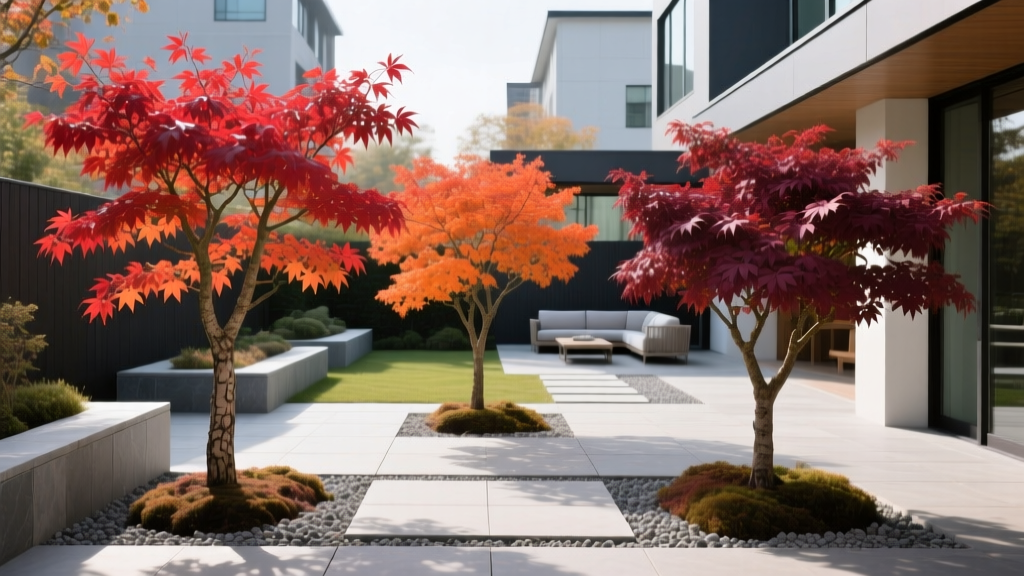
Top Short Japanese Maple Varieties for Small Yards & Patios
Why Choose a Short Japanese Maple?
Japanese maples (Acer palmatum) are prized for their architectural branching and vibrant seasonal foliage, but standard varieties like 'Bloodgood' can easily reach 20 feet in height and width, quickly overwhelming small suburban lots. For compact spaces, patio containers, and understory planting, a short Japanese maple—specifically dwarf or slow-growing cultivars—is the ideal solution. These specialized varieties typically max out between 4 and 8 feet over a 15-year period, offering the same dramatic visual impact without the heavy pruning or structural shading issues associated with full-sized trees.
According to the Clemson Cooperative Extension, Japanese maples thrive in USDA hardiness zones 5 through 8, but their ultimate success relies heavily on selecting the right cultivar for your specific microclimate and space constraints. Below, we break down the best short varieties and provide a beginner-friendly framework for planting and maintaining them.
The 4 Best Short Japanese Maple Cultivars
Not all "dwarf" maples grow at the same rate or exhibit the same form. When shopping at local nurseries, look for these specific cultivars, which are proven performers for small-scale landscapes.
| Cultivar | 10-Year Height | Growth Habit | Foliage Color | Avg. Price (3-Gallon) |
|---|---|---|---|---|
| 'Shaina' | 3 to 5 feet | Bushy, Compact, Globe | Deep Red to Purple | $90 - $130 |
| 'Mikawa Yatsubusa' | 4 to 6 feet | Layered, Architectural | Green to Bright Orange/Red | $110 - $160 |
| 'Koto no Ito' | 5 to 7 feet | Upright, Narrow, Vase | Green to Yellow/Gold | $85 - $120 |
| 'Orangeola' | 3 to 4 feet | Weeping, Cascading | Orange to Bronze-Red | $100 - $145 |
Cultivar Deep Dive
'Shaina' is widely considered the ultimate short Japanese maple for beginners. Originating as a witch's broom mutation, it grows incredibly dense and requires almost no pruning to maintain its rounded shape. It performs exceptionally well in large patio containers (minimum 20-gallon volume).
'Mikawa Yatsubusa' is favored by bonsai artists and landscape architects for its naturally layered, tiered branching. Its leaves are tightly spaced, creating a lush, textured canopy. Fall color transitions from vibrant green to an intense, fiery orange.
'Koto no Ito' (meaning "harp strings" in Japanese) features uniquely narrow, linear-lobed leaves. Because of its upright but narrow habit, it is perfect for planting between close structures, like a fence and a walkway, where horizontal space is limited.
Site Selection: Sun, Soil, and Microclimates
The most common reason beginners kill Japanese maples is improper site selection. These trees are highly susceptible to environmental stress.
💡 The Dappled Shade Rule: Short Japanese maples require bright, indirect light. Aim for a location that receives morning sun (maximum 4 hours) and is completely shaded from the harsh, hot afternoon sun (12 PM - 4 PM). Full afternoon sun will cause severe leaf scorch, turning the delicate leaf margins brown and crispy within days.
⚠️ Warning: Heavy Clay Soils: Japanese maples are highly susceptible to Phytophthora root rot. If your soil is heavy clay that holds water for more than 4 hours after a rainstorm, you must plant the tree on a raised mound (at least 6 inches above grade) or in a raised cedar bed to ensure the root crown never sits in standing water.
Soil pH should be slightly acidic, ideally between 5.5 and 6.5. The NC State Extension Plant Toolbox notes that alkaline soils (pH above 7.0) can lead to manganese deficiency, resulting in chlorosis (yellowing leaves with green veins). If your soil is alkaline, amend it with elemental sulfur or plant in a container where you can control the soil chemistry entirely.
Step-by-Step Planting Guide for Dwarf Maples
Proper planting technique dictates the first three years of your tree's survival. Follow these exact steps to prevent transplant shock and root girdling.
- Expose the Root Flare: Gently brush away the top 2 inches of soil from the nursery pot. The root flare (where the trunk widens and transitions into roots) must be visible. Planting a maple too deep is a fatal beginner mistake.
- Dig a Shallow, Wide Hole: Dig a hole that is only as deep as the root ball, but 2 to 3 times as wide. This encourages lateral root growth rather than downward growth into compacted subsoil.
- Amend with Pine Bark Fines: Avoid using heavy peat moss, which retains too much moisture. Instead, mix your native soil with 20% pine bark fines by volume. This provides excellent drainage and slowly acidifies the soil.
- Set and Backfill: Place the tree in the center of the hole. Ensure the root flare sits exactly 1 inch above the surrounding soil grade to account for settling. Backfill with your native/bark mix, tamping gently to remove large air pockets.
- Mulch Correctly: Apply a 2-inch layer of shredded hardwood mulch or pine needles in a 3-foot radius around the tree. Crucial: Keep the mulch at least 3 inches away from the trunk itself. "Volcano mulching" against the trunk invites fungal pathogens and bark-rot.
- Deep Watering: Water immediately with 3 to 5 gallons of water to settle the soil. For the first year, water deeply twice a week during dry spells, allowing the top 2 inches of soil to dry out between waterings.
Pruning and Maintenance: Keeping Them Short
One of the main benefits of choosing a true dwarf cultivar like 'Shaina' or 'Orangeola' is the minimal pruning required. However, structural maintenance is still necessary to ensure tree health.
When to Prune: Perform structural pruning in late winter (January or February) while the tree is fully dormant. Pruning in spring causes heavy sap bleeding, which weakens the tree. Light cosmetic thinning can be done in late summer.
What to Cut: Focus on the "Three D's": Dead, Damaged, and Diseased wood. Next, remove any branches that are crossing or rubbing against each other. Finally, thin out dense interior clusters of twigs to allow airflow and dappled light to reach the inner canopy, which prevents interior dieback and fungal issues like powdery mildew.
Never Top the Tree: Topping (cutting the main central leader to reduce height) destroys the tree's natural architecture and triggers a flush of weak, ugly water sprouts. If a short Japanese maple outgrows its space, it is better to transplant it or replace it with a smaller cultivar than to hack it back.
Troubleshooting Common Beginner Mistakes
Even with careful planning, environmental factors can cause stress. Use this diagnostic guide to identify and correct issues early.
- Symptom: Leaf margins turning brown and crispy in mid-summer.
Cause: Leaf scorch from excessive sun, hot drying winds, or insufficient watering.
Fix: Increase watering frequency. If the tree is in a container, move it to a location with more afternoon shade. Apply a fresh layer of mulch to retain soil moisture. - Symptom: Leaves turning pale yellow with dark green veins.
Cause: Chlorosis due to high soil pH (alkaline conditions) locking up manganese and iron.
Fix: Apply a chelated iron drench to the soil immediately for short-term relief. For long-term correction, lower the soil pH using elemental sulfur or an acidifying fertilizer formulated for azaleas and camellias. - Symptom: Sudden wilting of individual branches while the rest of the tree looks fine.
Cause: Verticillium wilt, a soil-borne fungal disease that blocks the tree's vascular system.
Fix: Prune out the affected branches, cutting well below the discolored wood. Sterilize your pruning shears with 70% isopropyl alcohol between every single cut to prevent spreading the fungus. Improve soil drainage, as the fungus thrives in wet, poorly aerated soils. - Symptom: Sticky residue on leaves and the presence of sooty mold.
Cause: Aphid infestation. Aphids secrete honeydew, which attracts black sooty mold.
Fix: Spray the foliage with a strong jet of water to dislodge the aphids. For severe infestations, apply horticultural oil or insecticidal soap in the early evening to avoid harming beneficial pollinators like bees.
Frequently Asked Questions
Can I grow a short Japanese maple entirely indoors?
No. Japanese maples require a winter dormancy period with temperatures below 40°F for at least 1,000 hours to survive long-term. They are outdoor trees. If you want an indoor maple aesthetic, consider a Ficus benjamina or a dwarf Schefflera instead.
How often should I fertilize my dwarf maple?
Established short Japanese maples are light feeders. Apply a slow-release, balanced fertilizer (such as a 10-10-10 or 14-14-16 Osmocote formula) just once a year in early spring, right before the buds break. Never fertilize in late summer or fall, as this stimulates tender new growth that will be killed by the first winter frost.