
Tree Care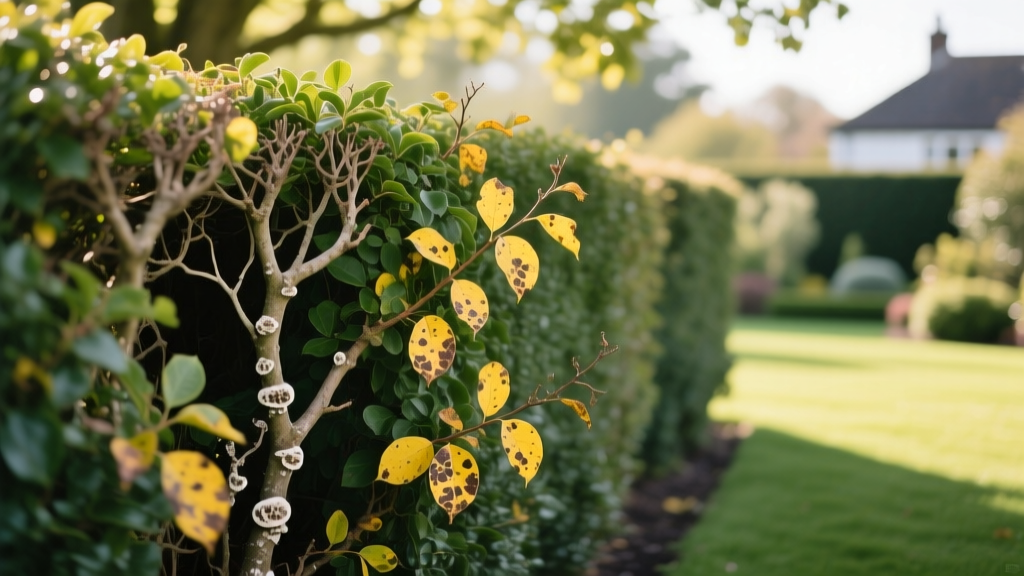
Troubleshooting a Shrub Fence: Fixing Gaps, Dieback, and Blight
The Hidden Vulnerabilities of Living Privacy Screens
A shrub fence offers superior noise dampening, windbreaking, and ecological value compared to static wood or vinyl barriers. However, treating a living fence like an inanimate structure is the primary reason homeowners face catastrophic hedge failures. When a shrub fence develops bare patches at the base, suffers severe winter browning, or succumbs to rapid fungal blight, the root cause is almost always a mismatch between the plant's biological needs and the homeowner's maintenance habits.
Diagnosing a failing hedgerow requires moving beyond surface-level symptoms. Below is a comprehensive diagnostic matrix and targeted recovery protocols for the three most common shrub fence failures.
Rapid Diagnostic Matrix: Shrub Fence Symptoms
| Primary Symptom | Probable Biological Cause | Immediate Action Required |
|---|---|---|
| Bare stems at the base ("Bare Legs") | Apical dominance shading out lower foliage | Implement A-frame pruning; apply rejuvenation cuts |
| Brown needle tips on evergreens | Winter desiccation (transpiration exceeds root uptake) | Apply anti-desiccant spray; deep root hydrate before freeze |
| Black/brown leaf spots with halos | Fungal blight (e.g., Shot Hole or Cercospora) | Sanitize shears; apply copper octanoate fungicide |
| Stunted growth and yellowing | Root girdling or compacted trench soil | Vertical mulching; radial trenching for aeration |
Problem 1: The "Bare Legs" Syndrome (Base Gaps)
The most frequent complaint with mature shrub fences—particularly those using Thuja occidentalis (Arborvitae) or Prunus laurocerasus (Cherry Laurel)—is the loss of foliage at the bottom two feet. This creates a gap that defeats the purpose of a privacy screen.
The Diagnosis: Apical Dominance and Light Starvation
Shrubs naturally exhibit apical dominance, directing growth hormones (auxins) to the highest terminal buds. When homeowners shear a hedge straight up and down, or worse, wider at the top than the bottom, the upper canopy casts a dense shadow over the lower branches. Deprived of photosynthetically active radiation (PAR), the lower branches abort their foliage to conserve energy. According to the Morton Arboretum, hedges must always be wider at the base than at the top to ensure sunlight reaches the lower extremities.
The Solution: A-Frame Pruning and Rejuvenation
Pro Tip: Never use powered hedge trimmers for corrective base pruning. The tearing action invites disease. Use sharp bypass hand pruners (like the Felco 2) to make precise cuts.
- Corrective Shaping: Prune the hedge into an "A-frame" or trapezoid shape. For a 6-foot-tall shrub fence, the base should be at least 6 inches wider on each side than the top crown.
- Selective Thinning: Remove up to 20% of the interior crossing branches to allow dappled light to penetrate the core of the hedge.
- Rejuvenation Cuts: For deciduous shrubs (like Privet or Forsythia), cut one-third of the oldest, thickest stems completely to the ground in late winter. This forces vigorous new basal shoots. Note: Never perform hard rejuvenation pruning on conifers like Arborvitae, as they will not regenerate from old, brown wood (University of Minnesota Extension).
Problem 2: Winter Dieback and Evergreen Desiccation
Evergreen shrub fences retain their foliage year-round, meaning they continue to lose water through transpiration even in January. When the ground freezes, roots cannot replace this lost moisture, resulting in severe browning, particularly on the windward side of the fence.
The Diagnosis: Transpiration Imbalance and Salt Burn
If the browning is uniform across the windward side, the issue is winter desiccation. If the browning is concentrated on the side facing a roadway or driveway, the culprit is likely salt aerosol damage or salt-laden snow runoff altering the soil osmotic pressure, effectively causing chemical drought.
The Solution: Moisture Locking and Physical Barriers
- Deep Hydration Timeline: The critical window for preventing winter kill is late October through November. Apply 1 to 1.5 inches of water per week until the ground freezes solid. This ensures the root zone is fully saturated before dormancy.
- Anti-Desiccant Application: Spray a polymer-based anti-transpirant (such as Wilt-Pruf) when daytime temperatures are between 40°F and 50°F, and no rain is forecast for 24 hours. Mix at a ratio of 1 part concentrate to 10 parts water. Coat the foliage until it drips, focusing heavily on the windward side. A second application is required in late January during a winter thaw.
- Burlap Wrapping: For newly planted shrub fences (in their first two winters), install wooden stakes 12 inches away from the foliage and staple heavy-duty burlap to create a windbreak. Never wrap the burlap tightly directly against the foliage, as solar radiation can overheat the trapped air and cook the needles.
Warning: Avoid applying nitrogen-heavy fertilizers to an evergreen shrub fence after August. Late-season nitrogen pushes tender new growth that will not have time to harden off before the first frost, guaranteeing severe dieback.
Problem 3: Fungal Blight in High-Density Hedges
Shrub fences are often planted too closely together to achieve instant privacy. This high-density planting destroys airflow, creating a microclimate with trapped humidity—the perfect incubator for fungal pathogens like Cercospora leaf spot or Shot Hole disease (common in Cherry Laurel and Skip Laurel).
The Diagnosis: Pathogen Proliferation
Inspect the affected leaves. If you see circular brown spots that eventually fall out, leaving "shot holes" in the leaf, you are dealing with a bacterial or fungal leaf spot. If the branch tips are turning brown and curling into a shepherd's crook, suspect Fire Blight (common in Rosaceae family hedges).
The Solution: Sanitation and Chemical Intervention
According to Penn State Extension guidelines on plant pathology and environmental stress, managing dense hedge diseases requires a multi-pronged approach:
- Tool Sanitization: Fungal spores are easily transmitted via pruning shears. Wipe your blades with 70% isopropyl alcohol between every single cut when removing diseased wood. Do not use bleach, as it corrodes and pits the steel, creating microscopic grooves where pathogens hide.
- Fungicide Protocol: For active fungal leaf spots, apply a copper octanoate fungicide (such as Bonide Copper Fungicide) at the first sign of symptoms in spring. Repeat every 10 to 14 days during wet weather. Ensure thorough coverage of the underside of the leaves where stomata are located.
- Irrigation Adjustment: Never use overhead sprinklers on a shrub fence. Wet foliage for more than 12 hours triggers spore germination. Switch to drip irrigation laid along the root zone, delivering water directly to the soil without wetting the canopy.
12-Month Recovery Plan for a Failing Shrub Fence
If your living fence is struggling, do not attempt to fix everything in one weekend. Follow this phased recovery schedule to avoid shocking the plants.
Phase 1: Months 1-3 (Early Spring)
Focus on structural correction and sanitation. Remove dead, diseased, or crossing branches. Implement the A-frame pruning profile. Apply a 2-inch layer of composted pine bark mulch over the root zone, keeping it 3 inches away from the main trunks to prevent collar rot.
Phase 2: Months 4-6 (Late Spring to Summer)
Monitor for pest pressure (spider mites and bagworms are notorious in Arborvitae fences). Apply targeted treatments like Spinosad or horticultural oil if thresholds are met. Ensure the hedge receives 1 inch of water weekly via deep, slow drip irrigation rather than frequent shallow watering.
Phase 3: Months 7-12 (Fall and Winter Prep)
Cease all pruning by late August. Conduct the deep hydration protocol in October. Apply anti-desiccant sprays in November and install physical windbreaks if the hedge is exposed to harsh northern winds.
When to Replace: Cost and Species Analysis
Sometimes, a shrub fence is too far gone to save. If more than 40% of the hedge is dead wood, or if the root system is compromised by Armillaria root rot, replacement is the only viable option. As of 2026, nursery and installation costs for premium privacy shrubs have stabilized but remain a significant investment.
| Species | Mature Height | Avg. Cost per 6ft Specimen (Installed) | Best Use Case |
|---|---|---|---|
| Thuja occidentalis 'Smaragd' (Emerald Green) | 12-15 ft | $140 - $190 | Northern climates, narrow spaces, full sun |
| Prunus laurocerasus 'Schipkaensis' (Skip Laurel) | 10-15 ft | $160 - $220 | Shade tolerance, wide privacy screens, deer resistance |
| Taxus x media 'Densiformis' (Densiformis Yew) | 8-10 ft | $180 - $250 | Heavy shade, foundation screens, highly toxic to livestock |
When replanting, resist the urge to space plants tightly for instant gratification. Plant Emerald Green Arborvitae at least 24 to 30 inches apart, center-to-center. This slight delay in achieving total visual opacity will double the lifespan of your shrub fence by ensuring adequate airflow and reducing root competition for water and nutrients.

