
Tree Care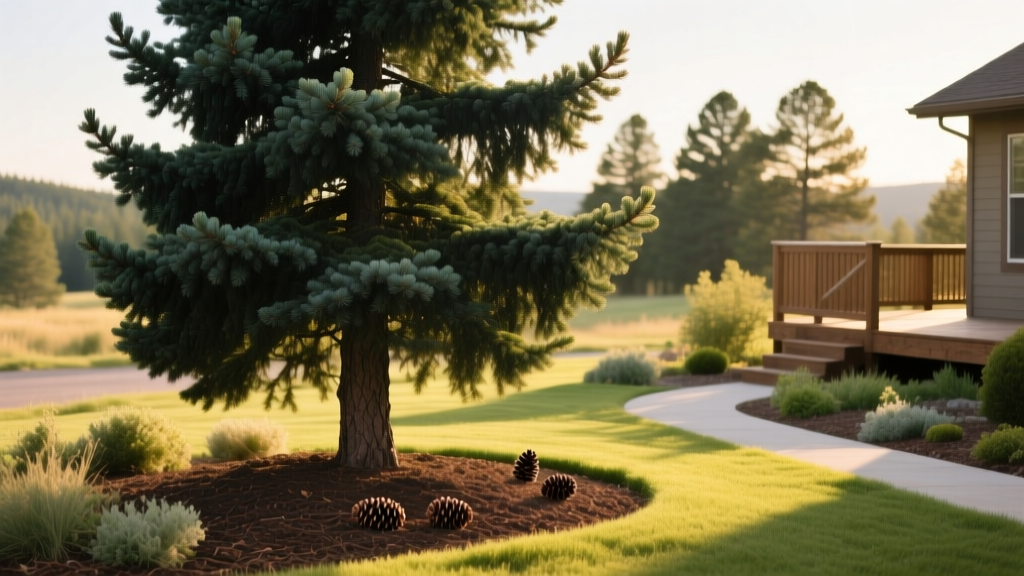
State Tree for South Dakota: Black Hills Spruce Planting Guide
The Legacy of the State Tree for South Dakota
When homeowners ask which evergreen offers the best combination of cold hardiness, dense screening, and low maintenance in northern climates, arborists consistently point to the Black Hills Spruce (Picea glauca var. densata). Officially designated as the state tree for South Dakota in 1947, this native conifer was discovered in the rugged Black Hills region. Unlike the standard white spruce, the densata variety grows slower, develops a remarkably tight, conical form, and exhibits superior resistance to winter desiccation and sunscald.
For beginner gardeners and seasoned landscapers alike, integrating the state tree for South Dakota into a home landscape provides year-round privacy, critical winter windbreaks, and vital habitat for local avian species. However, successful establishment requires precise planting depths, calculated irrigation, and an understanding of spruce-specific pathology. This guide provides the exact frameworks needed to plant and maintain a thriving Black Hills Spruce.
Botanical Profile & Hardiness Data
- Botanical Name: Picea glauca var. densata
- USDA Hardiness Zones: 2 through 6 (Marginal in Zone 7 with afternoon shade)
- Mature Dimensions: 40–60 feet tall, 20–30 feet wide
- Light Requirements: Full sun (Minimum 6–8 hours of direct, unfiltered sunlight)
- Soil Preference: Well-draining loam; pH 5.0 to 7.0
- Growth Rate: Slow to medium (12 to 18 inches per year under optimal conditions)
Site Selection & Soil Preparation
The most common reason young spruce trees fail within the first three years is improper site selection. Black Hills Spruce roots are highly susceptible to Phytophthora root rot in waterlogged soils. Before digging, evaluate your site against these non-negotiable criteria:
- Drainage Test: Dig a test hole 12 inches deep and 12 inches wide. Fill it with water and let it drain. Refill it and time the drainage. If it takes longer than 4 hours to drain the second fill, the site has heavy clay or a hardpan layer. You must either choose a different location or install a French drain system to divert subsurface water.
- Spacing Framework: Plant at least 15 feet away from building foundations to prevent root interference with basement waterproofing membranes. For privacy screens or windbreaks, space trees 12 to 15 feet apart in a staggered zigzag pattern rather than a single straight line.
- Overhead Clearance: Ensure the planting site is completely free of overhead utility lines. A mature Black Hills Spruce will easily exceed 40 feet, making it a severe hazard near power drops.
Planting Instructions: B&B vs. Container
Black Hills Spruce is typically sold either Balled and Burlapped (B&B) or in plastic nursery containers. The preparation and handling differ significantly between the two.
| Feature | Balled & Burlapped (B&B) | Container-Grown |
|---|---|---|
| Root Mass | Heavier, field-dug, often 90% of native soil | Lighter, 100% soilless peat/pine bark mix |
| Preparation | Must remove all synthetic burlap and wire baskets | Must shave 1 inch off outer root ball to remove circling roots |
| Planting Depth | Root flare must sit 1–2 inches above grade | Root flare must sit exactly at grade level |
| Best Planting Time | Early spring (April-May) or early fall (Sept-Oct) | Anytime ground is workable, avoiding peak July heat |
Step-by-Step Planting Protocol
- Locate the Root Flare: Brush away soil from the top of the root ball until you see the trunk flare (where the trunk widens at the base). This is your depth reference point.
- Dig the Hole: Dig a hole 2 to 3 times wider than the root ball, but no deeper than the root ball itself. The bottom of the hole must be undisturbed, solid native soil to prevent the tree from sinking over time.
- Set and Level: Lift the tree by the root ball (never by the trunk). Place it in the hole. Use a 4-foot level across the top of the root ball to ensure it is perfectly straight.
- Backfill: Backfill with the native soil you just dug out. Do not amend the backfill with compost or peat moss; this creates a 'bathtub effect' that traps water. Tamp the soil gently with your hands to remove large air pockets.
- Water In: Immediately flood the planting hole with a slow trickle from a garden hose to settle the soil around the roots.
Year-One Watering & Mulching Framework
Establishing a robust root system requires precise moisture management. According to forestry guidelines referenced by the South Dakota State University Extension, overwatering is just as lethal as drought stress for newly planted spruce.
The Caliper Rule: Measure the trunk diameter (caliper) at 6 inches above the soil line. Apply 1.5 gallons of water per inch of caliper per watering session. For example, a 2-inch caliper tree requires exactly 3 gallons per session.
Frequency: During the first growing season, water when the top 3 inches of soil feel dry to the touch. Use a 12-inch soil probe to check moisture. In typical summer conditions, this translates to watering every 4 to 6 days. During the critical fall establishment period (September through ground freeze), water deeply once every 10 days to prevent winter desiccation.
Mulching: Apply a 2 to 3-inch layer of coarse arborist wood chips in a 4-foot diameter ring around the tree. Crucial Warning: Keep the mulch at least 4 inches away from the trunk flare. 'Volcano mulching' traps moisture against the bark, inviting fungal pathogens and encouraging girdling roots.
Pest & Disease Troubleshooting
While the state tree for South Dakota is highly resilient, it is not immune to specific environmental stressors and pathogens. Use this diagnostic framework to identify and treat common issues.
Symptom: Needles turn yellow/brown and drop, starting on lower, inner branches.
Cause: Cytospora Canker (Leucostoma kunzei). This fungal disease attacks stressed trees, often entering through pruning wounds or bark abrasions.
Action Plan: There is no chemical cure. Prune infected branches at least 4 inches below the visible canker margin during dry weather. Sterilize bypass pruners with 70% isopropyl alcohol between every single cut to prevent spreading the spores. Improve air circulation and reduce drought stress.
Symptom: Needles look dusty, stippled with tiny yellow dots, and fine webbing is visible.
Cause: Spruce Spider Mites (Oligonychus ununguis). These arachnids thrive in hot, dry, dusty conditions, typically peaking in late spring and early fall.
Action Plan: Blast the foliage with a strong stream of water to dislodge mites. For severe infestations, apply a 1% to 2% rate of horticultural oil (avoid neem oil, which can clog spruce stomata and cause needle burn). Apply only when temperatures are below 85°F to prevent phytotoxicity.
Pruning Rules for Spruce Trees
Beginners often mistake spruce trees for hedge shrubs and attempt to shear them. Never shear a Black Hills Spruce. Shearing removes the terminal buds, destroys the natural conical architecture, and creates a dense outer shell of needles that blocks sunlight from reaching the inner branches, leading to interior dieback.
The Arbor Day Foundation advises that spruce trees generally require no structural pruning once established. Limit your pruning strictly to the 'Three Ds': Dead, Damaged, or Diseased wood. If the tree develops a double leader (two competing main vertical trunks), prune the weaker leader back to a lateral branch in late winter while the tree is fully dormant. This prevents the trunk from splitting under heavy snow loads in maturity.
Frequently Asked Questions
Do I need to fertilize my Black Hills Spruce?
Do not fertilize during the first year. The root system needs to establish without the push of top growth. In year two, conduct a soil test. If nitrogen is deficient, apply a slow-release evergreen fertilizer (like a 12-6-6 formulation) at a rate of 1 pound of actual nitrogen per 1,000 square feet of root zone in early spring before bud break.
Will deer eat the state tree for South Dakota?
Black Hills Spruce is considered highly deer-resistant due to its stiff, sharp needles and strong aromatic resins. While starving deer may nibble the lower branches in severe winters, it is rarely a primary target compared to arborvitae or yew.
Can I plant it in heavy clay soil?
Planting directly in unamended heavy clay will likely kill the tree via root asphyxiation. If clay is your only option, plant the tree slightly elevated (mounding the backfill 4 to 6 inches above the surrounding grade) and slope the soil away from the trunk to ensure rapid surface drainage.

