Tree Care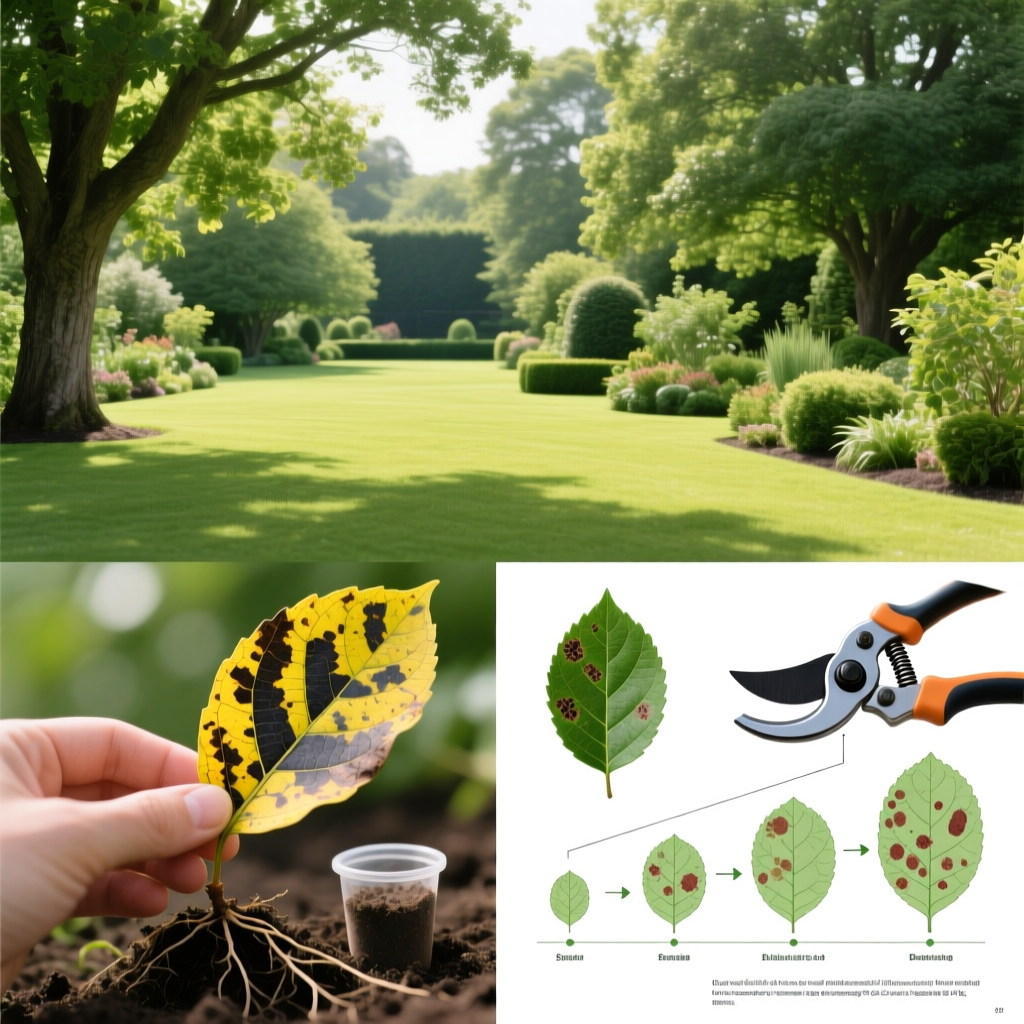
How to Spot & Manage Bacterial Leaf Scorch in Landscape Trees
Sarah ChenPublished
How to Spot & Manage Bacterial Leaf Scorch in Landscape Trees
Bacterial leaf scorch (BLS) is one of the most frustrating diseases that landscape professionals & homeowners encounter. Caused primarily by the bacterium Xylella fastidiosa, this pathogen invades the water-conducting tissues of trees, slowly choking off their ability to transport moisture from roots to leaves. Unlike many fungal diseases that respond well to fungicide applications, bacterial leaf scorch requires a fundamentally different approach to management — one rooted in early detection, cultural practices, & strategic long-term planning.
If you have noticed the margins of leaves on your oak, elm, sycamore, or other landscape trees turning brown in mid-summer while the rest of the leaf remains green, you may be witnessing the early stages of this destructive disease. Understanding how bacterial leaf scorch develops, spreads, & progresses is essential for protecting the health & longevity of your landscape trees. Just as maintaining a healthy lawn requires vigilance against disease, keeping your trees thriving demands a proactive approach to plant health care.
This comprehensive guide will walk you through everything you need to know about spotting & managing bacterial leaf scorch in landscape trees, from recognizing the earliest symptoms to implementing effective long-term management strategies.
Recognizing the Symptoms of Bacterial Leaf Scorch
Early identification is the cornerstone of effective bacterial leaf scorch management. The disease presents a distinctive set of symptoms that, once you know what to look for, become relatively easy to distinguish from other tree health issues. However, because some symptoms mimic drought stress or nutritional deficiencies, careful observation across multiple seasons is often necessary.
The Classic Marginal Leaf Scorch Pattern
The hallmark symptom of bacterial leaf scorch is a browning or necrosis that begins at the leaf margins & progresses inward toward the midrib. What makes BLS distinctive from simple drought stress is the presence of a narrow, yellow or chlorotic band — often called a "halo" or "border" — that separates the dead, brown tissue from the remaining healthy green tissue. This demarcation line is one of the most reliable field indicators of bacterial leaf scorch.
In the early stages, you may notice that only a few branches on one side of the tree show symptoms. This localized or "flagging" pattern is typical during the first year or two of infection. As the disease progresses over subsequent growing seasons, the scorching becomes more widespread, eventually affecting the entire canopy.
Seasonal Timing of Symptoms
One of the most telling characteristics of bacterial leaf scorch is when symptoms appear. Unlike drought stress, which can occur at any point during dry periods, BLS symptoms typically emerge in early to mid-summer — often around late June through August in temperate climates. Leaves that emerge in spring look perfectly healthy, only to develop scorch symptoms weeks later as the bacterial population inside the xylem builds to levels that restrict water flow.
This timing is significant because it helps differentiate BLS from abiotic stress factors. If your trees are receiving adequate irrigation through a well-designed irrigation system & the soil moisture is sufficient, yet marginal leaf scorch still appears in mid-summer, bacterial leaf scorch should be high on your list of suspects.
Progressive Decline Over Multiple Years
Bacterial leaf scorch is a chronic, progressive disease. In the first year, symptoms may be limited to a handful of branches. By the second or third year, entire sections of the canopy may be affected. Over a period of five to ten years, severely infected trees often experience significant dieback, reduced growth, premature leaf drop, & eventually death. The rate of decline varies by tree species, environmental conditions, & the overall vigor of the tree at the time of infection.
Species Most Commonly Affected
While Xylella fastidiosa has an extraordinarily broad host range, certain landscape trees are particularly susceptible to the strains that cause bacterial leaf scorch. The most commonly affected species include:
- Oaks — Especially red oaks, pin oaks, & other members of the red oak group
- Elms — American elm, Siberian elm, & various hybrid elms
- Sycamores — American sycamore & London plane tree
- Maples — Red maple & sugar maple
- Mulberries — Red mulberry & white mulberry
- Oleanders — Particularly in warmer climates where oleander leaf scorch is prevalent
If you are planning a new landscape installation & want to minimize the risk of BLS, consider consulting our guide to selecting the best shade trees for disease-resistant alternatives suited to your region.
Understanding How Bacterial Leaf Scorch Spreads
To manage bacterial leaf scorch effectively, you need to understand the biology of the pathogen & how it moves through both individual trees & the broader landscape. This knowledge informs every aspect of your management strategy, from pruning decisions to vector control.
The Role of Xylem-Colonizing Bacteria
Xylella fastidiosa is a xylem-limited bacterium, meaning it lives & multiplies exclusively within the water-conducting vessels of the tree. As bacterial populations increase, they form biofilms & aggregates that physically block the flow of water & dissolved nutrients from the roots to the canopy. The scorch symptoms you see on leaves are essentially the result of localized water deprivation — the leaves are dying of thirst even when the soil is moist.
The bacteria move systemically through the tree over time, spreading from the initial point of infection outward through the vascular system. However, movement is not uniform. The bacteria tend to colonize certain branches & sectors of the canopy more heavily than others, which explains the characteristic flagging pattern seen in early-stage infections.
Insect Vectors: The Primary Transmission Route
Bacterial leaf scorch does not spread through root contact, wind, or rain splash the way many fungal diseases do. Instead, it relies almost entirely on xylem-feeding insects to move from tree to tree. The primary vectors include:
- Sharpshooters — Various species of leafhoppers in the family Cicadellidae, including the glassy-winged sharpshooter
- Spittlebugs — Both meadow spittlebugs & other species in the family Aphrophoridae
- Treehoppers — Members of the family Membracidae that feed on woody plants
These insects acquire the bacterium when they feed on an infected tree, then transmit it to healthy trees during subsequent feeding events. The insects themselves are not harmed by the bacterium & can remain infectious for life. Because these vectors are highly mobile & feed on a wide range of host plants, controlling the spread of BLS across a landscape is exceptionally challenging.
Maintaining a healthy, diverse landscape with proper soil nutrition & aeration practices can help keep trees vigorous enough to better tolerate the stress of vector feeding & potential infection.
Root Graft Transmission
In some cases, bacterial leaf scorch can spread between adjacent trees through root grafts — natural unions that form when the roots of neighboring trees of the same species grow together & fuse. This is particularly common in species like elms & oaks that are planted in close proximity. When one tree in a group becomes infected, the bacteria can move through these root connections to adjacent trees, making the disease appear to spread slowly outward from a central point.
Diagnostic Methods & Confirmation
While the symptoms described above provide strong field indicators, definitive diagnosis of bacterial leaf scorch requires laboratory confirmation. Several factors can produce symptoms that closely resemble BLS, including drought stress, root damage, girdling roots, construction injury, & certain nutrient deficiencies. Before investing significant time & resources into management, proper diagnosis is essential.
Field Diagnosis Techniques
Experienced arborists & plant pathologists can often make a preliminary diagnosis based on the combination of symptom pattern, timing, host species, & progression history. Key field diagnostic steps include:
- Examining the pattern of scorch on individual leaves — looking for the characteristic marginal necrosis with a chlorotic border
- Mapping the distribution of symptoms within the canopy — noting whether symptoms are localized or widespread
- Reviewing the tree's symptom history over multiple seasons — BLS worsens progressively year over year
- Assessing site conditions to rule out abiotic causes — checking soil moisture, compaction, drainage, & recent construction activity
- Inspecting the root flare & trunk for signs of girdling roots, mechanical damage, or other issues that could explain the symptoms
Laboratory Testing
For definitive confirmation, samples of symptomatic leaf petioles & small twigs should be submitted to a plant diagnostic laboratory. The most reliable testing methods include:
- ELISA (Enzyme-Linked Immunosorbent Assay) — A widely used serological test that detects proteins specific to Xylella fastidiosa
- PCR (Polymerase Chain Reaction) — A molecular test that detects the DNA of the bacterium with high sensitivity & specificity
- Isolation & Culturing — Growing the bacterium on specialized media, though this is more time-consuming & technically demanding
When collecting samples for laboratory analysis, choose leaves that are in the early stages of symptom development — those showing the marginal scorch but still largely green. Avoid submitting completely dead, dry leaves, as the bacteria may no longer be detectable in fully necrotic tissue. Place samples in sealed plastic bags with a slightly damp paper towel & ship them to the laboratory as quickly as possible, preferably with ice packs to keep the tissue fresh.
When to Call a Professional
If you are uncertain about the diagnosis or if the affected tree is a high-value specimen, consulting a certified arborist or plant health care professional is strongly recommended. These professionals can provide accurate diagnosis, assess the overall health & structural integrity of the tree, & develop a customized management plan. Many of the same principles that apply to proper tree pruning for health also apply to managing disease — early intervention & professional guidance make a significant difference in outcomes.
Management Strategies for Bacterial Leaf Scorch
Once bacterial leaf scorch has been confirmed, the focus shifts to managing the disease to prolong the life & usefulness of the affected tree while minimizing the risk of spread to nearby susceptible trees. It is important to set realistic expectations: there is currently no cure for bacterial leaf scorch. However, a combination of cultural, chemical, & strategic practices can significantly extend the functional lifespan of infected trees.
Cultural Practices to Support Tree Health
The foundation of BLS management is keeping the affected tree as healthy & vigorous as possible. A tree that is growing well & free from additional stresses can tolerate the presence of the bacterium far longer than a tree that is already compromised. Key cultural practices include:
Deep, Infrequent Watering: Because BLS impairs the tree's ability to transport water, ensuring that adequate soil moisture is available at all times is critical. During dry periods, provide deep, slow irrigation that moistens the soil to a depth of at least twelve inches across the entire root zone. Drip irrigation or soaker hoses placed along the dripline are far more effective than frequent, shallow sprinkling. For guidance on setting up efficient watering systems, see our drip irrigation guide for trees & shrubs.
Mulching: Apply a two- to four-inch layer of organic mulch — such as wood chips, shredded bark, or composted leaves — over the root zone, extending at least to the dripline if possible. Keep mulch a few inches away from the trunk to prevent bark decay. Mulch helps conserve soil moisture, moderates soil temperature, reduces competition from turfgrass, & improves soil structure over time as it decomposes. This is one of the single most impactful practices you can implement for tree health.
Avoiding Soil Compaction: Heavy foot traffic, vehicle parking, & construction activity over the root zone compacts the soil, reducing the oxygen available to roots & impairing water infiltration. Protect the critical root zone of infected trees by installing physical barriers, redirecting traffic, & using aeration techniques such as vertical mulching or air spading where compaction has already occurred.
Balanced Nutrition: Have your soil tested periodically & apply fertilizers based on the results. Avoid excessive nitrogen applications, which can promote lush, succulent growth that is more attractive to insect vectors & more susceptible to stress. A slow-release, balanced fertilizer applied in early spring is generally sufficient for most landscape trees. For more on maintaining balanced soil health, check out our complete soil testing guide.
Antibiotic Treatments
Tetracycline-class antibiotics, specifically oxytetracycline, can be injected into the trunk of infected trees to suppress bacterial populations & reduce symptom severity. This treatment does not cure the infection — the bacteria are not eliminated entirely — but it can provide temporary relief, typically lasting one to two growing seasons.
Key considerations for antibiotic treatment include:
- Applications must be performed by a licensed pesticide applicator or arborist trained in trunk injection techniques
- Treatments are most effective when applied in spring, before symptoms appear, as a preventive measure for the coming season
- Repeated injections create wounds in the trunk that can serve as entry points for wood-decaying fungi, so the long-term structural implications must be considered
- The cost of annual or biennial treatments can be substantial, especially for large trees, & must be weighed against the value of the tree & the expected extension of its lifespan
Antibiotic treatment is most appropriate for high-value specimen trees where the cost is justified & where the tree is still in relatively good overall health. For trees that are already in advanced decline, the investment in antibiotic therapy is unlikely to provide meaningful benefit.
Pruning & Sanitation
Pruning plays an important but nuanced role in BLS management. Removing dead & dying branches improves the appearance of the tree, reduces the risk of branch failure, & can redirect the tree's energy toward healthy growth. However, pruning alone will not eliminate the bacterium from the tree, as it has typically spread systemically by the time symptoms are visible.
Follow these guidelines when pruning BLS-affected trees:
- Remove only branches that are completely dead or that pose a hazard due to structural weakness
- Avoid heavy pruning or "topping," which places additional stress on the tree & stimulates vigorous but vulnerable regrowth
- Make clean, proper cuts just outside the branch collar to promote rapid wound closure
- Disinfect pruning tools between cuts when working on infected trees — a solution of 70% alcohol or a 10% bleach solution is effective
- Schedule pruning during the dormant season when insect vectors are inactive & fresh wounds are less likely to attract feeding insects
For detailed guidance on proper pruning cuts & techniques, visit our seasonal tree pruning guide.
Vector Management
Reducing the populations of xylem-feeding insects in the landscape can help slow the spread of bacterial leaf scorch to uninfected trees. While complete vector elimination is neither practical nor environmentally desirable, targeted management can reduce risk:
- Habitat modification: Remove or manage weedy host plants near valuable trees, as many sharpshooter & spittlebug species breed on herbaceous weeds & groundcover plants
- Insecticidal treatments: Systemic insecticides applied as soil drenches or trunk injections can reduce vector feeding on treated trees, though the effect is temporary & must be repeated
- Monitoring: Use yellow sticky cards or sweep netting to monitor sharpshooter & spittlebug populations in the landscape, timing any interventions to coincide with peak vector activity
It is worth noting that because vectors are highly mobile & can fly in from surrounding areas, vector management is most effective as part of a community-wide effort rather than an individual property-level strategy.
Tree Removal & Replacement Planning
For trees in advanced stages of decline, removal may be the most practical & responsible course of action. A tree that has lost more than fifty percent of its canopy to BLS-related dieback is unlikely to recover, even with aggressive treatment, & may become a safety hazard as dead branches become brittle & prone to failure.
When removing an infected tree, consider the following:
- Remove the stump & as much of the root system as practical, especially if adjacent trees of the same species could be connected through root grafts
- In situations where root graft transmission is a concern, severing root connections between infected & healthy trees using a vibratory plow or trenching equipment can help protect nearby specimens
- Select replacement trees from species that are not susceptible to bacterial leaf scorch, or choose resistant cultivars where available
Explore our guide to choosing disease-resistant trees for excellent replacement options that will thrive in your landscape without the risk of BLS.
Seasonal Care Calendar for Trees Affected by Bacterial Leaf Scorch
Managing bacterial leaf scorch is a year-round commitment. The following seasonal calendar outlines the key tasks & observations to prioritize throughout the year to give your infected trees the best possible support.
Spring: Prevention & Preparation
Spring is the most critical season for proactive BLS management. As trees break dormancy & begin pushing new growth, the following tasks should be completed:
- Inspect trees carefully as leaves emerge — note any branches that fail to leaf out or that show delayed budbreak, as these may indicate advancing infection
- Apply antibiotic trunk injections if this is part of your management plan — timing is critical, as treatments must be in place before bacterial populations build up in the xylem
- Refresh mulch around the base of affected trees, ensuring adequate coverage of the root zone
- Fertilize based on soil test results, using slow-release formulations that provide steady nutrition throughout the growing season
- Monitor for early vector activity — sharpshooters & spittlebugs often become active in late spring, so begin monitoring with sticky traps
Spring is also an excellent time to evaluate your overall landscape health. A well-maintained lawn with proper spring lawn care supports a healthier ecosystem that reduces stress on all landscape plants.
Summer: Monitoring & Stress Reduction
Summer is when BLS symptoms become most visible & when infected trees are under the greatest physiological stress. Your primary goals during this season are to minimize additional stressors & to document symptom progression:
- Maintain consistent irrigation — this is the single most important summer task for BLS-affected trees. Do not allow the soil to dry out significantly between watering events
- Document symptoms with photographs & notes — record which branches are affected, the severity of scorch, & the date of first symptom appearance. This information is invaluable for tracking disease progression over time
- Avoid pruning during summer unless necessary for safety — fresh wounds attract insect vectors & the tree is already under maximum stress
- Limit soil disturbance around the root zone — avoid trenching, grading, or heavy equipment use near infected trees during the growing season
- Watch for secondary pests — stressed trees are more susceptible to borers, bark beetles, & other opportunistic pests that can accelerate decline
Fall: Assessment & Planning
As the growing season winds down, fall provides an opportunity to assess the overall trajectory of the disease & plan for the coming year:
- Evaluate the rate of decline — compare this year's symptoms to your records from previous years to determine whether the disease is progressing slowly, moderately, or rapidly
- Collect samples for laboratory testing if you have not yet confirmed the diagnosis — early fall, while some symptomatic tissue is still available, is a good time for sampling
- Plan dormant-season pruning — identify branches that should be removed during winter & schedule the work accordingly
- Apply fall fertilizer if soil tests indicate a need — fall applications of potassium can help improve winter hardiness & overall tree vigor
- Consider root zone treatments such as vertical mulching or compost top-dressing to improve soil conditions before winter
Winter: Structural Pruning & Infrastructure Improvements
Winter dormancy is the ideal time to perform many of the more invasive management tasks, as the tree is less vulnerable to stress & insect vectors are inactive:
- Perform structural pruning to remove dead wood, reduce canopy density if needed, & improve the overall form & safety of the tree
- Install or repair irrigation systems that will serve the affected trees during the coming growing season
- Address soil compaction through radial trenching, air spading, or other aeration techniques
- Remove severely declined trees if the decision has been made to replace them — winter removal minimizes disruption to the surrounding landscape & allows time for replanting in spring
- Sharpen & disinfect pruning tools to prepare for the coming season
Frequently Asked Questions About Bacterial Leaf Scorch
Can bacterial leaf scorch be cured once a tree is infected?
Unfortunately, there is currently no cure for bacterial leaf scorch. Once Xylella fastidiosa has colonized the xylem of a tree, it cannot be fully eradicated. Antibiotic treatments with oxytetracycline can suppress bacterial populations & reduce symptom severity, but they do not eliminate the infection. The most effective approach is a combination of supportive cultural practices, targeted treatments, & realistic long-term planning that may eventually include tree replacement. Research into biological controls & resistant cultivars is ongoing, & new management options may become available in the future.
How long can a tree live after being diagnosed with bacterial leaf scorch?
The lifespan of a tree after BLS diagnosis varies significantly depending on the species, the tree's overall health at the time of infection, environmental conditions, & the quality of ongoing care. In general, trees with bacterial leaf scorch may survive for five to ten years or more after initial symptoms appear, though they will experience progressive decline throughout this period. Well-maintained trees in favorable sites tend to last longer than trees that are already stressed by poor soil conditions, drought, compaction, or other factors. Some oak specimens have been known to persist for over a decade with careful management, while others decline rapidly within three to five years.
Is bacterial leaf scorch contagious to other trees in my yard?
Yes, bacterial leaf scorch can spread to other susceptible trees in your landscape, primarily through insect vectors — sharpshooters, spittlebugs, & treehoppers that feed on the xylem sap of infected trees & then move to healthy trees. The disease can also spread between adjacent trees of the same species through root grafts. However, BLS does not spread through casual contact, wind, or rain, so the risk of transmission is more gradual than with some other tree diseases. To reduce the risk of spread, maintain good overall tree health across your landscape, manage vector populations where practical, & consider severing root grafts between infected & healthy trees if they are growing in close proximity. Diversifying your tree species is one of the best long-term strategies to limit the impact of BLS on your landscape.
What trees should I plant as replacements for trees lost to bacterial leaf scorch?
When selecting replacement trees, prioritize species that are not known hosts of Xylella fastidiosa or that have demonstrated resistance. Good alternatives for shade trees include ginkgo (Ginkgo biloba), zelkova (Zelkova serrata), katsura (Cercidiphyllum japonicum), & certain cultivars of disease-resistant elms. For smaller ornamental trees, consider serviceberry, redbud, or flowering dogwood (though dogwood has its own set of disease considerations). Always select trees that are well-suited to your specific site conditions — including soil type, drainage, sun exposure, & hardiness zone — as a well-sited tree will be inherently more resilient to all forms of stress. Consult with a local certified arborist or your cooperative extension service for species recommendations tailored to your region.
How can I tell the difference between bacterial leaf scorch & drought stress?
Distinguishing between bacterial leaf scorch & drought stress can be challenging because both produce marginal leaf browning. However, several key differences can help you differentiate them. BLS typically features a distinct yellow or chlorotic border between the dead tissue & the healthy green tissue, while drought scorch usually transitions more gradually without a sharp demarcation line. BLS symptoms appear in mid-summer even when soil moisture is adequate, whereas drought stress correlates directly with dry soil conditions & resolves when the tree receives sufficient water. BLS often affects only certain branches or one side of the tree initially, while drought stress tends to affect the entire canopy more uniformly. Finally, BLS worsens progressively over multiple years, while drought stress may vary from year to year depending on rainfall patterns. If you are uncertain, laboratory testing of petiole samples provides definitive answers.
Final Thoughts on Managing Bacterial Leaf Scorch
Bacterial leaf scorch is a serious & chronic disease that demands a thoughtful, long-term management approach. While the news that a beloved landscape tree is infected can be disheartening, the situation is far from hopeless. By combining early detection, supportive cultural practices, strategic pruning, & — where appropriate — antibiotic treatments, you can extend the useful life of affected trees for many years.
The broader lesson of bacterial leaf scorch is the importance of landscape diversity. Monocultures of susceptible species create conditions where a single pathogen can devastate an entire planting. By maintaining a varied palette of tree species in your landscape, practicing excellent overall lawn & landscape care, & staying vigilant for early signs of disease, you can build a resilient, beautiful landscape that withstands the challenges posed by BLS & other emerging threats.
Whether you are managing a single infected oak in your front yard or developing a comprehensive plant health care program for a large property, the principles outlined in this guide provide a solid foundation for making informed, effective decisions about bacterial leaf scorch management. When in doubt, consult with a certified arborist who can provide site-specific recommendations & help you navigate the complex decisions that come with managing this challenging disease.