
Tree Care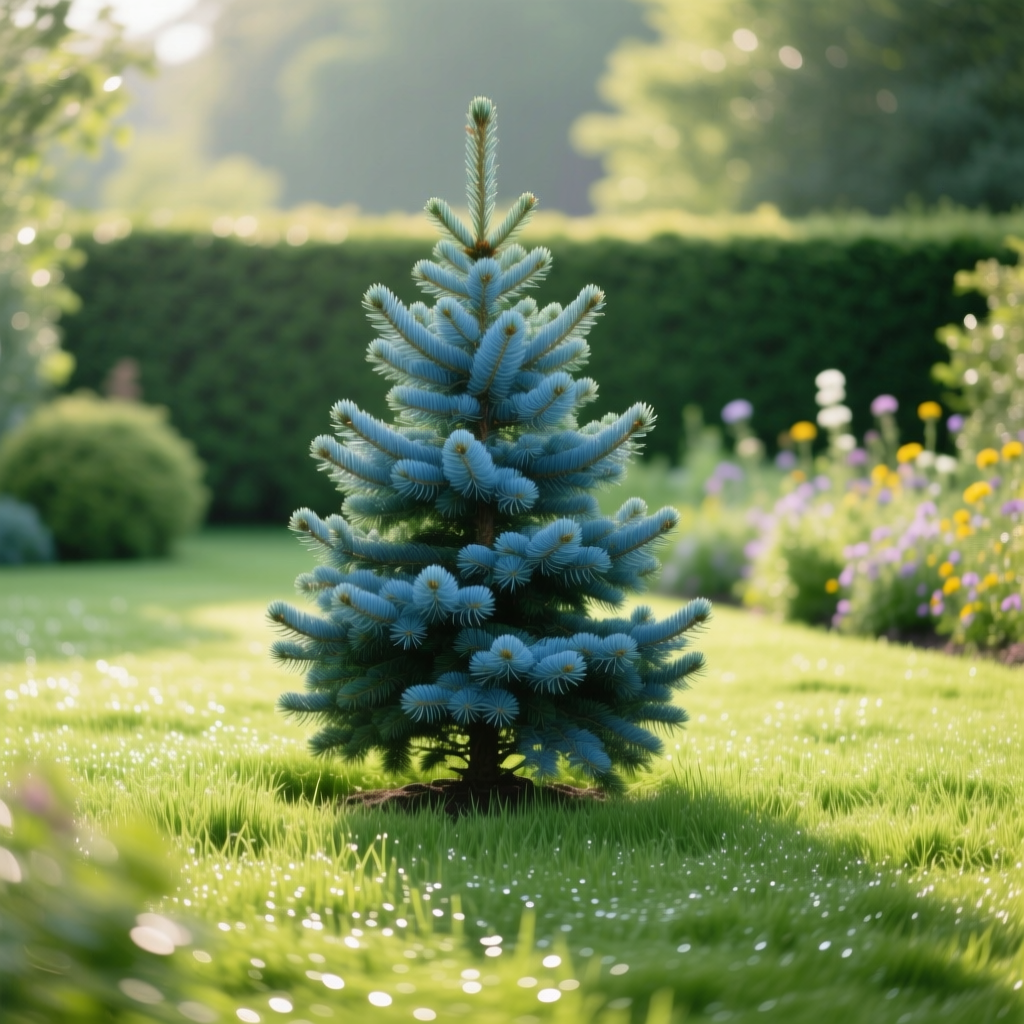
Spruce Tree Care: Planting, Pruning, & Maintenance
Spruce trees (genus Picea) are among the most majestic & recognizable evergreens in the world, prized for their symmetrical conical shapes, stiff needles, & year-round visual interest. Whether you are planting a Colorado Blue Spruce as a striking landscape focal point, establishing a Norway Spruce windbreak to protect your property, or nurturing a dwarf Alberta Spruce in a formal garden bed, understanding the specific needs of these conifers is crucial for their long-term survival. Unlike turfgrass management, which requires frequent, shallow interventions, tree care demands a long-term perspective focused on root health, structural integrity, & environmental adaptation.
Native to northern temperate & boreal regions, spruce trees are naturally adapted to cold winters & relatively cool summers. However, when introduced into residential landscapes, they often face stressors such as compacted soil, reflected heat from hardscapes, & improper watering regimes. A stressed spruce tree is highly susceptible to a variety of fungal pathogens & opportunistic pests. By mastering the fundamentals of spruce tree care, you can ensure your evergreens remain vibrant, dense, & resilient for decades. This comprehensive guide will walk you through everything from site selection & soil preparation to advanced pruning techniques & seasonal maintenance strategies.
Essential Care Requirements for Spruce Trees
Establishing a strong foundation is the most critical step in spruce tree care. While these evergreens are relatively low-maintenance once mature, their first few years in the landscape require attentive oversight to develop a robust root system capable of sustaining the tree during periods of environmental stress.
Sunlight & Site Selection: Spruce trees thrive in full sun, requiring a minimum of six to eight hours of direct, unfiltered sunlight daily. Insufficient sunlight leads to sparse foliage, weakened branch structure, & an increased susceptibility to fungal diseases. When selecting a planting site, consider the tree's mature width & height. Planting a spruce too close to a building, driveway, or property line will eventually lead to structural conflicts. Furthermore, avoid planting in low-lying areas where cold air settles or where water naturally pools, as spruce roots are highly sensitive to prolonged saturation.
Soil Conditions & pH: These evergreens prefer well-draining, slightly acidic soils with a pH ranging from 6.0 to 6.5. Heavy clay soils can suffocate roots, while excessively sandy soils may fail to retain adequate moisture & nutrients. Before planting, it is highly recommended to conduct a comprehensive soil analysis. Utilizing a professional soil testing service will reveal nutrient deficiencies & pH imbalances, allowing you to amend the native soil appropriately. If your soil is heavily compacted, broad-scale aeration & the incorporation of organic compost can significantly improve soil structure & drainage.
Watering Strategies: Proper watering is arguably the most misunderstood aspect of evergreen tree care. Spruce trees require deep, infrequent watering rather than shallow, daily sprinklings. Deep watering encourages roots to grow downward into the soil profile, anchoring the tree & providing access to subsurface moisture during droughts. For newly planted trees, water slowly at the base to ensure the root ball remains consistently moist but not waterlogged. For established trees, apply water along the dripline (the outer edge of the canopy) where the majority of the fine, water-absorbing feeder roots are located. A soaker hose left running for several hours is an excellent method for delivering deep hydration.
Mulching Best Practices: A proper mulch ring is essential for moisture retention, soil temperature regulation, & weed suppression. Apply a two- to four-inch layer of organic mulch, such as shredded bark or wood chips, extending out to the tree's dripline. Crucially, you must avoid 'volcano mulching'—the practice of piling mulch against the trunk. Mulch piled against the bark traps moisture, leading to trunk rot, & provides a hidden habitat for rodents that may girdle the tree in winter. Always leave a three-inch gap between the mulch & the base of the trunk to expose the root flare.
Fertilization Needs: Spruce trees generally do not require heavy fertilization, especially if they are growing near a regularly maintained lawn that receives routine nutrient applications. However, if a soil test indicates a deficiency, or if the tree exhibits stunted growth & pale needles, a slow-release, balanced fertilizer formulated for acid-loving evergreens can be applied in early spring. Avoid high-nitrogen fertilizers late in the growing season, as this stimulates tender new growth that will not have time to harden off before winter freezes.
Pruning & Shaping Your Spruce Trees
One of the most appealing characteristics of spruce trees is their naturally symmetrical, pyramidal form. In most cases, they require very little pruning to maintain their aesthetic appeal. However, strategic pruning is sometimes necessary to remove damaged wood, improve airflow, or manage density. Understanding the unique growth habits of spruce trees is vital to avoid causing permanent damage.
Unlike yews or arborvitae, spruce trees do not possess latent buds on older, bare wood. This means that if you prune a branch back into the 'dead zone'—the interior of the canopy where no needles are present—that branch will never produce new foliage. It will remain a bare, unsightly stub indefinitely. Therefore, all pruning cuts must be made just above a lateral bud on the current season's growth or at the branch collar where it connects to the trunk.
Candle Pruning for Density: If you wish to encourage a denser, more compact growth habit, particularly on younger specimens, you can perform a technique known as candle pruning. In late spring, the new growth emerges in the form of elongated, pale shoots called 'candles.' By pinching or cutting these candles back by one-third to one-half before the needles fully expand, you force the tree to distribute its energy into lateral buds, resulting in a thicker, more lush canopy. This technique is especially useful for maintaining formal hedges or controlling the width of specimen trees.
Removing Dead & Diseased Wood: Routine inspection of your spruce trees should be a standard part of your general tree care regimen. Promptly remove any dead, broken, or crossing branches to prevent the entry points for pests & fungal spores. When removing an entire branch, use the three-cut method to prevent the heavy limb from tearing the bark down the trunk as it falls. Always use sharp, sanitized pruning tools to make clean cuts that heal rapidly. Disinfect your blades with a 10% bleach solution or rubbing alcohol between cuts when dealing with diseased wood to prevent spreading the infection to healthy tissue.
The Dangers of Topping: Never 'top' a spruce tree by cutting off the central leader (the main vertical trunk) to control its height. Topping destroys the tree's natural conical architecture, forces the development of multiple, weakly attached co-dominant leaders, & creates a massive wound at the top of the tree that is highly susceptible to rot & insect infestation. If a spruce tree is too large for its designated space, it was the wrong tree for that location, & removal or relocation should be considered rather than disfiguring the specimen.
Common Spruce Tree Diseases & Pest Management
Spruce trees are vulnerable to several specific pathogens & insects, particularly when subjected to environmental stress. Early identification & proactive management are the cornerstones of effective pest & disease control.
Rhizosphaera Needle Cast: This is one of the most prevalent fungal diseases affecting Colorado Blue Spruce. Caused by the fungus Rhizosphaera kalkhoffii, it typically begins on the lower, inner branches where humidity is highest & airflow is restricted. Infected needles turn a purplish-brown color & eventually drop prematurely, leaving the branches looking sparse & scorched. Upon close inspection with a magnifying glass, you can see tiny, black, pimple-like fruiting bodies arranged in neat rows along the surface of the infected needles. Management involves improving air circulation through selective pruning, avoiding overhead irrigation, & applying targeted fungicides in the spring when new needles are half-grown.
Cytospora Canker: Cytospora canker is a devastating fungal disease that primarily attacks older, stressed spruce trees. The fungus enters through wounds or natural openings, killing the inner bark & cambium layer. The most obvious symptom is the profuse exudation of white, crusty resin flowing down the trunk or branches from infected sites. As the canker girdles the branch, all foliage beyond the infection point turns brown & dies. There is no chemical cure for Cytospora canker. Management relies entirely on pruning out infected branches well below the canker margin during dry weather & reducing tree stress through proper watering & mulching.
Spruce Spider Mites: These microscopic arachnids are cool-season pests that cause the most damage in spring & fall, though they can persist through summer in cooler climates. Mites feed by piercing individual needles & sucking out the cellular contents, resulting in a stippled, yellowish, or bronze appearance. Heavy infestations produce fine, silken webbing between the needles. To confirm their presence, hold a piece of white paper beneath a branch & tap the foliage sharply; if tiny, dark specks fall onto the paper & begin to crawl, mites are present. A strong jet of water can dislodge light infestations, while horticultural oils or miticides may be required for severe outbreaks.
Spruce Gall Adelgids: These tiny, aphid-like insects feed at the base of new needles, injecting saliva that causes the plant tissue to swell & form pineapple-shaped galls. While these galls are visually striking & can be alarming to homeowners, they rarely cause significant harm to the overall health of large, established trees. However, they can distort the growth of young trees & ruin the aesthetic of specimen plantings. The most effective control is to manually pick off & destroy the green galls in mid-summer before they open & release the next generation of adelgids.
Seasonal Spruce Tree Care Tips
Adapting your maintenance routine to the changing seasons ensures your spruce trees receive the specific support they need throughout the year. Integrating these seasonal tasks with your broader winter landscape preparation & spring cleanup schedules will keep your property looking pristine.
Spring: As the ground thaws, inspect your spruce trees for winter damage, including broken branches from snow load or desiccated needles from harsh winds. Remove any dead wood before the spring flush of growth begins. This is also the ideal time to apply a fresh layer of mulch & administer slow-release fertilizer if a soil test indicates a need. Monitor closely for the emergence of spider mites & the early signs of needle cast as the new candles begin to expand.
Summer: The primary focus during summer is moisture management. While established spruce trees are moderately drought-tolerant, prolonged dry spells will weaken their natural defenses against borers & canker fungi. Water deeply during periods of extended drought, ensuring the soil remains moist to a depth of at least twelve inches. Avoid pruning during the heat of summer, as fresh cuts can attract wood-boring insects & the tree's ability to compartmentalize wounds is reduced.
Fall: Autumn is a critical, yet often overlooked, season for evergreen care. Spruce trees continue to transpire (lose water through their needles) well into the winter months. If the ground freezes while the tree is dehydrated, it cannot replace the lost moisture, leading to severe winter burn. Continue to water your spruce trees deeply right up until the ground freezes solid. This practice, combined with proper planting techniques that ensure good drainage, sets the stage for winter survival.
Winter: Protect your trees from physical & environmental winter hazards. If your spruce is located near a road or driveway, shield it from salt spray using a burlap screen, as salt desiccates needles & poisons the soil. For multi-leader trees or those with weak branch crotches, gently brush off heavy, wet snow accumulations using a broom, sweeping upward to prevent snapping the branches. Avoid shaking frozen branches, as they are brittle & will shatter easily.
Frequently Asked Questions About Spruce Tree Care
How fast do spruce trees grow?
The growth rate of a spruce tree varies significantly depending on the species, environmental conditions, & soil quality. On average, most landscape spruces, such as the Colorado Blue Spruce or White Spruce, exhibit a slow to medium growth rate, adding anywhere from six to twelve inches of height per year under optimal conditions. The Norway Spruce is notably faster, capable of growing up to two feet annually when young & well-watered. Dwarf varieties, like the Dwarf Alberta Spruce, grow exceptionally slowly, often adding only two to four inches per year, making them ideal for small spaces & foundation plantings.
Why is my spruce tree turning brown from the bottom up?
Browning that begins on the lower, inner branches & slowly progresses upward is a classic symptom of Rhizosphaera needle cast or Cytospora canker. Both of these fungal pathogens thrive in the cool, damp, shaded environment found near the base of the tree canopy. Additionally, natural needle drop (the shedding of older, interior needles after two to four years) can sometimes be mistaken for disease. However, if the browning is aggressive, affects the branch tips, or is accompanied by resin flow or black fruiting bodies, a fungal infection is the likely culprit, & immediate pruning & fungicide applications may be necessary.
Can I top a spruce tree to control its height?
Topping a spruce tree is strongly discouraged by certified arborists. Cutting off the central leader ruins the tree's natural conical shape, forces the growth of multiple, structurally weak lateral leaders, & creates a massive, flat wound that is highly prone to water accumulation & internal rot. If a spruce tree is interfering with power lines or outgrowing its space, the only viable long-term solutions are selective lower-branch pruning to raise the canopy or complete removal & replacement with a smaller, more appropriate species.
How often should I water a newly planted spruce tree?
A newly planted spruce tree requires consistent moisture to establish its root system. During the first growing season, water the tree deeply one to two times per week, depending on rainfall & soil type. The goal is to keep the root ball evenly moist but never soggy. Use a soil probe or a long screwdriver to test the moisture level; if it slides easily into the soil to a depth of eight inches, the moisture is adequate. As the tree enters its second & third years, gradually reduce the frequency of watering while increasing the volume to encourage deep root penetration.
Do spruce trees need acidic soil?
Yes, spruce trees prefer slightly acidic soil with a pH between 6.0 & 6.5. In this pH range, essential micronutrients like iron & manganese are readily available to the roots. If the soil becomes too alkaline (pH above 7.0), the tree may develop iron chlorosis, a condition characterized by the yellowing of new needles while the veins remain green. If a soil test reveals high alkalinity, you can lower the pH by incorporating elemental sulfur or applying fertilizers specifically formulated for acid-loving plants, though altering soil pH is a slow, ongoing process.
By integrating these comprehensive spruce tree care practices into your broader landscape management routine, you can protect your investment & enjoy the timeless beauty, privacy, & ecological benefits that these magnificent evergreens provide. Consistent observation, proper watering, & proactive disease management are the keys to cultivating thriving spruce trees that will stand as enduring pillars in your garden for generations to come.

