
Tree Care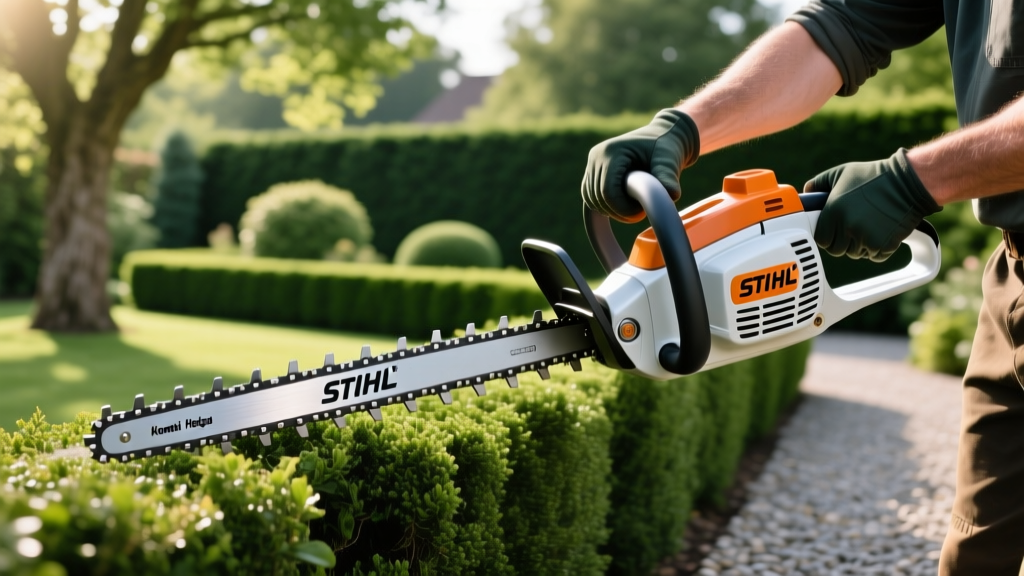
STIHL Kombi Hedge Trimmer: Attachment Selection & Care Guide
Decoding the STIHL Kombi Hedge Trimmer Lineup (HL Series)
The STIHL KombiSystem offers unmatched modular versatility, but pairing the wrong powerhead with an ill-suited hedge trimmer attachment (HL series) leads to stalled gears, burnt-out clutches, and jagged pruning cuts. Selecting the correct STIHL Kombi hedge trimmer requires matching the attachment's stroke rate, blade length, and motor type to your specific shrub density and powerhead torque output.
| Attachment Model | Blade Length | Strokes/Min (spm) | Weight | Motor Type | Ideal Powerhead Match | Est. Price (2026) |
|---|---|---|---|---|---|---|
| HL 91 K | 17.5 in | 4,000 | 3.8 lbs | Standard | KM 56 RC-E, KM 91 R | $260 - $280 |
| HL 94 K | 24 in | 4,000 | 4.6 lbs | Standard | KM 91 R, KM 111 R | $310 - $340 |
| HL 135 K | 24 in | 4,200 | 5.5 lbs | EC Brushless | KM 131 R | $420 - $450 |
The HL 91 K is a lightweight, compact option designed for precision shaping of slow-growing ornamentals. The HL 94 K extends the reach to 24 inches, making it the workhorse for standard residential privacy hedges. The flagship HL 135 K features an integrated EC brushless motor, eliminating carbon brush wear and delivering consistent torque even when pushing through thick, sap-heavy cedar branches.
Matching the Attachment to Your Shrub and Tree Species
Shrub density and branch caliper dictate the required cutting force. According to pruning guidelines from the University of Minnesota Extension, making clean, scissor-action cuts is vital to prevent tearing the cambium layer, which invites fungal pathogens. A mismatched trimmer will fold and crush thick stems rather than slicing them.
- Dense Privacy Screens (Arborvitae, Leyland Cypress, Green Giant): These species feature rapid vertical growth and thick, sap-heavy lateral branches. Use the HL 135 K paired with the high-torque KM 131 R powerhead. The brushless motor prevents bogging down in dense interior foliage.
- Formal Hedges (Boxwood, Yew, Privet): These require high-frequency, low-amplitude cuts for a manicured finish. The HL 94 K on a KM 91 R provides the perfect balance of reach and maneuverability without the front-end weight of the 135 series.
- Flowering Shrubs (Lilac, Forsythia, Hydrangea): For selective pruning of thicker, woody canes up to 3/4 inch in diameter, the HL 91 K offers superior tip control, allowing you to navigate complex branch crotches without accidentally snipping adjacent blooms.
Critical Maintenance Protocol: Gearbox and Drive Shaft
The most common point of failure in the STIHL Kombi hedge trimmer lineup is not the engine, but the attachment's spur gear head and the square drive shaft coupling. Neglecting these components results in catastrophic gear stripping.
WARNING: Drive Shaft Lubrication Error
Never pack the Kombi drive tube with heavy grease. The square drive shaft requires a light coating of STIHL Multilube or a lightweight machine oil. Heavy grease inside the aluminum tube creates a vacuum lock, attracts abrasive silica dust, and accelerates wear on the bronze bushing at the coupling point.
Never pack the Kombi drive tube with heavy grease. The square drive shaft requires a light coating of STIHL Multilube or a lightweight machine oil. Heavy grease inside the aluminum tube creates a vacuum lock, attracts abrasive silica dust, and accelerates wear on the bronze bushing at the coupling point.
The 25-Hour Gearbox Grease Purge
The HL gear head operates under extreme lateral stress. STIHL mandates servicing the gear head every 25 hours of operation, or immediately if you notice metal shavings in the existing grease.
- Remove the single Torx screw securing the grease plug on the side of the HL gear housing.
- Insert the nozzle of the STIHL Multi-Purpose Grease cartridge (Part #0781 120 1117).
- Pump exactly 3 to 5 strokes into the housing.
- Manually rotate the blades by hand (with the spark plug disconnected or battery removed) to force the old, degraded grease out of the blade gap.
- Wipe the purged grease from the blade edges, replace the plug, and tighten to 1.5 Nm.
Blade Gap and Sharpening Tolerances
STIHL hedge trimmer blades operate on a scissor-cut principle. The clearance gap between the upper and lower blades must remain between 0.004 and 0.008 inches (0.1mm - 0.2mm). If the gap widens beyond 0.010 inches due to pivot wear, thin branches will fold into the gap and tear. To adjust the gap, loosen the blade mounting nuts, apply inward pressure to the blades to eliminate play, and retighten. When sharpening, use a STIHL flat file to maintain the factory bevel; never use a bench grinder, as overheating the high-carbon steel will destroy the temper and cause immediate edge rolling.
Troubleshooting Common Kombi Hedge Trimmer Failures
Symptom: Blades Stutter or Stall Under Moderate Load
Cause: Clutch slip in the powerhead. This frequently occurs when users pair a heavy-load attachment like the HL 94 K with the entry-level KM 56 RC-E powerhead. The KM 56's centrifugal clutch engages at a lower RPM but lacks the rotational mass to sustain torque through dense wood.
Fix: Upgrade to the KM 91 R or KM 131 R powerhead, which feature heavier clutch drums and professional-grade anti-vibration mounts. If upgrading is not an option, replace the worn clutch shoes and drum on the KM 56 (Part #4140 160 2900).
Symptom: Excessive Vibration and Rattling at the Coupling Point
Cause: Stripped square drive interface or bent drive shaft. The KombiSystem relies on a precise square male-to-female metal coupling. If the attachment was previously forced onto the powerhead without fully depressing the locking pin, the corners of the square shaft become rounded.
Fix: Inspect both the powerhead output shaft and the HL attachment input shaft. If the corners are rounded, the shaft must be replaced. Always apply a drop of lightweight oil and ensure the locking pin audibly clicks into the detent hole before engaging the throttle.
Symptom: Uneven Cutting and Frayed Branch Tips
Cause: Resin buildup acting as a physical wedge between the blades, or dull cutting edges.
Fix: Spray the blades with STIHL Resin Solvent or a citrus-based degreaser. Scrub with a brass wire brush (never steel, which can score the anti-corrosion coating). If fraying persists, check the blade gap tolerance as outlined above.
Safe Operating Angles for Overhead Tree Pruning
When utilizing the KombiSystem for overhead hedge maintenance or light tree canopy leveling, the center of gravity shifts dangerously. The Arbor Day Foundation emphasizes that improper overhead pruning not only damages tree health through ragged cuts but poses severe ergonomic risks to the operator.
'When operating extended-reach hedge trimmers above shoulder height, always utilize a professional shoulder strap to distribute the powerhead's weight across your torso. Never extend your arms fully locked; maintain a slight bend in the elbows to absorb the high-frequency harmonic vibrations transferred through the aluminum drive tube.'
For overhead work exceeding 8 feet, pair the HL 135 K with the KM 131 R and a dedicated STIHL shoulder harness. Keep the cutting plane parallel to the ground to prevent the heavy trimmer head from twisting out of your grip. Always scan the canopy for hidden hazards, particularly deadwood that could be dislodged by the vibration of the blade contacting live branches.
Final Verdict on System Investment
The STIHL Kombi hedge trimmer attachments represent a significant investment in modular landscaping efficiency. By strictly adhering to the 25-hour gearbox purge schedule, maintaining the 0.008-inch blade gap tolerance, and pairing the HL series with a powerhead that matches the torque requirements of your specific shrub species, you will easily extract a decade of professional-grade performance from the system. Avoid the temptation to under-power a 24-inch blade with a residential engine; the resulting clutch wear will quickly negate any initial cost savings.

