Tree Care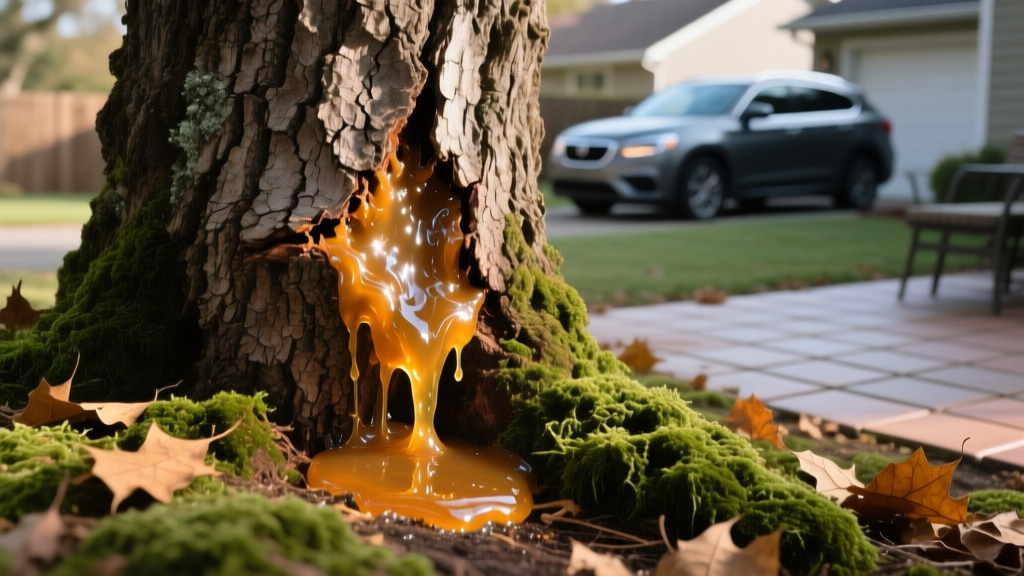
How to Stop Sticky Sap From Tree Dripping on Cars & Patios
Finding your car windshield or patio furniture coated in a sticky, glistening residue is one of the most frustrating aspects of yard maintenance. When homeowners notice this sticky sap from tree canopies dripping onto their property, the immediate instinct is often to blame the tree itself. However, in roughly 90% of cases, what appears to be tree sap is actually an insect byproduct called honeydew. True tree sap only leaks under specific environmental conditions or from physical damage.
Diagnosing the exact source of the drip is the critical first step. Applying a wound sealer to a healthy tree suffering from an aphid infestation will waste your time and money, while aggressively treating insects on a bleeding maple will not stop the natural root-pressure flow. This guide breaks down the exact biological causes, specific chemical and organic treatments available in 2026, and professional cleaning methods to restore your hardscapes and vehicles.
The Diagnosis: Honeydew vs. True Tree Sap
Before purchasing any treatments, you must identify what is actually falling from your tree. Use this diagnostic matrix to determine the root cause of the drip.
| Characteristic | Honeydew (Insect Excrement) | True Tree Sap (Wound/Root Pressure) |
|---|---|---|
| Primary Cause | Aphids, soft scale, whiteflies feeding on phloem | Physical wounds, improper pruning, spring root pressure |
| Appearance | Clear, watery, highly sticky; may turn black (sooty mold) | Thick, viscous, amber or clear; smells sweet/piney |
| Timing | Peak in late spring through early fall | Early spring (dormancy break) or immediately after storm damage |
| Tree Species | Oaks, Maples, Lindens, Pines, Citrus, Birches | Maples, Birches, Elms, Walnuts, Pines (from wounds) |
| The Fix | Systemic insecticides, horticultural oils, biological controls | Proper pruning timing, avoiding wound sealers, patience |
How to Stop Honeydew Drips (The Insect Problem)
If your diagnostic test points to honeydew, you are dealing with a piercing-sucking insect infestation. These insects consume the sugary phloem of the tree and excrete the excess as a sticky aerosol that rains down on everything below. To stop the sap from tree pests, you must break their feeding cycle.
1. Systemic Root Drenches (Long-Term Control)
For large shade trees where foliar spraying is impossible, a systemic soil drench is the most effective approach. The tree's roots absorb the active ingredient and translocate it into the canopy.
- Traditional Option (Imidacloprid 1.47%): Products like Bonide Annual Tree & Shrub Insect Drench cost roughly $25 for a 32oz bottle. The standard dosage is 3 fluid ounces per inch of trunk circumference. Warning: Do not use Imidacloprid on Linden (Basswood) trees or any blooming tree currently attracting bees, as it is highly toxic to pollinators.
- 2026 Eco-Safe Alternative (Chlorantraniliprole): Due to increasing municipal restrictions on neonicotinoids, arborists are shifting to Acelepryn (chlorantraniliprole). It costs about $45 for 8oz but is exceptionally safe for pollinators while devastating to scale and aphids. Mix 2 teaspoons per inch of trunk diameter and pour at the root flare.
2. Suffocating Oils (Contact Control)
For smaller trees or immediate relief, horticultural oils smother overwintering eggs and active scale insects on contact. Monterey Horticultural Oil (70% mineral oil, ~$15) is highly refined and safe for most canopies. Apply at a 2% to 4% dilution rate using a pump sprayer, ensuring you coat the undersides of the leaves and the bark crevices where soft scale insects hide. Never apply oils when ambient temperatures exceed 85°F, as this will cause severe phytotoxicity (leaf burn).
Managing True Sap Bleeding (Wounds and Pruning)
If the dripping substance is thick, amber, and originating from a specific physical cut or broken branch, you are witnessing true sap bleeding. This is driven by immense root pressure as trees push water and nutrients upward during the spring thaw.
The 'Bleeder' Tree Index
Some species are notorious for heavy spring sap flow. If you have these trees, pruning timing is your only defense against messy drips:
- Maples & Birches: Prune only in mid-to-late summer after the spring flush has hardened off.
- Elms & Walnuts: Prune in late fall or deep winter when the tree is fully dormant and root pressure is zero.
- Pines & Spruces: Prune candles in late spring, but avoid cutting into older, woody bark which will weep pitch continuously.
⚠️ CRITICAL WARNING: Stop Using Pruning Paint
For decades, homeowners painted pruning cuts with black tar-like 'wound sealers' to stop sap from tree wounds. Modern arboriculture has definitively proven this is harmful. According to the Morton Arboretum, sealing a wound traps moisture and decay-causing fungi inside the wood. Trees heal through a chemical process called CODIT (Compartmentalization of Decay in Trees). A clean, sharp cut left open to the air will callus over and stop bleeding naturally within a few weeks. Throw the pruning sealer away.
How to Clean Sticky Residue Without Damaging Surfaces
Whether it is honeydew or true sap, allowing it to bake onto surfaces in the sun will lead to permanent damage. Sap contains organic acids that will etch into automotive clear coats within 48 hours, and honeydew will cultivate black sooty mold on concrete patios.
Automotive Paint and Glass
- Do not scrape: Never use a razor blade or abrasive sponge on car paint.
- Isopropyl Alcohol (IPA) Method: Mix a 1:1 solution of 70% isopropyl alcohol and distilled water in a spray bottle. Mist the sap spots, let it dwell for 30 seconds to break down the resin bonds, and wipe gently with a clean microfiber towel.
- Commercial Enzymatic Removers: For severe honeydew fallout, use Turtle Wax Bug & Tar Remover or Stoner Tarminator. These contain specialized solvents that dissolve tree resins without stripping automotive wax or ceramic coatings. Expect to spend $8 to $12 per can.
Concrete Patios and Hardscapes
Honeydew drips often turn into slippery, black sooty mold on stone and concrete. To remove it, avoid standard bleach which can discolor natural stone. Instead, use a heavy-duty degreaser like Krud Kutter Original or a TSP (Trisodium Phosphate) substitute. Apply the solution, agitate with a stiff-bristle deck brush, and rinse with a garden hose. If using a pressure washer, keep the nozzle at least 12 inches from the surface and use a 40-degree white tip to avoid etching the concrete paste.
Expert Insights: Preventative Maintenance Calendar
'The most common mistake we see is homeowners treating the symptom rather than the pest. If you see sooty black mold on the leaves above your driveway, you have a scale or aphid problem, not a tree disease. Treat the canopy in early spring before the first generation of insects hatches, and you will eliminate the summer honeydew drip entirely.' — Certified Master Arborist, Midwest Region
To keep your yard sap-free year-round, follow this targeted maintenance schedule:
- March (Dormant Season): Apply dormant horticultural oil to smother overwintering scale eggs on bark.
- May (Post-Bloom): Apply systemic Chlorantraniliprole drenches to susceptible trees (Oaks, Lindens) just as the spring growth flush finishes.
- July (Peak Summer): Monitor for aphid colonies on new growth tips. Spot-treat with insecticidal soap if localized.
- August/September: Prune 'bleeder' species (Maples, Birches) now to avoid the massive sap runs of early spring.
By correctly identifying whether the sap from tree canopies is a biological insect issue or a seasonal root-pressure event, you can save hundreds of dollars in unnecessary treatments and protect your vehicles and outdoor living spaces from corrosive, sticky damage.