
Tree Care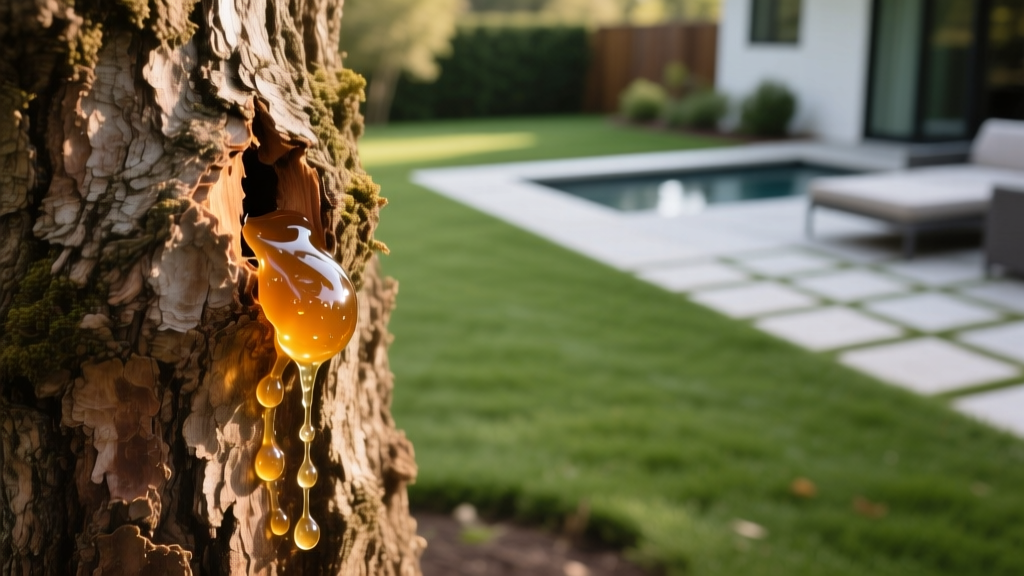
How to Stop the Sap of the Tree From Dripping on Your Patio
Diagnosing the Drip: True Sap vs. Insect Honeydew
When homeowners notice a sticky residue coating their patio furniture, windshield, or paver stones, they immediately blame the sap of the tree overhead. However, in 90% of summer drip cases, the culprit is not true tree sap at all. It is essential to correctly diagnose the source before purchasing treatments, as the management strategies for true sap and insect honeydew are entirely different.
Quick Diagnostic Test: True sap is generally clear, watery, and slightly sweet, dripping primarily in early spring. Honeydew is thick, highly viscous, often darkens as it ages, and drips consistently from late spring through early fall. If you see black sooty mold growing on the leaves or patio below, you are dealing with honeydew.
| Feature | True Tree Sap | Insect Honeydew |
|---|---|---|
| Primary Season | Early Spring (March - April) | Late Spring to Early Fall (May - September) |
| Viscosity | Thin, watery, clear | Thick, sticky, syrup-like |
| Root Cause | Root pressure, pruning wounds, bark damage | Sap-sucking insects (aphids, scale, whiteflies) |
| Common Species | Maples, Birches, Walnuts, Elms | Lindens, Oaks, Elms, Maples, Honeylocusts |
| Secondary Signs | Wet bark, dripping from cut branch collars | Sooty mold, ant trails on trunk, curled leaves |
Managing True Sap Bleeding from Pruning Wounds
If you have confirmed the drip is actual xylem or phloem fluid, the issue is likely tied to improper pruning timing or physical bark damage. Trees like maples, birches, and walnuts are notorious "bleeders." In early spring, these species build immense positive root pressure to push nutrients upward before leaves emerge. If you prune them during this window, the sap of the tree will flow uncontrollably from the wounds.
The Pruning Sealant Myth
Decades ago, it was common practice to paint pruning cuts with asphalt-based sealants to stop sap bleeding and "protect" the tree from rot. Modern arboriculture has thoroughly debunked this. According to Penn State Extension, wound dressings do not stop the sap of the tree from flowing, nor do they prevent decay. In fact, they trap moisture against the exposed wood, accelerating fungal colonization. The correct approach is to make a clean, precise cut just outside the branch collar and allow the tree's natural compartmentalization process (CODIT) to seal the wound internally.
- Winter Pruning (Late Dormancy): Prune bleeders in mid-winter (January to early February) when the tree is fully dormant and internal hydraulic pressure is at its lowest.
- Summer Pruning (Post-Flush): Alternatively, prune immediately after the first spring growth flush has hardened off (usually late June or July). The leaves act as a sink, pulling moisture up and reducing root pressure.
Eliminating Honeydew: The Real Culprit Behind Summer Drips
If your patio is coated in a thick, sticky film from June to September, you are dealing with honeydew excreted by phloem-feeding insects. Aphids, scale insects, and lace bugs pierce the leaf veins, consuming the sugary sap of the tree and excreting the excess as honeydew.
Systemic Soil Drench Protocol
Foliar sprays are largely ineffective for mature shade trees due to canopy height and the risk of harming pollinators. Instead, use a systemic neonicotinoid soil drench. Products containing Imidacloprid (1.47%) or Dinotefuran are absorbed by the roots and translocated into the tree's vascular system, eliminating the pests when they feed.
Ecological Warning: Never apply Imidacloprid to linden (basswood) trees or other highly attractive bee forage plants while they are blooming or just before bloom. Apply strictly in early spring or late fall when pollinators are inactive.
- Measure the Trunk: Measure the trunk circumference at breast height (4.5 feet above the ground). For multi-trunk trees, add the circumferences of all trunks together.
- Calculate the Dose: For standard 1.47% Imidacloprid concentrates (e.g., Bayer Advanced 12 Month Tree and Shrub, retailing around $35-$45 per 32oz bottle), the standard rate is 3 fluid ounces per inch of trunk circumference.
- Mix and Apply: Mix the calculated chemical volume with 1 gallon of water for every 10 inches of circumference. Pull back mulch from the base of the tree, pour the drench in a 12-inch band directly on the mineral soil, and replace the mulch. Water the area lightly to push the active ingredient into the root zone.
Disrupting the Ant-Aphid Mutualism
Ants actively "farm" aphids, protecting them from ladybugs and parasitic wasps in exchange for honeydew. To accelerate pest control, wrap the tree trunk with a 4-inch band of masking tape and apply a sticky barrier like Tanglefoot ($12 for a 16oz tub). This breaks the mutualism, allowing natural predators to collapse the aphid population.
Removing Sticky Residue from Hardscapes and Vehicles
Once the biological source is managed, you must remove the accumulated residue. Dried honeydew and tree sap bond aggressively to surfaces and require specific chemical breakdowns.
Cleaning Concrete and Paver Patios
Do not use chlorine bleach, as it does not dissolve the complex sugars and can damage mortar joints. Instead, use an oxygenated cleaner or an enzyme-based degreaser. Simple Green Oxy Solve Concrete and Driveway Cleaner ($20 per gallon) utilizes hydrogen peroxide and surfactants to lift the sap of the tree residues without harming adjacent lawn grass. Apply, let it dwell for 10 minutes, and agitate with a stiff-bristle deck brush. If using a pressure washer, keep the nozzle at least 12 inches from the surface and do not exceed 2,500 PSI on concrete, or 1,500 PSI on wood composite decking, to prevent surface etching and gouging.
Protecting Automotive Clear Coats
Tree sap and honeydew are highly acidic and will permanently etch automotive clear coats within 48 hours under hot sun. Avoid scraping with razor blades or abrasive sponges.
"The safest removal method for vehicle paint is to soak a microfiber towel in warm water and a dedicated automotive sap remover, such as Turtle Wax Bug & Tar Remover or Goo Gone Automotive. Lay the soaked towel over the spot for three minutes to soften the resin, then gently wipe away without applying downward pressure."
For severe, season-long accumulations on vehicles, a professional clay bar treatment followed by a synthetic polymer sealant or ceramic coating will restore the hydrophobic properties of the clear coat and prevent future sap adhesion.

