Tree Care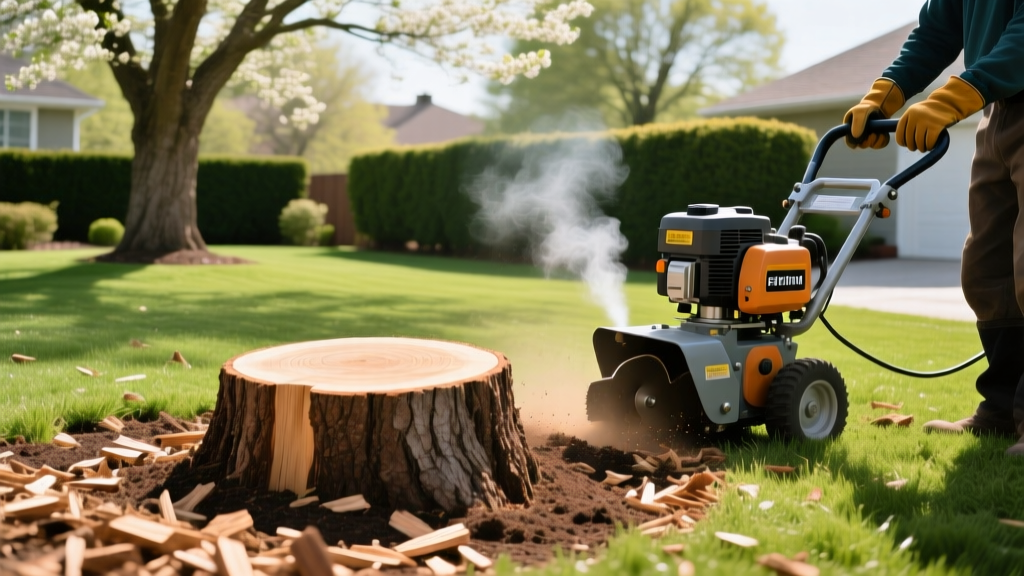
2026 Stump Grinding Guide: Costs, Equipment & DIY vs Pro
The True Cost of Stump Grinding in 2026
Leaving a tree stump in your yard invites carpenter ants, fungal pathogens like Armillaria root rot, and creates a persistent mowing hazard. While chemical decomposers take up to two years to break down a mature stump, mechanical stump grinding removes the obstacle in hours. In 2026, pricing has shifted due to increased fuel costs and equipment maintenance, making it critical to understand how arborists calculate their quotes.
Most professionals charge by the inch of the stump's diameter, measured at ground level. However, the visible stump is only part of the equation. The root flare—the wide, sloping base where the trunk meets the soil—often extends 12 to 18 inches beyond the visible trunk diameter. Failing to account for the root flare is the most common reason homeowners experience quote discrepancies.
| Stump Diameter (Inches) | Base Cost ($4-$7/inch) | Root Flare Extension Fee | Estimated Total (2026) |
|---|---|---|---|
| 10" - 15" | $40 - $105 | +$50 | $150 - $200 (Minimum Trip Charge) |
| 16" - 24" | $64 - $168 | +$85 | $149 - $253 |
| 25" - 36" | $100 - $252 | +$120 | $220 - $372 |
| 37" - 50"+ | $148 - $350+ | +$150+ | $298 - $500+ |
Hidden Fees to Watch For: If the stump is located in a fenced backyard with gates narrower than 36 inches, companies must use smaller, less efficient micro-grinders or manually dismantle the gate. Expect a $50 to $100 "access surcharge" for tight-clearance properties. Additionally, if you want the resulting woodchips hauled away rather than left on-site, disposal fees typically add $75 to $150 depending on local landfill tipping rates.
DIY vs. Professional Removal: Decision Matrix
Renting a stump grinder from a local equipment yard seems like a straightforward way to save money, but the physical toll and hidden risks often negate the savings. Use this matrix to determine which route fits your specific scenario.
CRITICAL SAFETY WARNING: Before any grinding begins, you must call 811 to have underground utility lines marked. Hitting a buried gas or fiber-optic line with a grinding wheel can result in catastrophic damage and personal liability. Visit Call811.com to initiate the request at least 3 business days before your project.
When to Hire a Professional
- Stump diameter exceeds 20 inches: Large stumps require heavy machinery (1,000+ lbs) to maintain downward cutting pressure. Rental units lack the torque for dense, mature heartwood.
- Slopes greater than 15 degrees: Walk-behind rental grinders have a high center of gravity and can easily tip backward on inclines, causing severe crush injuries to the operator.
- Proximity to hardscaping: Professionals use specialized shielding to prevent carbide teeth from shattering against concrete sidewalks or retaining walls, which can launch shrapnel at 150 mph.
When to Rent and DIY
- Stump diameter is under 12 inches: Small stumps from ornamental trees or shrubs can be handled by a standard 25-HP rental unit in under 30 minutes.
- Flat, open terrain: You have a clear, level path from the driveway to the stump with no narrow gate restrictions.
- Cost threshold: You have multiple small stumps. A $180 daily rental fee becomes highly economical when clearing five or six small stumps in a single weekend.
Equipment Spotlight: Which Grinder Fits Your Yard?
Understanding the machinery helps you evaluate contractor bids or select the right rental unit. The industry standard relies on a rotating cutting wheel equipped with tungsten carbide teeth that shear the wood into small chips.
Walk-Behind Models (e.g., Vermeer SC252)
The Vermeer SC252 is the workhorse of residential stump removal. Powered by a 25-HP Kohler engine, it features a 10-inch cutting wheel that sweeps side-to-side via hydraulic controls. It fits through standard 36-inch gates and is the most common unit available at big-box rental centers. However, its wheeled chassis struggles in soft, muddy soil, often requiring plywood track mats to prevent lawn rutting.
Track-Mounted Models (e.g., Toro STX-38)
For sloped terrain or wet lawns, professionals deploy track-mounted grinders like the Toro STX-38. The rubber tracks distribute the machine's 1,200-pound weight over a larger surface area, reducing turf compaction and providing superior traction on inclines. If a contractor quotes you for a sloped backyard, verify they are bringing a track-mounted unit; using a wheeled unit on a slope is a major safety violation outlined by the International Society of Arboriculture.
The 5-Step Professional Grinding Process
- Site Prep & Debris Clearing: The operator removes rocks, mulch, and soil from the base of the stump. Grinding soil dulls the carbide teeth rapidly; contractors may charge a blade-sharpening fee if you fail to clear the base.
- Utility Verification: Visual confirmation of 811 paint marks. If lines are within 24 inches of the stump, the operator must use hand tools or air-spades near the marked zone.
- The Sweeping Cut: The operator engages the wheel, sweeping it left-to-right while lowering it 2 to 3 inches per pass. This creates a uniform trench across the stump face.
- Root Flare Excavation: Once the main trunk is reduced to 6 inches below grade, the operator angles the wheel to chase the lateral root flare, ensuring no large structural roots remain to interfere with future landscaping.
- Backfilling: The resulting cavity is filled with the generated woodchips and native soil, mounded slightly above grade to account for settling as the chips decompose.
Post-Grinding Soil Remediation (The Hidden Step)
The most overlooked phase of stump removal is soil remediation. The grinding process leaves behind a massive volume of woodchips mixed with native soil. If you attempt to lay sod or plant a new tree directly into this mix, you will encounter severe growth stunting.
The Nitrogen Robbery Effect
Fresh woodchips have a Carbon-to-Nitrogen (C:N) ratio of approximately 400:1. Soil microbes require a 24:1 ratio to function. When introduced to the soil, these microbes will aggressively scavenge all available nitrogen from the surrounding earth to break down the carbon-rich woodchips, effectively starving any new grass or plants of this critical macronutrient.
The Fix: Before laying new sod over a ground stump, you must remove as many woodchips as possible. For the remaining chip-soil mix, apply a high-nitrogen synthetic fertilizer, such as 46-0-0 Urea, at a rate of 1 pound per 100 square feet. Water it in thoroughly and allow the soil to rest for three to four weeks before planting. For long-term organic remediation, the Arbor Day Foundation recommends incorporating blood meal or composted poultry manure to slowly rebuild the soil microbiome without causing synthetic fertilizer burn.
Frequently Asked Questions
A Note on "Stump Grindering" and Online Scams
While researching local services, you may encounter the term stump grindering in search results, directory listings, or spam emails. This is a common typographical error that low-quality lead-generation sites and fly-by-night operators exploit to rank for misspelled keywords and capture desperate homeowner leads. Always verify your arborist's credentials. A legitimate professional will carry ISA certification, comprehensive liability insurance, and will never operate under misspelled business names or use high-pressure spam tactics.
Can I plant a new tree in the exact same spot?
It is highly discouraged to plant a new tree in the exact same hole immediately after grinding. The decomposing woodchips will create air pockets as they break down, causing the new tree's root ball to sink and suffocate. Furthermore, if the previous tree was removed due to a soil-borne pathogen like Verticillium wilt, the spores remain active in the soil for up to a decade. If you must replant in the same zone, offset the new planting hole by at least 6 to 8 feet from the center of the old stump, and select a species resistant to the specific pathogen that killed the predecessor.