
Tree Care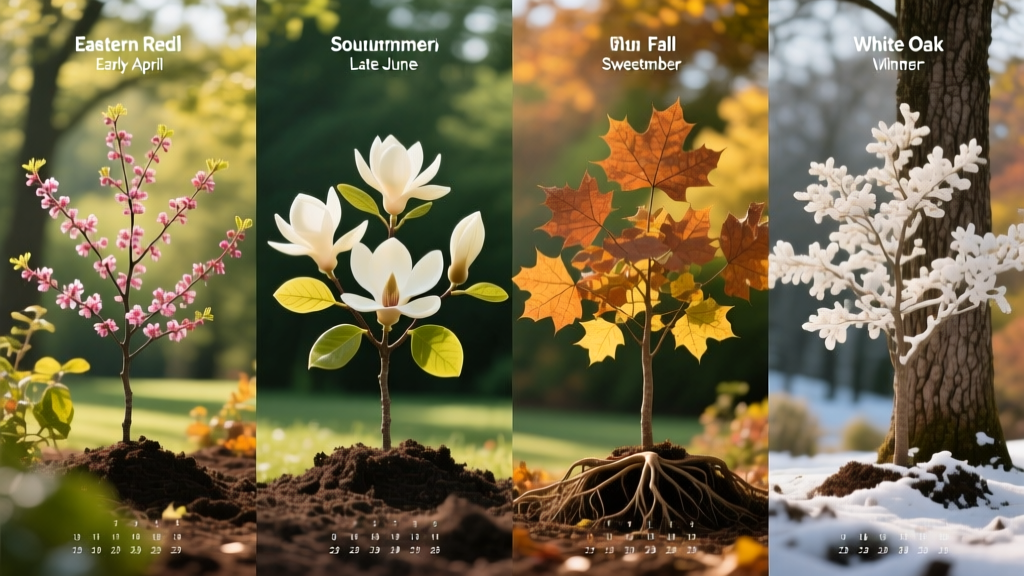
When to Plant Trees Native to Tennessee: A Seasonal Care Calendar
Understanding Tennessee's Microclimates for Native Trees
Tennessee's topography creates a diverse planting environment, spanning USDA Hardiness Zones 6a in the higher elevations of the Cumberland Plateau to Zone 7b in the warmer, humid subtropical lowlands of West Tennessee and Memphis. When selecting and establishing trees native to Tennessee, matching the species to your specific zone and adhering to strict seasonal timing is the difference between a thriving canopy and a costly replacement. Native species are genetically adapted to the state's wet springs and severe late-summer droughts, but they still require precise establishment protocols to survive their first 24 months.
Top Trees Native to Tennessee & Species-Specific Timing
Not all native trees share the same biological clock. Below is a breakdown of the state's most prominent native species and the exact seasonal windows required for planting and pruning.
Tulip Poplar (Liriodendron tulipifera)
As the Tennessee state tree, the Tulip Poplar is a rapid grower, adding 2 to 3 feet of vertical growth annually under optimal conditions. Because of its aggressive taproot and fast growth rate, fall planting (mid-November to early December) is vastly superior to spring planting. Fall planting allows the root system to establish in soil temperatures between 50°F and 55°F before the canopy demands water in the spring. Pruning should be strictly limited to late winter (February) just before the heavy spring sap flow begins.
Flowering Dogwood (Cornus florida)
Dogwoods are understory trees that require partial shade and highly specific moisture levels. They are highly susceptible to Dogwood Borer infestations and Dogwood Anthracnose. Plant in early spring (March) after the last hard frost, or in late fall. Never prune a Dogwood between April and August; fresh pruning cuts emit volatile organic compounds that attract borers. Limit pruning to late November when the tree is fully dormant.
⚠️ Critical Dogwood Warning: If you must remove deadwood from a Flowering Dogwood during the summer, immediately seal cuts larger than 1 inch in diameter with a water-based pruning sealer to mask the scent from the Dogwood Borer moth.
Eastern Redbud (Cercis canadensis)
Known for its early spring magenta blooms, the Eastern Redbud has a relatively shallow root system. Late fall planting (October to November) yields the highest survival rates. Because they bloom on old wood, prune Redbuds immediately after they finish flowering in late May to shape the canopy without sacrificing the following year's bloom cycle.
The Tennessee Seasonal Tree Care Matrix
Use this regional calendar to align your maintenance tasks with the biological triggers of native species. Data sourced from regional extension guidelines and the Arbor Day Foundation's climate zone maps.
| Season | Primary Action | Target Native Species | Environmental Trigger |
|---|---|---|---|
| Early Spring (Mar) | Plant understory species; apply pre-emergent weed control around root zones. | Flowering Dogwood, Serviceberry | Soil temp reaches 50°F at 6 inches deep. |
| Late Spring (May) | Post-bloom structural pruning; apply 2-inch layer of hardwood mulch. | Eastern Redbud, Hawthorn | Petals drop; canopy fully leafs out. |
| Summer (Jul-Aug) | Deep drought watering (1.5 inches/week); monitor for borer frass. | All species (especially Dogwood) | Consecutive 7 days without 1 inch of rain. |
| Late Fall (Nov) | Plant large caliper shade trees; dormant structural pruning. | Tulip Poplar, White Oak, Hickory | Soil temp drops to 55°F; leaves drop. |
| Winter (Jan-Feb) | Sanitation pruning (remove diseased wood); soil test and amend. | Oaks, Sycamore, Tulip Poplar | Deep dormancy; freezing nighttime temps. |
Soil Temperature & Planting Windows: The 55°F Rule
Homeowners often rely on ambient air temperature to decide when to plant, which is a critical error. Air temperature fluctuates wildly in Tennessee's transitional seasons. Instead, use a 20-inch soil probe thermometer. For fall planting of large shade trees like the White Oak or Tulip Poplar, wait until the soil temperature at a 6-inch depth consistently reads between 50°F and 55°F. At this temperature, the soil is cool enough to halt top-growth, forcing the tree to direct all stored carbohydrates into root expansion.
When digging the planting hole, measure the root ball and dig exactly 2.5 times wider than the root ball, but 2 inches shallower than the root ball's height. The root flare (the exact point where the trunk widens into the roots) must sit 2 inches above the native soil grade to prevent trunk girdling and root rot, a common failure mode in Tennessee's heavy clay soils.
Regional Maintenance: Navigating TN Summer Droughts
Tennessee's climate is characterized by a distinct mid-summer dry spell, typically peaking in late July and August. Native trees are drought-tolerant once established, but during their first two years, they require precise irrigation to survive the August deficit.
'A newly planted 2-inch caliper native tree requires roughly 10 to 15 gallons of water per week during a drought cycle. Overhead sprinklers are highly inefficient due to evaporation and canopy interception.' — Regional Forestry Guidelines, USDA Plants Database
The Solution: Invest in slow-release drip irrigation bags (such as the TreeDiaper or generic 20-gallon slow-release bags, typically costing $25 to $35 each). Fill these bags twice a week during July and August. The slow drip over 8 to 12 hours allows water to penetrate deep into the heavy clay profile rather than running off the surface.
Mycorrhizal Inoculation for Clay Soils
Tennessee's native red and yellow clay soils can be highly compacted, restricting oxygen to new roots. When backfilling your planting hole, integrate a granular mycorrhizal fungi inoculant (like MycoGrow, approx. $25 per pound). The fungi form a symbiotic network with the native tree roots, effectively increasing the root surface area by up to 100 times, allowing the tree to extract moisture from micro-pores in the clay that the roots cannot physically access.
Sourcing & Costs: What to Expect in 2026
When sourcing trees native to Tennessee, avoid big-box hardware stores, which frequently stock non-native cultivars or mislabeled species. Instead, seek out nurseries certified by the Tennessee Nursery and Landscape Association (TNLA) or use the National Wildlife Federation's Native Plant Finder to locate regional growers.
- 15-Gallon Container (2 to 3-inch caliper): Expect to pay $120 to $180. Ideal for Eastern Redbud and Flowering Dogwood. Easier to handle without heavy machinery.
- 30-Gallon B&B (Balled and Burlapped, 3 to 4-inch caliper): Expect to pay $350 to $600. Standard for Tulip Poplar and Oaks. Requires a skid steer or multiple people to position safely.
- Professional Planting Labor: If hiring a certified arborist to plant and guarantee the tree, labor and soil amendment fees will add $150 to $250 per tree.
By aligning your planting and pruning schedules with the specific biological rhythms of Tennessee's native flora, you ensure deep root establishment, minimize pest vulnerabilities, and build a resilient, low-maintenance landscape that thrives in the local climate.

