
Tree Care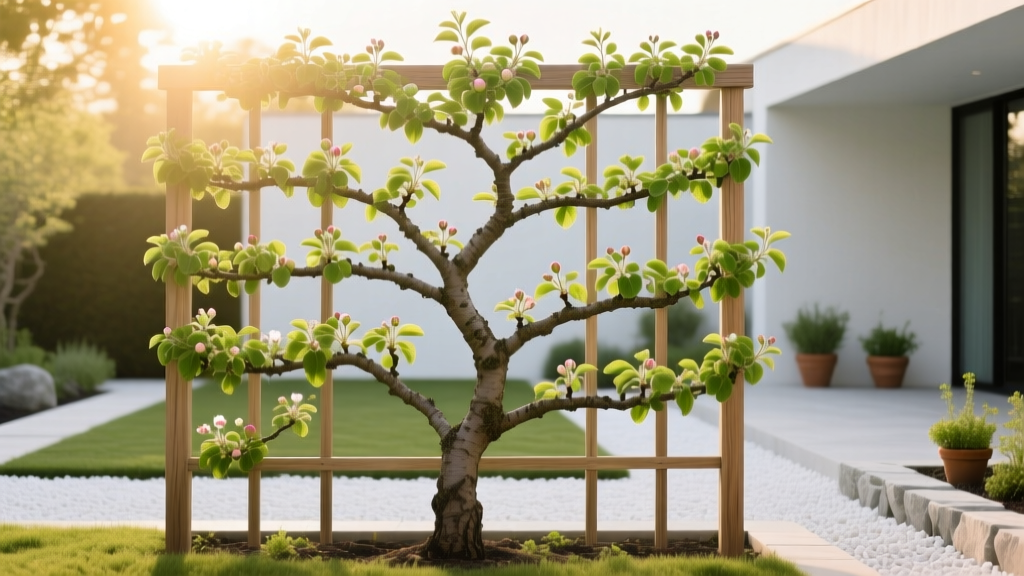
How to Train Trees in Shapes: Topiary and Espalier Pruning Guide
Choosing the Right Species for Shaped Trees
Training trees in shapes requires selecting species with dense foliage, small leaves, and a high tolerance for frequent shearing. The success of your topiary or espalier project depends heavily on matching the plant's natural growth habit to your desired architectural form. Fast-growing species require constant maintenance, while slow-growing evergreens hold their shape for months with minimal touch-ups.
| Species | Botanical Name | Best Shape Style | Annual Growth | Hardiness Zones |
|---|---|---|---|---|
| English Boxwood | Buxus sempervirens | Spheres, Cones, Spirals | 3-6 inches | 5-8 |
| Green Velvet Boxwood | Buxus 'Green Velvet' | Large Cubes, Hedges | 6-10 inches | 4-9 |
| English Yew | Taxus baccata | Complex Topiary, Niwaki | 6-12 inches | 6-8 |
| Japanese Privet | Ligustrum japonicum | Pom-poms, Cloud Pruning | 12-24 inches | 7-10 |
| Apple/Pear | Malus/Pyrus spp. | Espalier, Cordons | 12-18 inches | 4-8 |
Pro Tip for Sourcing: When buying boxwood for topiary, avoid cheap, field-dug plants with bare roots. Invest in container-grown specimens (5-gallon pots typically cost $45-$85) to ensure an intact root ball and immediate establishment in your landscape.
Essential Tools for Precision Tree Shaping
Standard hedge trimmers tear leaf tissue, leading to brown, necrotic edges on broadleaf evergreens. Precision shaping demands specialized, razor-sharp hand tools that make clean cuts to promote rapid healing.
- Topiary Shears: The Okatsune 103 Topiary Shears ($65-$85) feature Izumo Yasugi steel blades that hold an edge significantly longer than standard carbon steel. The 12-inch blade length is ideal for sweeping, continuous cuts on spheres and cones.
- Bypass Pruners: Felco Model 2 Classic ($55-$65) for removing thicker structural branches (up to 1 inch) inside the canopy without crushing the bark.
- Long-Reach Shears: ARS HS-300L ($70-$90) for reaching the top of tall conical shapes without a ladder, maintaining a safe and level sightline.
- Espalier Wire Kit: 12-gauge galvanized steel wire, heavy-duty vine eyes (screws), and turnbuckles for tensioning. Avoid thin copper wire, which will snap under the weight of mature fruit trees.
- Plant Ties: Use flexible, UV-resistant silicone tree ties or broad velcro straps. Never use thin twine or zip ties, which will girdle and strangle the cambium layer as the branch thickens.
Step-by-Step: Creating Geometric Topiary Shapes
Creating perfect spheres, cones, or spirals relies on establishing a physical framework before making a single cut. Freehand pruning almost always results in lopsided, asymmetrical shapes.
- Build a Bamboo Guide: For a cone, drive a single 1/4-inch thick bamboo cane into the center of the plant, extending slightly above the desired height. For a sphere, create a cross-frame using four canes pushed into the soil around the perimeter, tied together at the exact center point above the plant.
- Establish the Silhouette: Using your long-reach shears, trim the outermost branches to just kiss the bamboo guides. Do not cut deeper than the guide at this stage.
- Work Top-Down: Always prune from the top of the tree downward. This allows you to clear away clippings as you go, preventing them from lodging in the lower branches and obscuring your sightlines.
- The 'Sightline' Technique: Keep your eyes level with the section you are cutting. If you are shaping the middle of a tall cone, use a step stool. Looking down at the cut from above creates a sloping, convex surface rather than a flat, true plane.
- Thin the Interior: Once the outer shell is shaped, reach inside with your Felco bypass pruners and remove 10-15% of the interior crossing branches. This prevents the center of the topiary from dying out due to lack of light and airflow.
Warning: Never shear broadleaf evergreens in late fall. New cuts stimulate tender growth that will not harden off before the first frost, resulting in severe winter burn and dieback. According to the Royal Horticultural Society (RHS), the optimal window for major shaping is late spring to early summer, with a lighter touch-up in late August.
The Espalier Technique: Training Trees Flat Against Walls
Training trees in shapes isn't limited to freestanding topiary. Espalier is the art of training trees (usually fruit-bearing) into flat, two-dimensional geometric patterns against a wall or fence. This maximizes space and utilizes the radiant heat of a brick or stone wall to ripen fruit in cooler climates.
Setting Up the Wire Trellis
Do not tie branches directly to the wall. You must build a wire support system that keeps the foliage 4 to 6 inches away from the masonry to allow for air circulation and prevent fungal diseases like powdery mildew.
- Install Vine Eyes: Drill masonry anchors and screw in heavy-duty vine eyes at 18-inch vertical intervals, starting 18 inches above the soil line.
- String the Wire: Thread 12-gauge galvanized wire through the vine eyes and use turnbuckles at the end of each row to pull the wire drum-tight.
- Initial Planting: Plant a young, unbranched 'whip' (1-year-old tree) about 6 inches away from the wall base. Cut the central leader back to just above the first wire tier to force lateral bud break.
Bending and Tying
As lateral branches grow, tie them down to the horizontal wires. The University of Minnesota Extension recommends bending branches while they are young and pliable in early summer. If a branch resists bending, use the 'notching' technique: make a small, shallow notch in the bark just above the bud you want to encourage, which interrupts the downward flow of auxin (growth hormone) and forces the bud to break and grow horizontally.
Niwaki: The Japanese Cloud Pruning Method
For a more organic, naturalistic shape, Niwaki (cloud pruning) mimics the effect of wind and snow on mature pine trees. This technique is best applied to Japanese Black Pine (Pinus thunbergii) or Red Pine (Pinus densiflora).
Instead of shearing, Niwaki relies on 'candle pinching'. In mid-spring, pine trees produce new shoots called candles. Snap off 50% to 75% of the candle length by hand before the needles fully elongate. This forces the tree to push out secondary, shorter shoots, creating dense, flat, cloud-like pads of foliage. Remove any branches that grow straight up or straight down, keeping only the horizontal or slightly drooping lateral branches to form the 'clouds'.
Maintenance and Recovery: Fixing Overgrown Shapes
Even well-maintained shaped trees can lose their form due to aggressive summer growth, winter damage, or neglect. Here is how to recover specific failure modes:
- Bare Patches in Boxwood: If a section of your topiary dies out (often due to Volutella blight or physical damage), do not try to stretch surrounding branches over the hole. Instead, prune the surrounding foliage back hard by 2-3 inches. This stimulates dormant buds deeper in the canopy to push new growth, which will eventually fill the void evenly.
- Loss of Crisp Edges: If your hedges or cubes have become rounded and sloppy at the corners, snap a chalk line between two stakes to create a perfectly straight visual guide. Use your topiary shears to cut a 45-degree bevel on the top edge of the hedge; this ensures sunlight reaches the lower branches, preventing the base from thinning out.
- Espalier Branch Breakage: If a heavy fruit load snaps a horizontal cordon, immediately make a clean cut back to the nearest healthy lateral spur. Paint the cut with a sterile pruning sealant if the diameter exceeds 1 inch to prevent canker infections.
Frequently Asked Questions
Can I shape a mature, overgrown tree into a topiary?
Yes, but it requires a multi-year approach called 'rejuvenation pruning'. You cannot cut a mature, unkempt yew or boxwood into a perfect sphere in one day without leaving massive, ugly wounds that will not heal. In year one, reduce the overall size by one-third and thin the interior. In year two, establish your bamboo framework and begin shaping the new outer growth. Expect a 2-3 year timeline for a full transformation.
What is the best fertilizer for shaped trees?
Shaped trees endure frequent pruning, which depletes their energy reserves. Apply a slow-release, balanced granular fertilizer (like Osmocote 14-14-14) in early spring at a rate of 3 tablespoons per square foot of root zone. Avoid high-nitrogen liquid fertilizers in summer, as they promote rapid, soft, leggy growth that will ruin your crisp lines within weeks.
How do I clean and maintain my topiary shears?
Resin and sap buildup will drag on the blades and tear the leaves. After every use, wipe the blades with a rag soaked in rubbing alcohol or a specialized camellia oil. Sharpen the blades with a fine-grit diamond whetstone (1000 grit or higher) every 20 hours of use to maintain the razor edge required for clean cuts on broadleaf evergreens.

