
Tree Care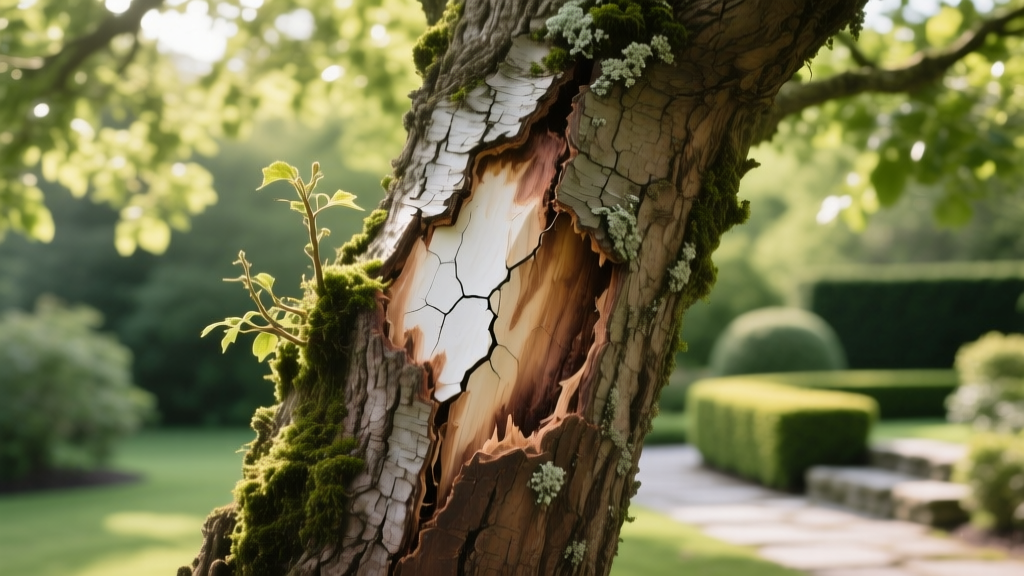
How to Treat Trees with Cuts: Bark Wound Diagnosis & Care
The Anatomy of a Tree Wound: Why Cuts Matter
When you encounter trees with cuts—whether from lawnmower strikes, storm damage, animal scraping, or improper pruning—you are looking at a compromised vascular system. The bark of a tree is not merely a protective skin; it houses the phloem (which transports sugars downward from the leaves) and shields the cambium, the microscopic layer of cells responsible for generating new wood and bark. A deep cut severs these pathways and creates an entry point for fungal pathogens and wood-boring insects.
Unlike humans, trees do not heal by replacing damaged tissue. Instead, they survive by compartmentalizing the injury. Dr. Alex Shigo’s foundational CODIT (Compartmentalization of Decay in Trees) model explains that a tree builds four chemical and physical 'walls' around a wound to isolate the decay from healthy wood. The success of this process dictates whether the tree will successfully form woundwood (callus tissue) to seal the cut, or whether internal rot will eventually compromise its structural integrity.
⚠️ The Pruning Sealer Myth
Decades of outdated advice suggested painting tree wounds with tar, asphalt-based sealants, or latex paint to 'keep out moisture and disease.' Modern arboriculture has definitively proven this practice is harmful. According to Wisconsin Horticulture, wound dressings actually trap existing fungal spores and moisture against the exposed wood, accelerating decay while physically inhibiting the natural formation of callus tissue. Never apply commercial pruning sealers to a fresh cut.
Diagnosing the Cut: Triage Decision Matrix
Not all damage requires the same intervention. Assessing the severity of the cut is the first step in formulating a treatment plan. Use the following diagnostic matrix to determine your immediate course of action.
| Cut Severity | Visual Indicators & Dimensions | Required Action | Long-Term Prognosis |
|---|---|---|---|
| Superficial (Grade 1) | Outer bark scraped; cambium largely intact. Less than 10% of trunk circumference affected. | Monitor. Ensure adequate soil moisture. No physical tracing required. | Excellent. Tree will naturally overgrow the scratch within 1-2 growing seasons. |
| Moderate (Grade 2) | Cambium exposed and dried. Jagged bark edges. 10% to 25% of trunk circumference. | Bark tracing (debridement). Mulch and implement deep-watering protocol. | Good, provided secondary borers are managed and callus tissue initiates before winter. |
| Severe (Grade 3) | Deep xylem (sapwood) exposed. Over 30% of circumference girdled. Vertical splits present. | Consult an ISA Certified Arborist for sonic tomography or resistograph testing. | Guarded to Poor. High risk of structural failure or systemic fungal colonization. |
| Critical (Grade 4) | Complete girdling (100% circumference). Deep heartwood exposure with visible cavities. | Schedule professional removal. The tree is biologically dead above the cut line. | Terminal. Immediate hazard; removal required within 30 days. |
Step-by-Step Treatment Protocol for Moderate Cuts
If your tree falls into the Grade 2 (Moderate) category, immediate and precise physical intervention is required to facilitate the CODIT response and encourage woundwood formation. Follow this exact protocol.
Step 1: Tool Sterilization
Before touching the tree, sterilize your cutting tools. Use a sharp bypass pruning saw or a curved hand pruner (such as the Felco 2 or Felco 600 folding saw). Wipe the blades thoroughly with a 70% isopropyl alcohol solution or a 10% bleach-to-water mixture. This prevents the introduction of secondary pathogens like Botryosphaeria (canker fungi) directly into the open vascular tissue.
Step 2: Bark Tracing (Debridement)
Jagged, torn bark edges cannot form callus tissue; they simply dry out and die back further into the healthy trunk. You must 'trace' the wound.
- Identify the boundary: Locate the exact line where the bark is firmly attached to the wood (healthy) versus where it is loose or peeling (dead).
- Make the cuts: Using your sterilized knife or pruner, carefully slice through the bark just outside the damaged area. Create a smooth, continuous edge.
- Shape matters: Shape the traced wound into an elongated oval or ellipse, with the points facing vertically up and down the trunk. This specific shape mimics natural branch collars and allows water to shed off the top point, while promoting the fastest lateral callus growth.
- Depth control: Cut only through the bark and cambium. Do not gouge into the underlying sapwood (xylem).
Step 3: Moisture and Nutrient Management
Generating callus tissue requires massive energy reserves. A wounded tree must be supported environmentally.
- Hydration: Use a soil probe to check moisture at a 6-inch depth. If dry, apply 10 gallons of water per inch of trunk DBH (Diameter at Breast Height). Use a slow-release drip bag, like the Treegator Original, to ensure water penetrates deeply rather than running off the surface.
- Mulching: Apply a 2-to-3-inch layer of coarse organic arborist wood chips over the root zone, extending out to the drip line. Crucial: Keep the mulch at least 4 inches away from the trunk flare to prevent secondary rot and rodent damage.
- Fertilization: Avoid high-nitrogen synthetic fertilizers immediately after a severe cut, as this forces rapid, weak foliar growth at the expense of wound defense chemicals. If a soil test indicates a deficiency, use a slow-release, low-nitrogen organic fertilizer in the early spring.
Vulnerability to Borer Insects
Trees with cuts emit specific volatile organic compounds (VOCs) and stress pheromones that act as a beacon for wood-boring insects, particularly flatheaded borers (e.g., Chrysobothris femorata) and clearwing moths. These insects lay eggs in the crevices of the wound, and their larvae tunnel into the compromised cambium, effectively destroying the tree's attempt to compartmentalize the decay.
According to Penn State Extension, maintaining tree vigor through proper watering is the primary defense against borers. However, if the tree is highly stressed and local borer pressure is severe, a preventative systemic insecticide application may be warranted. A soil drench containing Imidacloprid (such as Bayer Advanced 12 Month Tree and Shrub Insect Control) applied in early spring can protect the vascular system. Note: Always check local 2026 environmental regulations regarding neonicotinoid use, as several states have restricted their application near blooming plants or waterways.
When to Call an Arborist: Advanced Diagnostics and Removal
For Grade 3 cuts, visual assessment is insufficient to determine the tree's safety. A deep cut that exposes the heartwood compromises the tree's mechanical strength, making it a liability during high-wind events. An ISA Certified Arborist will utilize advanced diagnostic tools to quantify the internal damage.
Sonic Tomography and Resistograph Testing
Rather than guessing the extent of internal rot, arborists use devices like the IML RESI PD-500 (drilling resistance measurement) or PiCUS Sonic Tomograph. These tools map the internal density of the trunk, revealing exactly how much solid wood remains versus decayed cavities. Expect to pay between $250 and $450 for a comprehensive structural assessment using these technologies.
Warning Signs Requiring Immediate Removal
Do not wait for an arborist if you observe any of the following critical failure signs around the site of the cut:
- Fungal Fruiting Bodies (Conks): The appearance of shelf-like mushrooms (such as Ganoderma applanatum or Armillaria species) on or near the wound indicates that the internal compartmentalization has failed and advanced heart rot is present.
- Seismic Cracking: Visible vertical cracks radiating from the top or bottom of the wound, especially if they open and close slightly during wind events.
- Pronounced Lean: A sudden shift in the tree's canopy alignment or soil heaving at the base opposite the wound.
Proper diagnosis and targeted, science-based care are the only ways to manage trees with cuts effectively. By abandoning outdated sealants, practicing precise bark tracing, and supporting the tree's natural CODIT defenses, you can salvage moderately damaged trees and maintain a safe, healthy landscape.

