Tree Care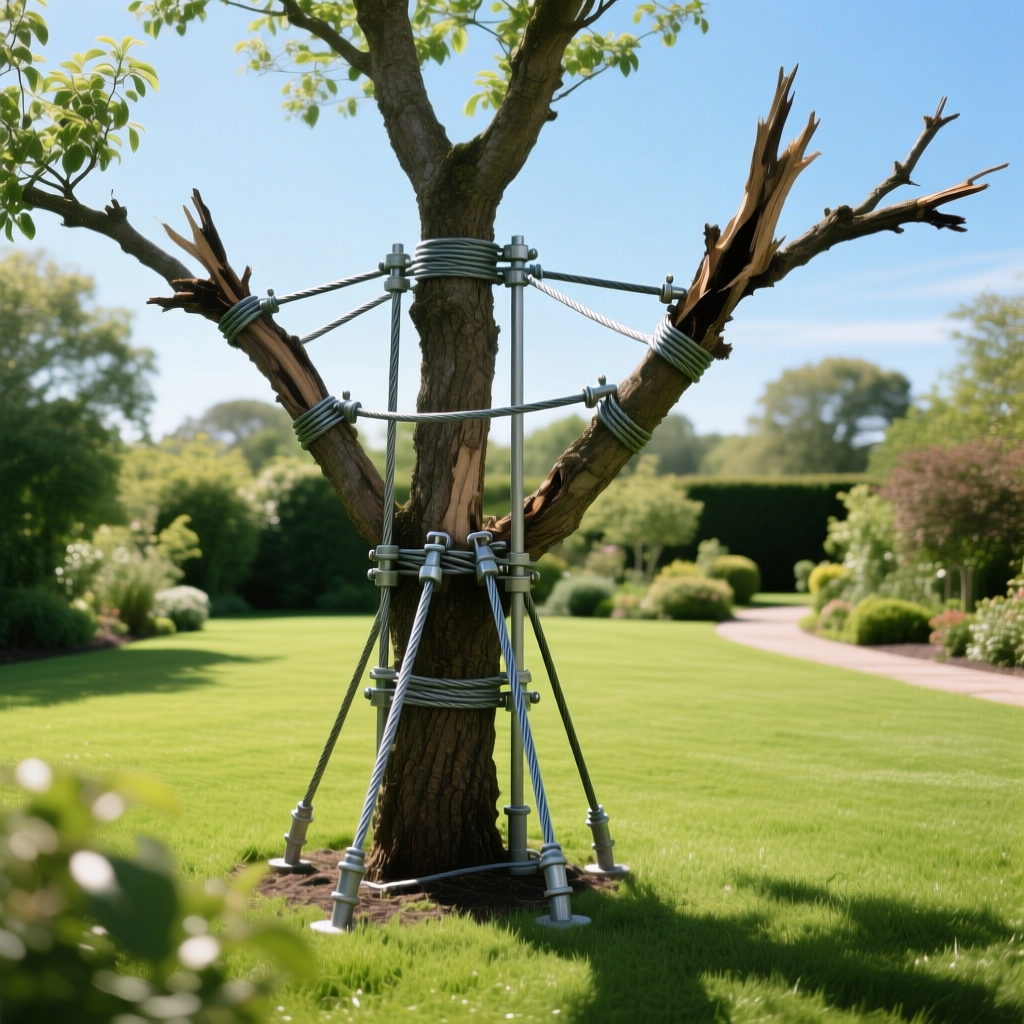
Tree Cabling & Bracing Techniques for Weak Branch Support
Emily WatsonPublished
Mature trees are the crown jewels of any landscape, providing essential shade, improving air quality, and significantly boosting property value. However, as trees age and grow, they often develop structural defects that can pose severe risks to your home, your lawn, and personal safety. Weak branch unions, co-dominant stems, and overextended limbs are common issues that make trees highly susceptible to failure during severe weather events. When a heavy limb snaps, it can cause catastrophic damage to your property, necessitating costly lawn and landscape repairs. Fortunately, proactive arboriculture offers a solution: tree cabling and bracing.
Tree cabling and bracing are specialized structural support systems designed to restrict the movement of weak branches and stems, effectively redistributing mechanical stress during high winds, heavy snow, or ice storms. Rather than removing a magnificent but structurally compromised tree, these techniques allow arborists to preserve the tree's canopy and aesthetic value while mitigating the risk of failure. In this comprehensive guide, we will explore the biology behind tree support systems, the step-by-step techniques for installation, and the ongoing care requirements necessary to maintain a safe and thriving landscape. For more foundational advice, be sure to visit our complete tree care hub.
Understanding Tree Cabling and Bracing Systems
Before attempting to support a weak branch, it is crucial to understand the fundamental differences between cabling and bracing, as well as the physics of how trees respond to environmental stress. Trees are dynamic organisms that have evolved to sway in the wind. This swaying action stimulates the production of reaction wood, which strengthens the trunk and branches over time. When we artificially restrict this movement, we alter the tree's natural growth patterns, which is why the choice of hardware and installation technique is paramount.
Static Cabling Systems: Traditionally, arborists relied on static cabling systems utilizing high-strength steel wire, dead-end grips, and J-hook lag screws. Steel cables are incredibly rigid and are excellent for preventing a weak union from splitting under heavy loads. However, because they do not stretch, they can transfer extreme shock loads to other parts of the tree during sudden gusts of wind, potentially causing secondary failures. Static systems are generally reserved for situations where absolute restriction of movement is required, such as supporting a massive, overextended limb over a high-traffic area.
Dynamic Cabling Systems: Modern arboriculture has largely shifted toward dynamic cabling systems, which utilize high-strength synthetic ropes (such as braided polyester or polypropylene). These systems are designed to allow a controlled degree of swaying, enabling the tree to continue producing reaction wood while preventing the branch from exceeding its elastic limit and snapping. Dynamic ropes are typically installed using a friction-based splicing technique or specialized belts that wrap around the branches without the need to drill into the wood, making them a less invasive option for long-term health.
Bracing Rods: While cabling addresses the tension and sway of the canopy, bracing is used to reinforce the actual union where two or more stems meet. Bracing involves installing heavy-duty, threaded steel rods directly through the trunk or co-dominant stems. These rods act as a physical clamp, holding weak, V-shaped unions together and preventing them from splitting down the middle. Bracing is almost always used in conjunction with cabling to provide a comprehensive support network for severely compromised trees.
Assessing Tree Health and Pruning Before Installation
Installing support hardware into a dying or severely diseased tree is a waste of resources and a safety hazard. Cabling and bracing are preventative measures designed for otherwise healthy trees with specific structural flaws. Before any hardware is installed, a thorough risk assessment must be conducted to evaluate the tree's overall vitality, root system stability, and the extent of any internal decay. If the wood at the intended drill site is spongy, hollow, or infected with fungal pathogens, the hardware will simply pull through the wood under stress, leading to sudden failure.
Once the tree is deemed a viable candidate for support, the next critical step is canopy pruning. Overextended branches act as massive levers; the further the weight is from the trunk, the greater the mechanical stress placed on the branch union. By employing proper pruning techniques, arborists can perform "end-weight reduction," selectively removing the outermost foliage and smaller lateral branches to reduce the "sail effect" and lighten the load. This reduction in leverage drastically decreases the tension that the cables and braces will need to withstand during a storm.
Furthermore, pruning allows for better airflow through the canopy, which reduces wind resistance and minimizes the chaotic whipping motion that causes weak unions to fatigue. It is essential to make clean, precise pruning cuts just outside the branch collar to facilitate rapid compartmentalization. Leaving jagged stubs or tearing the bark will only invite pests and accelerate the very decay we are trying to avoid. Proper pruning not only prepares the tree for hardware installation but also promotes a balanced, sustainable architecture that works in harmony with the support system.
Step-by-Step Cabling and Bracing Techniques
The installation of tree cabling and bracing hardware requires precision, an understanding of tree anatomy, and strict adherence to safety protocols. Improper installation can girdle branches, introduce severe decay, or create a false sense of security. Below is a detailed breakdown of the professional techniques used to secure weak branches.
1. Hardware Selection and Measurement: The first step is selecting the appropriate hardware based on the diameter of the branches and the severity of the defect. For static steel cables, arborists typically use 7-strand galvanized aircraft cable or specialized tree cabling wire. For dynamic systems, synthetic ropes of varying thicknesses are chosen based on the estimated load. The distance between the branches to be connected is carefully measured to determine the required cable length, ensuring that the cable will be installed in the upper two-thirds of the canopy, above the weak union.
2. Drilling and Lag Screw Insertion (Static Systems): If using a traditional steel system, a hole must be drilled through the center of the branch. It is vital to use a sharp, high-quality wood bit and to drill perfectly perpendicular to the branch to avoid splintering the exit wound. A forged steel eye bolt or J-lag screw is then threaded into the hole. The hardware must be sized correctly so that the eye sits just outside the bark, allowing the tree to eventually grow over the metal without cracking the surrounding wood.
3. Non-Invasive Attachment (Dynamic Systems): For dynamic synthetic ropes, drilling is often unnecessary. Instead, arborists use specialized splicing techniques to create a loop in the rope, which is then fed through a soft, flexible sleeve or belt that wraps securely around the branch. This "hug" distributes the pressure evenly around the circumference of the limb, completely eliminating the wound created by drilling and preserving the tree's vascular system.
4. Bracing Rod Installation: When reinforcing a co-dominant stem union with a brace, a long, threaded steel rod is drilled completely through the trunk. Large washers and nuts are secured on both ends. The nuts are tightened just enough to pull the stems snugly together without crushing the bark or strangling the cambium layer. Over-tightening is a common amateur mistake that cuts off the flow of water and nutrients, eventually killing the upper canopy.
5. Tensioning and Final Inspection: Once the cables are attached to the hardware on both branches, the system is tensioned. The goal is not to pull the branches tightly together, but to provide a safety net that only engages when the branches begin to sway dangerously. The cable should have a slight amount of slack under normal, calm conditions. Finally, all hardware is inspected to ensure no sharp edges are exposed and that the installation meets current arboricultural standards.
Preventing Diseases and Maintaining Cabled Trees
Any time you penetrate the bark of a tree, you create a wound. Trees do not heal in the human sense; instead, they seal off damaged tissue through a process known as Compartmentalization of Decay in Trees (CODIT). Drilling holes for lag screws and bracing rods breaches the tree's protective outer layers, exposing the vulnerable xylem and phloem to airborne fungal spores and wood-boring insects. Therefore, disease prevention is a critical component of post-installation tree care.
To minimize the risk of infection, all drilling equipment must be sterilized before use, and cuts should be made during the dormant season when fungal activity and insect populations are at their lowest. Avoid applying commercial wound paints or sealants over the drill holes; modern research has shown that these products can actually trap moisture and pathogens inside the wood, accelerating rot. Instead, allow the tree's natural defense mechanisms to seal the wound around the hardware.
Ongoing maintenance is equally vital. As the tree grows, it will attempt to engulf the cables, eye bolts, and braces. If a steel cable becomes completely buried inside the growing wood, it can girdle the branch, cutting off the nutrient supply and causing the limb to die and eventually snap. An annual inspection by a certified arborist is required to monitor the hardware. In some cases, the hardware may need to be loosened, repositioned, or replaced entirely to accommodate the tree's radial growth. Keeping the surrounding landscape healthy also supports the tree; for instance, maintaining proper soil moisture and learning about protecting grass from tree shade ensures a balanced ecosystem where neither the turf nor the tree is overly stressed.
Seasonal Tips for Inspecting Supported Trees
A cabled and braced tree is not a "set it and forget it" solution. The hardware and the tree's biology are in a constant state of interaction, heavily influenced by the changing seasons. Implementing a seasonal inspection routine is essential for identifying wear and tear before it leads to a catastrophic failure.
Spring: As the tree breaks dormancy and pushes out new foliage, the canopy becomes significantly heavier. Spring is the ideal time to check the tension of your dynamic ropes and static cables. Look for signs of bark abrasion where the cables rub against the branches, and ensure that new growth is not beginning to swallow the hardware. This is also a great time to review your broader seasonal landscape maintenance plan to ensure the tree's root zone is properly mulched and watered.
Summer: Summer brings the threat of violent thunderstorms, high winds, and lightning. Before the peak storm season arrives, visually inspect the canopy from the ground using binoculars. Look for any snapped cables, loose lag screws, or cracked wood around the brace unions. If the tree has experienced a severe storm, check the hardware immediately for signs of shock loading, such as bent eye bolts or frayed synthetic ropes.
Autumn: As the leaves drop, the tree's structure becomes fully visible, making autumn the perfect time for a thorough structural assessment. Without the canopy in the way, you can easily spot new cracks, included bark formations, or fungal fruiting bodies (mushrooms) emerging from the trunk or branch unions. The presence of mushrooms is a primary indicator of internal heart rot, which may mean the tree can no longer safely hold the support hardware.
Winter: Ice and heavy, wet snow can add thousands of pounds of extra weight to a tree's canopy. During winter storms, monitor the cabled branches to ensure the support system is effectively distributing the load. Once the snow melts, check the braces to ensure the nuts have not loosened due to the extreme expansion and contraction of the wood caused by freezing and thawing cycles. For a deeper understanding of how environmental stress affects tree vitality, consult our guide on common tree diseases and treatments.
Frequently Asked Questions
How long do tree cables and braces last?
The lifespan of tree support hardware depends heavily on the materials used, the tree's growth rate, and the local climate. Traditional galvanized steel cables and lag screws typically last between 15 to 20 years before they begin to rust, degrade, or become completely engulfed by the tree's wood. Modern synthetic dynamic ropes are highly resistant to UV radiation and rot, often lasting 10 to 15 years, but they require regular inspection for fraying and abrasion. Bracing rods can last a lifetime if installed correctly, though the nuts may need periodic adjustment to accommodate the tree's growth. Regardless of the material, an annual inspection by a qualified arborist is mandatory to ensure the system remains safe and functional.
Can I install tree cabling and bracing myself?
While it may be tempting to purchase hardware from a local hardware store and attempt a DIY installation, tree cabling and bracing should strictly be left to certified arborists. Improper placement of a cable can actually increase the likelihood of branch failure by creating unnatural leverage points. Furthermore, drilling into a tree without understanding its internal anatomy can sever critical vascular tissues or introduce fatal diseases. Professional arborists possess the specialized equipment, climbing skills, and biological knowledge required to assess the tree's load-bearing capacity and install the system to exact industry safety standards.
Does cabling a tree damage its health or invite disease?
When performed correctly, cabling and bracing cause minimal long-term damage to a tree's health. Dynamic systems that use friction sleeves and synthetic ropes are entirely non-invasive and do not require drilling, thereby eliminating the risk of introducing pathogens through wounds. Static systems and bracing rods do require drilling, which creates a localized wound. However, a healthy tree will rapidly compartmentalize this wound, sealing off the exposed wood to prevent the spread of decay. The risk of disease only becomes significant if the hardware is installed in already decaying wood, if tools are not sterilized, or if the tree is severely stressed and lacks the energy to mount a chemical defense.
What is the difference between static and dynamic tree cabling?
The primary difference lies in how the systems handle mechanical stress and tree movement. Static cabling uses rigid steel wire to completely immobilize a weak branch, preventing it from moving past a fixed point. While highly effective for holding heavy, dangerous limbs in place, this rigidity can prevent the tree from growing reaction wood and may transfer destructive shock loads to the trunk during high winds. Dynamic cabling utilizes elastic synthetic ropes that allow the branch to sway naturally within a safe range. This movement stimulates the tree to build its own structural strength over time while the rope acts as a shock absorber, making dynamic systems the preferred choice for most modern preventative tree care applications.
When should a weak branch be removed instead of cabled?
Cabling and bracing are not cure-alls for every structural defect. A weak branch should be completely removed rather than supported if the tree is suffering from advanced internal decay, severe root damage, or a systemic disease that compromises the wood's integrity. Hardware relies on strong, healthy wood to anchor into; if the anchor point is rotting, the cable will simply rip out during a storm. Additionally, if a branch is dead, dying, or heavily infested with wood-boring insects, it must be pruned out immediately. Finally, if the cost of installing and maintaining a support system exceeds the aesthetic or environmental value of the tree, or if the branch poses an unmanageable risk to a high-traffic target zone, removal and replanting is the safest and most responsible course of action.