
Tree Care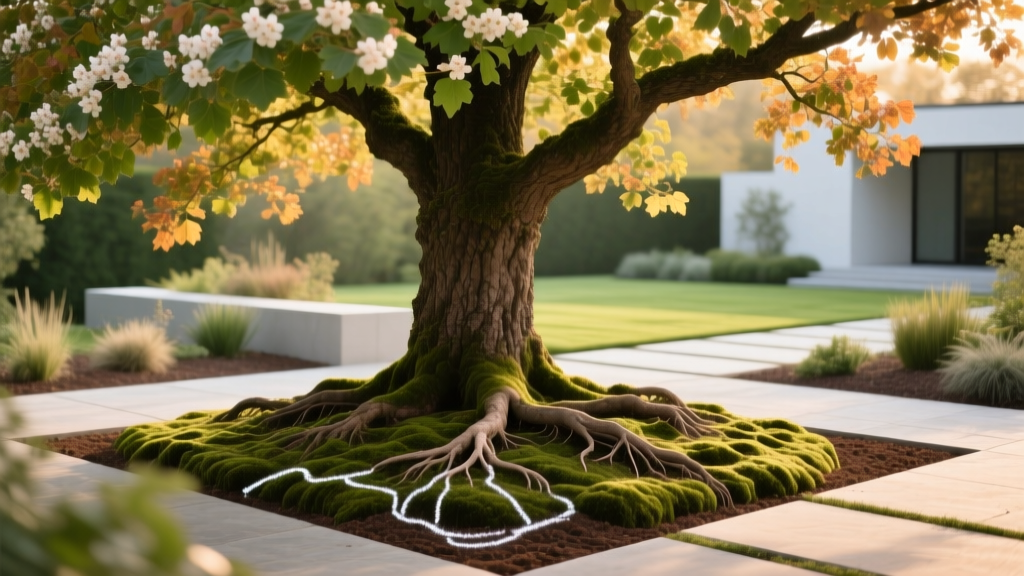
What Is the Drip Line of a Tree? Identification and Care Guide
Defining the Tree Drip Line and Its Biological Purpose
The drip line of a tree is the imaginary outer boundary of the tree's canopy, marking the exact circle where rainwater naturally falls from the outermost leaves to the ground. While it serves as a visual marker for the tree's above-ground spread, its true importance lies below the soil surface. The area just inside and immediately outside the drip line houses the highest concentration of fine feeder roots—the microscopic, non-woody roots responsible for absorbing up to 90% of the water and nutrients the tree requires to survive.
Understanding what the drip line of a tree is fundamentally changes how you approach yard maintenance. Homeowners who water only at the base of the trunk or apply fertilizer directly against the bark are actively starving the tree's primary absorption zones. By shifting your care practices to align with the drip line and the broader Critical Root Zone (CRZ), you can reverse canopy dieback, improve drought resistance, and extend the lifespan of mature landscape trees.
Expert Insight: Canopy vs. Root Spread
While the drip line marks the canopy edge, a mature tree's root system often extends 1.5 to 3 times beyond this line. However, the densest network of active feeder roots remains concentrated within the top 12 to 18 inches of soil directly beneath the drip line. This is why targeted applications at the drip line yield the highest return on investment for tree health.
How to Identify and Measure the Critical Root Zone (CRZ)
To properly treat a tree, you must first calculate its Critical Root Zone (CRZ). The CRZ is a standardized metric used by certified arborists to determine the minimum soil area required to sustain a tree. It is calculated using the tree's Diameter at Breast Height (DBH).
Step-by-Step DBH and CRZ Calculation
- Measure the Circumference: Wrap a flexible measuring tape around the trunk at exactly 4.5 feet (54 inches) above the ground. If the tree splits into multiple trunks below this height, measure the largest trunk or consult an arborist for a multi-stem calculation.
- Calculate DBH: Divide the circumference by 3.14 (Pi) to get the diameter.
- Determine CRZ Radius: Multiply the DBH (in inches) by 1.5 to find the CRZ radius in feet. This radius is measured outward from the center of the trunk.
| Tree Trunk Circumference | DBH (Inches) | CRZ Radius (Feet) | Total CRZ Area (Sq Ft) |
|---|---|---|---|
| 31.4 inches | 10" | 15 ft | 706 sq ft |
| 62.8 inches | 20" | 30 ft | 2,827 sq ft |
| 94.2 inches | 30" | 45 ft | 6,361 sq ft |
According to the International Society of Arboriculture (ISA), any construction, trenching, or soil compaction that occurs within this calculated CRZ radius can cause irreversible decline, often manifesting as canopy dieback 3 to 5 years after the initial root damage.
Practical Applications: Watering, Mulching, and Fertilizing
Deep Watering Techniques at the Drip Line
Overhead sprinklers are highly inefficient for mature trees, as they lose significant volume to evaporation and fail to penetrate the turfgrass root competition. Instead, utilize targeted drip irrigation or soaker hoses placed directly along the drip line.
- Volume Requirement: Apply 10 gallons of water per inch of DBH per week during drought conditions. A 20-inch DBH tree requires 200 gallons weekly.
- Equipment Setup: Install a loop of 1/2-inch drip tubing equipped with 2 GPH (gallons per hour) pressure-compensating emitters spaced every 18 inches along the drip line.
- Verification: Use a steel soil probe 24 hours after watering. The probe should slide easily through the soil to a depth of 12 to 18 inches. If it hits resistance at 6 inches, your watering duration is insufficient.
Mulching: The 3-3-3 Rule
Mulch regulates soil temperature and retains moisture within the drip line, but improper application is lethal. Follow the industry-standard 3-3-3 rule:
- 3 Inches Deep: Apply a uniform layer of organic arborist chips or shredded hardwood no thicker than 3 to 4 inches. Deeper layers restrict oxygen exchange to the feeder roots.
- 3 Inches Away: Maintain a strict 3-inch clearance between the mulch and the tree's root flare (the base of the trunk). Piling mulch against the bark (volcano mulching) traps moisture, inviting Phytophthora root rot and encouraging girdling roots.
- 3 Feet Wide (Minimum): Extend the mulch bed at least 3 feet from the trunk, though extending it all the way to the drip line is the gold standard for eliminating turf competition.
Warning: Avoid Landscape Fabric
Do not place woven or non-woven geotextile landscape fabrics beneath mulch within the drip line. These barriers restrict gas exchange, prevent organic matter from integrating into the soil profile, and eventually cause feeder roots to grow into the fabric, making future maintenance destructive to the root system.
Fertilizer Placement Strategies
Surface-applied granular fertilizers often get intercepted by lawn grass before reaching tree roots. For optimal nutrient delivery, Penn State Extension recommends liquid soil drenching or subsurface injection. Inject liquid fertilizer at a depth of 6 to 8 inches using a soil needle, spacing injection points 12 inches apart in a grid pattern that starts 2 feet from the trunk and extends just past the drip line.
Common Drip Line Mistakes and Failure Modes
Even well-intentioned homeowners frequently compromise the drip line environment. Avoid these critical errors:
- Trunk-Only Watering: Watering exclusively at the base of the trunk wets the non-absorptive structural roots while leaving the fine feeder roots at the drip line parched, leading to accelerated drought stress.
- Trenching for Utilities: Cutting a trench for irrigation lines or lighting cables directly through the CRZ severs major structural roots. Always tunnel or bore horizontally beneath the root zone (at least 18 inches deep) if crossing the drip line is unavoidable.
- Soil Grade Alteration: Adding just 2 to 3 inches of topsoil or fill dirt over the drip line during landscaping projects suffocates the shallow feeder roots, causing a slow, multi-year decline that is often misdiagnosed as a disease.
Frequently Asked Questions
Does the drip line change with the seasons?
Yes, slightly. Deciduous trees lose their outermost leaves in autumn, technically shrinking the physical canopy edge. However, for arboricultural purposes, the drip line is considered a fixed metric based on the tree's peak summer canopy spread. Always measure and calculate your CRZ during the growing season when the canopy is fully leafed out.
How do I water a tree on a slope where the drip line is uneven?
On sloped terrain, water naturally runs downhill, meaning the uphill drip line is chronically under-watered. Install drip emitters at a higher density on the uphill side of the canopy, and construct a shallow, level berm on the downhill side of the drip line to capture and hold runoff, allowing it to percolate into the downhill feeder roots.
What if my tree's branches extend over my neighbor's property or a driveway?
The physical drip line dictates where water falls, but the biological root zone ignores property lines and concrete. If a driveway covers the CRZ, the soil beneath is likely compacted and deprived of oxygen. Mitigate this by installing aeration tubes or using an air spade to fracture compacted soil at the edges of the pavement, allowing water and oxygen to reach the roots trapped beneath the hardscape.
For more detailed guidelines on assessing tree health and soil moisture, consult the Arbor Day Foundation's watering resources or hire an ISA Certified Arborist to perform a comprehensive root zone assessment.

