
Tree Care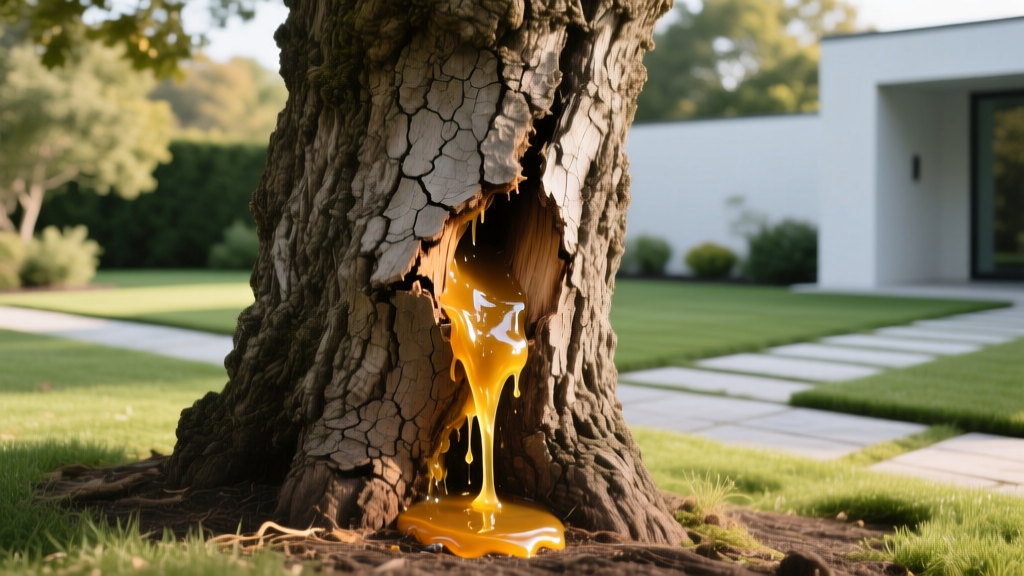
Tree Sapping Diagnosis: Why Your Tree Drips Sap and How to Stop It
The Two Faces of Tree Sapping: Bleeding vs. Honeydew
When homeowners notice a sticky substance coating their driveway, patio furniture, or the leaves of understory plants, they often refer to the problem as 'tree sapping.' However, in arboriculture, this phenomenon stems from two entirely different biological mechanisms: physiological sap bleeding and entomological honeydew secretion. Misdiagnosing the source leads to wasted money on ineffective treatments, such as applying insecticides to a tree that is simply experiencing natural spring root pressure, or attempting to seal pruning wounds that actually need to breathe.
Accurate diagnosis requires examining the physical properties of the drip, the time of year, and the specific tree species involved. Below is a comprehensive diagnostic framework to identify the exact cause of your tree sapping and the precise steps to mitigate it.
Quick Diagnostic Test: The Touch and Sight Method
Rub the dripping substance between your gloved fingers. If it is clear, watery, and slightly sweet, you are dealing with physiological sap bleeding. Look up: are there recent pruning cuts or natural branch crotches on species like maples or birches? If the substance is tacky, thick, and accompanied by a black powdery residue (sooty mold) on lower leaves, you are dealing with insect honeydew. Look closely at the undersides of the leaves above for clustered insects.
Scenario A: Physiological Tree Sapping (Spring Bleeders)
Physiological sapping occurs when a tree's internal vascular system—the xylem and phloem—generates immense positive root pressure. In late winter and early spring, before the leaf canopy emerges to pull water upward via transpiration, the roots continue to absorb water and minerals from the thawing soil. This creates a pressurized hydraulic column. When the bark or wood is compromised by a pruning cut, a storm break, or a woodpecker hole, the pressurized sap is forced out of the wound.
The 'Bleeder' Species Profile
Not all trees exhibit visible sapping. The phenomenon is heavily concentrated in specific genera that rely on alternative starch-storage and hydraulic mechanisms during dormancy. According to the Arbor Day Foundation's pruning guidelines, timing your cuts around these species' unique biological clocks is critical.
- Sugar Maple (Acer saccharum) & Silver Maple (Acer saccharinum): Famous for syrup production, these trees generate massive root pressure in February and March. Pruning during this window guarantees heavy sapping.
- Paper Birch (Betula papyrifera) & River Birch (Betula nigra): Birch sap is highly watery and can drip continuously for weeks if cut in early spring, sometimes depleting the tree's immediate carbohydrate reserves.
- Black Walnut (Juglans nigra) & Butternut (Juglans cinerea): These species bleed heavily and their sap contains juglone, a compound that can stain concrete and patios a dark, stubborn yellow-brown.
- Elms (Ulmus spp.): Pruning elms in early spring not only causes sapping but the fresh sap odor actively attracts elm bark beetles, the primary vectors for Dutch Elm Disease.
The Pruning Mistake: Why Wound Dressings Fail
A common reaction to heavy tree sapping from a pruning cut is the application of 'pruning paint' or wound dressings (typically asphalt-based or petroleum-based pastes). Do not use pruning paint. Decades of peer-reviewed arboricultural research have proven that wound dressings do not stop sap flow. Instead, they trap moisture and fungal spores against the exposed cambium, accelerating decay and creating an ideal environment for Cytospora or Nectria cankers. The tree's natural defense mechanism, Compartmentalization of Decay in Trees (CODIT), requires oxygen to form the chemical barriers that eventually seal the wound.
The Solution: For spring bleeders, shift your pruning schedule. Prune maples, birches, and walnuts in mid-to-late summer (after the leaves have fully expanded and transpiration is pulling water upward) or in late autumn after the leaves have dropped and the tree has entered deep dormancy. If a branch breaks in spring and saps heavily, make a clean, perpendicular cut just outside the branch collar using a sterilized bypass pruning saw, and allow it to bleed out naturally. The flow will cease once the leaves flush and transpiration begins.
Scenario B: Entomological Sapping (Insect Honeydew)
If your tree is dripping sap in mid-to-late summer, or if the drip is coating everything beneath the canopy in a sticky, varnish-like film, you are not seeing tree sap. You are seeing honeydew. Honeydew is the sugar-rich excrement of piercing-sucking insects that feed on the phloem sap of the tree's leaves and tender twigs. Because these insects consume far more sugar than they need for protein synthesis, they excrete the excess as a sticky waste product.
As detailed by the University of Minnesota Extension, honeydew not only creates a nuisance for homeowners but also serves as the primary substrate for sooty mold (Capnodium spp.), a black fungus that blocks sunlight from reaching the leaf surface, thereby reducing the tree's photosynthetic capacity.
Insect Identification & Treatment Matrix
Identifying the specific insect dictates the chemical and cultural controls required. Below is a diagnostic matrix for the three most common honeydew-producing pests in residential landscapes.
| Pest | Visual Identification | Preferred Host Trees | Primary Treatment Active Ingredient |
|---|---|---|---|
| Aphids | Soft-bodied, pear-shaped, 1-3mm long. Often green, black, or yellow. Found in dense clusters on new growth and leaf undersides. | Maples, Oaks, Birches, Crape Myrtles, Pines | Imidacloprid (systemic soil drench) or Insecticidal Soap (contact foliar spray) |
| Scale Insects | Immobile adults covered in a waxy, shell-like bump (brown, white, or gray). Look like small scabs on twigs and branches. | Magnolias, Euonymus, Oaks, Fruit Trees | Horticultural Oil (dormant or summer rate) or Dinotefuran (systemic bark spray) |
| Whiteflies | Tiny, white, moth-like insects that swarm in a cloud when the branch is shaken. Found exclusively on leaf undersides. | Ficus, Ash, Crape Myrtle, Citrus | Pyriproxyfen (insect growth regulator) or Neem Oil (contact smothering) |
Step-by-Step Treatment Protocol for Honeydew Sapping
Eliminating entomological sapping requires breaking the insect life cycle while managing the secondary fungal growth. Follow this protocol for a high-value shade tree exhibiting severe aphid or soft-scale honeydew drip.
- Step 1: Mechanical Wash (Immediate Relief). Use a high-pressure hose nozzle to physically blast the undersides of the lower canopy leaves. This dislodges aphid colonies and washes away existing honeydew and sooty mold. Perform this early in the morning so the foliage can dry before nightfall, preventing secondary fungal leaf spots.
- Step 2: Apply a Systemic Soil Drench (Long-Term Control). For trees over 15 feet tall, foliar sprays are ineffective and dangerous for non-target pollinators. Purchase a systemic insecticide containing Imidacloprid (e.g., Bayer Advanced 12 Month Tree and Shrub Protect & Feed II). Measure the tree's trunk circumference at breast height (4.5 feet off the ground). Mix the exact ounce-to-inch ratio specified on the label (typically 1 oz per inch of circumference) with water in a 5-gallon bucket. Pour the solution in a continuous ring around the tree's drip line, not directly against the trunk. Cost expectation: $25 to $45 per bottle, treating one large tree per bottle.
- Step 3: Deploy Horticultural Oil for Scale (If applicable). If your diagnostic matrix identified scale insects, Imidacloprid is less effective against armored scales. Instead, apply a dormant-rate horticultural oil (e.g., Bonide All Seasons Horticultural Oil) in late winter before bud break, or a summer-rate application when the 'crawler' stage is active in early June. The oil physically blocks the insects' spiracles, suffocating them without leaving toxic residue.
- Step 4: Address the Sooty Mold. You do not need to apply a fungicide for sooty mold. Once the honeydew food source is eliminated via Steps 2 and 3, the sooty mold will dry up and flake off naturally over the next 3 to 4 weeks, aided by wind and rain.
Warning: Pollinator Protection
Never apply systemic Imidacloprid to trees that are currently blooming or about to bloom. The active ingredient is translocated into the nectar and pollen, which is highly toxic to bees and other essential pollinators. Wait until the flower petals have completely dropped before applying soil drenches.
When to Call a Certified Arborist
While physiological sapping is harmless and minor honeydew issues can be managed with consumer-grade products, certain scenarios require professional intervention. If the honeydew drip is originating from a tree over 40 feet tall, consumer hose pressure and soil drench volumes are insufficient. Furthermore, if the sapping is accompanied by significant canopy dieback, peeling bark, or the presence of wood-boring beetle exit holes (frass), the tree may be suffering from a systemic vascular disease or severe structural decline.
2026 Cost Expectations for Professional Care
When hiring an ISA Certified Arborist for professional diagnosis and treatment, expect the following pricing structure in the current market:
- Diagnostic Consultation & Site Visit: $75 to $150 (Often waived if you proceed with treatment).
- Professional Systemic Trunk Injection (e.g., Emamectin benzoate for severe borers/scale): $15 to $25 per inch of trunk diameter. This method bypasses the soil and delivers the active ingredient directly into the xylem, providing 2 years of control for a 30-inch oak.
- High-Pressure Canopy Wash & Horticultural Oil Spray: $200 to $450 per tree, depending on canopy volume and access requirements for bucket trucks.
By correctly identifying whether your tree sapping is a natural hydraulic release or an insect infestation, you can protect your landscape investments, preserve your hardscaping from sticky damage, and maintain the long-term health of your urban forest.

