Tree Care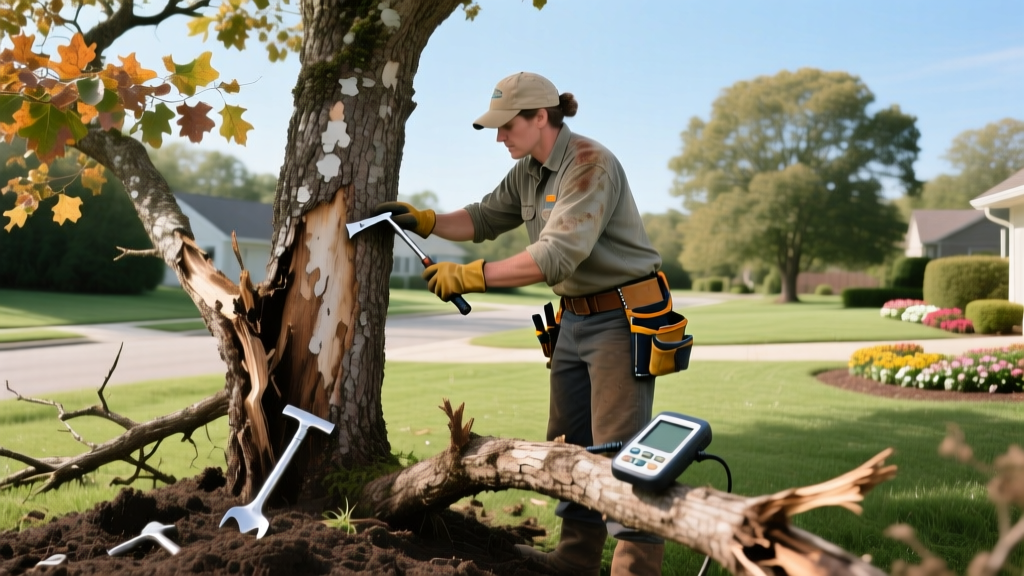
Tree Service Lexington: Diagnosing Sick Trees & Storm Damage
The Lexington Urban Forest: Unique Pathologies and Soil Profiles
Lexington’s urban canopy covers roughly 25% of the city, featuring mature white oaks, green ashes, and flowering dogwoods. However, the Bluegrass region’s specific environmental factors—heavy clay soils, high summer humidity, and severe late-winter ice storms—create a unique set of arboricultural challenges. When homeowners notice canopy dieback, premature leaf drop, or structural leaning, accurate problem diagnosis is critical before calling a professional. Misdiagnosing a soil compaction issue as a fungal pathogen can lead to unnecessary chemical treatments and wasted capital.
This guide provides a diagnostic framework for the most common tree health and structural emergencies in Fayette County and surrounding areas, helping you determine exactly what type of tree service in Lexington you need to hire.
The Lexington Tree Health Diagnostic Matrix
Use this matrix to cross-reference your tree’s visual symptoms with likely underlying causes before scheduling an on-site consultation.
| Visual Symptom | Primary Suspect | Diagnostic Verification | Required Service Type |
|---|---|---|---|
| D-shaped exit holes, S-shaped galleries under bark, epicormic sprouting | Emerald Ash Borer (EAB) | Peel back bark on lower trunk; look for larval galleries | PHC (Plant Health Care) Trunk Injection or Removal |
| Leaves turning brown from edges inward in mid-summer, rapid canopy collapse | Oak Wilt or Bacterial Leaf Scorch | Lab culture of vascular tissue from symptomatic twigs | Root flare excavation, systemic fungicide, or removal |
| Yellowing leaves (chlorosis), stunted growth, water pooling at base | Phytophthora Root Rot / Clay Compaction | Soil probe test for drainage rate and bulk density | Air-spading, radial trenching, vertical mulching |
| V-shaped branch unions, cracking at branch crotches during wind | Included Bark (Codominant Stems) | Visual Tree Assessment (VTA) and mallet sounding | Cabling/bracing or structural reduction pruning |
Emerald Ash Borer (EAB): Treatment vs. Removal Economics
Despite aggressive municipal management over the last decade, EAB remains a persistent threat to untreated ash trees in Central Kentucky. The USDA APHIS continues to monitor quarantine zones, but the responsibility for private yard trees falls entirely on the homeowner.
Decision Framework: Save or Remove?
- Save: The tree has less than 30% canopy dieback, a trunk diameter (DBH) over 15 inches, and high landscape value. Treatment with Emamectin benzoate (Tree-age G4) via trunk injection provides 2 years of protection.
- Remove: The tree exhibits over 40% canopy dieback, extensive bark splitting, or is located in a low-traffic area. Once an ash tree crosses the 30% dieback threshold, its vascular system is too compromised to distribute systemic insecticides effectively.
2026 EAB Trunk Injection Pricing
Professional trunk injection in Lexington typically costs between $15 and $25 per diameter inch (measured at 4.5 feet above ground). For a mature 24-inch ash tree, expect to pay $360 to $600 per treatment cycle, which must be repeated every 24 months.
Storm Damage Triage: Ice Loading and Windthrow
Lexington’s late-winter and early-spring ice storms disproportionately affect species with weak wood or poor architecture, such as Bradford pears, silver maples, and hackberries. When a storm hits, immediate triage is required to prevent secondary failures.
- Assess the Root Plate: Look for soil heaving or cracking on the side opposite to the lean. If the root plate is lifting, the tree has lost structural anchorage and requires immediate emergency removal.
- Identify Hangers: Broken branches suspended in the canopy (widow-makers) must be removed via crane or bucket truck before any ground-level cleanup begins.
- Evaluate Wound Size: If a torn limb has stripped bark down the main trunk exceeding 30% of the trunk's circumference, the tree's long-term viability is severely compromised due to decay organism entry.
Expert Warning: Never hire a 'door-knocker' service offering discounted storm cleanup. Legitimate Lexington tree services carry specific Workers' Compensation policies for arboriculture, which is a high-risk classification. If an uninsured worker is injured on your property, the liability falls directly on the homeowner.
Addressing Bluegrass Region Soil Compaction
Many residential neighborhoods in Lexington are built on heavy Maury silt loam or similar clay-dominant soils. When construction equipment compacts this soil, pore space is eliminated, suffocating fine feeder roots. Symptoms mimic drought stress even during periods of heavy rainfall.
The Solution: Air-Spading and Radial Trenching
Top-tier tree services utilize pneumatic air-spades to excavate soil at high velocities without severing roots. By digging radial trenches from the trunk out to the dripline and backfilling them with a mix of expanded shale, compost, and biochar, arborists can permanently restore soil porosity. Expect to pay $800 to $1,500 for a professional root-zone aeration and amendment treatment for a mature shade tree.
Vetting a Tree Service in Lexington: 2026 Cost Guide
When soliciting bids, ensure the company employs at least one ISA Certified Arborist and holds TCIA (Tree Care Industry Association) accreditation. Below is the current market rate for professional, insured tree work in the Fayette County area.
| Service Category | Specific Task | Estimated 2026 Cost Range |
|---|---|---|
| Pruning | ISA standard crown cleaning (up to 50ft tree) | $450 - $850 |
| Removal | Medium tree (50-75ft) in open yard | $1,200 - $1,800 |
| Removal | Large tree (75ft+) requiring crane or rigging | $2,500 - $4,500+ |
| Stump Grinding | Standard grind (8-12 inches deep) | $4 - $6 per diameter inch |
| Soil Care | Deep root fertilization / bio-stimulant injection | $250 - $400 per zone |
By understanding the specific biological and structural threats facing Lexington's trees, you can accurately diagnose issues, avoid predatory contractors, and invest in targeted solutions that preserve your property's canopy for decades.