Tree Care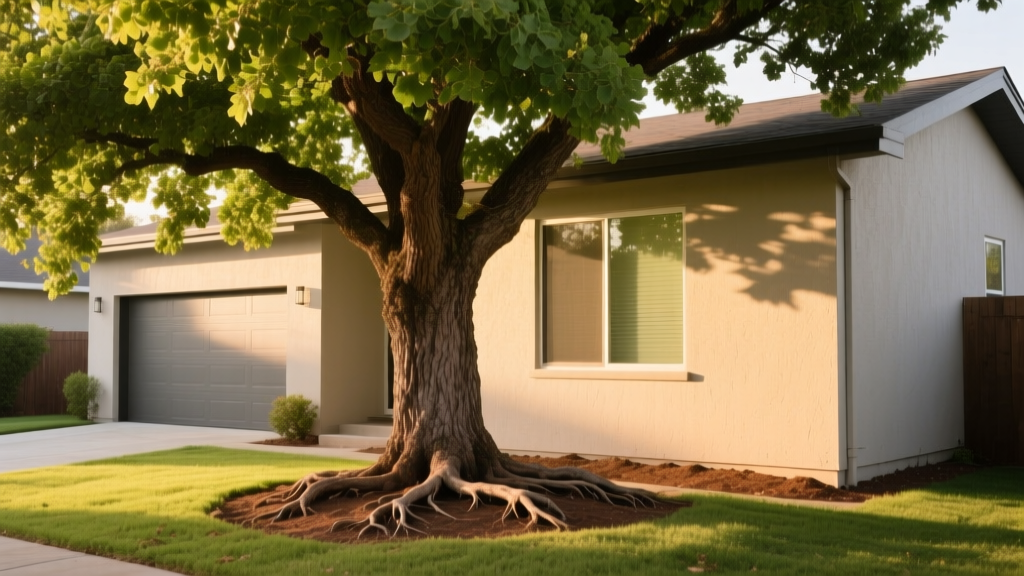
Is Your Tree Too Close to House? Safe Distances and Root Risks
Planting a tree near your home can provide valuable shade, enhance curb appeal, and lower summer cooling costs. However, placing a tree too close to house structures introduces significant risks to your foundation, roof, and siding. For beginners navigating yard design, the line between a beautiful landscape and a structural liability often comes down to a few critical feet of clearance.
Understanding how tree roots interact with soil and concrete, alongside knowing the mature canopy spread of your chosen species, is essential for long-term property protection. This guide breaks down the exact distances, soil mechanics, and 2026 mitigation costs you need to make informed decisions about the trees surrounding your home.
The Rule of Thumb for Tree-to-House Distances
The most common mistake homeowners make is planting a sapling based on its current size rather than its mature dimensions. A tree planted five feet from a foundation might look perfectly proportioned for the first decade, but as its root system expands and canopy widens, it becomes a hazard. The International Society of Arboriculture (ISA) recommends selecting planting sites based entirely on a tree's projected mature height and root spread.
| Tree Size Category | Mature Height | Minimum Safe Distance from Foundation | Estimated Root Spread Radius |
|---|---|---|---|
| Small Trees | Under 25 feet | 8 to 10 feet | 15 to 20 feet |
| Medium Trees | 25 to 50 feet | 15 to 20 feet | 30 to 45 feet |
| Large Trees | Over 50 feet | 30 to 50 feet | 60 to 100+ feet |
Crucial Soil Variable: If your property has heavy, expansive clay soil, you must increase these minimum distances by 25% to 50%. Clay soils are highly susceptible to moisture-driven shrinking and swelling, which amplifies the foundation risks posed by nearby tree roots.
How Tree Roots Actually Damage Foundations
There is a pervasive myth in beginner gardening circles that tree roots actively seek out and 'crack' solid concrete foundations through brute mechanical force. In reality, direct physical pressure from roots rarely breaks intact, poured concrete. The true danger lies in soil subsidence.
The Mechanics of Soil Subsidence
A mature hardwood tree can transpire (draw up and release) between 50 and 200 gallons of water per day during the peak summer months. When a large tree is planted too close to a house, its extensive root network extracts massive amounts of moisture from the soil directly beneath and adjacent to your foundation.
- In Clay Soils: As roots pull water from clay, the soil shrinks and pulls away from the foundation. This loss of lateral support causes the foundation to settle unevenly, leading to severe structural cracking, sticking doors, and drywall fractures.
- In Sandy Soils: Subsidence is less of a threat because sand does not shrink significantly when dry. However, large surface roots can still heave shallow footings, driveways, and underground plumbing lines through direct upward growth pressure.
According to research highlighted by the University of Minnesota Extension, managing soil moisture levels around foundations is just as critical as managing the physical roots themselves. If you already have a large tree near your home, maintaining consistent soil moisture during droughts using soaker hoses can prevent the drastic clay shrinkage that triggers foundation settlement.
Branches, Gutters, and Fire Hazards
While roots threaten the base of your home, the canopy poses risks to the roof and exterior. Overhanging branches create a microclimate that traps moisture against siding, accelerating wood rot and promoting mold growth. Furthermore, branches touching the roof provide a direct highway for squirrels, rats, and roof-damaging pests to access your attic.
Follow these strict clearance measurements to protect your home's exterior:
- Roof Clearance: Maintain a minimum 10-foot vertical and horizontal clearance between branch tips and the roof surface to prevent wind-whipping damage during storms.
- Gutter Clearance: Keep branches at least 5 feet away from gutters to reduce leaf litter accumulation and prevent ice dams in winter.
- Siding Clearance: Prune shrubs and low branches to maintain a 2-foot gap from exterior walls, ensuring proper airflow and preventing paint degradation.
- Utility Lines: Never plant trees that will mature over 25 feet tall directly beneath or within 15 feet of overhead power lines.
Decision Matrix: Prune, Install Root Barriers, or Remove?
If you have inherited a property with a tree that is already too close to the house, you must weigh the cost of mitigation against the cost of removal. Here is a practical framework based on current 2026 arborist pricing and techniques.
Scenario A: Branches are encroaching, but roots are stable
Solution: Crown reduction and directional pruning. Hire an ISA-certified arborist to selectively remove branches, reducing the canopy's wind sail effect and clearing the roofline.
Estimated Cost: $400 to $850 per tree, depending on canopy size and crane accessibility.
Scenario B: Surface roots are heaving walkways or threatening shallow plumbing
Solution: Root pruning and mechanical barrier installation. An arborist can safely sever specific roots and install a high-density polyethylene (HDPE) root barrier. The industry standard is the DeepRoot UB 24-2 panel. It is critical that the barrier is at least 24 inches deep; since 90% of a tree's absorbing roots exist in the top 18 to 24 inches of soil, shallower barriers will simply be bypassed by roots growing underneath.
Estimated Cost: $45 to $75 per linear foot for trenching, barrier installation, and backfilling.
Scenario C: Large tree in expansive clay soil within 10 feet of the foundation
Solution: Complete tree removal. If a massive species (like a Silver Maple or Water Oak) is actively causing foundation subsidence in clay soil, pruning or barriers will not stop the moisture extraction. Removal is the only way to stabilize the soil.
Estimated Cost: $1,200 to $2,800. Trees this close to a house cannot be felled in one piece; they require meticulous sectional rigging to lower wood safely without damaging the roof or siding.
The 3x Rule for Root Cutting: If you must cut a root to install a barrier or fix a pipe, never cut a root closer to the trunk than 3 times the trunk's diameter (measured at 4.5 feet high). For a tree with a 10-inch thick trunk, do not sever any roots within 30 inches of the base, or you risk destabilizing the tree and causing it to fall on your house during the next high-wind event.
Best Small Trees to Plant Near a House
If you are starting with a blank slate and want to plant trees relatively close to your home for aesthetic framing, stick to small, slow-growing species with non-aggressive root systems.
- Japanese Maple (Acer palmatum): Mature height of 15 to 25 feet with a similar spread. Features a shallow, fibrous root system that is highly unlikely to damage concrete. Thrives in partial shade, making it ideal for planting near house corners.
- Flowering Dogwood (Cornus florida): Reaches 15 to 25 feet tall. Offers brilliant spring blooms and deep red fall foliage. Dogwoods have relatively soft, non-invasive roots and prefer the dappled shade provided by the house's eaves.
- Eastern Redbud (Cercis canadensis): Grows 20 to 30 feet tall with a 25-foot spread. A native species that provides stunning early-spring purple flowers. Its root system is deep and taproot-dominant, meaning it is less likely to produce surface roots that heave walkways.
Frequently Asked Questions
Can I just cut the roots that are touching my foundation?
Severing large structural roots (those thicker than 2 inches) close to the trunk compromises the tree's anchorage. A tree with a compromised root system is highly susceptible to uprooting during storms, turning it into a massive projectile aimed at your house. Always consult an arborist before cutting roots larger than a garden hose.
Will installing a root barrier kill the tree?
When installed correctly by a professional at the proper distance from the trunk, a root barrier like the DeepRoot UB 24-2 will not kill the tree. The tree will simply redirect its root growth downward and outward away from the barrier. However, trenching too close to the trunk to install the barrier will sever critical feeder roots and can induce severe drought stress or decline.
My neighbor's tree is too close to my house. Who is responsible?
Property laws vary by municipality, but generally, you have the right to prune branches and roots that cross your property line, up to the property boundary. However, you cannot trespass to do so, and you cannot perform cuts that will kill or destabilize the neighbor's tree. If the tree poses an imminent hazard to your home, document the risk and send a certified letter to the neighbor; in many jurisdictions, this shifts the liability for future damage onto them if they fail to act.