
Tree Care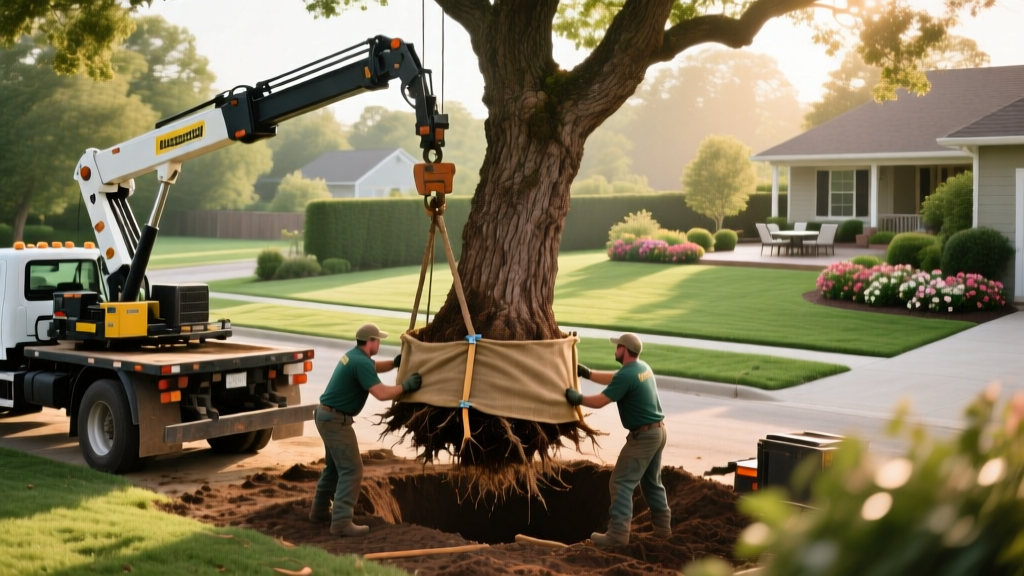
Tree Transplanting Cost: 2026 Pricing & Coverage Guide
Moving an established tree is a heavy logistical and horticultural operation, not a simple weekend landscaping task. In 2026, the national average tree transplanting cost ranges from $1,200 to $4,500 for mid-sized specimens, while monumental moves involving cranes and oversized root balls routinely exceed $15,000. Understanding the exact pricing mechanics, equipment requirements, and hidden variables is critical before you authorize a contract. This guide breaks down the true financial and biological costs of relocating mature trees, ensuring you can budget accurately and avoid catastrophic transplant shock.
The Core Formula: Calculating Cost by Trunk Diameter (DBH)
Professional arborists do not price transplanting by the height of the canopy or the species alone. The industry standard metric is Diameter at Breast Height (DBH), measured exactly 4.5 feet above the ground. In 2026, the baseline cost to dig, move, and replant a tree typically falls between $150 and $300 per inch of DBH.
If a tree is multi-stemmed, arborists calculate the DBH by measuring the largest stem and adding a fraction of the secondary stems, which complicates the base rate. Furthermore, species with brittle wood (like Bradford Pears or Silver Maples) or deep taproots (like Oaks and Hickories) command a 15% to 25% premium due to the higher risk of structural failure and the need for specialized root-pruning techniques months in advance.
The ANSI A300 Root Ball Sizing Rule
According to ANSI A300 standards and guidelines published by Penn State Extension, a proper root ball requires 10 to 12 inches of diameter for every 1 inch of trunk DBH. A tree with a 6-inch trunk requires a 60-to-72-inch wide root ball. This soil mass can easily weigh over 3,000 pounds, dictating the heavy machinery required for the move.
2026 Price Breakdown by Tree Size and Equipment
The equipment deployed is the primary driver of your final invoice. Small trees can be moved with skid-steer attachments, while mature specimens require massive truck-mounted spades or crane rigging. Below is the current pricing matrix for professional transplanting services.
| Tree DBH | Root Ball Size | Est. Soil Weight | Required Equipment | Average Cost Range |
|---|---|---|---|---|
| 3 - 4 inches | 36 - 48 inches | 800 - 1,500 lbs | Skid-steer tree spade | $600 - $1,100 |
| 5 - 8 inches | 60 - 90 inches | 2,500 - 6,000 lbs | Truck-mounted spade (e.g., Dutch Industries 90-inch) | $1,500 - $3,200 |
| 9 - 14 inches | 100 - 140+ inches | 8,000 - 18,000+ lbs | Excavator + Mobile Crane rigging | $4,500 - $12,000+ |
| 15+ inches | Custom boxed | 20,000+ lbs | Heavy-duty crane + custom timber boxing | $15,000 - $35,000+ |
Hidden Cost Variables That Inflate the Final Invoice
The per-inch DBH rate only covers the physical dig and drop. Site-specific obstacles and biological necessities will add line items to your estimate. Expect to budget for the following hidden variables:
- Site Access and Obstruction Removal ($300 - $1,500): Truck-mounted spades require wide, clear paths. If your arborist needs to temporarily remove fencing, dismantle retaining walls, or lay down steel track mats to prevent turf destruction from heavy machinery, labor and material restoration costs will apply.
- Utility Marking and Permits ($150 - $500): Digging a 6-foot deep hole requires 811 utility clearing. If the tree is being moved to a public right-of-way or near municipal easements, local arborist permits and engineering inspections can add weeks and hundreds of dollars to the project.
- Soil Amendments and Inoculants ($150 - $400): Rebuilding the severed root system requires biological support. High-end transplanting contracts include the application of mycorrhizal fungi inoculants (such as MycoApply) and biochar to the backfill soil, which drastically improves water uptake and reduces transplant shock.
- Anti-Desiccant Sprays and Guy-Wires ($200 - $600): Broadleaf evergreens lose moisture rapidly through their leaves after root severing. Applying an anti-desiccant like Wilt Stop is critical. Additionally, trees over 4 inches in DBH require 3-point guy-wire staking systems to prevent wind-throw before new anchor roots establish.
Professional Warranty Coverage vs. Self-Managed Risk
When hiring an ISA Certified Arborist, you are often offered a 1-year transplant warranty. However, this coverage is highly conditional and rarely a blank check for tree replacement.
What a Standard Warranty Actually Covers
A standard warranty covers the cost of a replacement tree and the labor to plant it if the transplanted specimen dies within 12 months. It does not cover the initial cost of moving the original tree. If you paid $4,000 to move an Oak, and it dies, the warranty will provide a $300 nursery tree and plant it for free, but you are still out the $4,000 transplanting fee.
How Homeowners Accidentally Void the Warranty
Arborists require strict adherence to a post-transplant watering schedule to keep the warranty valid. The golden rule for newly transplanted trees is 10 gallons of water per inch of DBH, per week. For an 8-inch tree, that is 80 gallons weekly. Most warranties require the homeowner to install and maintain a slow-drip irrigation ring (emitting 1 to 2 gallons per hour) and submit soil moisture meter logs. Failure to provide documented proof of watering will immediately void the replacement guarantee.
Decision Matrix: When to Move vs. Replace
Transplanting is generally only cost-effective if the tree holds immense sentimental value, is a rare cultivar, or is blocking a mandatory construction footprint where local ordinances forbid removal. If you simply want a tree in a different part of your yard for aesthetic reasons, it is almost always 60% to 80% cheaper to remove the existing tree and purchase a new, 15-gallon nursery specimen that will establish faster and experience zero transplant shock.
Transplanting is generally only cost-effective if the tree holds immense sentimental value, is a rare cultivar, or is blocking a mandatory construction footprint where local ordinances forbid removal. If you simply want a tree in a different part of your yard for aesthetic reasons, it is almost always 60% to 80% cheaper to remove the existing tree and purchase a new, 15-gallon nursery specimen that will establish faster and experience zero transplant shock.
Frequently Asked Questions
Can I transplant a tree myself to save money?
DIY transplanting is only viable for trees with a trunk diameter under 2 inches. Anything larger requires hydraulic spades or crane rigging. Attempting to dig a 4-inch DBH tree by hand will result in a root ball that is too small and too heavy to lift without snapping the trunk or causing severe personal injury.
What is the best season to minimize transplanting costs and shock?
Late autumn (after leaf drop) and early spring (before bud break) are the optimal windows. Transplanting during the heat of summer requires the arborist to deploy expensive shade cloth, misting systems, and intensive anti-desiccant protocols, which can increase your total bill by 20% to 30% while still resulting in a lower survival rate.
Does root pruning in advance lower the final cost?
Yes. If you plan to move a large tree, hire an arborist to perform "root pruning" 6 to 12 months in advance. This involves trenching a circle around the tree to sever lateral roots, forcing the tree to grow a dense, fibrous root system close to the trunk. This creates a smaller, lighter, and more cohesive root ball, potentially allowing the use of smaller, less expensive machinery on moving day.

