
Tree Care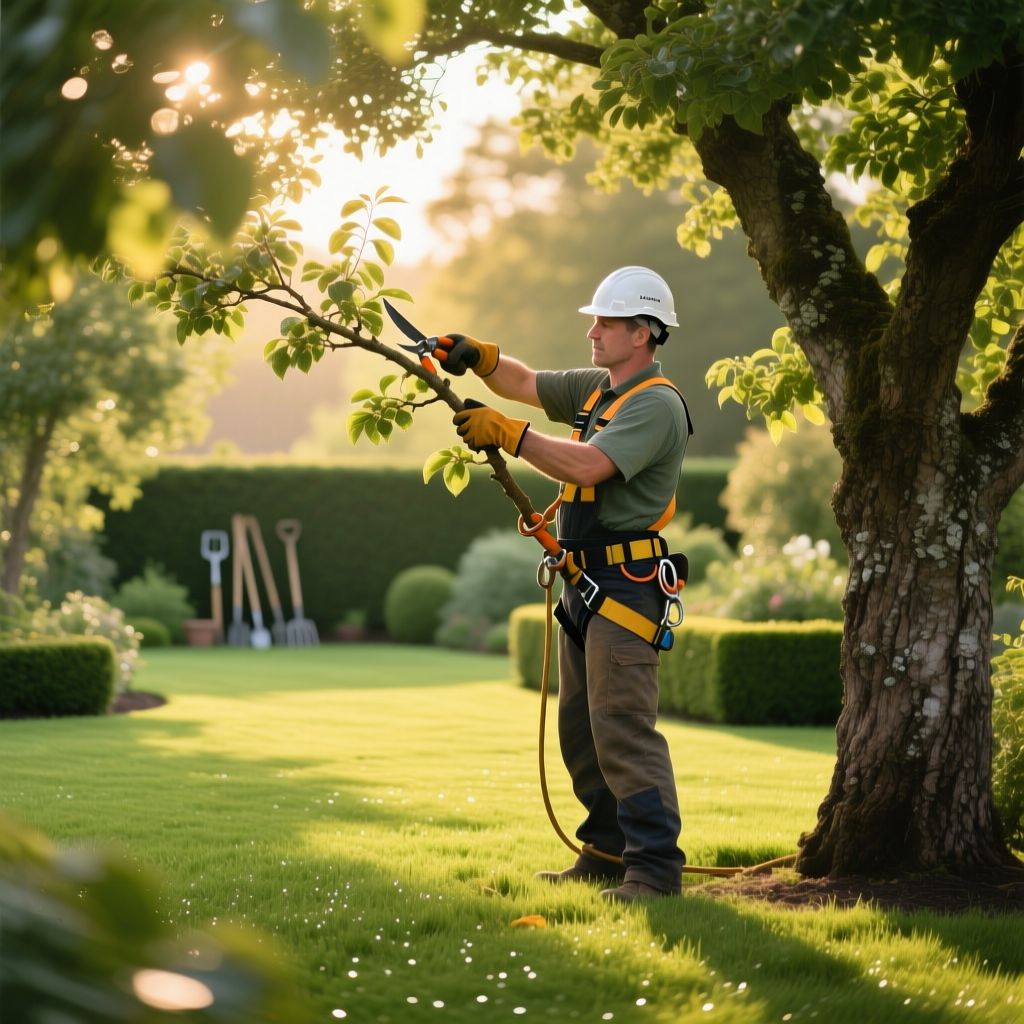
The Ultimate Guide to Tree Trimming Safety: Protecting
Maintaining a beautiful, thriving landscape requires dedication, and proper tree care is a cornerstone of any healthy yard. While routine tasks like mowing, edging, and fertilizing are thoroughly covered in our lawn care basics guide, managing the vertical elements of your property introduces a completely unique set of challenges. Tree trimming is absolutely essential for promoting vigorous growth, improving sunlight penetration to your turfgrass, and preventing severe property damage. However, it is also widely recognized as one of the most hazardous landscaping tasks a homeowner or groundskeeper can undertake. Every year, thousands of amateur landscapers suffer severe injuries from falls, chainsaw accidents, and electrocution while attempting to prune their trees without the proper knowledge or equipment.
Whether you are clearing deadwood from a mature oak, shaping a decorative maple, or removing hazardous overhanging branches near your roof, prioritizing health and safety is non-negotiable. In this comprehensive guide, we will explore the critical aspects of tree trimming safety, from selecting the right personal protective equipment to understanding the biomechanics of falling branches. By mastering these principles, you can protect yourself, your property, and the long-term health of your trees. For more general advice on maintaining your landscape, be sure to visit our complete tree care hub.
Essential Safety Gear & Equipment for Tree Pruning
Before you even touch a pruning shear or start a chainsaw, you must equip yourself with the proper personal protective equipment (PPE). Professional arborists never compromise on safety gear, and homeowners should adopt the same rigorous standards. The right equipment acts as your final line of defense against unpredictable accidents, flying debris, and accidental contact with sharp blades.
Head, Eye, & Face Protection: A standard construction hard hat is not sufficient for tree work. You need an arborist-specific helmet that includes a polycarbonate face shield and a wire mesh visor. This combination protects your skull from falling branches (widowmakers) while shielding your eyes and face from high-velocity wood chips, sawdust, and snapping twigs. Ensure your helmet meets ANSI Z89.1 standards for impact resistance.
Hearing Protection: Gas-powered chainsaws and heavy-duty electric pole saws routinely operate at decibel levels that can cause permanent hearing damage within minutes. Invest in high-fidelity earplugs or over-the-ear acoustic muffs designed specifically for forestry work. Many modern arborist helmets come with integrated, adjustable ear muffs for convenience and consistent protection.
Hand & Leg Protection: Your hands are your most valuable tools, yet they are constantly exposed to thorns, splinters, and sharp blades. Wear heavy-duty, cut-resistant leather gloves with reinforced palms. For your legs, chainsaw chaps are an absolute necessity when operating any motorized cutting tool. These chaps are constructed with layers of ballistic nylon and Kevlar; if the chainsaw bar accidentally contacts your leg, the inner fibers are instantly pulled into the chainsaw sprocket, jamming the machine and stopping the chain before it can cause severe lacerations.
Footwear & Climbing Gear: Always wear steel-toe or composite-toe boots with deep, aggressive treads for maximum grip on uneven, slippery terrain. If your trimming requires you to leave the ground, do not rely on standard hardware store ropes. Professional climbing requires specialized arborist saddles, friction hitches, and climbing lines rated for life support. For most homeowners, however, the safest climbing gear is a professional arborist's phone number.
Assessing the Tree & Surrounding Hazards
A critical component of tree trimming safety occurs before any cutting begins. A thorough site assessment allows you to identify hidden dangers and plan your cuts strategically. Never rush into a pruning job without first performing a comprehensive 360-degree evaluation of the tree and its surrounding environment.
The Danger of Power Lines: Electrocution is one of the leading causes of fatalities in tree care. Never attempt to trim any branch that is within ten feet of an overhead utility line. Electricity can arc across gaps, especially in humid conditions or when the sap and moisture content of the wood is high. If a tree is growing into or near power lines, you must contact your local utility company or a certified line-clearance arborist. They possess the specialized training and insulated equipment required to manage these extreme hazards safely.
Evaluating the Drop Zone: Gravity is unpredictable when branches are under tension. Before making a cut, clearly identify the drop zone—the area where the branch or debris will fall. Clear this zone of all bystanders, pets, and fragile property. If you are working near a road, driveway, or public sidewalk, use caution tape, traffic cones, or a dedicated ground partner to redirect foot and vehicle traffic. Establish clear vocal commands with your ground team, such as shouting "Stand clear!" before any branch is severed.
Checking the Weather Forecast: Environmental conditions drastically alter the safety profile of a pruning job. Never trim trees during high winds, as gusts can easily push a severed branch off its intended path or knock you off balance if you are elevated. Rain and morning dew make bark exceptionally slippery and reduce the friction on your gloves and boots. Furthermore, if there is any threat of lightning in the forecast, postpone the work immediately; tall trees and metal cutting tools are prime conductors.
Safe Pruning Techniques & Tool Handling
Using the right tool for the job is just as important as wearing the right gear. Improper tool handling leads to fatigue, loss of control, and severe injuries. Whether you are using manual landscaping tools or motorized equipment, adhering to safe handling protocols is mandatory.
Hand Pruners, Loppers, & Pole Saws: For branches under two inches in diameter, bypass pruners and loppers are ideal. Keep the blades razor-sharp; dull blades require excessive force, which can cause the tool to slip unexpectedly. When using telescoping pole saws, be mindful of overhead fatigue. Holding a heavy pole saw above your shoulders for extended periods compromises your balance and control. Always maintain a firm, two-handed grip, and never stand directly directly beneath the branch you are cutting. Position yourself at a 45-degree angle so the falling debris slides away from your body.
Chainsaw Safety & Kickback Prevention: The chainsaw is the most dangerous tool in the arborist's arsenal. The primary risk is kickback, which occurs when the upper quadrant of the chainsaw bar's tip (the kickback zone) contacts a solid object. This causes the saw to violently pivot upward and backward toward the operator's head or torso. To prevent kickback, never cut with the tip of the bar. Always engage the chain brake when starting the saw and when moving between cuts. Maintain a solid stance with your feet shoulder-width apart, and always hold the saw firmly with both hands, wrapping your left thumb securely around the front handlebar.
The Three-Cut Method: When removing heavy limbs, never attempt a single flush cut. The weight of the branch will cause it to snap prematurely, tearing the bark down the trunk and creating a massive, vulnerable wound. Instead, use the three-cut method. First, make an undercut about a foot away from the trunk, cutting roughly one-third of the way through the branch. Second, make a top cut slightly further out from the undercut; the branch will snap cleanly and fall away. Finally, make a precise finishing cut just outside the branch collar to promote proper healing and prevent disease entry. This method is a staple in professional tree care and ensures both your safety and the tree's health.
The Ladder Hazard: One of the most common and dangerous mistakes homeowners make is combining a ladder with a chainsaw. Ladders are inherently unstable on soft, uneven lawn surfaces. The vibration of a chainsaw, combined with the shifting weight of a falling branch, can easily dislodge the ladder, resulting in catastrophic falls. If a branch is too high to reach from the ground with a pole saw, it is time to hire a professional. For lower, manual pruning, use a specialized tripod orchard ladder, which is designed to stabilize on uneven ground, but never take a power tool onto it.
Recognizing Tree Diseases & Structural Weaknesses
A tree's structural integrity dictates how it will behave when cut. Diseased, dying, or decayed wood is highly unpredictable. It may shatter under the pressure of a saw, drop unexpectedly, or fail to support the weight of a climbing arborist. Learning to identify common tree diseases and structural flaws is a vital safety skill.
Signs of Internal Decay: Heart rot and sap rot hollow out the interior of a tree, leaving a fragile shell. Look for fungal conks (mushrooms) growing on the trunk or roots, which are primary indicators of internal decay. Cavities, deep cracks, and areas where the bark is missing or peeling away also suggest compromised structural integrity. If a trunk is heavily decayed, the "hinge wood" you rely on to control the direction of a falling branch may snap instantly, causing the limb to fall in an uncontrolled manner.
Weak Branch Unions: Pay close attention to the crotches where branches meet the trunk. V-shaped crotches often contain "included bark," a condition where bark grows inward between the branch and trunk, preventing a strong wood-to-wood connection. These branches are highly prone to splitting and can fail without warning, especially under the weight of snow, ice, or the vibration of a chainsaw. U-shaped crotches are generally much stronger and safer to work around.
Root Issues & Tree Lean: A tree's stability starts underground. If you notice heaving soil at the base of the tree, fungal growth near the root flare, or a sudden, pronounced lean, the root system may be failing due to root rot or physical damage. Cutting branches off a severely leaning, uprooting tree can shift its center of gravity and cause the entire tree to topple onto you or your home. In these cases, the tree should be evaluated by a certified arborist immediately.
Seasonal Safety Tips & Environmental Considerations
The changing seasons bring unique environmental hazards that affect both the tree and the person holding the saw. Adapting your safety protocols to the time of year is essential for a successful and injury-free pruning session. Just as you adapt your lawn maintenance routines to the seasons, your tree care approach must evolve as well.
Spring & Summer Hazards: During the warmer months, the primary threats to the worker are heat exhaustion, dehydration, and biological hazards. Pruning in high heat while wearing heavy, cut-resistant PPE can quickly lead to heatstroke. Schedule your trimming for the early morning or late evening, take frequent shade breaks, and hydrate continuously. Additionally, summer is peak season for stinging insects. Wasps, hornets, and bees frequently build nests in the dense canopy of trees. Always visually scan the branches for nests before cutting, and carry an epinephrine auto-injector if you have known allergies. Be vigilant for poison ivy or oak vines growing up the trunks of trees; the sap from these vines can transfer to your gloves and cause severe rashes.
Fall & Winter Hazards: In the colder months, the wood of many tree species becomes exceptionally brittle, especially when frozen. Brittle wood does not bend; it shatters. When a frozen branch snaps, it can splinter violently, sending sharp shards of wood flying like shrapnel. Furthermore, winter conditions introduce the hazards of ice and snow. Climbing icy branches or standing on frozen, sloping ground drastically increases the risk of slips and falls. Shorter daylight hours also mean you may be working in dim, shadowy conditions, which impairs your depth perception and makes it difficult to see the chainsaw bar clearly. Always finish your cutting work well before dusk.
Frequently Asked Questions
How close to power lines can I safely trim a tree?
As a general rule, homeowners should never attempt to trim any part of a tree that is within ten feet of an overhead utility line. Electricity can arc through the air, and the moisture inside a living tree acts as a highly effective conductor. If a branch is encroaching on the utility clearance zone, you must contact your local power company. Most utility providers offer free or low-cost line-clearance services to ensure the safety of the electrical grid and the public. Never risk your life to save a few dollars on a pruning job.
Should I use a ladder when trimming tall trees?
Using a standard extension ladder to trim trees is incredibly dangerous and is strongly discouraged by professional arborists. Ladders are designed for flat, stable surfaces, not the uneven, soft ground typically found in a yard. Furthermore, leaning a ladder against a tree trunk damages the bark and creates an unstable pivot point. If you are holding a heavy saw and reach out to cut a branch, your center of gravity shifts, easily tipping the ladder. For heights beyond the reach of a standard pole saw (usually around 12 to 14 feet), you should hire a professional tree service equipped with bucket trucks or proper climbing rigging.
What is the safest time of year to trim trees?
From a biological and safety standpoint, late winter to early spring—while the tree is fully dormant—is generally the safest and most beneficial time to prune most deciduous trees. The absence of leaves provides a clear view of the tree's structural framework, making it easier to identify deadwood, weak unions, and hazardous branches. Additionally, the ground is often frozen, providing a stable surface for heavy equipment, and the risk of transmitting diseases or attracting wood-boring insects to fresh cuts is at its lowest. However, dead, diseased, or structurally compromised branches that pose an immediate hazard should be removed immediately, regardless of the season.
When should I hire a professional arborist instead of doing it myself?
You should immediately hire an ISA-certified arborist if the job involves any of the following: working within ten feet of power lines, removing branches that require climbing or the use of a ladder with a power tool, cutting trees that show signs of severe decay or structural instability, or felling large trees near structures, fences, or roads. Professional arborists carry specialized liability insurance, possess advanced rigging techniques to lower heavy wood safely in tight spaces, and have the expertise to make precision cuts that protect the long-term health of your tree. For more information on integrating professional tree care with your overall landscape design, check out our tree planting guide.
How do I safely dispose of heavy tree debris?
Disposing of heavy limbs and trunks poses its own set of ergonomic and safety challenges. Never attempt to lift massive logs using your back; always use your legs, or better yet, utilize mechanical assistance such as a wheelbarrow, a log cart, or a winch. When dragging branches, be mindful of hidden tripping hazards like roots, rocks, and uneven terrain. If you are chipping the wood to use as mulch for your garden beds, ensure the chipper is placed on flat, stable ground, and never push material into the hopper with your hands or feet. Use a long push-stick to feed the last few feet of a branch into the machine. Properly managing the debris ensures your yard remains safe and pristine after the pruning is complete.

