
Tree Care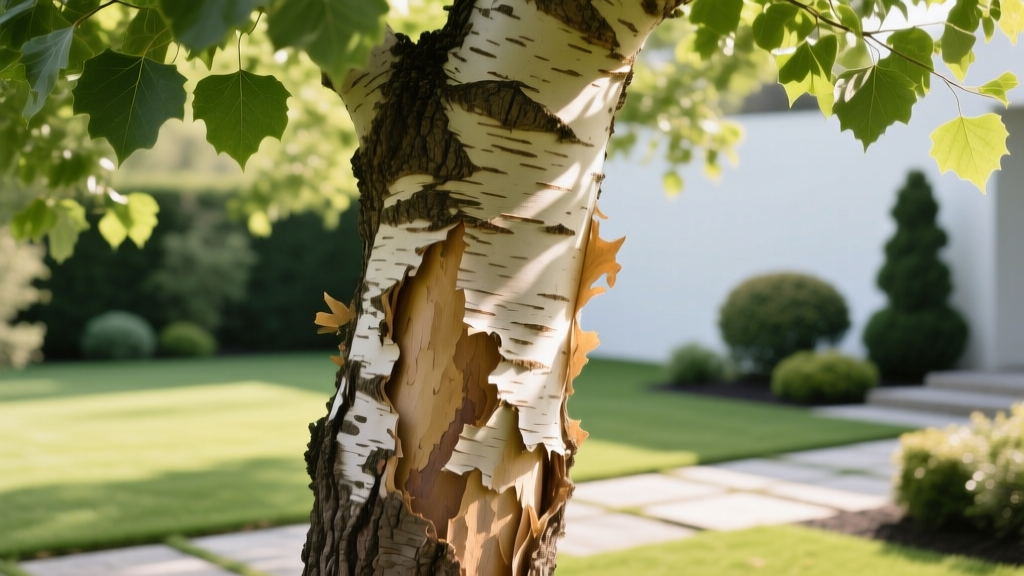
Tree With Peeling Bark: How to Diagnose and Treat It
The 'Is It Normal?' Quick-Test Framework
Finding a tree with peeling bark triggers immediate concern for most homeowners, but shedding the outer bark layer is not universally a death sentence. Before initiating expensive treatments or scheduling a removal, you must determine if the exfoliation is a natural growth mechanism or a symptom of systemic failure.
Species such as Sycamore, Silver Maple, River Birch, and Scotch Pine naturally shed their outer bark as the trunk expands. In these species, the peeling reveals healthy, smooth, and often brightly colored inner bark (phloem and cambium). However, if your tree is an Oak, Ash, Elm, or Apple, peeling bark is almost always pathological.
The Cambium Scratch Test: Take a sterilized pocket knife and gently scrape a 1-inch vertical slit where the bark is peeling. If the underlying cambium layer is vibrant green and moist, the tree is still transporting nutrients. If it is brittle, brown, or dry, that section of the trunk is dead. If more than 30% of the trunk's circumference shows brown cambium, the tree's structural integrity and long-term viability are severely compromised.
4 Primary Culprits of Abnormal Bark Peeling
When a non-exfoliating species develops a peeling trunk, it is typically reacting to one of four severe stressors. Identifying the exact cause dictates whether you can salvage the tree with a $20 DIY fix or need to budget $1,500 for emergency removal.
1. Environmental Stress: Sunscald and Frost Cracks
Thin-barked trees planted in highly exposed areas (especially on the south or southwest side of a property) suffer from sunscald. During winter days, the sun heats the bark, activating the cambium cells. When temperatures plummet at night, these active cells freeze and rupture, causing the bark to split, peel, and slough off in large vertical strips. According to Colorado State University Extension, frost cracks can penetrate deep into the sapwood, creating permanent entry points for decay fungi.
2. Fungal Pathogens: Hypoxylon Canker
If the peeling bark reveals a black, grey, or white crusty mat underneath, your tree is likely infected with Hypoxylon canker. This opportunistic fungus attacks drought-stressed or root-damaged trees, particularly Oaks and Sycamores. The fungus consumes the sapwood, causing the outer bark to literally detach and fall off in large sheets. There is no chemical cure for Hypoxylon; management relies entirely on removing infected limbs or, if the main trunk is involved, removing the entire tree to protect neighboring canopy.
3. Boring Insects: Emerald Ash Borer and Pine Beetles
Insects that tunnel beneath the bark sever the tree's vascular system. As the tree dies, the bark loses its moisture tension and peels away. If you look under the peeling bark and see S-shaped galleries (tunnels) packed with sawdust-like frass, you are dealing with the Emerald Ash Borer (EAB). The Emerald Ash Borer Information Network notes that once the bark begins to peel and woodpeckers start stripping the trunk (a phenomenon called 'flecking'), the tree is usually beyond chemical salvation.
4. Mechanical Damage and 'Mulch Volcanoes'
Piling mulch directly against the trunk (creating a 'mulch volcano') traps moisture against the bark. This constant dampness rots the outer bark and invites secondary pests like carpenter ants and bark beetles. Similarly, string trimmer damage that girdles the trunk cuts off nutrient flow, causing the bark above the wound to die and peel away over the following 12 to 18 months.
Diagnostic Matrix: Match the Symptom to the Culprit
Use this field-guide matrix to narrow down the exact cause of your tree's bark failure based on visual evidence and species type.
| Visual Symptom Under Bark | Primary Tree Species Affected | Likely Culprit | Salvage Probability |
|---|---|---|---|
| Vertical splitting, dry brown cambium | Maple, Ash, Linden, Crabapple | Sunscald / Winter Frost Crack | High (if under 30% girdled) |
| Black/grey crusty mat, white sapwood | Oak, Sycamore, Hickory | Hypoxylon Canker | Low (Requires removal if on trunk) |
| S-shaped tunnels, D-shaped exit holes | All Ash species | Emerald Ash Borer (EAB) | Zero (once bark is peeling) |
| Soft, spongy, rotting tissue at base | Any species with improper mulching | Basal Rot / Crown Rot | Moderate (if caught early) |
Step-by-Step Treatment and Salvage Protocol
If your diagnostic scratch test reveals green cambium and the damage is localized, follow these specific protocols to stabilize the tree.
Protocol A: Repairing Sunscald and Frost Cracks
- Wound Tracing: Using a sterilized carving knife, carefully trace around the edges of the peeled bark, cutting away dead tissue back to healthy, green bark. Do not apply pruning paint or tar; these trap moisture and accelerate rot. Let the wound callus naturally.
- Winter Wrapping: To prevent future sunscald, wrap the trunk from the base up to the first major branch using a commercial paper tree wrap (such as DeWitt Tan/Brown Paper Tree Wrap, typically $12-$18 per roll). Apply in late November and remove it by early March. Leaving wrap on year-round girdles the tree and invites pests.
Protocol B: Correcting Mulch Volcanoes and Basal Rot
- The 3-3-3 Excavation: Pull all mulch and soil away from the trunk. The final mulch bed should be 3 inches deep, span 3 feet in radius, and stay 3 inches away from the actual trunk bark.
- Root Flare Exposure: If the root flare is buried, use an air spade or hand trowel to expose it. Buried root flares cause the bark at the soil line to rot and peel, eventually girdling the tree.
Protocol C: Preemptive Borer Treatment (Before Peeling Occurs)
If you have Ash trees and EAB is in your county, you must treat before the bark peels. Trunk injections of emamectin benzoate (e.g., Tree-age G4) are the gold standard. This requires drilling 1/4-inch holes every 6 inches around the base of the trunk and injecting the chemical under pressure. Professional application costs between $15 and $25 per inch of Diameter at Breast Height (DBH). A 20-inch Ash tree will cost roughly $300-$500 per treatment, lasting 2 years.
Critical Safety Warning: If a tree with peeling bark shows signs of Hypoxylon canker on the main trunk, or if EAB damage has caused 'flecking' (extensive woodpecker damage), the tree is structurally compromised. Dead, dry bark means the vascular system has failed. These trees become brittle and can drop heavy limbs without warning. Do not attempt to climb or prune these yourself.
When to Call an ISA-Certified Arborist (Cost & Risk Thresholds)
Homeowners should transition from DIY diagnosis to professional intervention based on specific financial and risk thresholds. According to the Morton Arboretum, bark loss that encompasses more than a third of the trunk's circumference usually warrants professional assessment.
- Diagnostic Consultation: Expect to pay $75 to $150 for an ISA-certified arborist to perform an on-site risk assessment and soil probe test. Avoid companies that offer 'free estimates,' as they are often sales-driven tree removal services rather than diagnostic experts.
- Cabling and Bracing: If the peeling bark is localized but the tree has high sentimental or shade value, an arborist may install dynamic cabling (e.g., Cobra systems) to support weakened limbs. Cost: $400 - $800.
- Tree Removal: If the diagnosis is fatal (advanced Hypoxylon or severe EAB), budget for removal. A standard 50-foot oak with a 24-inch DBH typically costs $1,200 to $2,500 to remove, depending on proximity to structures and power lines. Stump grinding adds an additional $250 to $500.
Frequently Asked Questions
Can I paint over the exposed wood where the bark peeled off?
No. Modern arboriculture strictly advises against using tree wound paint, tar, or sealants. These products prevent the tree from forming a natural callus ridge (compartmentalization) and trap fungal spores and moisture against the exposed sapwood, accelerating internal decay.
My pine tree is peeling bark in large plates. Is it dying?
Not necessarily. Pines, particularly Scotch and Lodgepole pines, naturally exfoliate their bark in jigsaw-puzzle-like plates as they mature. If the underlying tissue is firm and the canopy needles are green and robust, this is a normal developmental phase. However, if the peeling is accompanied by blue-stained sapwood and pitch tubes, it indicates a fatal Pine Bark Beetle infestation.
How long does it take for a tree to recover from a frost crack?
If the cambium layer survives and the wound is properly traced, a healthy tree will begin to roll callus tissue over the exposed wood at a rate of roughly 1 to 2 inches per year. A severe vertical crack may take 5 to 10 years to fully close, during which time the tree must be protected from secondary borers and extreme winter sun exposure.

