
Tree Care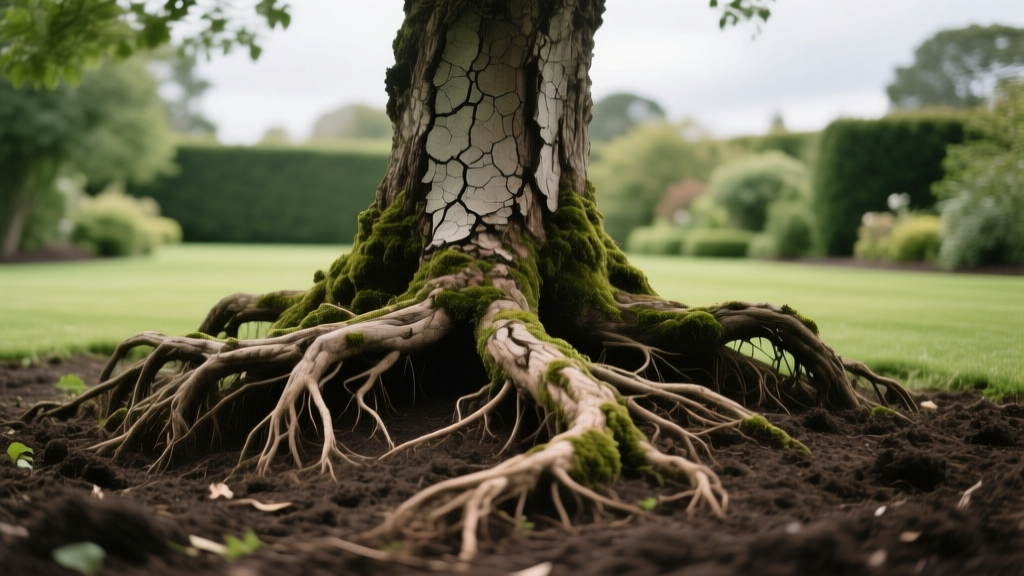
Trees With Roots Above Ground: Causes, Risks, and Solutions
The Hidden Mechanics of Surface Rooting
Finding trees with roots above ground is one of the most common structural challenges in residential landscaping. While it may look like the tree is aggressively pushing upward, surface rooting is almost always a symptom of subterranean stress. Roots require oxygen, water, and low soil resistance to grow deeply. When the soil environment fails to provide these, the tree adapts by shifting its root architecture to the top few inches of soil where oxygen exchange is highest.
According to soil science metrics, when soil bulk density exceeds 1.5 g/cm³ (common in heavily trafficked suburban lawns), downward root penetration is physically restricted. Heavy clay soils exacerbate this by becoming waterlogged and anaerobic, forcing roots upward to avoid suffocation. Additionally, as trees mature, secondary thickening naturally pushes older, shallow roots closer to the surface over decades. Understanding whether your issue is environmental or genetic is the first step in diagnosing the correct treatment path.
⚠️ Critical Warning: Never use a rototiller or string trimmer near exposed roots. Rototillers sever the vital cambium layer, inviting fatal fungal pathogens like Armillaria root rot, while string trimmers girdle the bark, cutting off the tree's nutrient transport system.
Species Prone to Surface Rooting
Genetics play a massive role in root architecture. If you are planning a new planting or diagnosing an existing yard, consult this root profile matrix. Some species are naturally adapted to shallow water tables and will always produce surface roots, regardless of your soil quality.
| Tree Species | Botanical Name | Root Depth Profile | Infrastructure Risk Level |
|---|---|---|---|
| Silver Maple | Acer saccharinum | Extremely Shallow | Severe (High heaving potential) |
| Norway Maple | Acer platanoides | Shallow to Medium | High |
| Weeping Willow | Salix babylonica | Shallow, Wide-Spreading | Severe (Water/pipe seeking) |
| American Sycamore | Platanus occidentalis | Medium | Moderate |
| Sweetgum | Liquidambar styraciflua | Shallow | Moderate to High |
For authoritative guidance on species selection and root behavior, the Morton Arboretum provides extensive databases on which trees are safest for planting near hardscapes and foundations.
The Risks of Ignoring Exposed Tree Roots
Leaving trees with roots above ground unmanaged creates compounding liabilities for your property:
- Mower Scalping and Blade Damage: Lawnmower blades striking woody roots cause expensive equipment damage and create open wounds on the tree, exposing it to heartwood decay.
- Tripping Hazards and Liability: Roots that heave more than 1.5 inches above the soil grade create severe tripping hazards, increasing premises liability if guests are injured.
- Turf Grass Asphyxiation: Dense surface root mats outcompete lawn grass for water and nutrients, resulting in bare, compacted dirt patches beneath the canopy that accelerate soil erosion.
- Hardscape Heaving: As surface roots undergo secondary growth (thickening), they can exert hundreds of pounds of lateral pressure, cracking concrete sidewalks and lifting retaining walls.
Proven Solutions for Trees With Roots Above Ground
Addressing surface roots requires a phased approach. Do not attempt to bury them deeply or chop them indiscriminately. Follow these targeted remediation strategies based on the severity of the exposure.
1. The Mulch Conversion Method (Best for Mild Exposure)
The most biologically sound solution is to stop fighting the tree and convert the grass zone into a mulch bed. This eliminates mower damage and mimics the tree's natural forest floor environment.
- Mow the existing grass under the canopy as short as possible.
- Apply a 2-to-3-inch layer of double-shredded hardwood arborist mulch. Avoid dyed mulches or rubber mulch, which restrict gas exchange.
- Maintain a strict 3-inch gap between the mulch and the tree's root flare (the trunk base) to prevent trunk rot and vole damage.
- Extend the mulch bed at least to the tree's drip line, or a minimum 8-foot radius for mature trees.
2. Precision Topdressing (Best for Moderate Exposure)
If you must maintain a walkable surface or turf, you can gradually bury shallow roots using a specific topdressing protocol. The Penn State Extension warns that adding more than an inch of soil at once will suffocate the fine feeder roots.
- The Mix: Blend 50% coarse river sand with 50% screened compost. Do not use heavy topsoil or clay.
- The Application: Apply no more than 0.5 inches of this mix over the roots in early spring.
- The Follow-up: Wait a full year before applying another 0.5-inch layer. This slow build allows the tree to grow new feeder roots upward into the new medium without experiencing hypoxia (oxygen deprivation).
3. Strategic Root Pruning (Best for Hardscape Conflicts)
When a specific surface root is actively destroying a foundation or sidewalk, surgical removal is required. This must be done with extreme precision to avoid destabilizing the tree.
Pro Arborist Tip: Use a sharp, professional-grade bypass pruning saw like the Silky Gomboy 240mm. Never use an axe or chainsaw on roots, as the tearing action shatters the wood fibers and prevents the root wound from compartmentalizing (sealing) properly.
According to research from the University of Florida IFAS Extension, you must adhere to the 'Rule of 8' for root pruning: never cut a root closer to the trunk than 8 times the trunk's diameter (measured at breast height). Furthermore, never sever a root larger than 2 inches in diameter, as these are primary structural anchors. Make a clean, vertical cut, apply a thin layer of copper-based fungicide to the wound, and backfill with native soil.
Cost Breakdown: Surface Root Management
Budgeting for surface root remediation depends on the square footage and the chosen method. Below are the current average material and labor costs for residential properties:
| Remediation Method | Material Cost (Per Sq Ft) | Professional Labor Cost | Longevity / Maintenance |
|---|---|---|---|
| Arborist Mulch Bed | $0.15 - $0.30 | $50 - $85 per hour | Requires annual 1-inch top-up |
| Sand/Compost Topdressing | $0.40 - $0.60 | $65 - $100 per hour | Multi-year phased process |
| Surgical Root Pruning | N/A | $150 - $250 per root | Permanent, but limits tree stability |
| Permeable Paver Hardscape | $12.00 - $18.00 | $15 - $25 per sq ft | 20+ years, allows root oxygenation |
Frequently Asked Questions
Can I just cover the exposed roots with 4 inches of topsoil and plant new grass?
No. Applying 4 inches of dense topsoil all at once will cut off oxygen to the fine feeder roots, effectively suffocating the tree and causing canopy dieback within 12 to 18 months. You must use a porous sand/compost mix and apply it in 0.5-inch increments over several years.
Will cutting surface roots kill my tree?
Cutting one or two small roots (under 2 inches in diameter) outside the critical root zone will not kill a healthy tree. However, severing large structural roots or removing more than 25% of the root system in a single season will cause severe canopy decline and make the tree highly susceptible to windthrow (blowing over in storms).
What is the best grass to grow under trees with surface roots?
Standard turfgrasses like Kentucky Bluegrass or Bermuda will fail under dense surface root canopies due to shade and moisture competition. Instead, plant shade-tolerant, shallow-rooted groundcovers such as Creeping Jenny (Lysimachia nummularia), Sweet Woodruff (Galium odoratum), or Hostas, which coexist peacefully with tree roots without requiring deep soil aeration.

