
Tree Care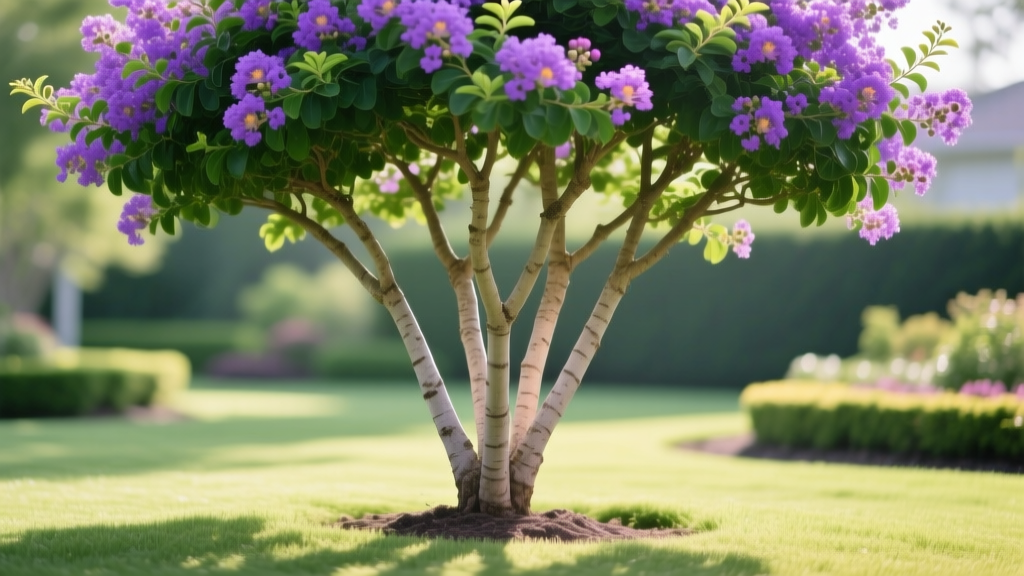
How to Trim a Crape Myrtle Into a Tree: Step-by-Step Guide
Understanding the Crape Myrtle Growth Habit
Crape myrtles (Lagerstroemia indica and its hybrids) are naturally multi-stemmed, deciduous shrubs. Left to their own devices, they will develop a dense, vase-shaped thicket of basal shoots. Training one into a structured, single-trunk or multi-trunk tree form is not a one-weekend project; it is a deliberate, multi-year horticultural commitment. When executed correctly, a tree-form crape myrtle showcases its stunning, smooth, exfoliating bark and elevates the vibrant summer canopy above the surrounding landscape.
According to arboriculture standards outlined by the Clemson University Home & Garden Information Center, the key to successful tree training lies in selective basal pruning and gradual canopy elevation, rather than drastic topping. Below is the definitive framework for transitioning your crape myrtle from a sprawling shrub into a structurally sound landscape tree.
Choosing Your Form: Single-Trunk vs. Multi-Trunk
Before making your first cut, you must decide on the architectural goal. Both forms require the same fundamental pruning mechanics, but they serve different aesthetic purposes in landscape design.
| Feature | Single-Trunk Tree | Multi-Trunk Tree (3-5 stems) | Natural Shrub (Untrained) |
|---|---|---|---|
| Visual Impact | Formal, focal point, highlights bark | Semi-formal, naturalistic, balanced | Informal, screening, hedge use |
| Maintenance Level | High (constant sucker removal) | Moderate (occasional basal thinning) | Low (minimal selective thinning) |
| Structural Risk | Higher wind resistance if pruned right | Excellent wind load distribution | Dense center can trap moisture/disease |
| Best Cultivars | Natchez, Muskogee, Tuscarora | Dynamite, Tonto, Sioux, Zuni | Pocomoke, Chickasaw (dwarf types) |
Essential Tools for Precision Pruning
Using the wrong tool crushes the cambium layer (the vascular tissue beneath the bark), inviting wood-decay fungi and delaying compartmentalization. Invest in high-quality bypass blades. Never use anvil pruners on live crape myrtle wood.
- Hand Pruners: Felco 2 Classic Bypass Pruners (approx. $65). Ideal for precise cuts on branches up to 3/4 inch in diameter.
- Loppers: Corona SL 3264 Bypass Loppers with compound action (approx. $50). Provides the leverage needed for clean cuts on 1.5-inch basal suckers.
- Pruning Saw: Silky Gomboy 210mm Folding Saw (approx. $45). Essential for removing mature, competing trunks flush with the root collar without tearing the bark.
- Safety Gear: ANSI-rated safety glasses and puncture-resistant nitrile gloves to protect against the hard, brittle wood splinters.
The 3-Year Tree Training Timeline
Transforming a shrub into a tree requires patience. Attempting to force a mature, multi-stemmed crape myrtle into a single-trunk tree in one season will shock the plant and trigger an explosion of weak epicormic growth.
Year 1: Selecting the Leader and Basal Clearing
Perform this work in late winter (February to early March), just before the spring bud break.
- Identify the Primary Trunk: Select the straightest, most vigorous, and healthiest stem that aligns with your desired canopy center. For a multi-trunk tree, select 3 to 5 stems that emerge from the ground at distinct angles and do not rub against one another.
- Remove Competing Trunks: Using your Silky pruning saw, cut all other basal stems completely off. Cut as close to the root collar (the swollen base where the trunk meets the roots) as possible without damaging the root flare. Do not leave stubs.
- Clear the Lower Third: Remove all lateral branches on the lowest one-third of the chosen trunk(s). Make cuts exactly 1/4 inch above a dormant bud, angling the blade at 45 degrees away from the bud to shed water.
Year 2: Elevating the Canopy and Sucker Management
By the second year, the plant will aggressively attempt to revert to its shrubby nature by pushing out basal suckers.
- Monthly Sucker Patrol: From May through August, inspect the base of the tree monthly. Snap off soft, green suckers by hand or cut them flush with the root collar. If left alone, these will steal energy from the primary canopy.
- Elevate the Browse Line: In late winter, remove another tier of lateral branches to raise the clear trunk height to about 4 to 5 feet above grade. This creates the visual 'trunk' and allows for underplanting with shade-tolerant perennials.
- Eliminate Inward Growth: Thin out any branches growing toward the center of the canopy to improve airflow and reduce the risk of powdery mildew (Erysiphe lagerstroemiae).
Year 3: Finalizing the Structure and Crown Thinning
At this stage, your crape myrtle should clearly read as a tree. The focus shifts from structural training to canopy refinement.
- Remove Crossing Branches: Where two branches intersect and rub, remove the weaker one or the one with the poorer angle of attachment.
- Thin the Crown: Remove no more than 15% to 20% of the live canopy in a single season. Over-thinning reduces the tree's ability to photosynthesize and produce the summer blooms crape myrtles are famous for.
- Head Back Leaders (Optional): If the primary trunks are excessively long and whippy, you can make a reduction cut just above a lateral branch that is at least one-third the diameter of the leader. This transfers apical dominance and thickens the trunk over time.
Warning: Avoid the 'Crape Murder' Trap
Topping a crape myrtle—indiscriminately chopping off the top third of all branches to stubs—is a catastrophic pruning error. According to research from the University of Florida IFAS Extension, topping removes the apical meristem and forces the tree to push out dozens of weak, upright water sprouts. These sprouts lack deep structural wood attachment and will routinely break under the heavy weight of summer blooms or high winds. Furthermore, the massive, ugly 'knuckles' that form at the cut sites are permanent and highly susceptible to rot.
Wound Care and Post-Pruning Maintenance
Modern arboriculture has entirely abandoned the use of pruning paints, wound dressings, and tar sealants. Studies confirm these products trap moisture against the exposed wood, accelerating the growth of decay fungi. Crape myrtles are highly efficient at compartmentalizing wounds naturally, provided the cuts are clean and made outside the branch collar.
After your late-winter pruning session, apply a 2-to-3-inch layer of organic mulch (like pine bark or wood chips) in a wide ring around the base of the tree. Keep the mulch at least 3 inches away from the actual trunk to prevent bark rot and discourage rodent damage. Fertilize only if a soil test indicates a deficiency; excess nitrogen promotes weak, vegetative growth at the expense of blooms.
Frequently Asked Questions
Can I train an older, overgrown crape myrtle shrub into a tree?
Yes, but it requires a more aggressive approach known as rejuvenation pruning. In late winter, cut the entire plant back to 6 to 12 inches above the ground. Allow it to regrow during the spring, then select your 1 to 3 primary leaders in the following winter and begin the Year 1 training steps outlined above. Expect a 1-year loss of blooms during the recovery phase.
Why are the trunks of my trained crape myrtle peeling?
Do not panic; this is a highly desirable trait. As crape myrtles mature, the outer bark naturally exfoliates in patches to reveal smooth, mottled inner bark in shades of pink, gray, and cinnamon. This process is completely normal and is one of the primary reasons homeowners train them into tree forms to expose the lower trunks.
How do I deal with branches that droop under the weight of flowers?
Drooping is a natural characteristic of heavy-blooming cultivars like 'Muskogee' and 'Natchez'. Instead of propping them up or cutting them off, use 'drop-crotchet' pruning in the winter. Cut the drooping branch back to a smaller, upward-growing lateral branch. This redirects the growth habit upward while maintaining the branch's structural integrity.

