
Tree Care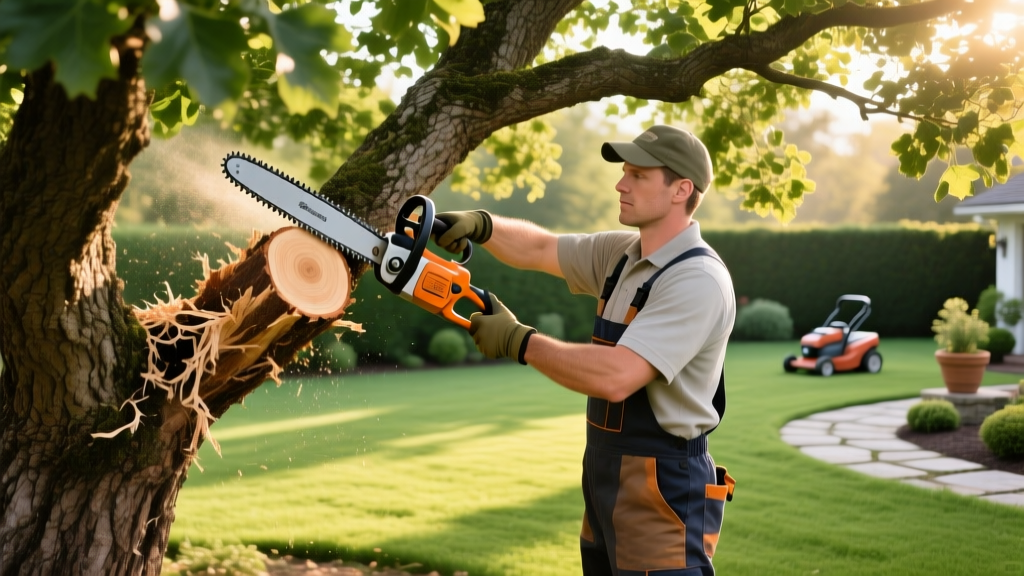
Expert Guide to Trimming Trees: Timing, Tools, and Pruning Cuts
The Biological Imperative of Trimming Trees
Trimming trees is not merely an aesthetic exercise; it is a surgical intervention that dictates how a tree compartmentalizes decay and allocates energy for future growth. While homeowners often use the terms interchangeably, arborists distinguish between trimming (managing size, shape, and clearance) and pruning (removing dead, diseased, or structurally compromised wood). Both require a strict adherence to seasonal timing and precise cut placement to avoid triggering fatal pathogen entry or structural failure.
This guide details the exact protocols for trimming deciduous, evergreen, and flowering trees, alongside the specific tool metallurgy and cutting mechanics required to execute professional-grade limb removal.
Seasonal Timing Matrix for Tree Species
The timing of your cuts determines the tree's vulnerability to disease and its vigor in the following spring. According to the Arbor Day Foundation, the majority of routine structural trimming should occur during the dormant season when the tree's energy reserves are stored in the root system and the vascular cambium is inactive.
| Tree Category | Examples | Optimal Trimming Window | Biological Rationale |
|---|---|---|---|
| Deciduous Shade Trees | Oak, Elm, Ash | Late Winter (February to early March) | Minimizes exposure to fungal spores (e.g., Oak Wilt) and allows rapid callus formation once spring sap flow begins. |
| Sap-Bleeding Deciduous | Maple, Birch, Walnut | Mid-Summer (July to August) | Trimming in late winter causes excessive sap bleeding. Summer trimming halts the flow, though it slightly reduces next year's growth. |
| Needled Evergreens | Pine, Spruce, Fir | Early Spring (April to May) | Allows for 'candling' (pinching new growth candles) before needles elongate, maintaining dense structural integrity. |
| Spring-Flowering | Lilac, Forsythia, Dogwood | Immediately after bloom (May to June) | Preserves the flower buds that form on old wood during the previous summer. Winter trimming removes the impending blooms. |
| Summer-Flowering | Crape Myrtle, Rose of Sharon | Late Winter (February to March) | These species produce flowers on new wood generated in the current spring, making dormant trimming ideal for maximizing blooms. |
Tool Selection and Blade Metallurgy
Using the wrong tool crushes the vascular cambium layer, delaying wound closure and inviting rot. Professional arborists select tools based on limb diameter and blade mechanics.
Hand Pruners and Loppers (Up to 2.5 inches)
Always select bypass pruners (scissor-action) for live wood. Anvil pruners (where a sharp blade crushes against a flat metal base) are strictly for deadwood, as they crush the living cells of green branches. For high-frequency trimming, the Felco 2 Classic bypass pruner remains the industry standard due to its hardened steel blade and replaceable parts. For limbs between 1.5 and 2.5 inches, use geared bypass loppers like the Corona Compound Action Loppers, which provide 3x cutting leverage.
Pruning Saws and Chainsaws (3 to 8 inches)
For limbs exceeding 3 inches, a pruning saw with impulse-hardened teeth is mandatory. The Silky Gomboy 210mm with fine teeth (13 teeth per 30mm) slices cleanly through live wood without tearing the bark. For limbs between 4 and 8 inches, a battery-powered top-handle chainsaw like the Stihl MSA 220 C-O (with a 12-inch bar) offers the torque required for dense hardwoods without the vibration and maintenance of gas-powered alternatives.
The Three-Cut Method for Heavy Limbs
Removing a heavy branch with a single cut inevitably strips the bark down the trunk as the limb falls, creating a massive, un-healable wound. To prevent this, execute the three-cut method:
- The Undercut (Relief Cut): Measure 12 to 18 inches out from the trunk. Cut upward from the underside of the branch, penetrating exactly one-third of the branch's diameter. This severs the bark and prevents tearing.
- The Top Cut (Removal Cut): Move 2 inches further out toward the branch tip. Cut straight down from the top. The branch will snap cleanly at the undercut, falling safely away from the trunk.
- The Final Collar Cut: Remove the remaining stub. Locate the branch collar (the swollen base where the branch meets the trunk) and the branch bark ridge (the dark, raised seam on top). Make your final cut just outside the collar, angling slightly downward and away from the trunk. Never cut flush with the trunk. Removing the collar destroys the tree's natural chemical boundary zone, allowing decay to enter the main trunk.
WARNING: Avoid 'Lion's Tailing' and 'Topping'
Stripping all interior lateral branches to leave a tuft of foliage at the very end of a limb (lion's tailing) shifts the weight distribution, making the limb highly susceptible to wind breakage. Similarly, 'topping' a tree by cutting the main central leader back to a stub forces the rapid growth of weakly attached 'water sprouts' that are prone to catastrophic failure during storms.
Wound Dressings: The Pruning Paint Myth
A persistent myth in residential tree care is the application of black asphalt-based pruning paint or tar over fresh cuts to 'seal' the wound. Research from Penn State Extension and the International Society of Arboriculture conclusively demonstrates that wound dressings do not accelerate callus formation. In fact, these sealants trap moisture and anaerobic bacteria against the exposed wood, accelerating internal decay. Trees possess a highly evolved defense mechanism called CODIT (Compartmentalization of Decay in Trees). When a clean, precise cut is made just outside the branch collar, the tree naturally generates callus tissue from the cambium edges to seal the wound from the outside in. Leave all cuts bare and exposed to air.
2026 Cost Expectations: DIY vs. Professional Arborists
While routine trimming of small ornamental trees is a viable DIY project, mature shade trees require professional rigging and aerial lifts. Below are the current market rates for professional tree trimming services as of early 2026.
| Tree Size / Scenario | DIY Tool Investment | Professional Service Cost (2026) | Risk / Equipment Factor |
|---|---|---|---|
| Small Ornamental (Under 20 ft) | $80 - $150 (Hand tools) | $250 - $450 | Low risk. Accessible via standard step ladder. |
| Medium Shade Tree (20 - 40 ft) | $250 - $500 (Pole saws, harnesses) | $600 - $1,100 | Moderate risk. Requires climbing spurs or bucket truck access. |
| Large Mature Tree (40 - 70 ft) | Not Recommended | $1,200 - $2,500 | High risk. Requires certified arborist, rigging ropes, and chipping crew. |
| Over 70 ft / Near Power Lines | Not Recommended | $2,500 - $4,500+ | Extreme risk. Requires utility-certified line clearance crews and crane assistance. |
When hiring a professional, always verify their credentials. Demand proof of ISA (International Society of Arboriculture) Certified Arborist status and request a certificate of liability insurance directly from their provider. Never hire 'door-knockers' who offer to top trees or use climbing spikes on trees that are not scheduled for complete removal, as spikes puncture the living cambium and create permanent entry points for disease.
"The objective of trimming trees is to guide the tree's natural growth patterns, not to force it into an artificial shape. Every cut is a wound; make only those cuts that are biologically or structurally justified."

