
Tree Care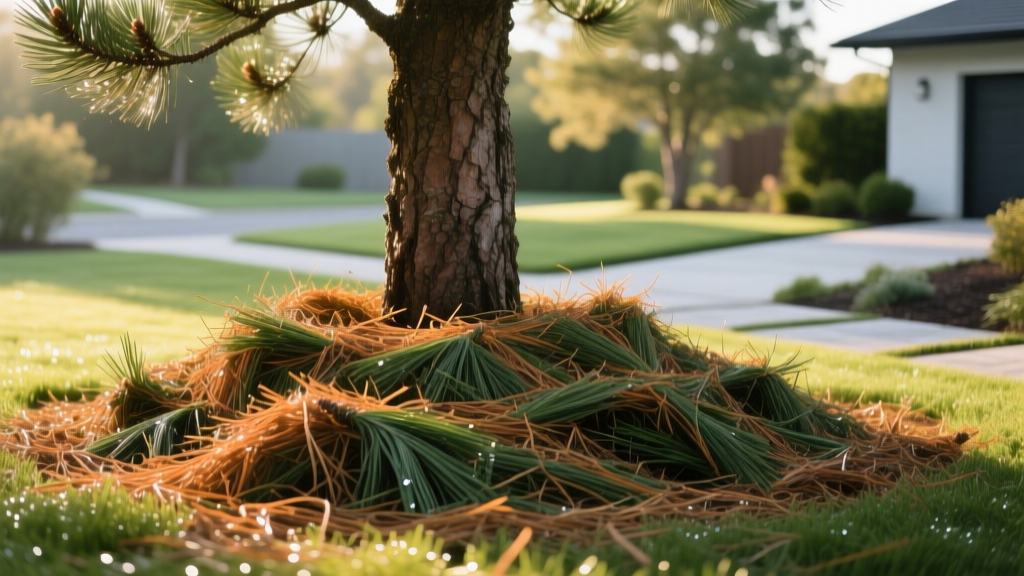
What Is Pine Straw? A Complete Guide to Pine Needle Mulch for Trees
Defining Pine Straw: More Than Just Fallen Needles
When homeowners ask, "what is pine straw?" they are often confusing it with pine bark mulch or generic wood chips. Pine straw—also referred to as pine needle mulch—consists of the naturally shed, dried brown needles of pine trees. Unlike wood mulch, which is mechanically shredded and dyed, pine straw is a whole, unprocessed organic material harvested directly from the forest floor of managed pine plantations. It is a premier mulching agent for tree care, prized for its unique interlocking structure, exceptional water permeability, and natural resistance to compaction.
For arborists and landscape professionals, pine straw is not just an aesthetic top-dressing; it is a functional soil amendment that regulates the microclimate around a tree's critical root zone. By mimicking the natural forest floor, pine straw creates a breathable, insulating layer that protects delicate feeder roots from temperature extremes while allowing vital oxygen and rainwater to penetrate the soil profile.
The Botanical and Physical Profile of Pine Straw
Not all pine straw is created equal. The physical characteristics of the mulch depend entirely on the species of pine from which it was harvested. Understanding these differences is crucial for selecting the right product for your specific landscape needs.
Longleaf Pine (Pinus palustris)
Longleaf pine straw is the gold standard in the landscaping industry. The needles range from 8 to 18 inches in length. When spread, these long needles fold over one another and interlock, creating a cohesive, porous mat. This interlocking mechanism makes longleaf straw highly resistant to wind and water erosion, making it the only reliable choice for sloped terrain or areas prone to heavy runoff.
Slash Pine (Pinus elliottii)
Slash pine needles are medium-length, typically measuring 5 to 11 inches. While it interlocks better than shorter varieties, it does not form as tight a matrix as longleaf. It is a cost-effective middle ground for flat residential beds but may require occasional raking after severe storms.
Loblolly Pine (Pinus taeda)
Loblolly straw features short needles, usually 4 to 8 inches long. Because the needles lack the length to interlock, loblolly straw behaves more like loose debris. It is the most affordable option but is easily displaced by wind and foot traffic, requiring more frequent reapplication.
Expert Buying Tip: When purchasing pine straw at a nursery or landscape supply, inspect the bale's weight and binding. Standard bales measure roughly 13 x 13 x 26 inches and should weigh between 25 and 35 pounds. If a bale feels excessively heavy (over 40 pounds), it has high moisture content—meaning you are paying premium prices largely for water weight. Premium longleaf bales are typically bound with two strands of baling twine, whereas lower-grade straw may be compressed in wire or plastic netting.
Pine Straw vs. Hardwood vs. Pine Bark: A Comparison Matrix
Choosing the right mulch requires understanding how different materials interact with tree roots and soil biology. Below is a direct comparison of pine straw against common alternatives.
| Feature | Pine Straw | Shredded Hardwood | Pine Bark Nuggets |
|---|---|---|---|
| Average Cost (2026) | $8 - $14 per bale | $35 - $45 per cubic yard | $40 - $55 per cubic yard |
| Longevity | 12 - 18 months | 6 - 10 months | 2 - 3 years |
| Slope Stability | Excellent (Interlocks) | Poor (Washes away) | Very Poor (Floats away) |
| Water Permeability | High | Moderate (Compacts over time) | Low (Sheds water) |
| Termite Attraction | Very Low | High | Moderate |
Debunking the Soil pH and Nitrogen Myths
Two persistent myths deter homeowners from using pine straw around their trees: the belief that it drastically acidifies the soil, and the fear that it robs the soil of nitrogen.
The Acidity Misconception
While living, green pine needles are acidic, the brown needles that fall to the forest floor and are harvested as straw have lost the vast majority of their acidity. According to soil science research cited by University of Georgia Extension, aged pine straw has a pH ranging from 6.0 to 6.5, which is nearly neutral. Applying a 3-inch layer of pine straw will not alter your underlying soil pH in any measurable way. If you have acid-loving trees like dogwoods, azaleas, or blueberries, pine straw is an excellent choice, but it will not artificially lower the pH of alkaline soils.
The Nitrogen Immobilization Fear
Wood-based mulches have a high Carbon-to-Nitrogen (C:N) ratio, often exceeding 400:1. When wood chips break down, soil microbes consume available nitrogen to process the carbon, temporarily starving plant roots. Pine straw, however, has a much lower C:N ratio of approximately 80:1. Furthermore, because pine straw is left on the soil surface rather than tilled into the earth, it breaks down slowly and causes virtually zero nitrogen tie-up in the root zone.
"Subterranean termites feed on high-cellulose, low-resin materials. Pine straw retains natural terpenes and resins even after drying, and its physical structure lacks the dense, moisture-trapping matting that termite colonies require for shelter, making it significantly safer near home foundations than shredded hardwood." — NC State Extension
Step-by-Step Application for Optimal Tree Health
Improper mulching is a leading cause of urban tree decline. Follow these precise steps to apply pine straw correctly, ensuring maximum moisture retention without inviting disease.
- Calculate Your Coverage: A standard 3-cubic-foot bale of compressed pine straw will cover approximately 50 to 70 square feet at a 3-inch depth. Measure the radius of your tree ring to determine how many bales you need.
- Clear the Base: Remove all existing weeds, grass, and old, matted wood mulch from the tree's drip line. Use a manual edger or hoe to scrape the surface clean. Do not use chemical herbicides directly under the canopy, as tree feeder roots will absorb the toxins.
- Establish the 'Donut' Buffer: This is the most critical step. Keep the pine straw at least 4 to 6 inches away from the actual trunk flare of the tree. Piling mulch against the bark (volcano mulching) traps moisture, leading to phytophthora root rot and inviting boring insects.
- Flake and Spread: Do not lay the dense, compressed slabs of straw directly on the ground. Grab handfuls of the bale and "flake" them apart in the air, letting them fall loosely. This preserves the air pockets that allow water infiltration.
- Measure the Depth: Aim for a uniform depth of 3 to 4 inches. Less than 2 inches will fail to suppress weeds and retain moisture. More than 5 inches will create a hydrophobic barrier that prevents rain from reaching the roots and cuts off oxygen to the soil.
- Hydrate the Mat: Immediately after spreading, water the pine straw heavily with a garden hose. This helps the needles settle, interlock, and conform to the ground, preventing the wind from blowing the fresh mulch away before it anchors.
Pros and Cons Summary
Advantages
- Stays in place on steep slopes and drainage swales.
- Allows superior air and water exchange compared to wood.
- Naturally deters termites and carpenter ants.
- Does not compact or form a water-repellent crust over time.
- Provides excellent insulation against summer heat and winter freezes.
Disadvantages
- Higher upfront cost per square foot than bulk hardwood mulch.
- Can be difficult to find in regions far from the Southeastern US due to freight costs.
- Loose needles can be tracked indoors by pets or children.
- Highly flammable when completely bone-dry; not recommended for fire-prone wildfire zones within 5 feet of structures.
Frequently Asked Questions
Do I need to remove old pine straw before applying a new layer?
No. Unlike wood mulch, which can develop anaerobic, sour-smelling fungal mats as it decomposes, pine straw breaks down cleanly into a rich, loamy humus. Simply apply the new 2-inch layer directly over the remaining, decomposed needles from the previous year. This builds long-term soil organic matter without suffocating the roots.
Is pine straw safe for vegetable gardens and fruit trees?
Yes. Because it does not tie up nitrogen or alter soil pH, pine straw is an excellent, clean mulch for fruit trees and perennial garden beds. However, because the needles are sharp and interlock, it is less ideal for annual vegetable rows where you need to frequently pull back the mulch to plant seeds or harvest root crops.
Why does my new pine straw smell sour or like ammonia?
If your pine straw emits a strong, unpleasant odor, the bale was likely harvested wet and sealed tightly in plastic wrap, causing anaerobic decomposition during transport. Open the bale, spread it out on your driveway, and let it air out in the sun for 24 to 48 hours before applying it around your trees. The volatile organic compounds causing the smell will dissipate harmlessly.

