
Tree Care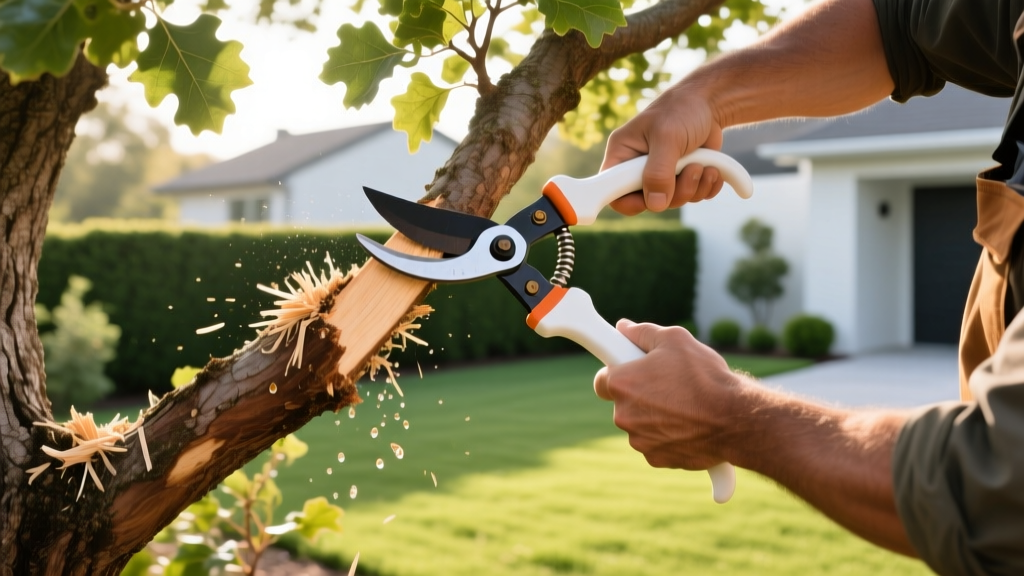
What Is Pruning in Plants? A Botanical & Practical Guide
At its core, the question of what is pruning in plants extends far beyond simply cutting away dead wood. Pruning is a deliberate physiological intervention. By selectively removing specific plant parts—buds, stems, branches, or roots—you manipulate the plant's endocrine system, redirect its carbohydrate reserves, and alter its structural architecture. Whether you are managing a 60-foot shade tree or a compact boxwood hedge, understanding the botanical mechanisms behind the cut is the difference between stimulating vigorous health and triggering irreversible decline.
The Endocrine System of Plants: Why Pruning Works
To understand pruning, you must understand apical dominance. The terminal bud at the tip of every stem produces Indole-3-acetic acid (IAA), a primary auxin hormone. This auxin travels downward through the stem's polar transport system, actively suppressing the growth of lateral (side) buds.
The Auxin-Cytokinin Balance
When you make a heading cut and remove the terminal bud, you eliminate the auxin source. Simultaneously, cytokinins—hormones produced in the root system and transported upward—are freed from suppression. The cytokinins flood the nearest lateral buds, breaking their dormancy and triggering a flush of new, bushy growth. This hormonal seesaw is the foundational mechanism of all pruning.
Cut Taxonomy and Hormonal Triggers
Not all cuts yield the same result. The International Society of Arboriculture (ISA) categorizes pruning cuts based on their structural and hormonal impact. Selecting the wrong cut type is the most common failure mode in residential tree care.
| Cut Type | Hormonal Effect | Structural Result | Best Application |
|---|---|---|---|
| Thinning Cut | Minimal auxin disruption; removes entire branch to its point of origin. | Maintains natural form, reduces wind sail, opens canopy to light. | Shade trees, structural training, disease management. |
| Heading Cut | Breaks apical dominance; spikes lateral cytokinin activity. | Dense, bushy habit; weakens scaffold structure if overused. | Hedges, fruit production (spurs), bonsai ramification. |
| Pinching | Mild apical disruption; removes soft, unhardened tissue. | Delays flowering, increases tertiary branching. | Herbaceous perennials, annuals, soft-tip shrub training. |
| Topping (Avoid) | Massive auxin loss; triggers epicormic (water sprout) panic growth. | Severe structural weakness, rapid decay, starvation. | Never recommended. Violates ANSI A300 pruning standards. |
Wound Response and the CODIT Model
Trees do not "heal" in the human sense; they seal. When you sever a branch, the tree relies on a biological process called Compartmentalization of Decay in Trees (CODIT), pioneered by Dr. Alex Shigo. The tree builds four chemical and physical walls around the wound to isolate the decay and protect the surrounding vascular tissue.
The most critical anatomical feature for a successful seal is the branch collar—the swollen, wrinkled area at the base of the branch where it meets the trunk. The collar contains specialized reactive wood rich in phenols and suberin that aggressively seal the wound.
Warning: The Flush Cut Failure Mode
Cutting flush with the trunk removes the branch collar and breaches the tree's primary defensive wall (Wall 4). This allows fungal pathogens to enter the trunk's heartwood, leading to hollowing and eventual structural failure. Always cut just outside the collar, leaving the swollen base entirely intact.
Tool Metallurgy: Selecting the Right Steel
The quality of your cut directly impacts the plant's ability to compartmentalize decay. Crushed or torn bark creates jagged wounds that invite pathogens. Tool selection is dictated by metallurgy and blade geometry.
- Bypass Pruners (The Standard): These operate like scissors, with a sharp curved blade passing by a blunt anvil. Look for blades forged from SK5 high-carbon steel (like the industry-standard Felco 2, typically priced around $60). SK5 steel holds a razor edge and slices cleanly through live cambium without crushing.
- Anvil Pruners (For Deadwood Only): A sharp blade crushes the material against a flat metal block. While they offer more leverage for thick, dead wood, they destroy the cellular structure of live branches. Never use anvil pruners on live tissue.
- Hand Saws for Limbs > 1.5 Inches: For larger scaffolds, use a pull-cut pruning saw with impulse-hardened teeth (such as the Silky Gomboy 240). Pull-saws cut on the backstroke, preventing the blade from bowing and binding in the kerf, resulting in a mirror-smooth finish that requires no wound sealant.
Phenological Timing Framework
Knowing what pruning in plants does physiologically is only half the equation; knowing when to execute the cut dictates the plant's seasonal survival. Timing is strictly governed by the plant's flowering phenology and regional disease vectors.
Spring-Flowering Shrubs (Old Wood Bloomers)
Species like Forsythia, Lilac, and Rhododendron set their floral buds during the late summer and fall of the previous year. If you prune them in early spring or winter, you are physically removing the impending flowers. Rule: Prune immediately after their spring bloom cycle ends (typically May or June), giving them ample time to generate new wood and set buds for the following year.
Summer-Flowering Shrubs (New Wood Bloomers)
Species like Crape Myrtle, Butterfly Bush, and Rose of Sharon produce flowers on the current season's growth. Rule: Prune these aggressively in late winter or early spring (February to March) while they are fully dormant. This stimulates a massive flush of new, flower-bearing wood as temperatures warm.
The Disease Vector Exception: Oaks and Elms
For certain species, timing is a matter of life and death. Oak trees (susceptible to Oak Wilt via Bretziella fagacearum) and Elm trees (susceptible to Dutch Elm Disease via Ophiostoma novo-ulmi) must only be pruned during deep winter dormancy (December through February). Pruning these species in spring or summer releases volatile compounds that attract sap beetles (Nitidulidae), which carry the fungal spores directly into the fresh pruning wounds. According to the University of Minnesota Extension, winter pruning is the single most effective cultural control for preventing these fatal vascular wilts.
Debunking the Wound Sealant Myth
For decades, homeowners painted pruning cuts with black asphalt-based "tree wound dressings" under the assumption it kept moisture and bugs out. Modern arboricultural science has thoroughly debunked this. Research cited by the International Society of Arboriculture confirms that wound dressings actually trap moisture against the exposed wood, accelerating fungal decay and preventing the tree from forming its natural callus roll. Leave all pruning cuts unpainted and exposed to the air to facilitate rapid desiccation and CODIT wall formation.
Summary Checklist for the Homeowner
- Identify the Goal: Are you reducing wind sail (thinning) or encouraging bushiness (heading)?
- Check the Phenology: Does it bloom on old wood or new wood?
- Verify Disease Vectors: Is it an Oak or Elm? If so, wait for deep winter.
- Inspect Your Steel: Ensure your bypass pruners are sharp, clean, and oiled. Wipe blades with 70% isopropyl alcohol between plants to prevent cross-contamination of viruses.
- Locate the Collar: Never make a flush cut. Preserve the swollen branch collar at all costs.
By treating pruning as a precise botanical surgery rather than a cosmetic chore, you align your landscaping practices with the plant's natural physiological defenses, ensuring decades of structural integrity and vigorous growth.

