
Tree Care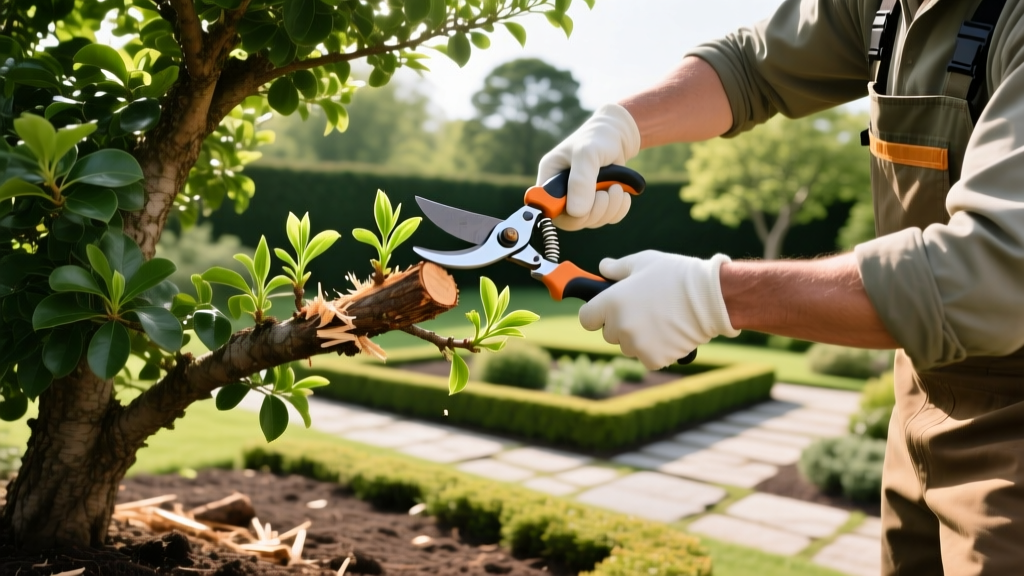
When to Cut Back Bushes: Regional Pruning Calendars and Timing
The Biology of Bud Set: Why Timing Dictates Blooms
Determining when to cut back bushes is not a matter of picking an arbitrary weekend in spring; it is a precise biological calculation based on how your specific shrub species produces flowers and foliage. Shrubs fall into two primary flowering categories: those that bloom on 'old wood' (growth produced the previous summer) and those that bloom on 'new wood' (growth produced in the current spring).
Spring-flowering shrubs like lilacs, forsythia, and rhododendrons initiate their flower buds during the late summer and early fall of the preceding year. If you prune these bushes in late winter or early spring, you are physically removing the hormonal triggers (auxins and cytokinins) stored in those terminal buds, sacrificing an entire year of blooms. Conversely, summer-flowering shrubs like butterfly bush, rose of sharon, and panicle hydrangeas rely on vigorous new spring growth to set buds. Pruning these in late winter stimulates the apical dominance required for massive summer floral displays.
Regional Pruning Calendars by USDA Hardiness Zone
The phrase 'late winter' means something entirely different in Minnesota than it does in Georgia. To establish a reliable baseline for when to cut back bushes, you must align your pruning schedule with regional soil temperatures and dormancy cycles. The optimal window for structural pruning of new-wood bloomers and evergreens occurs when the shrub is fully dormant, but the threat of severe freeze-thaw cycles that can desiccate fresh cuts has passed.
| USDA Hardiness Zone | Regional Geography | Optimal Late-Winter Pruning Window | Post-Bloom Pruning Window (Old Wood) | Dormancy Cue |
|---|---|---|---|---|
| Zones 3-4 | Upper Midwest, Northern New England | Mid-April to Mid-May | June to Early July | Soil temps consistently above 40°F |
| Zones 5-6 | Mid-Atlantic, Lower Midwest, Pacific NW | Mid-March to Mid-April | Late May to June | Final hard frost date passes |
| Zones 7-8 | Southeast, Southern Appalachians | Late February to Mid-March | May | Bud swell visible on new-wood species |
| Zones 9-10 | Deep South, Gulf Coast, Coastal CA | January to Mid-February | April | Brief winter chilling hours met |
According to the University of Minnesota Extension, pruning too early in northern zones leaves open wounds vulnerable to severe cold desiccation, which can cause dieback extending inches below the cut site. Always wait until the most extreme sub-zero temperatures have historically passed for your specific microclimate.
Species-Specific Timing Matrix
Use this decision matrix to identify your shrub and execute the correct seasonal cut. Misidentifying a hydrangea species is the most common cause of bloom failure in residential landscapes.
Spring Bloomers (Old Wood - Prune Post-Bloom)
- Lilac (Syringa vulgaris): Prune within 14 days of flower petal drop. Delaying allows the plant to set next year's buds, which will be sheared off if pruned late.
- Forsythia (Forsythia x intermedia): Cut back immediately after the yellow blooms fade in mid-spring. Shape by removing 1/4 inch above outward-facing nodes.
- Bigleaf Hydrangea (Hydrangea macrophylla): Only remove dead wood in early spring. Live stems must be left entirely intact until immediately after summer flowering.
Summer/Fall Bloomers (New Wood - Prune Late Winter)
- Panicle Hydrangea (Hydrangea paniculata): Cut back aggressively in late winter (Zones 5-6: March). Reduce previous year's growth by 1/3 to promote sturdy stems that won't flop under heavy bloom weight.
- Butterfly Bush (Buddleja davidii): Cut down to 12-18 inches from the soil line in early spring once green tissue appears at the base.
- Rose of Sharon (Hibiscus syriacus): Thin interior crossing branches in late winter before sap begins to flow heavily.
Evergreens and Formal Hedges
- Boxwood (Buxus sempervirens): Thin in late winter before the spring flush. Avoid shearing in late summer, as tender new growth will be killed by early frosts.
- Yew (Taxus spp.): Highly forgiving; can be pruned in early spring or mid-summer. Clemson University HGIC notes that yews are one of the few conifers that will readily sprout new growth from old, bare wood.
The 1/3 Renewal Rule: A Step-by-Step Framework
For multi-stemmed deciduous shrubs (like dogwoods, viburnums, and spireas), annual 'haircut' pruning leads to a dense outer canopy and a dead, woody interior. Instead, apply the 1/3 Renewal Rule over a three-year cycle to maintain vigorous growth and optimal flowering.
- Year 1: Identify the oldest, thickest canes (typically over 1.5 inches in diameter with peeling, gray bark). Cut exactly 1/3 of these canes completely to the ground, leaving a 2-inch stub.
- Year 2: The following dormant season, remove the next 1/3 of the oldest remaining original canes, plus any weak, spindly shoots generated from the Year 1 stubs.
- Year 3: Remove the final 1/3 of the original old wood. Your shrub is now entirely composed of vigorous, 1-to-3-year-old wood, maximizing bloom production and disease resistance.
Warning: Avoid Topping
Never 'top' a shrub by cutting all stems to an arbitrary uniform height. This destroys the plant's natural apical dominance, triggering a chaotic explosion of weak, vertical water sprouts (epicormic growth) that are highly susceptible to wind breakage and powdery mildew.
Never 'top' a shrub by cutting all stems to an arbitrary uniform height. This destroys the plant's natural apical dominance, triggering a chaotic explosion of weak, vertical water sprouts (epicormic growth) that are highly susceptible to wind breakage and powdery mildew.
Climate Anomalies: Adjusting for Early Thaws and Late Frosts
With shifting climate patterns resulting in erratic winter thaws followed by sudden hard freezes, rigid calendar-based pruning is becoming obsolete. In recent years, many regions have experienced 'false springs' in February, causing premature bud swell. If your region experiences an early thaw followed by a forecasted deep freeze, delay your late-winter pruning by two to three weeks.
Pruning stimulates sap flow and pushes the shrub out of deep dormancy. If you cut back bushes right before a sudden cold snap, the newly activated vascular tissue will freeze and rupture, causing severe dieback. Wait until the 10-day forecast shows stable nighttime temperatures above the shrub's hardiness threshold before making structural cuts.
Essential Tool Calibration for Clean Cuts
The physical execution of the cut is just as critical as the timing. Crushed or ragged cuts fail to callus over properly, inviting fungal pathogens like Botryosphaeria (canker).
- Bypass Pruners (For live wood up to 3/4 inch): Invest in a high-carbon steel bypass model like the Felco F-2 (approx. $65) or the ARS VS-8Z (approx. $50). Anvil pruners crush live vascular tissue and should only be used for deadwood.
- LOPPERS (For wood 3/4 to 2 inches): Use geared loppers to maintain leverage without twisting the blade, which causes bark tearing.
- Cut Angle and Placement: Always make cuts at a precise 45-degree angle, positioned exactly 1/4 inch above an outward-facing dormant bud. Cutting too high leaves a dead stub that rots; cutting too close damages the bud's growth node.
- Sanitization: Wipe blades with 70% isopropyl alcohol between every single shrub, and immediately after cutting any diseased wood. Avoid bleach solutions, which pit and corrode high-carbon steel blades, creating microscopic grooves where bacteria harbor.
Frequently Asked Questions
Can I prune my bushes in the fall?
Pruning in late fall is highly discouraged for most species. Fall pruning stimulates new, tender growth that will not have time to harden off before winter freezes, resulting in severe dieback. Furthermore, fungal spores are highly active in autumn leaf litter and easily enter fresh pruning wounds. The Arbor Day Foundation strictly recommends waiting until deep winter dormancy or post-bloom periods.
How do I know if a branch is dead before cutting?
Perform the 'scratch test'. Use your fingernail or a sterilized pocket knife to gently scratch the thin outer bark of the branch. If the cambium layer underneath is vibrant green and slightly moist, the wood is alive. If it is brittle, brown, and dry, the branch is dead and should be removed immediately, regardless of the season.
What happens if I prune my spring-blooming bushes in March?
If you prune spring-bloomers like azaleas, lilacs, or forsythia in March, you will not kill the plant, but you will sever the terminal flower buds that were formed the previous August. The shrub will leaf out normally and remain healthy, but it will produce zero flowers that spring. You will have to wait a full 12 months for the next bloom cycle.

