
Tree Care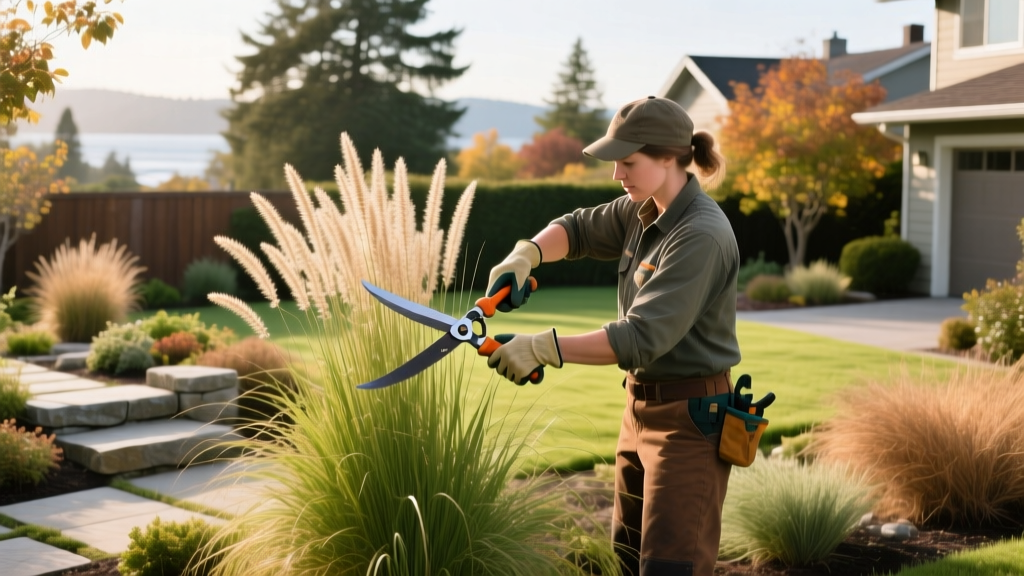
When to Prune Ornamental Grass by Region and Climate Zone
The Physiology of Grass Dormancy: Why Timing Matters
Determining when to prune ornamental grass is not a one-size-fits-all calendar event. The optimal pruning window depends entirely on the grass’s photosynthetic pathway (C3 vs. C4), your specific USDA Hardiness Zone, and local frost patterns. Cutting back a warm-season grass too early in autumn destroys crucial winter habitat for native pollinators, while shearing a cool-season grass too late in spring can sever the emerging basal shoots, stunting the plant’s growth for the entire year.
According to the University of Minnesota Extension, the primary mistake homeowners make is treating all bunchgrasses as identical. To establish a precise regional calendar, we must first divide your landscape into cool-season (C3) and warm-season (C4) species.
Cool-Season Grasses (C3)
Species like Blue Fescue (Festuca glauca), Blue Oat Grass (Helictotrichon sempervirens), and Tufted Hair Grass (Deschampsia cespitosa) thrive in temperatures between 60°F and 75°F. They put on their primary growth in early spring and fall, often going semi-dormant during the peak heat of summer. These grasses require earlier pruning to clear the way for their rapid spring flush.
Warm-Season Grasses (C4)
Species such as Maiden Grass (Miscanthus sinensis), Switchgrass (Panicum virgatum), and Fountain Grass (Pennisetum alopecuroides) thrive in temperatures between 80°F and 95°F. They remain dormant well into late spring and should be left standing throughout the winter to provide structural interest and protect the crown from freeze-thaw cycles.
Regional Pruning Calendar by USDA Hardiness Zone
Use the matrix below to schedule your pruning tasks. These dates target the period just before the basal break (when new green shoots emerge from the crown), ensuring you remove dead material without decapitating new growth.
| USDA Zone | Warm-Season Grasses (Miscanthus, Panicum) | Cool-Season Grasses (Festuca, Deschampsia) | Frost Risk & Soil Temp Note |
|---|---|---|---|
| Zones 3-4 | Mid-April to Early May | Early to Mid-April | Wait until soil temps consistently reach 45°F at a 2-inch depth. |
| Zones 5-6 | Late March to Mid-April | Early to Mid-March | Prune cool-season grasses as soon as snowmelt exposes the crown. |
| Zones 7-8 | Mid-February to Early March | Late January to Mid-February | Watch for late February hard freezes; delay if a polar vortex is forecast. |
| Zones 9-10 | Late January to Early February | Late December to Early January | Warm-season grasses may not fully go dormant; cut back when growth stalls. |
For authoritative species-specific guidance, the Clemson University Home & Garden Information Center emphasizes that leaving warm-season grasses uncut until late winter also prevents moisture from pooling in the hollow stems, which can cause fatal crown rot in freezing zones.
Tool Selection and The Bungee Cord Technique
Attempting to prune a mature, 6-foot-tall Miscanthus clump with standard hand pruners is a recipe for carpal tunnel and jagged cuts. Dense bunchgrasses require specialized leverage tools or motorized equipment.
Pro-Tip: The Bungee Cord Binding Method
Before making a single cut, wrap a heavy-duty bungee cord or twine around the grass clump about 12 to 18 inches above the ground. Pull it tight to bundle the stems into a single, manageable column. This prevents the stems from splaying outward when cut, allowing you to shear the entire bundle cleanly and lift it away in one piece without dropping debris into the crown.
Recommended Equipment for 2026
- Manual Hedge Shears: The ARS HS-KR1000 Professional Hedge Shears (approx. $75) feature fluorocarbon-coated blades that resist sap buildup from fibrous grass stems, reducing friction during repetitive cuts.
- Cordless Trimmers: For large landscapes, the STIHL HSA 56 Cordless Hedge Trimmer (approx. $229, tool only) provides the necessary blade gap to chew through thick, woody warm-season stems without jamming.
- Gloves: Always wear heavy leather gauntlet gloves. Many ornamental grasses, particularly Miscanthus and Pennisetum, have microscopic silica edges that will cause severe paper-cut lacerations on bare forearms.
Exact Cutting Heights
Never cut ornamental grasses flush with the soil. The growing point (crown) is highly susceptible to rot and mechanical damage.
- Warm-Season Grasses: Leave 3 to 4 inches of stubble above the soil line. This protects the crown and provides a structural anchor for the new spring shoots.
- Cool-Season Grasses: Leave 1 to 2 inches of stubble. These grasses have shallower, more compact crowns and will rot if buried under thick layers of old, decaying foliage.
The Ecological Case for Delaying Spring Pruning
Modern landscape management has shifted heavily toward ecological stewardship. If you are wondering when to prune ornamental grass for maximum environmental benefit, the answer is always as late as possible.
“Hollow-stemmed grasses and perennials provide crucial overwintering habitat for native solitary bees and beneficial predatory insects. Cutting them back in the fall destroys this habitat and exposes the soil to erosion.”
— Guidelines from the Xerces Society for Invertebrate Conservation
By delaying your warm-season grass pruning until daytime temperatures consistently hit 50°F in early spring, you allow overwintering insects to emerge naturally. Furthermore, the seed heads of native grasses like Switchgrass (Panicum virgatum) provide a critical late-winter food source for foraging birds, including juncos and sparrows, when other food sources are buried under snow.
Evergreen Grasses: The "No-Chop" Exception
Not all ornamental grasses should be sheared. Evergreen and semi-evergreen sedges and grasses do not produce a flush of entirely new basal growth each spring. Chopping them to the ground will result in a dead, unsightly stump that may not recover.
Species That Require Combing, Not Cutting
- Sedges (Carex species): Such as Carex morrowii or Carex oshimensis.
- Mexican Feather Grass (Nassella tenuissima): Highly susceptible to crown rot if cut too hard.
- Hair Grass (Stipa species): Often semi-evergreen in milder zones.
The Technique: Instead of shearing, put on thick leather gloves and gently “comb” your fingers through the foliage, pulling upward and outward to extract the dead, brown winter blades while leaving the living green tissue intact. For larger sedge clumps, use a flexible wire leaf rake and gently pull upward through the center of the plant to dislodge dead thatch.
Post-Pruning Maintenance and Fertilization
Once the dead material is removed and hauled to the compost pile, the crown is exposed to the sun and warming soil. This is the exact moment to apply a light, balanced fertilizer to fuel the upcoming growth cycle. Avoid high-nitrogen synthetic fertilizers, which can cause overly lush, floppy growth that will collapse during summer thunderstorms. Instead, apply a half-inch top-dressing of organic compost or a slow-release granular fertilizer with an N-P-K ratio of 10-10-10 at a rate of 1 pound per 100 square feet. Water the crown deeply to settle the compost and signal the roots that the growing season has officially begun.

